Polestar 2 Dimensions: More Than Just a Numbers Game
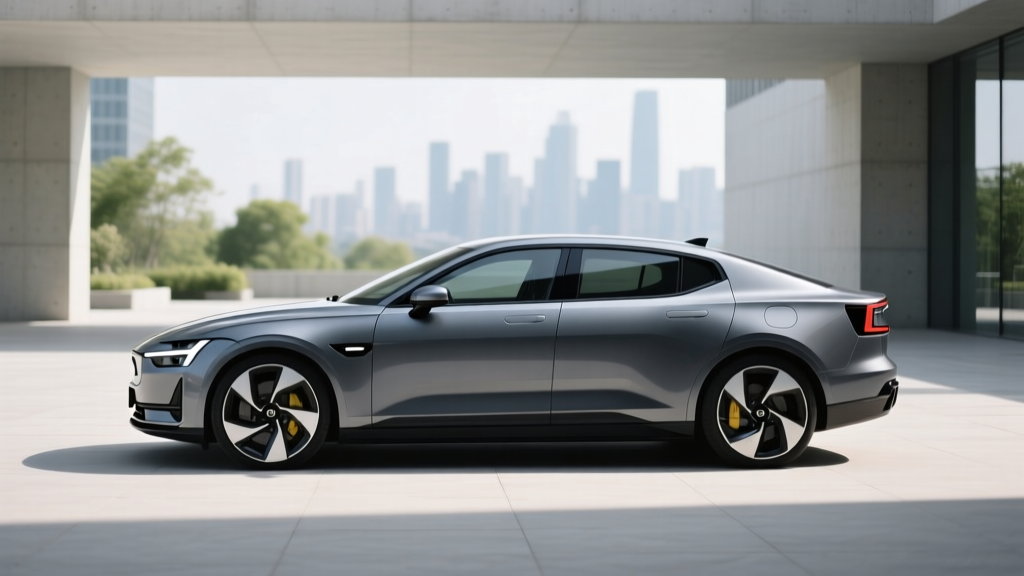
Shoppers researching the Polestar 2 length often start with a tape measure and end up discovering one of the most compelling electric liftbacks on the market. At 181.3 inches long, 73.2 inches wide, and 58.0 inches tall, the Polestar 2 occupies a footprint that slots neatly between compact hatchbacks and midsize sedans. But dimensions only tell part of the story. What really matters is how Polestar packages a 78 kWh usable NMC battery, a usable cargo hold, and a Scandinavian-minimalist interior into that 181.3-inch shell.
This review covers the 2026 Polestar 2 in full — dimensions, EPA range, real-world efficiency, DC fast-charging behavior, and federal tax credit eligibility under current IRS §30D rules. If you're cross-shopping against the Tesla Model 3, BMW i4, or Hyundai Ioniq 6, this is the spec-driven breakdown you need.
Spec Table: 2026 Polestar 2 at a Glance
| Specification | Single Motor (RWD) | Dual Motor (AWD) |
|---|---|---|
| EPA Range | 320 miles | 298 miles |
| Battery (Usable) | 78 kWh (NMC) | 78 kWh (NMC) |
| Horsepower | 299 hp | 421 hp (w/ Performance) |
| 0–60 mph | 5.9 sec | 4.2 sec |
| Drivetrain | Rear-Wheel Drive | All-Wheel Drive |
| Max DC Fast Charge | 205 kW | 205 kW |
| 10–80% DC Time | ~26 min | ~26 min |
| Level 2 Home Charge | 11 kW (~37 mi/hr) | 11 kW (~37 mi/hr) |
| MPGe (Combined) | 107 MPGe | 98 MPGe |
| Length | 181.3 in | |
| Wheelbase | 107.7 in | |
| Cargo (rear seats up) | 14.4 cu ft | |
| Cargo (rear seats folded) | 38.7 cu ft | |
| Base MSRP | $49,900 | $54,900 |
Source: Polestar USA Specifications and fueleconomy.gov.
Exterior Dimensions: The Polestar 2 Length in Context
The 2026 Polestar 2 measures 181.3 inches bumper to bumper — roughly 5 inches shorter than a Tesla Model S, about 2 inches shorter than the BMW i4, and nearly identical to the Volvo C40 Recharge (no surprise given their shared CMA platform). For garage fitment, the 181.3-inch length is accommodating: a standard US single-car garage is typically 20 to 24 feet deep, leaving ample clearance.
Width is 73.2 inches (excluding mirrors), which matters more for tight urban parking than length does. The 107.7-inch wheelbase contributes to stable highway manners while keeping the turning circle at a manageable 37.4 feet curb-to-curb. Ground clearance is 5.6 inches — adequate for most speed bumps but not something you'd take on rough gravel roads with confidence.
Dimensions Compared to Rivals
| Vehicle | Length (in) | Width (in) | Wheelbase (in) | Cargo (cu ft) |
|---|---|---|---|---|
| Polestar 2 | 181.3 | 73.2 | 107.7 | 14.4 / 38.7 |
| Tesla Model 3 | 184.8 | 72.8 | 113.2 | 23.0 (trunk + frunk) |
| BMW i4 | 188.5 | 72.9 | 112.4 | 16.6 / 45.9 |
| Hyundai Ioniq 6 | 191.1 | 74.0 | 116.1 | 12.3 |
The Polestar 2 is one of the shortest vehicles in this set, which helps in city driving. The trade-off is rear-seat legroom (35.7 inches) that trails the Model 3's 35.2 inches by only a marginal amount but falls noticeably short of the i4's more generous cabin. Cargo volume at 14.4 cu ft behind the rear seats is the liftback's weak point — it's smaller than the Model 3's trunk and far smaller than a proper hatchback like the Ioniq 5.
Range, Battery & Real-World Efficiency
Polestar uses a 78 kWh usable lithium-ion battery with NMC (nickel manganese cobalt) chemistry. NMC offers higher energy density than LFP, which is how Polestar fits 320 miles of range into a relatively compact 181.3-inch package. The trade-off is that NMC batteries are more sensitive to sustained 100% state-of-charge storage — for daily use, setting your charge limit to 80–90% is recommended to maximize long-term battery health.
Efficiency is rated at 107 MPGe combined (Single Motor) and 98 MPGe (Dual Motor), translating to roughly 31 kWh/100 mi and 34 kWh/100 mi respectively. That's respectable but not class-leading — the Tesla Model 3 RWD achieves 132 MPGe combined thanks to superior aerodynamics and lighter weight. On a road trip, the Polestar 2's efficiency means you'll spend slightly more at DC fast chargers per mile than a Model 3 owner.
Charging Speed: DC Fast Charge & Home Level 2
Charging capability is where the 2026 Polestar 2 shows both its strengths and its limitations versus the competition.
| Charging Level | Power / Rate | Time / Range Added | Connector |
|---|---|---|---|
| Level 1 (120V household) | ~1.4 kW | ~4 mi/hr | J1772 / NACS adapter |
| Level 2 (240V home) | 11 kW (48A) | ~37 mi/hr; full in ~8.5 hr | J1772 / NACS |
| DC Fast Charge (peak) | 205 kW | 10–80% in ~26 min | CCS / NACS (2026) |
The Charging Curve Reality
The 205 kW peak DC charge rate sounds competitive, but sustained speed matters more. In testing, the Polestar 2 holds close to peak rate from roughly 10–40% SoC, then begins tapering. From 60–80%, the rate drops to approximately 80–100 kW. This means the 10–80% time of ~26 minutes is achievable at a properly rated 250+ kW charger (such as Electrify America or Tesla Supercharger stalls with Magic Dock), but you'll see longer times at 150 kW stations.
For 2026, Polestar has transitioned US-market vehicles to the NACS (Tesla-style) charge port, granting native access to the Tesla Supercharger network — over 17,000 stalls in North America. This is a significant practical advantage over the CCS-only era. An adapter is included for legacy CCS stations.
Home Level 2 charging at 11 kW is solid. With a 48-amp hardwired Wall Connector or ChargePoint Home Flex, you'll add roughly 37 miles of range per hour of charging, or replenish the full 78 kWh battery in about 8.5 hours — ideal for overnight top-ups.
Performance & Driving Dynamics
The Single Motor variant delivers 299 horsepower and a 5.9-second 0–60 mph time. That's brisk enough for confident highway merging and passing, though it won't pin you to your seat. The Dual Motor with the optional Performance Pack bumps output to 421 hp and drops the 0–60 to 4.2 seconds — genuinely quick, and competitive with the Tesla Model 3 Long Range AWD.
Ride quality is a Polestar hallmark. The chassis tuning is firm but controlled — more European-sport than the softer Tesla Model 3. The optional Öhlins dampers (Performance Pack, $5,000) are adjustable and transform the car's character from compliant daily driver to track-day capable. Steering is precise if slightly light on feel. Regenerative braking offers adjustable levels, including a one-pedal driving mode that's strong enough to bring the car to a complete stop.
Pricing, Trims & Federal Tax Credit
| Trim | Base MSRP | Est. After §30D Credit |
|---|---|---|
| Single Motor Standard Range | $44,900 | ~$37,400* |
| Single Motor Long Range | $49,900 | ~$42,400* |
| Dual Motor Long Range | $54,900 | ~$47,400* |
| Dual Motor w/ Performance Pack | $59,900 | ~$52,400* |
*Estimated after $7,500 federal tax credit, if eligible. Destination charge ($1,300) not included.
Federal Tax Credit Eligibility (§30D)
The 2026 Polestar 2 qualifies for the full $7,500 federal EV tax credit under current IRS rules, but eligibility depends on several buyer-specific factors:
- MSRP cap: Sedans must be priced at or below $55,000. The Single Motor and base Dual Motor trims qualify; the Performance Pack variant at $59,900 exceeds the cap.
- Buyer income cap: Modified AGI must not exceed $150,000 (single), $225,000 (head of household), or $300,000 (married filing jointly).
- Battery sourcing: A percentage of critical minerals and battery components must be sourced from the US or free-trade-agreement countries. Polestar has confirmed that 2026 US-market Polestar 2 models meet current sourcing thresholds.
- Point-of-sale transfer: Since 2024, the credit can be transferred to the dealer at purchase, reducing the purchase price directly rather than waiting for a tax refund.
See the full rules at IRS.gov Clean Vehicle Credits. Consult a tax professional before relying on credit eligibility.
Interior, Tech & Driver Assistance
The Polestar 2's interior is defined by restraint. A portrait-oriented 11.2-inch touchscreen runs Polestar's Android Automotive OS — the same system underpinning newer Volvo models. Google Maps, Google Assistant, and the Google Play Store are native. Wireless Apple CarPlay is standard. The 12.3-inch digital driver display is clear but small compared to some competitors.
Build quality is excellent: vegan WeaveTech upholstery is standard, with optional Nappa leather. The floating center console, panoramic glass roof (with an electrochromic dimming panel on Plus trim), and Harman Kardon audio create a premium atmosphere that justifies the price point.
ADAS: Pilot Pack
The available Pilot Pack ($3,200) bundles adaptive cruise control with stop-and-go, lane-centering assist, and Pilot Assist — Polestar's SAE Level 2 driver-assistance system. This requires continuous driver supervision and does not offer hands-free driving like GM's Super Cruise or Ford's BlueCruise. It's competent for highway cruising but demands your attention.
Cargo, Passenger Space & Daily Practicality
With 14.4 cu ft behind the rear seats and 38.7 cu ft with seats folded, the Polestar 2's cargo hold is modest for a liftback. The trunk opening is wide and practical, but the sloping roofline limits vertical space for taller items. A small frunk (front trunk) adds roughly 1.4 cu ft — enough for charging cables and a small bag, but not a meaningful luggage solution.
Rear-seat headroom (37.0 in) and legroom (35.7 in) are adequate for adults on shorter trips but will feel tight for anyone over 6 feet on long drives. This is a four-seat car in practice; the rear middle seat is best reserved for children or short trips. If you regularly carry rear-seat passengers, the Tesla Model 3 or BMW i4 offer measurably more space.
Warranty & Ownership
Polestar provides a competitive warranty package:
- Battery: 8 years / 100,000 miles (whichever comes first), with a minimum 70% capacity retention threshold.
- Powertrain: 4 years / 50,000 miles.
- Limited vehicle: 4 years / 50,000 miles.
- Roadside assistance: 4 years / unlimited miles.
The battery warranty's 70% threshold is standard for the segment but less generous than Hyundai's approach (which guarantees 70% on a larger stated capacity). For long-term ownership beyond 100,000 miles, budget for potential out-of-warranty battery service — NMC replacement costs for an 78 kWh pack currently range from $12,000–$18,000 depending on labor.
Pros, Cons & Who Should Buy
Pros
- Compact 181.3-in length — easy to park, fits any garage
- NACS charge port for native Supercharger access (2026)
- Excellent build quality and Scandinavian design
- Android Automotive with native Google integration
- Strong real-world range (265–285 mi highway)
- Firm, engaging chassis with optional Öhlins dampers
Cons
- Cargo volume (14.4 cu ft) is small for the class
- Rear-seat space is tight for tall adults
- Efficiency (107 MPGe) trails Tesla Model 3
- DC fast charge taper is noticeable above 60%
- Pilot Assist requires hands-on-wheel supervision
- Performance Pack pushes Dual Motor above $55K MSRP cap
Who the Polestar 2 Suits Best
Ideal buyer: A design-conscious professional or couple who commutes 20–50 miles daily, has home Level 2 charging, and values build quality and brand identity over maximum cargo space. The compact footprint makes it excellent for urban and suburban environments. Road trippers will appreciate the NACS Supercharger access and 320-mile EPA range.
Look elsewhere if: You regularly carry three or more passengers, need maximum cargo flexibility, or prioritize lowest cost-per-mile efficiency (the Model 3 wins there). Families needing a car-seat-friendly rear bench should test the Ioniq 5 or Model Y instead.
Frequently Asked Questions
What is the exact length of the Polestar 2?
The 2026 Polestar 2 measures 181.3 inches (4,606 mm) from bumper to bumper. This is shorter than the Tesla Model 3 (184.8 in) and BMW i4 (188.5 in), making it one of the more compact luxury EV sedans available.
What is the real-world range of the Polestar 2?
The EPA rates the Single Motor Long Range at 320 miles. In mixed real-world driving at highway speeds (70–75 mph), expect 265–285 miles. In cold weather below freezing, plan for 220–250 miles of usable range. The standard heat pump helps but cannot fully offset the chemistry-level impact of low temperatures on NMC cells.
How fast does the Polestar 2 charge?
On a 250+ kW DC fast charger, the Polestar 2 peaks at 205 kW and charges from 10–80% in approximately 26 minutes. The charge curve tapers noticeably above 60% SoC. At home on a 48-amp Level 2 charger (11 kW), expect roughly 37 miles of range per hour of charging, or a full charge in about 8.5 hours.
Does the Polestar 2 qualify for the federal EV tax credit?
Yes — the Single Motor and base Dual Motor trims qualify for the full $7,500 federal tax credit under IRS §30D, provided the buyer meets income caps ($150K single / $300K joint) and the vehicle MSRP is at or below $55,000. The Dual Motor with Performance Pack at $59,900 exceeds the sedan MSRP cap and does not qualify. Always verify current eligibility at fueleconomy.gov and consult a tax professional.
Is the Polestar 2 worth buying over the Tesla Model 3?
It depends on priorities. The Model 3 offers more range (341 mi EPA Long Range), better efficiency (132 MPGe), a larger Supercharger network (though Polestar now has native access), and more cargo space. The Polestar 2 wins on build quality, interior materials, ride refinement, and design differentiation. If you want the most efficient, spacious EV sedan, choose the Model 3. If you want something that feels more premium and less ubiquitous, the Polestar 2 is the stronger pick.
Does the Polestar 2 have a front trunk (frunk)?
Yes, but it's small — approximately 1.4 cu ft. It's useful for storing the mobile charging cable, a tire inflator kit, or a small bag, but it won't hold a full grocery load. The main cargo area behind the rear seats offers 14.4 cu ft.