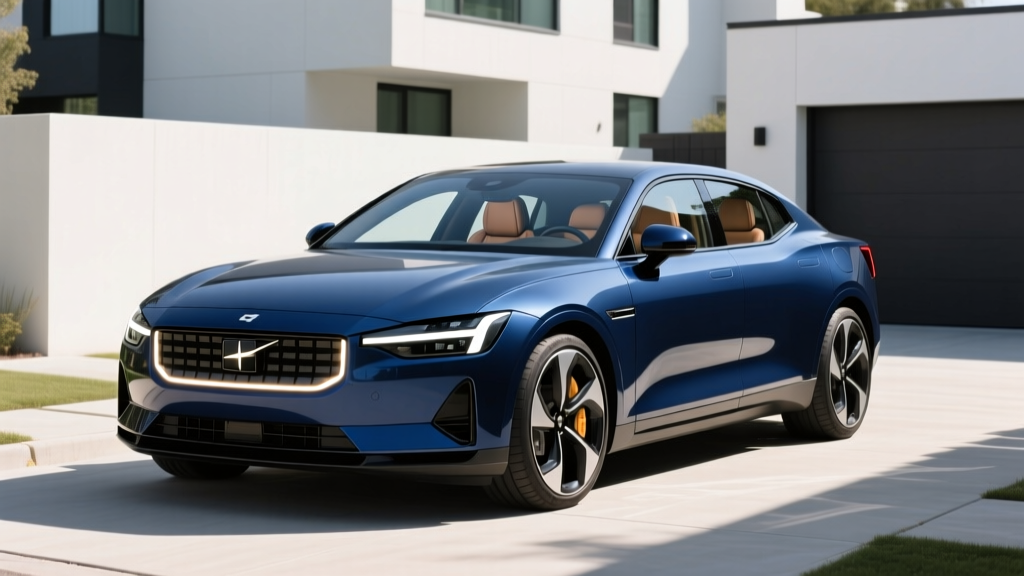
The headline is irresistible: a premium Scandinavian electric fastback for $299 a month. But as any seasoned EV shopper knows, lease deals live and die in the fine print. The Polestar 2 has been a compelling alternative to the Tesla Model 3 and Hyundai IONIQ 6 since its launch, and aggressive leasing is Polestar's primary strategy to move metal in the U.S. market. Let's dissect what a Polestar lease at $299 actually gets you, what the 2026 Polestar 2 delivers in range, charging, and daily usability, and whether this deal genuinely undercuts the competition.
What the $299 Polestar Lease Actually Includes
Automaker lease deals advertised at a specific monthly figure almost always reference a base trim with substantial down payment (called "due at signing" or capitalized cost reduction). For the 2026 Polestar 2 Standard Range Single Motor, a $299/month lease typically requires:
- Term: 36 months
- Due at signing: $3,999–$4,500 (first month's payment + cap cost reduction + acquisition fee)
- Mileage allowance: 10,000 miles/year (12k and 15k options cost more monthly)
- Disposition fee at lease end: ~$350–$400 if you don't purchase or lease another Polestar
- Tax credit application: The $7,500 federal EV credit is often applied as a capitalized cost reduction on qualifying leases, which dramatically lowers the monthly payment. This is the key mechanism that makes the $299 figure possible.
When you amortize that $4,000+ due at signing across 36 months, the true effective monthly cost is closer to $410–$425/month. That's still competitive for a premium EV, but it's not $299 out the door. Always ask the dealer for the full lease disclosure sheet before signing.
2026 Polestar 2: Range, Battery, and Efficiency
| Spec | Standard Range SM | Long Range SM | Long Range DM |
|---|---|---|---|
| Battery (usable) | 69 kWh (LFP) | 82 kWh (NMC) | 82 kWh (NMC) |
| EPA Range | 276 mi | 320 mi | 298 mi |
| MPGe (combined) | 114 MPGe | 122 MPGe | 107 MPGe |
| kWh/100 mi | 29 kWh | 28 kWh | 31 kWh |
| Drivetrain | RWD | RWD | AWD |
| Horsepower | 299 hp | 299 hp | 421 hp |
| 0–60 mph | 5.9 sec | 5.9 sec | 4.3 sec |
| Base MSRP | $49,900 | $53,400 | $57,900 |
The EPA estimates are useful baselines, but your actual mileage will vary. For the Long Range Single Motor (EPA 320 mi):
- City/suburban mixed driving (60–70°F): Expect 300–330 mi — regenerative braking in stop-and-go traffic helps.
- Sustained highway at 75 mph: Expect 260–280 mi. The Polestar 2's bluff-front fastback shape creates more drag than a Tesla Model 3.
- Cold weather (below 30°F): Expect 210–240 mi. The heat pump (standard on Long Range, optional on Standard) mitigates losses, but LFP chemistry in the Standard Range model suffers more in extreme cold than NMC.
Charging Speed: DC Fast Charge and Home Level 2
| Charging Level | Rate | Time / Miles Added |
|---|---|---|
| Level 1 (120V standard outlet) | ~1.4 kW | ~4 mi/hr |
| Level 2 (240V home, 48A) | 11 kW onboard | ~35 mi/hr; full charge in ~8 hr (LR) |
| DC Fast Charge (Standard Range) | 135 kW peak | 10–80% in ~30 min |
| DC Fast Charge (Long Range) | 205 kW peak | 10–80% in ~26 min |
The Long Range's 205 kW peak is competitive but not class-leading — the Hyundai IONIQ 6 hits 240 kW on its 800V architecture, and the Tesla Model 3 Highland peaks around 250 kW on V3 Superchargers. More importantly, the Polestar 2's charge curve tapers noticeably above 60% SoC. You'll see the full 205 kW only between roughly 10–35%, then it steps down to ~150 kW, then ~100 kW, then ~50 kW above 80%. A 10–80% session on a 350 kW Electrify America or Tesla Supercharger (with NACS adapter, standard on 2026 models) takes about 26 minutes in ideal thermal conditions.
Preconditioning matters. The Polestar 2 will precondition the battery for DC fast charging when you navigate to a charger via the built-in Google Maps. If you just pull up cold, expect peak rates 30–40% lower, especially in winter. Always use the nav-to-charger feature.
For home charging, the 11 kW onboard charger is solid. On a 48-amp Level 2 circuit (requiring a 60-amp breaker), you'll add roughly 35 miles of range per hour — enough to fully replenish the Long Range battery overnight in about 8 hours. A standard 32-amp Level 2 unit on a 40-amp circuit delivers ~7.7 kW, extending a full charge to ~11 hours.
Interior, Cargo, and Daily Livability
The Polestar 2 is a liftback, not a sedan or SUV, which gives it practical cargo access. Here are the key dimensions:
- Cargo volume (rear seats up): 14.4 cu ft
- Cargo volume (rear seats folded): 37.7 cu ft
- Front trunk (frunk): 1.4 cu ft — enough for a charging cable bag
- Front legroom: 42.2 inches
- Rear legroom: 34.0 inches — tight for tall adults on long trips
- Rear headroom: The sloping roofline cuts into headroom; passengers over 6'1" will notice
The interior materials are a highlight. Polestar uses a vegan "WeaveTech" upholstery standard, with available Nappa leather on higher trims. The minimalist Scandinavian design, 11.2-inch portrait touchscreen running Android Automotive OS with built-in Google Maps, Google Assistant, and Google Play Store, is one of the best infotainment systems in the EV segment. Wireless Apple CarPlay is standard for iPhone users.
Notable drawback: The rear visibility is compromised by the thick C-pillars and high trunk line. The 360-degree camera (included in the Pilot Plus pack, ~$3,500) is nearly essential for parking. The rear seats don't fold completely flat, which matters if you're hauling long items like skis or furniture.
Driver Assistance and Safety
The Polestar 2 comes standard with Pilot Assist, a Level 2 driver-assistance system combining adaptive cruise control and lane-centering. It works well on highways but requires hands on the wheel and does not support hands-free driving like GM's Super Cruise or Ford's BlueCruise.
Pilot Assist is a Level 2 system per SAE classification. The driver must remain fully engaged, monitor the road, and keep hands on the steering wheel. This is NOT autonomous or self-driving capability. Polestar does not currently offer a Level 3 or Level 4 system in the U.S.
Optional upgrades include:
- Pilot Plus Pack (~$3,500): Adds 360° camera, Park Assist Pilot (auto-parking), and Pilot Assist with enhanced curve speed management
- Performance Pack (~$5,000, LR DM only): Öhlins dampers, Brembo brakes, 20" forged wheels, gold seatbelts — drops 0–60 to 4.1 sec but reduces range to ~276 mi EPA
Safety ratings are strong: the Polestar 2 earned the IIHS Top Safety Pick+ designation and a 5-star overall rating from NHTSA.
Pricing, Tax Credits, and Total Lease Cost
| Trim | Base MSRP | §30D Credit Eligible? | Effective Lease Base* |
|---|---|---|---|
| Standard Range SM | $49,900 | Yes — up to $7,500 | $42,400 |
| Long Range SM | $53,400 | Yes — up to $7,500 | $45,900 |
| Long Range DM | $57,900 | Yes — up to $7,500 | $50,400 |
*Effective lease base = MSRP minus $7,500 credit applied as cap cost reduction. Actual credit amount depends on your tax liability and eligibility.
- MSRP cap: Vehicle MSRP must be ≤ $55,000 (sedans/fastbacks) — the Standard Range and Long Range SM qualify; the Long Range DM at $57,900 base exceeds the cap unless you negotiate below MSRP or it's reclassified as an SUV (unlikely for a fastback).
- Buyer income cap: AGI ≤ $150,000 (single), $225,000 (head of household), $300,000 (joint).
- Battery sourcing: Critical minerals and battery component requirements must meet IRS thresholds — Polestar sources from CATL (LFP) and LG Energy Solution (NMC); verify current-year compliance on irs.gov.
- Point-of-sale transfer: The $7,500 credit can be transferred to the dealer at purchase/lease, reducing your cap cost directly. This is how the $299 lease is structured.
- Lease loophole: If the vehicle doesn't qualify for §30D (e.g., LR DM over MSRP cap), the leasing company may pass through the commercial EV credit (§45W) — ask your dealer to confirm the credit mechanism.
Total 36-month lease cost at $299/mo:
- Due at signing: ~$4,000
- 36 monthly payments: $10,764
- Disposition fee (if not purchasing): ~$395
- Total out of pocket: ~$15,159 over 3 years (before state/local incentives, insurance, and electricity)
Compare this to buying the Standard Range SM at $49,900 minus $7,500 = $42,400, financed at 6% over 60 months = ~$820/month. Leasing at $299 with $4k down is significantly cheaper monthly, but you build no equity and face mileage penalties ($0.20–$0.25/mile over the limit).
How the Polestar 2 Stacks Up Against Rivals
| Spec | Polestar 2 LR SM | Tesla Model 3 LR | Hyundai IONIQ 6 SEL | BMW i4 eDrive40 |
|---|---|---|---|---|
| EPA Range | 320 mi | 363 mi | 361 mi | 307 mi |
| Peak DC kW | 205 kW | ~250 kW | ~240 kW (800V) | 205 kW |
| 10–80% DCFC | ~26 min | ~20 min | ~18 min | ~31 min |
| Base MSRP | $53,400 | $47,740 | $43,600 | $57,900 |
| 0–60 mph | 5.9 sec | 4.8 sec | 5.1 sec | 5.5 sec |
| Cargo (seats up) | 14.4 cu ft | 23.0 cu ft | 12.3 cu ft | 16.6 cu ft |
The Polestar 2 sits in an awkward middle: it's more expensive than the Model 3 and IONIQ 6 while offering less range and slower charging. Its advantages are build quality, interior design, Android Automotive integration, and the aggressive lease pricing that sidesteps the MSRP disadvantage. If you value Scandinavian aesthetics and don't need maximum range, it's a compelling choice. If you want the best range-per-dollar, the Model 3 Long Range or IONIQ 6 win.
Warranty and Long-Term Ownership
- Battery warranty: 8 years / 100,000 miles (retains ≥70% capacity)
- Powertrain warranty: 8 years / 100,000 miles
- Bumper-to-bumper: 4 years / 50,000 miles
- Corrosion: 12 years unlimited miles
- Roadside assistance: 4 years / unlimited miles
The 70% capacity retention threshold at 8 years is standard for the industry but less generous than Hyundai/Kia's approach (which replaces below 70% with no pro-rating). For a lease, the 8-year battery warranty is largely irrelevant since you'll return the car at 3 years — but it matters if you plan to purchase at lease-end.
EPA fuel economy data confirms the Polestar 2's efficiency figures, and real-world degradation data from early 2021–2023 models shows NMC packs losing roughly 5–8% capacity over 60,000 miles — well within warranty thresholds.
Pros, Cons, and Who Should Lease the Polestar 2
- Aggressive lease pricing ($299/mo with credit applied)
- Excellent Android Automotive OS with Google Maps
- Premium Scandinavian interior, vegan materials standard
- Top Safety Pick+ (IIHS), 5-star NHTSA
- NACS port standard for 2026 — full Tesla Supercharger access
- Competitive 11 kW Level 2 onboard charger
- Less EPA range than Model 3 and IONIQ 6 at similar price
- Slower DC fast charging than 800V competitors
- Tight rear headroom and legroom for a car this size
- Long Range DM may not qualify for §30D (MSRP cap)
- No hands-free driving option (Level 2 only)
- Small 1.4 cu ft frunk
- Urban/suburban commuters who value design, build quality, and Google-native infotainment over maximum range.
- Lease-focused buyers who want a premium badge at a mass-market monthly payment and don't want to own long-term.
- Two-car households where the Polestar 2 is the daily driver and a larger vehicle handles road trips.
Frequently Asked Questions
Is the $299/month Polestar 2 lease available nationwide?
Polestar advertises national lease offers, but actual terms vary by dealer, region, and your credit tier (Tier 1 credit typically required for advertised rates). The $299 figure usually applies to the Standard Range Single Motor with $3,999–$4,500 due at signing and 10k miles/year. Contact your local Polestar Space (their retail stores) for a personalized quote.
Can I buy the Polestar 2 at the end of the lease?
Yes. Polestar sets a residual value at lease signing (typically 50–55% of MSRP for 36 months/30k miles). If the buyout price is below market value at lease-end, purchasing can be a good deal — especially since you'll have 5+ years of the 8-year battery warranty remaining.
Does the 2026 Polestar 2 use CCS or NACS?
The 2026 Polestar 2 ships with a native NACS (Tesla-style) charge port, giving it direct access to Tesla's Supercharger network without an adapter. This is a significant upgrade from 2024 and earlier models that used CCS1 and required an adapter for Supercharger access.
How does cold weather affect the Polestar 2's range?
Expect 25–35% range loss in sustained sub-30°F temperatures. The Standard Range model with LFP chemistry is more affected by cold than the Long Range with NMC. The available heat pump (standard on Long Range) reduces HVAC energy draw by roughly 30% compared to resistive heating, partially offsetting cold-weather losses. Always precondition while plugged in to minimize range impact.
Is the Polestar 2 reliable?
Polestar is a relatively young brand (Volvo/Geely subsidiary), so long-term reliability data is still building. Early models (2021–2022) had some software glitches and a recall for inverter issues, but these have been addressed. JD Power and Consumer Reports give the Polestar 2 average to slightly above-average reliability scores. The shared Volvo CMA platform and proven LG/CATL battery suppliers provide confidence.