The Polestar 2 in Houston: What Texas EV Buyers Need to Know
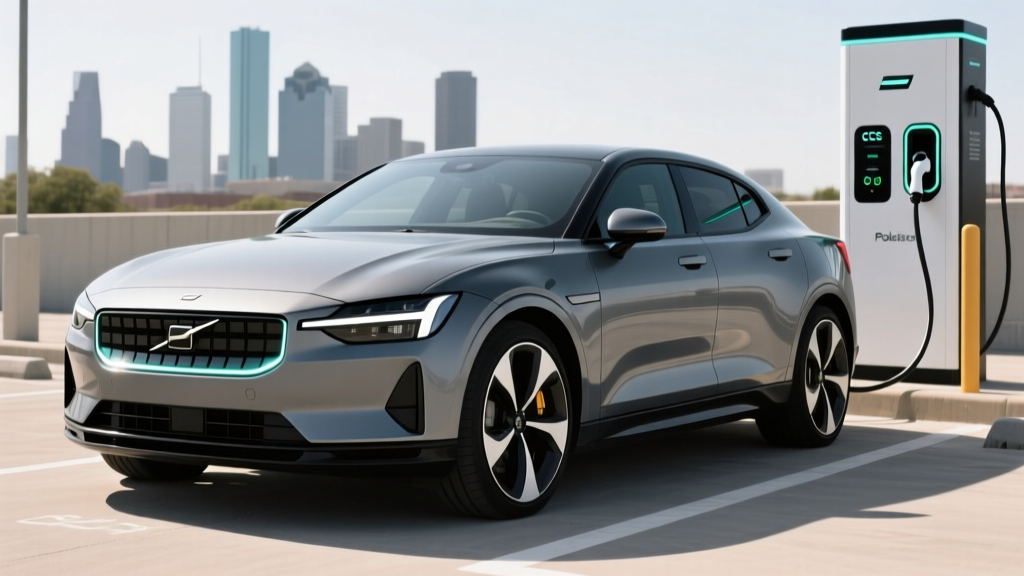
Houston's EV landscape is maturing fast. With an expanding Electrify America and Tesla Supercharger footprint across the Greater Houston area, plus a growing network of Level 2 chargers at H-E-B grocery stores, shopping centers, and apartment complexes, owning an electric vehicle in the Bayou City is more practical than ever. Among the premium electric sedans vying for Houston buyers, the 2026 Polestar 2 stands out for its Scandinavian design, engaging dual-motor performance, and increasingly competitive pricing.
But how does the Polestar 2 actually perform in Houston's specific conditions — from the relentless summer heat and humidity to the long, flat highway stretches of I-10 and I-45? This review covers the exact numbers that matter: EPA range, real-world efficiency in Texas heat, DC fast-charging speeds, home charging setup costs, and whether the Polestar 2 qualifies for the federal §30D tax credit under current IRS rules.
2026 Polestar 2 Core Specifications
| Specification | Standard Range (SM) | Long Range Single Motor (LRSM) | Long Range Dual Motor (LRDM) |
|---|---|---|---|
| EPA Range | 276 miles | 320 miles | 276 miles |
| Battery (usable) | 69 kWh (LFP) | 79 kWh (NMC) | 79 kWh (NMC) |
| Horsepower | 299 hp | 299 hp | 421 hp |
| 0–60 mph | 5.9 sec | 5.9 sec | 4.3 sec |
| Drivetrain | RWD | RWD | AWD (Dual Motor) |
| Max DC Fast Charge | 135 kW | 200 kW | 200 kW |
| 10–80% DC Time | ~34 min | ~26 min | ~26 min |
| Level 2 Home Charge | 11 kW (~37 mi/hr) | 11 kW (~37 mi/hr) | 11 kW (~37 mi/hr) |
| MPGe (combined) | 115 MPGe | 111 MPGe | 100 MPGe |
| Base MSRP | $49,900 | $53,400 | $56,900 |
| Battery/Powertrain Warranty | 8 yr / 100,000 mi | 8 yr / 100,000 mi | 8 yr / 100,000 mi |
Source: fueleconomy.gov and Polestar USA specifications. EPA estimates; your actual range will vary.
Real-World Range in Houston's Heat and Highways
EPA Sticker: 320 miles (Long Range Single Motor)
Expect in Houston summer (95°F+): ~275–295 miles combined. Battery thermal management handles heat well, but A/C compressor load on stop-and-go surface streets along Westheimer or Post Oak reduces efficiency by roughly 5–8%.
Highway (I-10 at 75–80 mph): ~250–270 miles. The Polestar 2's sedan aero profile helps, but sustained high-speed driving increases consumption to roughly 32–34 kWh/100mi.
Mild winter (50–60°F, rare Houston cold snap): Minimal range loss (~3–5%). Houston's climate is actually one of the most EV-friendly in the country — you won't see the 20–30% cold-weather losses that northern EV owners deal with.
Houston's flat terrain works in the Polestar 2's favor. There are no mountain grades to climb on the way to Galveston or College Station, and regenerative braking recovers energy effectively on the gentle elevation changes around the city. The Long Range Single Motor variant is the efficiency sweet spot: 320 EPA miles with the 79 kWh NMC battery pack gives most Houston commuters a comfortable buffer for a full work week without charging.
For context, the average Houston-area commute is roughly 27 miles each way according to Census data, meaning a Long Range Polestar 2 owner could realistically go 4–5 days between charges on city/suburban driving alone.
Charging Speed: DC Fast Charging and Home Setup
| Charging Level | Power / Rate | Miles Added per Hour | Notes |
|---|---|---|---|
| Level 1 (120V household) | ~1.4 kW | ~4–5 mi/hr | Emergency/trickle only; full charge takes 50+ hours |
| Level 2 (240V home, 48A) | 11 kW | ~37 mi/hr | Full charge in ~7–8 hours (overnight) |
| DC Fast Charge (Long Range) | Peak 200 kW | ~180+ mi in 15 min | 10–80% in ~26 min; tapers above 80% |
| DC Fast Charge (Standard Range) | Peak 135 kW | ~120 mi in 15 min | 10–80% in ~34 min; LFP chemistry limits peak rate |
Houston Public Charging Infrastructure
The Polestar 2 uses the CCS1 connector for DC fast charging (NACS adapter availability may expand by late 2026 for Tesla Supercharger access — check Polestar's current compatibility updates). Houston's public DC fast-charging network includes:
- Electrify America: Multiple 150–350 kW stations at Walmart and shopping center locations along the Katy Freeway, Southwest Freeway, and North Freeway corridors.
- EVgo: Stations in Memorial City, The Galleria area, and along I-45.
- Tesla Supercharger: With a NACS adapter (when supported), Houston has 20+ Supercharger stations including Katy, Sugar Land, The Woodlands, and Pearland.
- H-E-B Level 2: Many Houston-area H-E-B stores offer free or low-cost Level 2 charging — ideal for topping off during grocery runs.
Home Charging Setup in Houston
For a Level 2 home charger delivering the Polestar 2's full 11 kW accept rate, you'll need a 240V / 48-amp circuit (NEMA 14-50 outlet or hardwired wall connector). Houston-area electricians typically charge:
- Level 2 charger hardware: $400–$700 (ChargePoint Home Flex, Emporia Level 2, Wallbox Pulsar Plus)
- Electrician install (standard, panel nearby): $500–$1,200
- Electrical panel upgrade (if needed, 100A → 200A): $1,500–$3,000
- Permit (City of Houston): $50–$150
Most Houston homes built after 2000 have 200-amp panels with sufficient capacity. Older homes in neighborhoods like the Heights, Montrose, or Riverside Terrace may need a panel assessment. Always hire a licensed electrician and pull a permit — CenterPoint Energy (Houston's utility) requires it for any service modifications.
Pricing, Trims, and Federal Tax Credit Eligibility
| Trim | Base MSRP | As-Tested (with Plus/Pilot packs) | Est. After §30D Credit |
|---|---|---|---|
| Standard Range Single Motor | $49,900 | $54,400 | ~$42,400–$49,900* |
| Long Range Single Motor | $53,400 | $58,900 | ~$45,900–$53,400* |
| Long Range Dual Motor | $56,900 | $63,400 | ~$49,400–$56,900* |
*Tax credit amounts vary. See eligibility details below.
Does the Polestar 2 Qualify for the Federal §30D Tax Credit?
- ☑ MSRP Cap: Sedans must be ≤$55,000 MSRP. The Standard Range ($49,900) and Long Range SM ($53,400) qualify on base price; Dual Motor ($56,900) exceeds the sedan cap.
- ☐ Buyer Income Cap: AGI must not exceed $150,000 (single), $225,000 (head of household), or $300,000 (joint filing).
- ☐ Battery Sourcing: Critical minerals and battery components must meet phased-in percentage thresholds from U.S. or FTA-partner countries. This is the most common reason credits are reduced or denied — verify the specific VIN's sourcing compliance on the IRS Energy Credits portal or with your Polestar dealer.
- ☑ Point-of-Sale Transfer: If eligible, you can transfer the credit to the dealer at purchase, reducing your out-of-pocket cost immediately rather than waiting for tax filing.
- ☐ Assembly: The vehicle must undergo final assembly in North America. Confirm the Polestar 2's current assembly location for your model year — Polestar has shifted some production; check the VIN at NHTSA.gov.
Rules are subject to change. Always verify current eligibility at IRS.gov or consult a tax professional before purchasing.
The §30D credit situation for Polestar has been complex. Battery-sourcing requirements introduced under the Inflation Reduction Act have shifted eligibility on a model-year and even VIN basis. Some Polestar 2 variants have qualified for the full $7,500, a partial $3,750, or no credit depending on the production batch and battery supply chain. Houston buyers should ask the Polestar Space (showroom) to verify credit eligibility for the specific vehicle identification number before signing.
Performance, Handling, and Daily Driving in Houston
The Polestar 2's driving dynamics are one of its strongest selling points. The dual-motor AWD variant delivers 421 hp and a 4.3-second 0–60 mph time — quick enough to merge confidently onto the 610 Loop during rush hour. But even the single-motor versions feel responsive, with 299 hp and instant electric torque that makes city driving effortless.
Ride quality is firm but controlled. The optional Öhlins dampers (available in the Performance Pack on Dual Motor trims) offer 22-way manual adjustability, letting you dial in compliance for Houston's notorious construction-zone road surfaces or firm it up for backroad driving through Brazos Bend. The steering is precise and weighted, a refreshing contrast to the numb electric-assist racks in some competitors.
The low center of gravity from the floor-mounted battery pack keeps body roll minimal, and the Polestar 2 feels planted in the crosswinds common on the Hardy Toll Road and elevated freeway sections. Ground clearance is 5.7 inches — adequate for Houston's occasional flooded intersections after heavy rain, but this is a sedan, not an SUV. If deep water is a regular concern on your route, consider the Polestar 4 or a competing electric SUV.
Cargo and Passenger Space
- Rear cargo (behind rear seats): 14.4 cu ft (liftback design — the entire rear glass opens, making loading far easier than a traditional sedan trunk)
- Cargo (rear seats folded): ~38 cu ft
- Front trunk (frunk): 1.4 cu ft (small — fits a charging cable bag or laptop sleeve)
- Rear legroom: 35.7 inches (adequate for adults on shorter trips; taller passengers may find it snug compared to the Hyundai Ioniq 6 or Tesla Model 3)
- Front headroom: 40.5 inches (generous, even with the optional panoramic roof)
The liftback design is the Polestar 2's packaging secret weapon. That 14.4 cu ft number undersells the practicality — the wide opening easily swallows luggage for a weekend trip to Galveston or a Costco haul from the Sugar Land location.
Technology, Safety, and Driver Assistance
The Polestar 2 runs Google built-in for infotainment — meaning Google Maps, Google Assistant, and the Play Store are native to the car. For Houston drivers, this is a practical win: Google Maps' real-time traffic routing handles Houston's unpredictable congestion patterns (looking at you, I-610 West Loop at 5 PM) exceptionally well, and you can use voice commands to set navigation, adjust climate, or search for nearby chargers without touching the screen.
The 11.2-inch center touchscreen and 12.3-inch driver display are responsive, and the interface is clean compared to some competitors' cluttered menus. Wireless Apple CarPlay is supported for those who prefer iOS.
ADAS and Safety
The Polestar 2's Pilot Pack offers adaptive cruise control with stop-and-go, lane-centering assist, and blind-spot intervention. This is SAE Level 2 driver assistance — the driver must remain fully engaged, hands on or near the wheel, and eyes on the road at all times. It is not self-driving.
Safety ratings are strong. The Polestar 2 has earned top marks from IIHS (Top Safety Pick+ in prior model years) and features standard automatic emergency braking, run-off-road protection, and post-collision braking. The Pixel LED headlights (standard on Plus trims) provide excellent nighttime visibility on unlit rural roads outside the Houston metro area.
Polestar 2 vs. Key Competitors: Is It Worth It?
| Metric | Polestar 2 LRSM | Tesla Model 3 LR | Hyundai Ioniq 6 SEL | BMW i4 eDrive40 |
|---|---|---|---|---|
| EPA Range | 320 mi | 341 mi | 361 mi | 301 mi |
| Base MSRP | $53,400 | $47,740 | $42,450 | $57,900 |
| Max DC Charge | 200 kW | 250 kW | 240 kW | 200 kW |
| 10–80% Time | ~26 min | ~22 min | ~18 min | ~31 min |
| 0–60 mph | 5.9 sec | 4.8 sec | 6.2 sec | 5.5 sec |
| Cargo (rear) | 14.4 cu ft | 23 cu ft | 12.3 cu ft | 16.6 cu ft |
| Infotainment | Google built-in | Tesla OS | Hyundai Bluelink | BMW iDrive 8 |
Where the Polestar 2 wins: Build quality and materials punch above its price class — the vegan WeaveTech interior, available Nappa leather, and Harman Kardon audio create a cabin experience closer to Volvo/Audi than Tesla. The liftback practicality, distinctive design (you won't blend into every Uber fleet), and Öhlins suspension option appeal to driving enthusiasts who want something different.
Where it falls short: The Tesla Model 3 Long Range offers more range, faster charging, and Supercharger access at a lower price. The Hyundai Ioniq 6 leads the segment in EPA range and charging speed at a significantly lower MSRP, though its interior materials and rear-seat space are more modest. If maximum range-per-dollar is your priority, the Ioniq 6 is tough to beat.
Pros and Cons: The Honest Summary
Pros
- Premium Scandinavian interior — best materials in the segment at this price
- Liftback cargo versatility (14.4 cu ft + fold-flat rear seats)
- Engaging chassis dynamics, optional Öhlins dampers
- Google built-in navigation handles Houston traffic well
- Houston's warm climate is ideal for EV range — minimal cold-weather loss
- Strong safety ratings (IIHS Top Safety Pick+)
- 8-year / 100,000-mile battery warranty
Cons
- Rear seat legroom is tight for taller passengers (35.7 in)
- 200 kW peak DC charge rate trails Ioniq 6 (240 kW) and Model 3 (250 kW)
- §30D tax credit eligibility is inconsistent — battery sourcing rules may disqualify some VINs
- No NACS port native (CCS1; adapter needed for Supercharger access)
- Firm ride on standard suspension over Houston's rougher roads
- Frunk is tiny (1.4 cu ft) — barely fits the mobile charging cable
- Polestar Space (dealership) presence in Houston is limited vs. Tesla or legacy brands
Who Should Buy the Polestar 2 in Houston?
Choose the Polestar 2 if: You value distinctive design and premium interior quality over maximum range-per-dollar. You want a sedan with real cargo versatility (that liftback matters). You prefer Google-native infotainment. Your Houston commute is under 60 miles round-trip and you have home Level 2 charging.
Consider a competitor if: You need maximum range for frequent I-10 road trips to Austin or San Antonio (Ioniq 6 or Model 3 LR go farther per charge). You need a back seat that comfortably fits tall adults or rear-facing child seats (look at the Polestar 4 or Ioniq 5). You want guaranteed Supercharger access without adapters (Tesla Model 3). Your budget is under $42,000 (Ioniq 6 SEL starts lower).
The Polestar 2 is best suited for the Houston professional commuter — someone who drives 25–50 miles daily on a mix of freeway and surface streets, charges at home overnight, and wants an electric sedan that feels premium without the BMW or Mercedes price tag. It's also a strong pick for the design-conscious buyer who's tired of seeing the same Tesla Model 3 in every Memorial Drive parking lot.
For road trippers who regularly drive to Austin (160 mi), Dallas (240 mi), or New Orleans (350 mi), the Long Range Single Motor's 320-mile EPA range provides a comfortable buffer, and Houston's growing DC fast-charging network along major corridors means a 20-minute stop at an Electrify America station in Columbus, TX or Lafayette, LA keeps you moving.
Frequently Asked Questions
What is the real-world range of the Polestar 2 in Houston?
The Long Range Single Motor achieves 320 miles EPA. In Houston's hot summers with A/C running and mixed city/highway driving, expect roughly 275–295 real-world miles. Highway-only driving at 75–80 mph reduces that to around 250–270 miles. Houston's mild winters mean you won't face the significant cold-weather range losses that EV owners in colder climates experience.
How fast does the Polestar 2 charge at home and on the road?
On a 240V Level 2 home charger (48A), the Polestar 2 accepts up to 11 kW, adding roughly 37 miles of range per hour — a full overnight charge takes about 7–8 hours. On DC fast chargers, the Long Range variants peak at 200 kW, reaching 10–80% in approximately 26 minutes. The Standard Range (LFP battery) peaks at 135 kW with a 10–80% time of about 34 minutes.
How much does the Polestar 2 cost after tax credits?
Base pricing starts at $49,900 (Standard Range) to $56,900 (Long Range Dual Motor). Federal §30D tax credit eligibility depends on the specific VIN's battery sourcing, the buyer's adjusted gross income, and the vehicle's MSRP (sedan cap is $55,000). If eligible for the full $7,500 credit via point-of-sale transfer, effective pricing can drop to ~$42,400 for the Standard Range model. Verify eligibility with your dealer and the IRS before purchasing.
Is the Polestar 2 worth buying vs. a Tesla Model 3 or Hyundai Ioniq 6?
It depends on your priorities. The Polestar 2 offers superior interior materials, a more distinctive design, and engaging handling — but the Tesla Model 3 LR provides more range (341 mi) and faster charging (250 kW) at a lower price, while the Ioniq 6 leads in both range (361 mi) and charging speed (240 kW, 10–80% in ~18 min) at an even lower MSRP. If cabin quality and driving feel matter most, the Polestar 2 is compelling. If range and charging speed are your top concerns, look at the competitors.
Does the Polestar 2 qualify for the federal EV tax credit?
Eligibility varies by specific VIN and production batch due to battery-sourcing requirements under §30D. The Standard Range and Long Range Single Motor trims fall under the $55,000 sedan MSRP cap, but critical-mineral and battery-component sourcing thresholds must also be met. The Dual Motor trim's $56,900 base MSRP exceeds the sedan cap and does not qualify. Always verify current eligibility at IRS.gov and confirm with your Polestar dealer for the exact vehicle you're purchasing.
How does Houston's charging infrastructure support Polestar 2 ownership?
Houston has a growing network of Electrify America, EVgo, and ChargePoint DC fast chargers along major freeways, plus Level 2 chargers at many H-E-B locations, shopping centers, and parking garages. The Polestar 2's CCS1 connector is widely compatible with all major non-Tesla networks. With home Level 2 charging, most Houston Polestar 2 owners will rarely need public charging for daily driving.