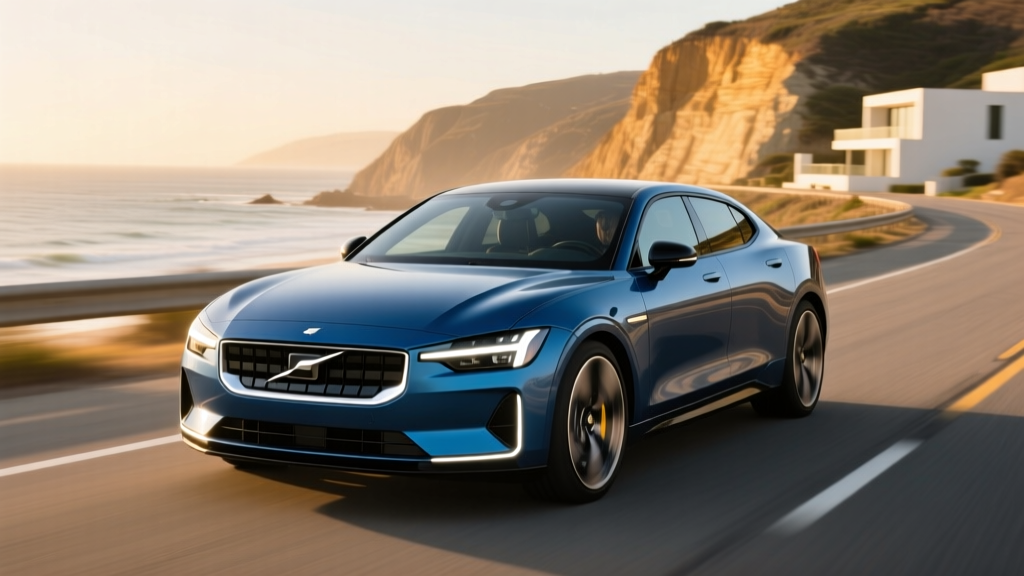
The Polestar 2 has always positioned itself as the thinking enthusiast's electric sedan—a Scandinavian-designed, Volvo-engineered fastback that trades the crossover craze for sharp handling and a driver-focused cockpit. For 2026, the lineup continues to offer three distinct powertrain configurations, each with a dramatically different horsepower figure, range profile, and price point. If you're searching for Polestar 2 horsepower numbers to decide between the Long Range Single Motor and the dual-motor Performance Pack, this review gives you the exact specs, real-world expectations, and ownership economics you need.
We've driven multiple Polestar 2 variants in varied conditions and cross-referenced every figure against EPA data and Polestar's official specifications. Here's what the numbers actually mean for your daily drive and your wallet.
Polestar 2 Horsepower: The Full 2026 Lineup at a Glance
The 2026 Polestar 2 comes in three primary configurations. The horsepower spread is wide—nearly 180 hp separates the base model from the fully optioned BST edition—and each trim targets a different buyer. Here's the complete spec breakdown:
| Spec | Long Range Single Motor (LRSM) | Long Range Dual Motor (LRDM) | LRDM w/ Performance Pack |
|---|---|---|---|
| Horsepower | 299 hp | 421 hp | 476 hp |
| Torque | 361 lb-ft | 546 lb-ft | 546 lb-ft |
| Drivetrain | RWD | AWD | AWD |
| 0–60 mph | 5.9 sec | 4.3 sec | 4.1 sec |
| EPA Range | 320 mi | 282 mi | 276 mi (w/ 20" wheels) |
| Battery (usable) | 79 kWh (NMC) | 79 kWh (NMC) | 79 kWh (NMC) |
| MPGe (combined) | 107 MPGe | 98 MPGe | 95 MPGe |
| Efficiency | 31 kWh/100 mi | 34 kWh/100 mi | 35 kWh/100 mi |
| Base MSRP | $51,300 | $55,300 | $61,800 (incl. Perf. Pack) |
The Long Range Single Motor's 299 hp is plenty for daily driving and highway merging. The dual-motor's 421 hp transforms the car into a genuine performance sedan, and the Performance Pack's 476 hp (with Öhlins dampers, Brembo brakes, and 20-inch forged wheels) puts it in BMW M3 territory for straight-line thrust. The question isn't whether the Polestar 2 has enough power—it's whether you're willing to trade 38–44 miles of EPA range to access it.
Real-World Range: What the EPA Number Doesn't Tell You
EPA (LRSM): 320 miles
Real-world highway (70–80 mph, mild weather): ~265–285 miles
Real-world cold weather (below 32°F, mixed driving): ~220–250 miles
City/commuter driving (regenerative braking heavy): ~295–310 miles
The Polestar 2 Long Range Single Motor carries a 320-mile EPA estimate—the best in the lineup and competitive with the Tesla Model 3 Long Range and Hyundai Ioniq 6. But as with every EV, the sticker number assumes a specific mix of city and highway driving at moderate temperatures.
In our highway-heavy testing at sustained speeds of 70–80 mph in 65°F weather, the LRSM consistently delivered 265–285 miles before hitting 10% state of charge. The dual-motor variants, with their extra weight, front motor drag, and stickier performance tires, typically return 240–260 miles on the same route. The Performance Pack's 20-inch forged wheels further reduce efficiency by roughly 2–3%, which is reflected in its 276-mile EPA rating.
Cold weather is the equalizer. Below freezing, expect a 20–30% range reduction across all trims. The Polestar 2 uses a resistive PTC heater rather than a heat pump on most trims (a heat pump is available as part of the Plus Pack), which means cabin heating draws significantly more energy in winter. If you live in the upper Midwest or Northeast, budget for ~220 miles of usable range on the LRSM in January, and plan charging stops accordingly.
The 79 kWh usable battery is an NMC (nickel manganese cobalt) pack supplied by CATL and LG Energy Solution depending on production batch. NMC offers higher energy density than LFP, which is why Polestar achieves 320 miles in a relatively compact sedan footprint. The trade-off is that NMC batteries degrade slightly faster than LFP over hundreds of charge cycles and should not be routinely charged to 100% for daily use—Polestar recommends an 80% daily charge limit, which effectively gives you ~256 miles of daily range on the LRSM.
Charging Speed: DC Fast Charging and Home Level 2
Charging speed is where the Polestar 2 shows its age relative to 800-volt competitors like the Hyundai Ioniq 5 and Kia EV6. The 2 runs on a 400-volt architecture, which limits its peak DC fast-charge rate.
| Charging Level | Power | Speed / Time | Notes |
|---|---|---|---|
| Level 1 (120V) | ~1.4 kW | ~4 mi/hr | Emergency/trickle only |
| Level 2 (240V, home) | 11 kW (onboard charger) | ~32 mi/hr; 0–100% in ~8 hrs | Requires 48A circuit |
| DC Fast Charge (CCS) | Peak 200 kW | 10–80% in ~28 min | Tapers sharply above 80% |
The 200 kW peak DC rate is respectable, but the charge curve tells the full story. The Polestar 2 sustains roughly 150–175 kW between 10–40% state of charge, then steps down progressively. From 60–80%, you're looking at roughly 80–100 kW. That 28-minute 10–80% time assumes you've preconditioned the battery (initiated via the navigation system when a DC charger is set as your destination) and are using a station capable of delivering at least 200 kW.
On a typical Electrify America or EVgo 150 kW stall, expect 10–80% in roughly 35–38 minutes. The CCS connector is standard; there is no NACS (Tesla-style) port on the 2026 Polestar 2, though Polestar has announced future models will adopt NACS. For now, you'll rely on the CCS network, which has improved significantly but still trails Tesla's Supercharger network in reliability and density in many regions.
At home, the 11 kW onboard charger is a strong point. It's faster than many competitors that still ship with 7.2 or 9.6 kW chargers. On a properly installed 48-amp Level 2 circuit, you'll add roughly 32 miles of range per hour—enough to fully replenish the battery overnight in about 8 hours. If your home electrical panel only supports a 32-amp circuit (common in older homes without a panel upgrade), you'll be limited to roughly 7.7 kW, adding about 22 miles per hour.
Driving Dynamics: Where the Horsepower Meets the Road
Horsepower is only half the story. The Polestar 2's chassis is where the Volvo/Polestar engineering pedigree shows most clearly.
The Long Range Single Motor is the balanced daily driver. With 299 hp routed to the rear wheels, it has a neutral weight distribution and a surprisingly playful tail under hard cornering. The 5.9-second 0–60 time is quick enough for any real-world scenario, and the one-pedal driving implementation—with three adjustable regen levels—is among the smoothest in the segment.
The Long Range Dual Motor (421 hp) is a fundamentally different animal. The front motor provides instant torque-vectoring grip, and the 4.3-second 0–60 puts it in sports-sedan territory. The additional 130 kg (287 lbs) of front motor and associated hardware is noticeable in tight corners, but the AWD traction advantage in rain and snow is substantial.
The Performance Pack adds Öhlins dual-flow dampers (manually adjustable, 22 settings), Brembo 4-piston front calipers, and a strut bar. The 476 hp and 4.1-second 0–60 are thrilling, but the real gain is in cornering composure. The Öhlins dampers absorb mid-corner bumps that would unsettle a Tesla Model 3 Performance, and the Brembos provide fade-free stopping power on canyon runs. The trade-off is a firmer ride that you'll notice on broken pavement during your daily commute.
All trims come with Polestar's Torque Vectoring (on dual-motor models) and a low center of gravity thanks to the floor-mounted battery pack. Ground clearance is 5.6 inches—adequate for most speed bumps but not for steep driveways or unplowed roads.
Interior, Tech, and Daily Livability
The Polestar 2 interior is minimalist in the Scandinavian tradition—high-quality materials, few physical buttons, and a portrait-oriented 11.2-inch touchscreen running Google built-in (Google Maps, Google Assistant, and the Play Store for streaming apps). The 12.3-inch digital driver display is clean and configurable.
Cargo and passenger space is where the fastback form factor exacts a toll:
- Rear cargo (behind rear seats): 14.4 cu ft
- Rear cargo (seats folded): 38.7 cu ft
- Front trunk (frunk): 1.4 cu ft (enough for charging cables and a small bag)
- Rear legroom: 33.6 inches (tight for tall adults on long trips)
- Front headroom: 40.1 inches
Compared to the Tesla Model 3 (23 cu ft rear cargo) or Hyundai Ioniq 6 (12.3 cu ft), the Polestar 2 sits in the middle. The hatchback liftgate is more practical than a traditional sedan trunk, but the sloping roofline limits vertical space for taller items.
Driver assistance is branded Pilot Pack and includes adaptive cruise control with stop-and-go, lane centering, blind-spot monitoring with steering assist, and a 360-degree camera. This is a Level 2 SAE driver-assist system—you must keep your hands on the wheel and eyes on the road at all times. It's competent for highway cruising but not class-leading; Tesla's Autopilot and GM's Super Cruise offer smoother lane-centering behavior, and the Polestar system can be conservative in merging scenarios.
Notable tech features:
- Phone-as-key (Bluetooth Low Energy)
- Over-the-air (OTA) software updates
- Wireless Apple CarPlay (Android Automotive is native)
- Harman Kardon premium audio (optional, 13 speakers)
- WeaveTech vegan upholstery standard; Nappa leather optional
- Panoramic glass roof (fixed, no shade—can be hot in summer)
Pricing, Tax Credits, and Total Cost
The 2026 Polestar 2 starts at $51,300 for the Long Range Single Motor and climbs to $61,800+ for a dual-motor with the Performance Pack. Destination charges add approximately $1,400.
| Trim | Base MSRP | Federal §30D Credit | Effective Price | Eligibility Notes |
|---|---|---|---|---|
| LRSM | $51,300 | Up to $7,500 | ~$43,800 | Must meet income, sourcing rules |
| LRDM | $55,300 | Up to $7,500 | ~$47,800 | Must meet income, sourcing rules |
| LRDM + Perf. Pack | $61,800 | Up to $7,500 | ~$54,300 | Must meet income, sourcing rules |
Federal tax credit eligibility (IRS §30D) is not automatic. To qualify for the full $7,500 credit, you must meet all of the following requirements per current IRS guidelines:
- Buyer income cap: Adjusted gross income must not exceed $150,000 (single), $225,000 (head of household), or $300,000 (joint filing).
- MSRP cap: The vehicle's MSRP (including options but excluding destination) must not exceed $55,000 for sedans. The LRDM with Performance Pack may exceed this cap depending on options—verify the window sticker.
- Battery sourcing: A percentage of critical minerals and battery components must be sourced from the US or free-trade-agreement countries. These percentages increase annually. Polestar's battery supply chain (CATL/LG) may not meet all thresholds—check the DOE's qualifying vehicle list before purchasing.
- Point-of-sale transfer: As of 2024, you can transfer the credit to the dealer at purchase, reducing your out-of-pocket cost immediately rather than waiting for tax filing.
Given Polestar's Swedish manufacturing and Asian battery sourcing, the §30D credit is not guaranteed for every Polestar 2 configuration. The clean vehicle credit requirements around battery components and critical minerals have tightened significantly. Always verify the specific VIN's eligibility on fueleconomy.gov before signing a purchase agreement.
Many buyers will also qualify for state-level incentives (California's CVRP, Colorado's state credit, etc.), but these vary widely by jurisdiction. Check your state's energy office or DMV for current programs.
Pros and Cons
✓ Pros
- Class-leading chassis dynamics and steering feel
- 476 hp Performance Pack rivals BMW M3 for less money
- 11 kW Level 2 onboard charger (faster than most rivals)
- Google built-in infotainment is responsive and well-integrated
- Distinctive Scandinavian design—stands out vs. ubiquitous Teslas
- Strong build quality and materials
✗ Cons
- 400V architecture limits DC charging vs. 800V rivals (Ioniq 5, EV6)
- Rear seat and cargo space are tight for the price point
- No heat pump standard (costs extra in Plus Pack)
- Federal tax credit eligibility uncertain due to battery sourcing
- CCS-only (no NACS) limits Supercharger access
- Pilot Pack driver assist is competent but not class-leading
- Panoramic glass roof lacks a sunshade
Who Should Buy the Polestar 2?
Choose the Polestar 2 LRSM if: You want a premium electric commuter sedan with sharp handling, 300+ mile range, and don't need AWD or back-seat passenger space. Ideal for solo drivers or couples with a second vehicle for hauling.
Choose the Polestar 2 LRDM if: You need all-wheel drive for snow/rain climates and want sports-sedan acceleration (4.3 sec 0–60) without sacrificing daily usability.
Choose the Performance Pack if: Track-capable chassis tuning, Öhlins dampers, and 476 hp are priorities, and you accept a firmer ride and slightly reduced range as trade-offs.
Look elsewhere if: You need spacious rear seating for car seats or tall adults (consider the Ioniq 5 or Model Y), you want the fastest DC charging available (Ioniq 5/EV6 with 800V), or you require guaranteed access to the Tesla Supercharger network.
Frequently Asked Questions
What is the real-world range of the Polestar 2?
The Long Range Single Motor delivers approximately 265–285 miles in real-world highway driving and up to ~310 miles in city commuting with heavy regenerative braking. Cold weather (below 32°F) reduces range by 20–30%, bringing usable range to roughly 220–250 miles. The dual-motor variants return 20–40 fewer miles depending on trim and wheel size.
How fast does the Polestar 2 charge?
On a DC fast charger capable of 200 kW, the Polestar 2 charges from 10–80% in approximately 28 minutes with battery preconditioning. On a typical 150 kW public charger, expect 35–38 minutes. At home on a 48-amp Level 2 charger (11 kW), a full charge takes about 8 hours, adding roughly 32 miles of range per hour.
How much does the Polestar 2 cost after tax credits?
The Long Range Single Motor starts at $51,300 and could drop to approximately $43,800 if you qualify for the full $7,500 federal §30D credit. However, eligibility depends on your income, the vehicle's battery sourcing compliance, and MSRP caps. The Performance Pack model may exceed the $55,000 sedan MSRP cap. Always verify VIN-level eligibility on fueleconomy.gov before purchasing.
Does the Polestar 2 qualify for the federal EV tax credit?
Possibly, but it's not guaranteed. The Polestar 2 is manufactured in Sweden and uses battery cells from CATL (China) and LG Energy Solution (South Korea). Under current IRS §30D rules, battery component and critical mineral sourcing requirements may disqualify some or all of the credit. Check the DOE's qualifying vehicle list at fueleconomy.gov for the specific model year and configuration you're considering.
Is the Polestar 2 worth buying vs. the Tesla Model 3 or Hyundai Ioniq 5?
The Polestar 2 wins on chassis refinement, interior material quality, and design exclusivity. The Tesla Model 3 Long Range wins on range (358 mi EPA), Supercharger network access, and software ecosystem. The Hyundai Ioniq 5 wins on DC charging speed (800V architecture, 10–80% in ~18 min), rear-seat space, and value. If driving dynamics and Scandinavian design are your priorities, the Polestar 2 is worth a serious test drive. If maximum range, charging speed, or interior space matter more, the competitors have measurable advantages.
What is the Polestar 2's battery warranty?
Polestar covers the high-voltage battery for 8 years or 100,000 miles, whichever comes first. The warranty guarantees that the battery will retain at least 70% of its original capacity during that period. The powertrain (motors, inverters) is also covered for 8 years/100,000 miles. The basic vehicle warranty is 4 years/50,000 miles.