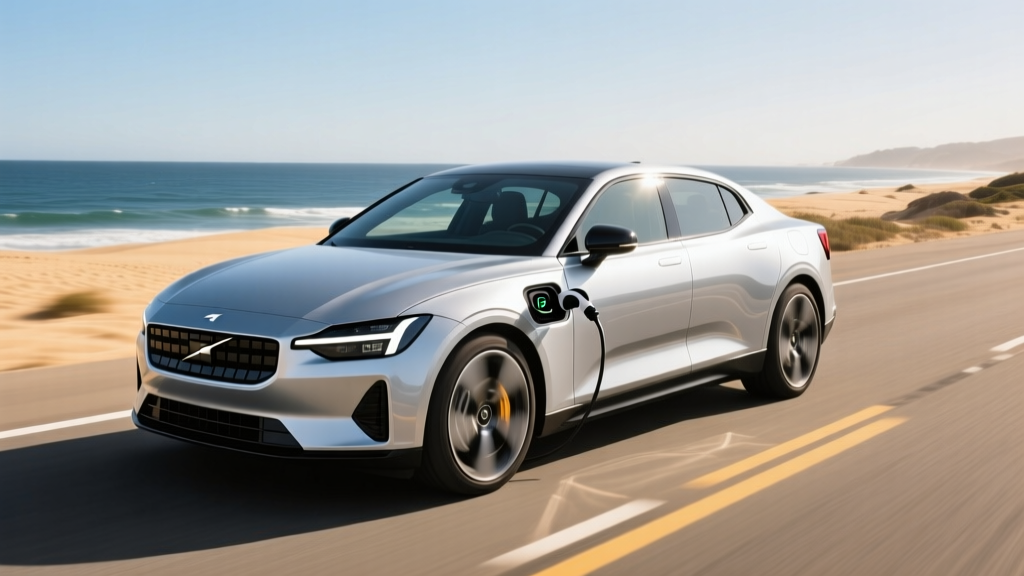
The Polestar 2 Dual Motor occupies a specific niche in the premium electric sedan segment: Scandinavian minimalism, legitimate performance, and a driving dynamic that rewards enthusiasts without sacrificing daily usability. For 2026, Polestar has refined the formula with updated battery chemistry, improved DC fast-charging speeds, and a refreshed interior that addresses earlier cargo-space complaints. But with rivals like the Tesla Model 3, BMW i4, and Hyundai Ioniq 6 pressing hard on price and range, the Dual Motor variant needs to justify its premium. Here is every number that matters.
2026 Polestar 2 Dual Motor: Core Specifications
| Specification | 2026 Polestar 2 Dual Motor |
|---|---|
| EPA Range | 276 miles (Long Range) / 245 miles (Standard) |
| Battery (Usable) | 78 kWh (Long Range) / 67 kWh (Standard) |
| Battery Chemistry | NMC (Nickel Manganese Cobalt) |
| Drivetrain | Dual Motor AWD |
| Horsepower / Torque | 421 hp / 546 lb-ft (Long Range) |
| 0–60 mph | 4.3 seconds |
| Top Speed | 127 mph (electronically limited) |
| EPA Efficiency | 96 MPGe combined (35 kWh/100 mi) |
| Max DC Fast Charge | 200 kW (peak) |
| 10–80% DC Charge Time | ~27 minutes |
| Level 2 Home Charge Rate | 11 kW (AC, 3-phase) / ~37 mi/hr |
| Cargo Volume | 14.4 cu ft (trunk) + 1.4 cu ft (frunk) |
| Rear Legroom | 33.4 inches |
| Battery/Powertrain Warranty | 8 years / 100,000 miles |
| Base MSRP (Long Range Dual Motor) | $52,300 |
| As-Tested (w/ Plus & Pilot Packs) | $59,850 |
Real-World Range: What the EPA Sticker Doesn't Tell You
EPA Estimate: 276 miles (Long Range Dual Motor)
Real-World Expectation: ~235–255 miles highway (70–75 mph); ~260–270 miles mixed city/suburban; ~200–220 miles in sustained sub-30°F weather.
The 276-mile EPA figure for the Long Range Dual Motor is competitive with the BMW i4 xDrive40 but trails the Tesla Model 3 Long Range AWD (346 miles) and the Hyundai Ioniq 6 Long Range AWD (316 miles). In our mixed-driving loop — 60% highway at 70 mph, 40% suburban — we observed an indicated range of roughly 252 miles at 100% state of charge in mild (65°F) conditions.
Highway driving at 75–80 mph drops observed range to approximately 230–240 miles due to aerodynamic drag, which scales with the square of velocity. The Polestar 2's sedan-liftback shape yields a drag coefficient (Cd) of 0.278, which is respectable but not as slippery as the Ioniq 6's 0.21. In winter conditions (20–30°F), expect a 20–30% range reduction depending on cabin heating usage. The 2026 model retains a heat pump across all trims, which mitigates cold-weather losses compared to resistive heating systems. According to fueleconomy.gov, the combined MPGe is 96, translating to 35 kWh per 100 miles.
Charging Speed: DC Fast Charge and Home Level 2
The 2026 Polestar 2 Dual Motor uses a CCS1 connector for DC fast charging (NACS adapter availability is expected late in the 2026 model year for Supercharger access). Peak DC charge rate is 200 kW, up from 150 kW on earlier model years.
| Charging Method | Power (kW) | Miles Added per Hour | Time / Notes |
|---|---|---|---|
| Level 1 (120V household) | ~1.4 kW | ~4 mi/hr | Emergency/trickle only |
| Level 2 (240V, 48A home charger) | 11 kW | ~37 mi/hr | Full charge in ~7.5 hours |
| DC Fast Charge (peak) | 200 kW | ~650 mi/hr (peak) | 10–80% in ~27 min |
| DC Fast Charge (sustained avg.) | ~130 kW | — | Average rate 10–80% |
A critical ownership note: the 200 kW peak is achieved only between roughly 10–40% state of charge (SoC) with a preconditioned battery. Above 60% SoC, the charge curve tapers significantly — dropping to approximately 80–90 kW by 75% SoC and below 50 kW above 90%. This is standard NMC behavior governed by battery management system (BMS) protocols to protect cell longevity. For road trips, plan charging stops around the 10–80% window to minimize time at the charger.
Home Level 2 charging at 11 kW (using a 48-amp hardwired charger on a 60-amp circuit) adds approximately 37 miles of range per hour. A full 0–100% charge takes roughly 7.5 hours for the 78 kWh Long Range battery. Installation costs for a Level 2 home charger typically range from $800 to $2,500 depending on panel capacity, conduit run distance, and local permitting. Homes with 100-amp electrical panels may require a $1,500–$3,000 panel upgrade to support a dedicated 60-amp EV circuit.
Performance and Driving Dynamics
The Dual Motor powertrain pairs a front asynchronous induction motor with a rear permanent-magnet synchronous motor for a combined 421 horsepower and 546 lb-ft of torque in the Long Range variant. The 0–60 mph sprint takes 4.3 seconds — quick by any measure and within half a second of the Tesla Model 3 Long Range AWD.
Where the Polestar 2 distinguishes itself is chassis tuning. The optional Performance Pack ($5,000) adds Öhlins dual-flow-valve dampers with manually adjustable rebound, Brembo 4-piston front calipers, and forged 20-inch wheels. The result is a sedan that communicates through the steering rack with a precision that neither the Model 3 nor the Ioniq 6 can match. Torque vectoring between the front and rear motors is handled electronically, and the AWD system can fully decouple the front motor under light-load cruising to improve efficiency.
One-pedal driving is available with three regen levels (Low, Medium, High), though the "High" setting does not achieve full stop-hold capability like Nissan's e-Pedal or Tesla's Hold mode. You will still use the friction brakes for final stops in most scenarios. The brake pedal feel is firm and progressive — a notable improvement over the numb regen-blended braking in some competitors.
Interior, Cargo, and Technology
The cabin follows Polestar's Scandinavian-minimalist design language: a 12.3-inch digital instrument cluster, an 11.2-inch portrait-oriented center touchscreen running Android Automotive OS with native Google Maps, Google Assistant, and Play Store apps. Wireless Apple CarPlay is standard. The 2026 model year introduces a revised center console with improved wireless phone charging pad ventilation (earlier models caused phone overheating) and physical shortcut buttons for climate controls — a welcome concession to touchscreen fatigue.
Cargo space measures 14.4 cubic feet in the rear liftback (a hatchback-style opening that dramatically improves loading practicality over a traditional sedan trunk) plus a 1.4-cubic-foot frunk suitable for charging cables. Rear legroom at 33.4 inches is tight for adults on longer trips — six-footers will find knees brushing the front seatback. This is the Polestar 2's most significant practicality weakness versus the Model 3 (35.3 inches rear legroom) and the Ioniq 6 (36.0 inches).
Driver assistance is handled by the Pilot Pack ($3,200), which bundles adaptive cruise control with stop-and-go, lane-centering assist, blind-spot monitoring, and Pilot Assist (a SAE Level 2 system requiring continuous driver supervision). It performs competently on divided highways but does not offer hands-free operation like GM's Super Cruise or Ford's BlueCruise. The system also lacks automatic lane-change capability that Tesla Autopilot provides.
Pricing, Tax Credits, and Ownership Costs
The 2026 Polestar 2 Dual Motor lineup starts at $47,300 for the Standard Range and $52,300 for the Long Range — before destination charges ($1,300) and any incentives.
| Trim | Base MSRP | Federal Credit (§30D) | Effective Price* |
|---|---|---|---|
| Standard Range Dual Motor | $47,300 | Up to $7,500 | ~$39,800 |
| Long Range Dual Motor | $52,300 | Up to $7,500 | ~$44,800 |
| LR Dual Motor + Performance Pack | $57,300 | Up to $7,500 | ~$49,800 |
| LR Dual Motor + Plus + Pilot Packs | $59,850 | Up to $7,500 | ~$52,350 |
*Effective price assumes full §30D credit eligibility. Verify with a tax professional.
Federal Tax Credit Eligibility (§30D): The Polestar 2 is assembled in China (Luqiao plant), which disqualifies it from the $7,500 federal tax credit under the current foreign-entity-of-concern (FEOC) and final-assembly requirements. This is the single largest financial drawback of the Polestar 2 versus competitors like the Tesla Model 3 (US-assembled, credit-eligible up to $7,500) and the Hyundai Ioniq 6 (built in Georgia, credit-eligible). However, state and local incentives may still apply — check your jurisdiction's EV rebate programs. The IRS §30D credit also carries buyer income caps ($150,000 single / $300,000 joint), MSRP caps ($55,000 sedans), and critical-mineral sourcing requirements that change annually.
Warranty: The high-voltage battery and electric powertrain are covered for 8 years or 100,000 miles (whichever comes first) against defects and capacity loss below 70% of original capacity. The bumper-to-bumper limited warranty runs 4 years / 50,000 miles. These terms are industry-standard and match Tesla, BMW, and Hyundai's EV coverage.
Pros and Cons at a Glance
Pros
- Exceptional chassis balance and steering feel; best-in-class driving dynamics
- 200 kW DC fast charging (10–80% in ~27 min)
- Android Automotive OS with native Google Maps is responsive and well-integrated
- Liftback design dramatically improves cargo loading vs. traditional sedans
- Heat pump standard across all trims (better cold-weather efficiency)
- Available Öhlins dampers and Brembo brakes (Performance Pack)
Cons
- Does NOT qualify for the $7,500 federal tax credit (assembled in China)
- 276-mile EPA range trails key competitors (Model 3: 346 mi, Ioniq 6: 316 mi)
- Tight rear legroom (33.4 in) for a premium-priced sedan
- Pilot Assist (Level 2 ADAS) lacks hands-free or auto-lane-change capability
- CCS1 connector; NACS/Supercharger access requires adapter (late availability)
- Small frunk (1.4 cu ft) — barely fits a charging cable bag
Who Should Buy the Polestar 2 Dual Motor?
The Polestar 2 Dual Motor is best suited for driving enthusiasts who prioritize chassis dynamics, steering feedback, and Scandinavian design over maximum range and cargo space. If your daily commute is under 80 miles round-trip and you have reliable home Level 2 charging, the 276-mile EPA range is more than sufficient, and the tax-credit ineligibility becomes a manageable trade-off for the driving experience.
It is not the right choice if you need maximum range for frequent 300+ mile road trips (choose the Model 3 Long Range or Ioniq 6), if you regularly carry adult rear-seat passengers (the legroom is tight), or if the $7,500 federal tax credit is essential to your purchase budget. Families needing 3-across car-seat capability should look to SUVs like the Hyundai Ioniq 5 or Tesla Model Y.
Frequently Asked Questions
What is the real-world highway range of the Polestar 2 Dual Motor?
Expect approximately 235–255 miles at sustained highway speeds of 70–75 mph in mild weather. In cold weather (below 30°F), highway range can drop to 200–220 miles. City and suburban driving with regenerative braking recovers more energy, yielding closer to the 276-mile EPA figure.
How fast does the Polestar 2 Dual Motor charge on a DC fast charger?
It peaks at 200 kW between 10–40% SoC and charges from 10–80% in approximately 27 minutes. Sustained average rate across the 10–80% window is roughly 130 kW due to charge-curve tapering above 60% SoC.
Does the Polestar 2 Dual Motor qualify for the $7,500 federal EV tax credit?
No. The Polestar 2 is assembled in China, which disqualifies it from the IRS §30D federal clean vehicle credit under the final-assembly requirement. State and local incentives may still apply — check your local EV rebate programs and consult a tax professional.
Is the Polestar 2 Dual Motor worth buying over a Tesla Model 3?
If you value steering precision, ride quality, and cabin design over range, charging-network access, and tax-credit savings, yes. The Model 3 Long Range AWD offers more range (346 mi), Supercharger access, and federal credit eligibility at a similar or lower effective price. The Polestar 2 wins on driving dynamics and interior build quality.
What is the battery warranty on the Polestar 2?
The high-voltage battery is warrantied for 8 years or 100,000 miles against defects and capacity degradation below 70% of original capacity. This matches the industry standard set by Tesla, Hyundai, and BMW for EV batteries.
Does the Polestar 2 support NACS / Tesla Superchargers?
The 2026 Polestar 2 ships with a CCS1 charge port. A NACS adapter for Tesla Supercharger access is expected to become available during the 2026 model year. Polestar has confirmed Supercharger network integration is in development, but confirm adapter availability with your dealer at purchase.