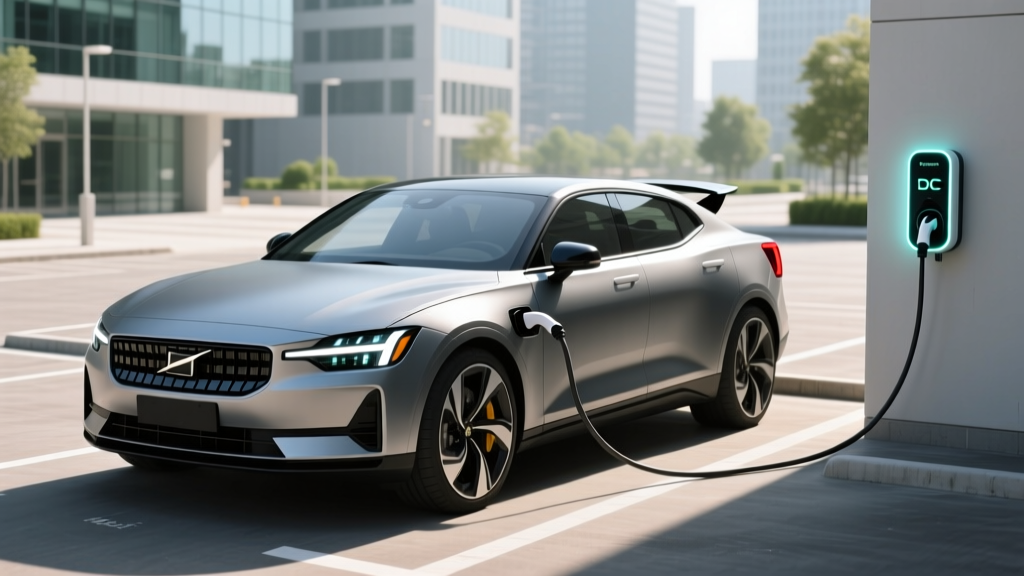
The Polestar 2 occupies a distinct space in the premium electric sedan market: Scandinavian minimalism, credible performance, and a charging architecture that has evolved significantly since the car's 2021 U.S. launch. For 2026, the Polestar 2 lineup features a refreshed battery pack, an updated infotainment stack, and — crucially for buyers researching Polestar DC fast-charging capability — improved charge-curve management that makes road-trip charging meaningfully faster than earlier model years.
This review breaks down the Polestar 2's DC fast-charging performance, real-world range, ownership costs, and how it stacks up against rivals like the Tesla Model 3, BMW i4, and Hyundai Ioniq 6. If you've been searching for concrete Polestar DC charging data rather than marketing claims, you're in the right place.
2026 Polestar 2: Quick Verdict
The 2026 Polestar 2 delivers a strong blend of real-world range, respectable DC fast-charging speeds, and one of the most intuitive infotainment systems in the segment (Google built-in). Its 82 kWh usable battery (NMC chemistry) provides an EPA-estimated 320 miles in the single-motor configuration, and the dual-motor AWD variant sacrifices only modest range for substantially more power. Where the Polestar 2 wins is in build quality, ride refinement, and transparency — the window sticker range is achievable in mixed driving. Where it trails is in peak DC charge rate versus the Hyundai/Kia 800V platforms and Tesla's Supercharger ecosystem.
Range, Battery, and Efficiency
| Specification | Single Motor (LRSM) | Dual Motor (LRDM) |
|---|---|---|
| EPA Range | 320 miles | 298 miles |
| Battery (usable) | 82 kWh | 82 kWh |
| Chemistry | NMC (Nickel Manganese Cobalt) | NMC |
| MPGe (combined) | 110 MPGe | 100 MPGe |
| Efficiency (kWh/100 mi) | 30 kWh/100 mi | 33 kWh/100 mi |
| Drivetrain | RWD | AWD (dual motor) |
The EPA's 320-mile estimate for the Long Range Single Motor is a solid figure, but real-world results depend heavily on conditions:
- Mixed city/suburban driving (65–70°F): Expect 290–315 miles. The Polestar 2's strong regenerative braking recovers energy effectively in stop-and-go traffic.
- Sustained highway driving (75 mph): Plan for 255–280 miles. Aerodynamic drag at speed cuts into the NMC pack's usable capacity faster than city driving.
- Cold weather (below 30°F): Range drops 20–30%, yielding roughly 225–260 miles. The Polestar 2 includes a heat pump (standard on 2025+ models), which mitigates cabin-heating energy draw but does not fully eliminate cold-weather losses. Battery preconditioning helps, but NMC chemistry is inherently more temperature-sensitive than LFP.
The 82 kWh usable capacity (approximately 85 kWh gross) uses NMC cells — chosen for their higher energy density compared to LFP. This gives the Polestar 2 its competitive range in a relatively compact sedan footprint. The trade-off: NMC batteries are more sensitive to repeated 100% charges and extreme temperatures. Polestar recommends daily charging to 80–90% and reserving 100% for road trips, a standard NMC care practice. For buyers who prioritize daily 100% charging without degradation concern, an LFP-equipped vehicle like the Tesla Model 3 RWD may be more suitable.
According to fueleconomy.gov, the 2026 Polestar 2 Long Range Single Motor achieves 110 MPGe combined — competitive with the BMW i4 eDrive40 (109 MPGe) but trailing the Tesla Model 3 Long Range (132 MPGe) and Hyundai Ioniq 6 SE Long Range (140 MPGe). If efficiency-per-mile is your top metric, the Polestar 2 is mid-pack; if you value build quality and ride comfort alongside efficiency, it punches above its weight.
DC Fast Charging & Home Charging Speeds
This is where most Polestar DC research leads, and the numbers tell a nuanced story. The 2026 Polestar 2 supports a peak DC fast-charge rate of 200 kW on its Long Range models (up from 155 kW on pre-2024 models). That peak is achieved at a low state of charge (roughly 10–25% SoC) and tapers as the battery fills — a characteristic of all lithium-ion packs, but the curve shape matters for real-world trip planning.
| Charge Level | Power / Rate | Time or Miles Added |
|---|---|---|
| Level 1 (120V household) | ~1.4 kW | ~4 miles per hour |
| Level 2 (240V home, 48A) | 11 kW | ~33 miles per hour; full charge ~8 hrs |
| DC Fast Charge (peak) | 200 kW | 10–80% in approximately 28 minutes |
| DC Fast Charge (sustained avg.) | ~130–145 kW | Average rate between 10–80% |
What this means on a road trip: A 10–80% session takes about 28 minutes under ideal conditions (preconditioned battery, warm ambient temperature, a functioning 200+ kW charger). The charge curve holds above 100 kW through roughly 60% SoC, then tapers progressively. From 80–100%, expect an additional 25–30 minutes — so plan your stops around the 80% mark for the best time-to-miles ratio.
Compared to competitors:
- Hyundai Ioniq 6 (800V architecture): Peaks at 235 kW, 10–80% in ~18 minutes. The Ioniq 6's 800V system sustains higher rates longer.
- Tesla Model 3 Long Range: Peaks at 250 kW on V3 Superchargers, 10–80% in ~25 minutes, with access to the most reliable public charging network in North America.
- BMW i4 eDrive40: Peaks at 200 kW, 10–80% in ~31 minutes — comparable to the Polestar 2.
The Polestar 2 uses the CCS1 connector for DC fast charging (and J1772 for Level 2 AC). It does not currently feature a native NACS port, though Polestar has announced future models will adopt NACS. For 2026, CCS-to-NACS adapters are available for Supercharger access where Tesla has opened the network to non-Tesla vehicles — but adapter-dependent charging adds friction. If seamless Supercharger access is a priority, note this limitation.
Home charging: The onboard 11 kW AC charger is competitive. On a 48-amp Level 2 home circuit (the most common dedicated EV circuit), you'll add roughly 33 miles of range per hour, or fully recharge the 82 kWh pack in about 8 hours. Most owners who charge overnight will never need public AC charging. Installation of a 240V/48A home charger typically costs $800–$2,000 including equipment and electrician labor, depending on panel capacity and run length.
Performance and Driving Dynamics
| Metric | Single Motor (LRSM) | Dual Motor (LRDM) | Dual Motor + Performance Pack |
|---|---|---|---|
| Horsepower | 299 hp | 421 hp | 476 hp |
| Torque | 361 lb-ft | 546 lb-ft | 546 lb-ft |
| 0–60 mph | 5.9 sec | 4.3 sec | 4.0 sec |
| Drivetrain | RWD | AWD | AWD |
| Top Speed | 100 mph (limited) | 125 mph (limited) | 125 mph (limited) |
The single-motor variant is the value play — 299 hp and a 5.9-second 0–60 time is plenty for daily driving and highway merging. The dual-motor models transform the Polestar 2 into a genuine sports sedan competitor, with the Performance Pack's Öhlins dampers and Brembo brakes (included in the $5,500 Performance Pack) delivering track-capable handling. Ride quality in the standard dual-motor is firm but composed; the Performance Pack's manually adjustable Öhlins are best suited for enthusiasts willing to tune them.
Regenerative braking offers three settings (off, low, high) but not true one-pedal driving in the sense of bringing the car to a complete stop. You'll still use the friction brake to come to a full halt. This is a deliberate Polestar design choice — some drivers prefer it, others miss full one-pedal capability.
Pricing, Trims, and Federal Tax Credit Eligibility
| Trim | Base MSRP | Est. After §30D Credit* |
|---|---|---|
| Long Range Single Motor | $49,900 | $42,400 |
| Long Range Dual Motor | $54,900 | $47,400 |
| LRDM + Performance Pack | $60,400 | $52,900 |
*Federal §30D tax credit eligibility is NOT guaranteed and depends on multiple factors. The credit can be up to $7,500, but requires:
- MSRP cap: Sedans must be under $55,000 MSRP. The LRSM qualifies; the LRDM qualifies; the Performance Pack trim at $60,400 exceeds the cap and is ineligible.
- Buyer income limits: Modified AGI must not exceed $150,000 (single), $225,000 (head of household), or $300,000 (joint). Check IRS.gov §30D guidelines for current thresholds.
- Battery sourcing: At least a percentage of critical minerals and battery components must meet North American sourcing/free-trade-agreement requirements. These thresholds tighten annually. Confirm current-year compliance on the IRS qualified vehicles list before purchasing.
- Point-of-sale transfer: As of 2024, buyers can transfer the credit to the dealer at purchase, reducing the sale price directly rather than waiting for a tax refund. The dealer must be registered with the IRS energy credits portal.
Always consult a tax professional and verify eligibility on IRS.gov before relying on the credit in your purchase decision. Rules change and vary by buyer situation.
Destination charges, dealer fees, and optional packages (Plus Pack, Pilot Pack, Nappa leather) add to the out-the-door price. A well-equipped LRSM with the Plus and Pilot packages typically lands around $54,000–$56,000 before any credit.
Interior, Tech, and Cargo Space
The Polestar 2's interior is its strongest differentiator. The 11.2-inch portrait touchscreen runs Android Automotive OS with Google built-in — meaning Google Maps, Google Assistant, and the Play Store are native to the car, not mirrored from your phone. Google Maps navigation includes real-time charger availability and automatic battery preconditioning when a DC fast charger is set as your destination. This is one of the best-executed EV navigation systems available.
The 12.3-inch digital driver display is clean and configurable. Wireless Apple CarPlay is standard for iPhone users who prefer that interface. A 15-watt wireless phone charger, USB-C ports (front and rear), and a Harman Kardon premium audio system (included in the Plus Pack) round out the tech.
| Dimension | Measurement |
|---|---|
| Cargo (rear seats up) | 14.4 cu ft (liftback) |
| Cargo (rear seats folded) | 38.7 cu ft |
| Frunk (front trunk) | 1.4 cu ft (cable storage) |
| Front legroom | 42.2 in |
| Rear legroom | 34.0 in |
| Wheelbase | 107.7 in |
The liftback design gives the Polestar 2 more practical cargo access than a traditional sedan trunk, though the 14.4 cu ft figure trails the Tesla Model 3 (23 cu ft) and Hyundai Ioniq 6 (12.3 cu ft trunk but with a less usable opening). Rear legroom at 34.0 inches is adequate for adults on shorter trips but tight for taller passengers on long drives — this is a compact executive sedan, not a family hauler.
Driver assistance: The Polestar 2 comes standard with adaptive cruise control, lane-keeping assist, blind-spot monitoring, and automatic emergency braking. The available Pilot Pack adds Pilot Assist (a Level 2 system combining lane centering and adaptive cruise), a 360-degree camera, and Park Assist Pilot. This is SAE Level 2 driver assistance — the driver must remain fully engaged at all times. It is not self-driving, and it does not offer hands-free operation like GM's Super Cruise or Ford's BlueCruise.
Warranty and Long-Term Ownership
| Coverage | Term |
|---|---|
| Basic Vehicle | 4 years / 50,000 miles |
| Powertrain | 4 years / 50,000 miles |
| Battery | 8 years / 100,000 miles (retains ≥70% capacity) |
| Corrosion | 12 years / unlimited miles |
| Roadside Assistance | 4 years / unlimited miles |
The 8-year/100,000-mile battery warranty guarantees that the pack will retain at least 70% of its original capacity. This is industry-standard — matching Tesla, BMW, and Hyundai — though some competitors (Genesis Electrified G80 at 10 years/100,000 miles) offer longer coverage. NMC degradation in the Polestar 2 has been moderate in early owner data; expect roughly 8–12% capacity loss over the first 100,000 miles under normal use patterns (avoiding frequent 100% charges and DC fast-charging exclusively).
Polestar's service network operates through Volvo dealerships (Polestar is a Volvo/Geely brand), which gives it broader service access than some EV startups but means you're sharing service bays with Volvo customers. Scheduled maintenance is minimal — cabin air filter, brake fluid, tire rotation — and costs significantly less than ICE sedan maintenance over a 5-year ownership period.
Pros and Cons
- Google Automotive infotainment is best-in-class with native EV route planning and preconditioning
- Real-world range closely tracks EPA estimates in mixed driving
- Premium interior materials and Scandinavian design stand out in the segment
- Strong regenerative braking with adjustable levels
- Liftback cargo design more practical than traditional sedan trunks
- Dual Motor Performance Pack delivers genuine sports-sedan dynamics
- Peak 200 kW DC charge rate trails Hyundai/Kia 800V competitors
- CCS1 port requires adapter for Tesla Supercharger access
- Rear legroom is tight for taller passengers (34.0 in)
- No true one-pedal driving (car creeps at low speed)
- Performance Pack trim exceeds $55K MSRP cap — ineligible for federal credit
- Service network shares capacity with Volvo — appointment wait times vary by market
Who Should Buy the Polestar 2?
Choose the Polestar 2 if:
- You want a premium compact EV sedan with excellent infotainment and don't prioritize the absolute fastest DC charging in the segment.
- You value ride quality, build materials, and design over maximum rear-seat space or cargo volume.
- Your typical commute is under 80 miles round-trip and you have reliable home Level 2 charging.
- You prefer Google Maps/Assistant integration natively in the car.
Look elsewhere if:
- You take frequent 400+ mile road trips and want the fastest possible DC charge stops (consider the Hyundai Ioniq 6 or Tesla Model 3).
- You need regular rear-seat adult passengers (consider the Tesla Model S or BMW i5).
- You want seamless Tesla Supercharger access without adapters (choose a Tesla or a NACS-native vehicle).
- You plan to charge to 100% daily and want LFP chemistry for maximum longevity (consider the Tesla Model 3 RWD).
Frequently Asked Questions
What is the real-world range of the 2026 Polestar 2?
The EPA rates the Long Range Single Motor at 320 miles and the Dual Motor at 298 miles. In real-world mixed driving at moderate temperatures, expect 290–315 miles (single motor) and 270–290 miles (dual motor). Sustained highway driving at 75 mph reduces this to approximately 255–280 miles, and cold weather below 30°F can drop range by 20–30%.
How fast does the Polestar 2 charge on DC fast chargers?
The 2026 Polestar 2 peaks at 200 kW DC and charges from 10–80% in approximately 28 minutes under ideal conditions (preconditioned battery, warm temperature, capable charger). The sustained average rate between 10–80% is roughly 130–145 kW. This is competitive with the BMW i4 but slower than the Hyundai Ioniq 6's 800V system (~18 minutes 10–80%).
Does the Polestar 2 qualify for the $7,500 federal EV tax credit?
The Long Range Single Motor ($49,900 MSRP) and Long Range Dual Motor ($54,900 MSRP) fall under the $55,000 sedan MSRP cap and may qualify — provided the buyer meets income limits (under $150K single / $300K joint) and the vehicle meets battery-sourcing requirements for the purchase year. The Performance Pack trim at $60,400 exceeds the MSRP cap and is ineligible. Always verify on IRS.gov and consult a tax professional.
Is the Polestar 2 worth buying over the Tesla Model 3 or Hyundai Ioniq 6?
It depends on your priorities. The Tesla Model 3 Long Range offers more range (358 mi EPA), faster Supercharger access, and better efficiency (132 MPGe) at a similar price. The Hyundai Ioniq 6 charges faster (10–80% in ~18 min) and is more efficient (140 MPGe). The Polestar 2 wins on interior quality, ride comfort, and Google-native infotainment. If build quality and driving refinement matter more than peak specs, the Polestar 2 is compelling. If you optimize for range, efficiency, or charge speed, the competitors edge ahead.
What connector does the Polestar 2 use?
The 2026 Polestar 2 uses CCS1 for DC fast charging and J1772 for AC Level 2 charging. It does not have a native NACS (Tesla) port. CCS-to-NACS adapters are available for access to open Tesla Superchargers, but this adds a step compared to native NACS vehicles.
How much does it cost to charge a Polestar 2 at home?
At the U.S. average residential electricity rate of ~$0.16/kWh, fully charging the 82 kWh battery costs approximately $13.12. For a typical 30-mile daily commute (~9 kWh), daily home charging costs about $1.44 — roughly one-quarter the cost of gasoline for an equivalent 30 MPG sedan at $3.50/gallon.
Does the Polestar 2 have one-pedal driving?
Not in the strict sense. The Polestar 2 offers adjustable regenerative braking (off, low, high), but the car will creep at very low speeds rather than coming to a complete stop. You still need the friction brake pedal for full stops. This is a deliberate engineering choice by Polestar.