Quick Verdict: The Enthusiast's Polestar 2
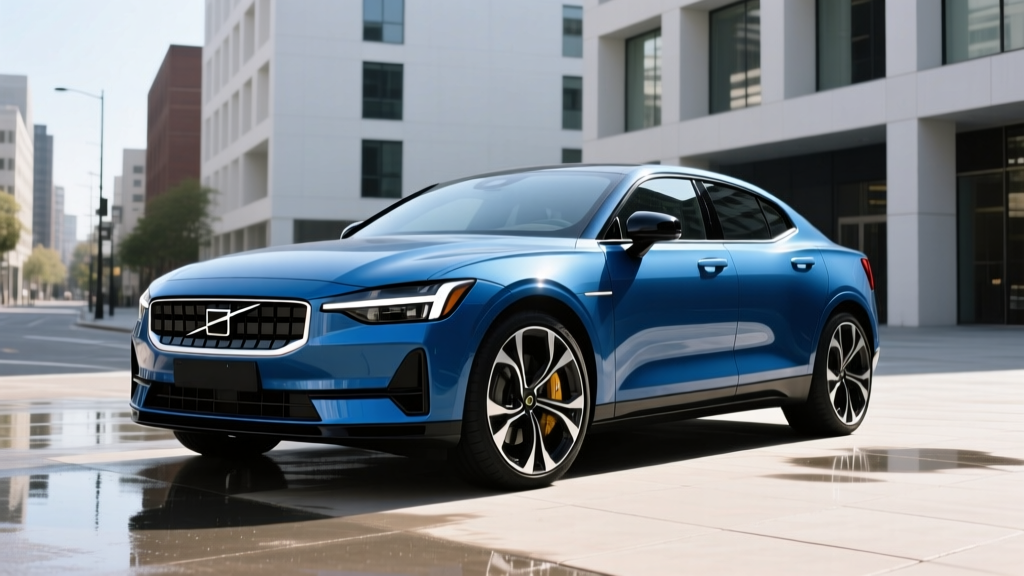
The Polestar 2 BST (Battest) Edition is the Swedish-Chinese brand's love letter to driving enthusiasts who want an electric sportback that can genuinely challenge a BMW M3 on a back road while still functioning as a practical daily driver. With 476 horsepower, Öhlins-tuned suspension, and a 78 kWh (usable) NMC battery delivering an EPA-estimated 270 miles of range, the BST Edition trades some efficiency for serious dynamic capability. It's not the longest-range EV in its class, nor the most practical — but it might be the most engaging to drive.
For 2026, the BST Edition continues as a limited-run variant sitting above the standard Long Range Dual Motor. It carries a premium price and faces stiff competition from the Tesla Model 3 Performance, BMW i4 M50, and Hyundai Ioniq 5 N. Here's everything you need to know before signing the order sheet.
Range, Efficiency, and Real-World Expectations
Real-World Expectation: Plan for 230–250 miles on highway road trips at 70–80 mph; expect 190–220 miles in sub-30°F winter conditions with cabin heating. City driving with regenerative braking can push closer to the 270-mile sticker.
The Polestar 2 BST Edition uses a 78 kWh usable (82 kWh gross) lithium-ion battery with NMC (nickel manganese cobalt) chemistry. NMC offers higher energy density than LFP, which is necessary given the BST's performance-oriented weight and power draw, but it does mean you'll want to follow the 20–80% daily charging guideline to maximize long-term battery health.
Efficiency comes in at approximately 98 MPGe combined (34 kWh/100 mi) according to fueleconomy.gov. That's respectable for a 476-hp dual-motor AWD sportback, though it trails the more efficiency-focused Tesla Model 3 Long Range AWD (134 MPGe). The BST's stickier 245/35R21 Pirelli P Zero tires and stiffer suspension tuning create measurable rolling-resistance and aero penalties compared to the standard Polestar 2.
If your commute is mostly suburban and city driving under 50 mph, you'll see range numbers close to or even exceeding the EPA estimate thanks to aggressive regenerative braking (one-pedal mode is standard). But sustained highway driving at 75+ mph — especially in the mountains or in cold weather — will pull that number down meaningfully. On a 300-mile road trip, plan for one DC fast-charge stop.
Charging Speed: DC Fast, Level 2, and Level 1
| Charging Level | Power / Rate | Time or Miles Added |
|---|---|---|
| DC Fast Charge (peak) | 205 kW max (CCS1) | 10–80% in ~28 minutes |
| DC Fast Charge (sustained avg) | ~120–140 kW (10–80%) | Avg ~4.5 mi/min during session |
| Level 2 (home / public AC) | 11 kW onboard charger | ~36 miles of range per hour; 0–100% in ~8 hours |
| Level 1 (120V outlet) | ~1.4 kW | ~4 miles of range per hour |
The Polestar 2 BST Edition peaks at 205 kW on a compatible DC fast charger. In practice, that peak rate holds roughly between 10–40% state of charge before tapering. The 10–80% session takes approximately 28 minutes at a 350 kW Electrify America or similar station — competitive with the BMW i4 but noticeably slower than the Hyundai Ioniq 5 N's 800V architecture (10–80% in ~18 minutes).
One important note: the Polestar 2 still uses a CCS1 connector in North America. With the industry shifting to NACS (Tesla's connector), Polestar has confirmed future models will adopt NACS, and a CCS-to-NACS adapter is available for Supercharger access. This works, but adds a step compared to native NACS vehicles.
At home on a Level 2 charger (240V, 48A circuit), the 11 kW onboard charger replenishes the battery at roughly 36 miles of range per hour. A full charge from near-empty takes about 8 hours — easily manageable overnight. For most owners, plugging in each evening and waking up to a full battery eliminates any range concern for daily driving.
Performance: 476 HP and Öhlins-Tuned Dynamics
| Specification | Polestar 2 BST Edition |
|---|---|
| Powertrain | Dual Motor AWD |
| Horsepower | 476 hp (with Performance software upgrade) |
| Torque | 502 lb-ft |
| 0–60 mph | 4.1 seconds |
| Top Speed | 125 mph (electronically limited) |
| Battery (usable) | 78 kWh, NMC chemistry |
| EPA Range | 270 miles |
| MPGe (combined) | 98 MPGe |
| Suspension | Öhlins Dual Flow Valve (manually adjustable, 22 settings) |
| Brakes | Brembo 4-piston front calipers |
| Wheels / Tires | 21" forged alloy / Pirelli P Zero 245/35R21 |
The BST Edition's performance credentials go well beyond straight-line speed. The Öhlins Dual Flow Valve dampers are manually adjustable with 22 click settings — a feature typically reserved for aftermarket coilovers on dedicated track cars. Out of the box, Polestar sets them to a sporty-but-livable medium setting. Dial them softer for daily commuting; stiffen them up for canyon carving.
The 476 hp comes via Polestar's Performance software upgrade (included on the BST Edition), which unlocks additional output over the standard dual-motor's 408 hp. The result is a 4.1-second 0–60 mph time — quick, though the Tesla Model 3 Performance (2.9 seconds) and Hyundai Ioniq 5 N (3.25 seconds) are notably quicker off the line.
Where the BST fights back is chassis balance. The torque-vectoring AWD system, Brembo front brakes, and sticky P Zeros give it genuine corner-carving ability that feels more analog and connected than most EVs. The steering is well-weighted, and the car communicates grip levels clearly through the seat and wheel — rare praise in the electric era.
Pricing, Trims, and Federal Tax Credit Eligibility
| Detail | Amount |
|---|---|
| Base MSRP (BST Edition) | $63,000 (includes destination) |
| As-Tested (with Pilot & Plus packs) | ~$68,500 |
| Federal Tax Credit (§30D) — Potential | Up to $7,500 (see eligibility below) |
| Effective Price (after max credit) | ~$55,500–$61,000 |
The Polestar 2 BST Edition starts at approximately $63,000 including destination charges. Adding the Pilot Pack (advanced driver assists including Pixel LED headlights and 360° camera) and the Plus Pack (panoramic glass roof, premium audio, heated rear seats) pushes the as-tested price to around $68,500.
Federal tax credit eligibility under IRS §30D is complex and subject to change. Here's what applies as of the 2026 tax year:
- MSRP Cap: Sedans/sportbacks must be under $55,000 MSRP to qualify. The BST Edition at $63,000 exceeds this cap and does NOT qualify for the new-vehicle §30D credit.
- Income Cap: Even if MSRP qualified, buyer AGI must be ≤ $150,000 (single) / $300,000 (joint).
- Battery Sourcing: Critical minerals and battery component requirements must be met (Polestar has been working to qualify, but the MSRP cap is the binding constraint here).
- Point-of-Sale Transfer: Eligible credits can be transferred to the dealer at purchase for an upfront price reduction.
Bottom line: The Polestar 2 BST Edition's MSRP exceeds the $55,000 sedan cap, making it ineligible for the $7,500 federal new-vehicle tax credit. Some buyers may qualify for state-level incentives (check AFDC's state incentive database), and the used-EV credit (§25E, up to $4,000) may apply if purchasing a pre-owned BST Edition under $25,000 in future years. Consult a tax professional for your specific situation.
Interior, Tech, and Practicality
The Polestar 2 cabin is a study in Scandinavian minimalism. The 11.15-inch portrait touchscreen runs a Google Automotive OS infotainment system — meaning Google Maps, Google Assistant, and the Play Store are natively built in. Navigation with live traffic, voice commands, and Spotify integration work seamlessly without needing to pair your phone. Apple CarPlay is also available wirelessly.
The 12.3-inch digital driver display is clean and configurable, though it lacks the theatrical flair of some competitors. A head-up display is available in the Pilot Pack.
Cargo and passenger space:
- Rear cargo (behind rear seats): 14.4 cu ft (liftback design improves usability)
- Cargo (rear seats folded): 38.7 cu ft
- Front trunk (frunk): 1.4 cu ft (small — fits charging cables and a jacket)
- Rear legroom: 33.4 inches (tight for taller adults on long trips)
- Front headroom: 40.1 inches
The liftback hatch is genuinely useful — it opens wide and swallows more than the sedan-shaped cargo volume suggests. However, rear seat space is the BST's clear weakness versus the Tesla Model 3 or Hyundai Ioniq 5. Adults over 6 feet will find the rear quarters snug, especially with the optional panoramic roof eating into headroom.
Driver assistance: The Polestar 2 comes with Pilot Assist — a Level 2 (SAE) driver-assistance system offering adaptive cruise control with stop-and-go, lane-centering, and speed-limit recognition. It's competent on highways but requires hands-on-wheel supervision at all times. This is not a "self-driving" system; it's a driver aid comparable to Toyota Safety Sense or Honda Sensing, though less refined than GM's Super Cruise on mapped highways.
Battery Warranty and Long-Term Ownership
Polestar provides an 8-year / 100,000-mile battery and drive unit warranty, which covers defects and capacity loss below 70% of original capacity. This is industry-standard and matches Tesla, BMW, and Hyundai's coverage. The vehicle limited warranty runs 4 years / 50,000 miles, and roadside assistance is included for 4 years.
The NMC battery chemistry in the BST Edition is proven and widely used across the industry. Based on data from similar NMC packs in Volvo/Polestar vehicles, expect roughly 8–12% degradation over the first 100,000 miles under normal use. To maximize longevity:
- Set daily charge limit to 80–90% for routine driving
- Avoid frequent DC fast charging when Level 2 is available
- Use preconditioning before fast charging (the car does this automatically when a DC charger is set as a navigation destination)
- In extreme cold, plug in when parked to allow battery thermal management to operate on grid power
Insurance costs for the BST Edition tend to run 15–25% higher than the standard Polestar 2 due to the performance hardware and higher repair costs for Brembo brakes and Öhlins dampers. Get quotes before ordering.
Polestar 2 BST vs. Key Competitors
| Spec | Polestar 2 BST | Tesla Model 3 Perf. | BMW i4 M50 | Hyundai Ioniq 5 N |
|---|---|---|---|---|
| Price (base) | $63,000 | $54,990 | $67,300 | $66,100 |
| HP | 476 | 510 | 536 | 641 (N Grin Boost) |
| 0–60 mph | 4.1s | 2.9s | 3.7s | 3.25s |
| EPA Range | 270 mi | 296 mi | 245 mi | 221 mi |
| DC Fast Charge Peak | 205 kW | 250 kW | 205 kW | 238 kW (800V) |
| 10–80% Time | ~28 min | ~25 min | ~31 min | ~18 min |
| Federal Tax Credit | No (MSRP cap) | Yes (up to $7,500) | No (MSRP cap) | No (MSRP cap) |
| Cargo (rear) | 14.4 cu ft | 23 cu ft | 10 cu ft | 27.2 cu ft |
Choose the Tesla Model 3 Performance if: Straight-line speed, Supercharger access, and tax-credit eligibility are priorities. It's quicker, goes farther, costs less, and qualifies for the $7,500 credit.
Choose the BMW i4 M50 if: Brand cachet, a traditional luxury dealership experience, and a more spacious (if less practical) cabin matter. It's the most expensive and least efficient of the group.
Choose the Hyundai Ioniq 5 N if: You want the most track-capable EV with simulated gear shifts, 800V ultra-fast charging, and the most cargo space. It's the most fun on a circuit but the least efficient.
Pros, Cons, and Who Should Buy
Pros
- Öhlins adjustable suspension — rare at any price point
- Genuinely engaging steering and chassis dynamics
- Google Automotive OS is fast, intuitive, and well-integrated
- Liftback cargo versatility beats typical sedans
- Distinctive Scandinavian design inside and out
- Strong build quality and materials
Cons
- Not eligible for $7,500 federal tax credit (MSRP exceeds $55K sedan cap)
- 270-mile range trails key competitors
- Rear seat space is tight for taller adults
- CCS connector requires adapter for Tesla Supercharger access
- 28-minute 10–80% charge is slower than 800V rivals
- Insurance premiums run higher than standard trims
Who this EV suits best: The Polestar 2 BST Edition is ideal for the driving enthusiast who wants an EV daily driver with genuine sporting character — someone who'd previously cross-shopped a BMW 340i or Audi S4 and now wants to go electric without sacrificing engagement. It works well as a commuter and weekend canyon car but is less suited for families needing spacious rear seats or road-trippers prioritizing maximum range and fastest charging.
Frequently Asked Questions
What is the real-world range of the Polestar 2 BST Edition?
The EPA rates it at 270 miles. In real-world highway driving at 70–80 mph, expect 230–250 miles. In cold weather (below 30°F), plan for 190–220 miles. City driving with regen can match or slightly exceed the EPA number.
How fast does the Polestar 2 BST charge?
On a DC fast charger, it peaks at 205 kW and charges from 10–80% in approximately 28 minutes. At home on a Level 2 charger (240V, 11 kW), it adds about 36 miles of range per hour, with a full charge taking roughly 8 hours.
Does the Polestar 2 BST qualify for the federal EV tax credit?
No. Under current IRS §30D rules, sedans and sportbacks must have an MSRP at or below $55,000 to qualify. The BST Edition starts at $63,000, exceeding this cap. State incentives may still apply — check your local programs.
How much does the Polestar 2 BST cost after incentives?
The base MSRP is $63,000; a well-equipped example with the Pilot and Plus packs runs around $68,500. Without federal tax credit eligibility, the effective purchase price remains near MSRP minus any state or utility rebates you may qualify for.
Is the Polestar 2 BST worth buying vs. a Tesla Model 3 Performance?
It depends on priorities. The Model 3 Performance is faster (2.9s vs. 4.1s 0–60), has more range (296 vs. 270 mi), qualifies for the $7,500 tax credit, and offers native Supercharger access. The Polestar 2 BST counters with superior chassis tuning, Öhlins suspension, better build materials, and a more distinctive design. If driving feel matters more than spec-sheet dominance, the BST has a strong case.
What is the battery warranty on the Polestar 2 BST?
Polestar covers the battery and drive units for 8 years or 100,000 miles, whichever comes first. The warranty guarantees the battery will retain at least 70% of its original capacity during that period.
Can I charge a Polestar 2 BST at Tesla Superchargers?
Yes, but you'll need a CCS-to-NACS adapter. Polestar provides or supports adapter use for Supercharger access via the Tesla app. It works, but native NACS vehicles (like Tesla and newer Ford/GM EVs) plug in directly without an adapter.