Quick Verdict: The Polestar 2 2022 at a Glance
The 2022 Polestar 2 occupies a specific niche in the used EV market: a premium, Scandinavian-designed electric fastback with genuine driving dynamics and one of the most intuitive infotainment systems ever put in a car. Originally launched as Volvo's performance EV sub-brand, the 2022 model year was significant because it introduced the Single Motor variant alongside the existing Dual Motor, giving buyers a choice between maximum range and maximum performance.
Now in 2026, the 2022 Polestar 2 has depreciated into an attractive price bracket for used EV shoppers, often landing between $22,000 and $30,000 depending on mileage and condition. That puts it squarely in competition with used Tesla Model 3s, Hyundai Ioniq 5s, and BMW i4s. But does the math work when you factor in real-world range, charging infrastructure compatibility, and the used-EV tax credit?
| Spec | Single Motor (Standard Range) | Single Motor (Long Range) | Dual Motor (Long Range) |
|---|---|---|---|
| EPA Range | 249 miles | 270 miles | 249 miles |
| Battery (usable) | 67 kWh (LFP) | 75 kWh (NMC) | 75 kWh (NMC) |
| Horsepower | 231 hp | 231 hp | 408 hp |
| 0–60 mph | 7.0 sec | 7.0 sec | 4.5 sec |
| Drivetrain | RWD | RWD | AWD |
| Max DC Fast Charge | 135 kW | 150 kW | 150 kW |
| 10–80% DC Time | ~32 min | ~35 min | ~35 min |
| Level 2 AC Rate | 11 kW (~37 mi/hr) | 11 kW (~37 mi/hr) | 11 kW (~37 mi/hr) |
| MPGe (combined) | 107 MPGe | 107 MPGe | 101 MPGe |
| Efficiency | 31 kWh/100mi | 31 kWh/100mi | 33 kWh/100mi |
| Cargo Volume | 14.4 cu ft (trunk) + 1.4 cu ft (frunk) | ||
| Original MSRP (base) | $45,900 | $49,900 | $53,500 |
Real-World Range: What the EPA Number Doesn't Tell You
The Long Range Single Motor's EPA-rated 270 miles is respectable for the segment, but EPA stickers assume a mix of city and highway driving at moderate temperatures. In practice, the 2022 Polestar 2 tells a more nuanced story.
- EPA sticker: 270 miles
- City/suburban mixed driving (65°F): 255–270 miles (regen braking helps significantly in stop-and-go)
- Sustained highway (75 mph, 65°F): 225–245 miles
- Cold weather highway (30°F or below): 185–210 miles (expect 25–35% range loss without preconditioning)
- Cold weather city: 210–230 miles (heat pump, if equipped, mitigates some loss)
The Dual Motor Long Range suffers a slightly worse real-world outcome due to the second motor's parasitic drag and heavier curb weight, typically delivering 215–235 miles in mixed driving and 180–200 miles on cold highway runs. The Standard Range Single Motor's LFP battery actually handles cold somewhat better than NMC in terms of charge acceptance, but its smaller 67 kWh pack limits total range to roughly 200–220 miles in temperate mixed driving.
One critical note: the 2022 Polestar 2 does not come standard with a heat pump. It was available as part of the $3,500 Plus Pack. If you're shopping the used market in a cold climate, verifying heat pump presence is essential — it can mean a 15–20% difference in winter range. According to fueleconomy.gov, the combined efficiency across trims hovers between 101–107 MPGe, which translates to roughly 31–33 kWh per 100 miles.
Charging Speed and Infrastructure Compatibility
The 2022 Polestar 2 uses the CCS1 (Combined Charging System) connector, which remains the standard across most non-Tesla public DC fast-charging networks including Electrify America, EVgo, and ChargePoint. This matters in 2026 because while NACS (Tesla's connector) has become the industry standard going forward, CCS1 infrastructure is still widely available and will remain so for years.
However, Polestar announced that future models will adopt NACS, and CCS1 adapters for Tesla Supercharger access are available through third-party manufacturers. If Supercharger access is a priority, budget $150–$250 for a CCS-to-NACS adapter and verify compatibility with your specific vehicle's firmware.
| Charging Level | Power | Miles Added per Hour | Notes |
|---|---|---|---|
| Level 1 (120V household) | ~1.4 kW | ~4–5 mi/hr | Emergency/trickle only |
| Level 2 (240V home/public) | 11 kW (48A) | ~37 mi/hr | Full charge overnight (~7–8 hrs) |
| DC Fast Charge (Long Range) | Peak 150 kW | ~200+ mi in 30 min | 10–80% in ~35 min; tapers sharply above 80% |
| DC Fast Charge (Standard Range) | Peak 135 kW | ~180+ mi in 30 min | 10–80% in ~32 min; LFP accepts charge well at low SoC |
A crucial detail for road-trippers: the 2022 Polestar 2's charge curve is not class-leading. While it peaks at 150 kW, sustained charging between 20–60% SoC hovers closer to 100–120 kW before tapering. Compare this to a Hyundai Ioniq 5 (2022), which sustains 200+ kW on its 800V architecture and hits 10–80% in roughly 18 minutes. The Polestar 2 is adequate for road trips but not a charging-speed benchmark.
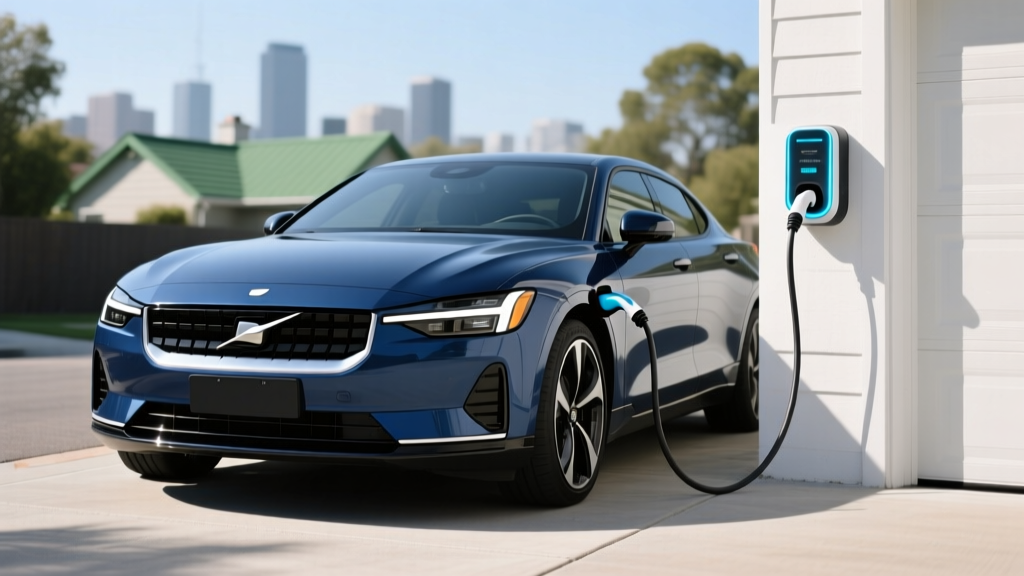
For home charging, the onboard 11 kW AC charger is a strong point — it's faster than the 7.7 kW chargers found in some competitors, meaning a full charge from empty takes roughly 7 hours on a properly installed 48-amp Level 2 circuit. Home installation for a 240V/48A charger typically runs $800–$2,000 depending on panel capacity and run length, per industry estimates. Always get a licensed electrician to assess your panel's headroom before committing to equipment.
Performance, Driving Dynamics, and Efficiency
The Dual Motor Long Range is the enthusiast's pick: 408 hp, 4.5 seconds to 60 mph, and standard all-wheel drive make it genuinely quick. The torque-vectoring rear axle (part of the $5,000 Performance Pack, which also includes Öhlins dampers and Brembo brakes) transforms the car from competent to engaging on back roads. Even without the Performance Pack, the Dual Motor's instant torque delivery and low center of gravity make it feel planted and responsive.
The Single Motor variants prioritize efficiency over excitement. The 7.0-second 0–60 time is perfectly adequate for highway merging and daily commuting, and the RWD layout gives the car a natural, balanced feel that some drivers prefer over AWD. The regenerative braking system offers adjustable levels through the infotainment system, though it doesn't quite achieve true one-pedal driving in the way a Nissan LEAF or Chevrolet Bolt does — you'll still use the friction brakes for final stops.
Efficiency-wise, the 2022 Polestar 2 averages 31–33 kWh per 100 miles depending on trim. That's middle-of-the-pack for the segment — a 2022 Tesla Model 3 Long Range achieves roughly 26 kWh/100mi, while the BMW i4 eDrive40 sits around 31 kWh/100mi. For context, at the national average electricity rate of ~$0.16/kWh, you're looking at roughly $5.00–$5.30 per 100 miles of driving, or about $0.05 per mile. Compare that to a 30 MPG gas car at $3.50/gallon, which costs about $0.12 per mile.
Interior, Tech, and Daily Usability
The Polestar 2's interior is where it makes its strongest case. The Google-built infotainment system (running Android Automotive OS natively) was industry-leading in 2022 and still holds up well in 2026. Google Maps with built-in EV routing, Google Assistant voice control, and native Spotify integration mean you don't need to plug in your phone for core functions. Apple CarPlay is also available via wired connection. The 11.2-inch portrait touchscreen is responsive, and the physical volume knob is a welcome ergonomic choice.
Build quality is excellent — typical Volvo/Polestar standards with vegan WeaveTech upholstery standard and optional Nappa leather. The pano roof (included in the Plus Pack) features an electrochromic dimming function that's a genuine conversation starter. Front seats are comfortable for long drives, though rear legroom (38.0 inches) is tighter than a Tesla Model 3 (40.3 inches) and will feel snug for taller passengers.
Cargo space is the Polestar 2's most notable practicality weakness. The 14.4 cu ft trunk is sedan-shaped (it's technically a liftback, but the opening is narrow), and the 1.4 cu ft frunk is barely large enough for a charging cable. Total cargo capacity is far less than a Model 3 (23 cu ft), Ioniq 5 (27.2 cu ft), or any crossover-shaped EV. If you regularly haul gear, kids' equipment, or luggage for road trips, this is a genuine limitation.
Driver Assistance Technology
The 2022 Polestar 2 comes standard with Pilot Assist, a Level 2 driver-assistance system that combines adaptive cruise control and lane-centering. Per NHTSA guidelines and SAE International definitions, this is not a self-driving system — the driver must remain fully engaged with hands on the wheel and eyes on the road at all times. Pilot Assist works well on highways but doesn't offer automatic lane changes or navigation-guided maneuvers the way Tesla's Autopilot/FSD or GM's Super Cruise do. The $3,000 Pilot Pack added a 360-degree camera, enhanced blind-spot monitoring, and Pilot Assist with more aggressive lane-centering.
Pricing, Tax Credits, and Used Market Value
As of 2026, the 2022 Polestar 2 has settled into the used EV market at attractive prices. Typical listings range from $22,000 (high-mileage Standard Range) to $32,000 (low-mileage Dual Motor with Performance Pack). The sweet spot for value is a Long Range Single Motor around $25,000–$27,000.
| Trim | Used Price Range | Max Used EV Credit (§25E) | Effective Price After Credit |
|---|---|---|---|
| Single Motor Standard Range | $22,000–$25,000 | $4,000 | $18,000–$21,000 |
| Single Motor Long Range | $25,000–$28,000 | $4,000 | $21,000–$24,000 |
| Dual Motor Long Range | $27,000–$32,000 | $4,000 | $23,000–$28,000 |
Important tax credit note: Because the 2022 Polestar 2 is now purchased as a used vehicle, buyers should look at the §25E Previously-Owned Clean Vehicle Credit, not the §30D new vehicle credit. Per IRS guidelines, the §25E credit provides up to $4,000 or 30% of the sale price (whichever is less) for qualified used EVs. Key eligibility requirements include:
- Sale price must be $25,000 or below
- Buyer income caps: $75,000 (single), $112,500 (head of household), $150,000 (joint)
- Vehicle must be at least 2 model years old (2022 models qualify in 2026)
- Must be purchased from a licensed dealer (private-party sales don't qualify)
- Cannot have claimed this credit for the same VIN previously
This means the higher-priced Dual Motor listings above $25,000 may not qualify for the full credit — negotiate with the dealer or look for listings at or below the $25,000 cap. Always consult a tax professional to confirm your specific eligibility, as rules are subject to legislative changes.
Warranty Coverage and Battery Longevity
Polestar provides a 4-year/50,000-mile limited vehicle warranty and an 8-year/100,000-mile battery and drive unit warranty. The battery warranty guarantees that the pack will retain at least 70% of its original capacity during the coverage period. For a 2022 model in 2026, the basic warranty has likely expired, but the battery warranty still has several years of coverage remaining — verify the specific in-service date and mileage with the seller.
The Long Range models use NMC (nickel-manganese-cobalt) chemistry, which offers higher energy density but is more sensitive to sustained high states of charge. Best practice for daily driving is to charge to 80–90% and only charge to 100% for long trips. The Standard Range model's LFP (lithium iron phosphate) battery is more tolerant of 100% charges and generally exhibits slower degradation over time, though its lower energy density means less total range.
Battery replacement costs for the Polestar 2 are not commonly published, but based on industry data for similar 75–78 kWh packs, expect $15,000–$22,000 out of warranty. That said, most modern EV batteries outlast their vehicles — IIHS and independent testing bodies have found that liquid-cooled packs like the Polestar 2's typically retain 85–90% capacity at 100,000 miles under normal use.
Who Should Buy the 2022 Polestar 2?
- Premium interior with class-leading Google Automotive infotainment
- Strong build quality and Scandinavian design
- Dual Motor offers genuine performance (4.5s 0–60, AWD)
- 11 kW Level 2 charging is faster than many competitors
- Competitive used pricing after depreciation
- Standard CCS1 connector works with most public networks
- Cargo space (14.4 cu ft) is tight for the segment
- Rear legroom is snug for taller passengers
- DC fast-charge speed (150 kW peak) trails Hyundai/Kia 800V platforms
- Heat pump was optional, not standard — verify on used listings
- No native Tesla Supercharger access without adapter
- Regen braking doesn't achieve full one-pedal driving
Best for: Urban and suburban commuters who value design, build quality, and a refined infotainment experience over maximum cargo capacity. The Single Motor Long Range is the pragmatic choice for daily drivers covering 40–80 miles per day with home charging. The Dual Motor appeals to enthusiasts who want AWD performance without the Tesla ubiquity.
Look elsewhere if: You need family-hauler cargo space (consider a used Model Y or Ioniq 5), you frequently road-trip in cold climates and need maximum range, or you want access to the Tesla Supercharger network without adapter hassles.
Frequently Asked Questions
What is the real-world range of the 2022 Polestar 2?
The Long Range Single Motor delivers approximately 255–270 miles in temperate mixed driving, 225–245 miles on sustained highway runs, and 185–210 miles in cold-weather highway conditions. The Standard Range model with its LFP battery provides roughly 200–220 miles in mixed use. Always account for a 20–35% reduction in freezing temperatures, especially without the optional heat pump.
How fast does the 2022 Polestar 2 charge?
On a DC fast charger, the Long Range models peak at 150 kW and charge from 10–80% in approximately 35 minutes, though sustained rates between 20–60% average closer to 100–120 kW. The Standard Range peaks at 135 kW with a similar 10–80% time of about 32 minutes. At home on a 48-amp Level 2 charger (11 kW), the car adds roughly 37 miles of range per hour, fully charging overnight in 7–8 hours.
Does the 2022 Polestar 2 qualify for any EV tax credit in 2026?
Since the 2022 model year is now sold as a used vehicle, buyers should look at the §25E Previously-Owned Clean Vehicle Credit rather than the §30D new vehicle credit. The §25E credit offers up to $4,000 (or 30% of the sale price, whichever is less) with strict requirements: the sale price must be at or below $25,000, the buyer must meet income caps ($75K single / $150K joint), and the vehicle must be purchased from a licensed dealer. Consult a tax professional and check IRS guidelines for current-year eligibility.
Is the 2022 Polestar 2 worth buying versus a used Tesla Model 3 or Hyundai Ioniq 5?
It depends on priorities. The Polestar 2 wins on interior design, build quality, and infotainment usability. The Model 3 wins on range efficiency (26 kWh/100mi vs 31), Supercharger network access, and cargo space. The Ioniq 5 wins on DC charging speed (18-minute 10–80% on 350 kW chargers) and interior volume. If you value premium materials and don't need maximum practicality, the Polestar 2 is a compelling used buy at current prices.
Does the 2022 Polestar 2 have a heat pump?
Not standard. The heat pump was bundled in the $3,500 Plus Pack along with the panoramic roof, Harman Kardon audio, and other features. If you live in a cold climate, confirming the presence of a heat pump on any used listing is important — it can improve winter range by 15–20% by using waste heat from the drivetrain rather than resistive cabin heating.
What connector does the 2022 Polestar 2 use?
The 2022 Polestar 2 uses the CCS1 (Combined Charging System) connector for both AC Level 2 and DC fast charging. CCS1 remains widely supported across Electrify America, EVgo, and ChargePoint networks. For Tesla Supercharger access, a third-party CCS-to-NACS adapter is required — verify firmware compatibility before purchasing.