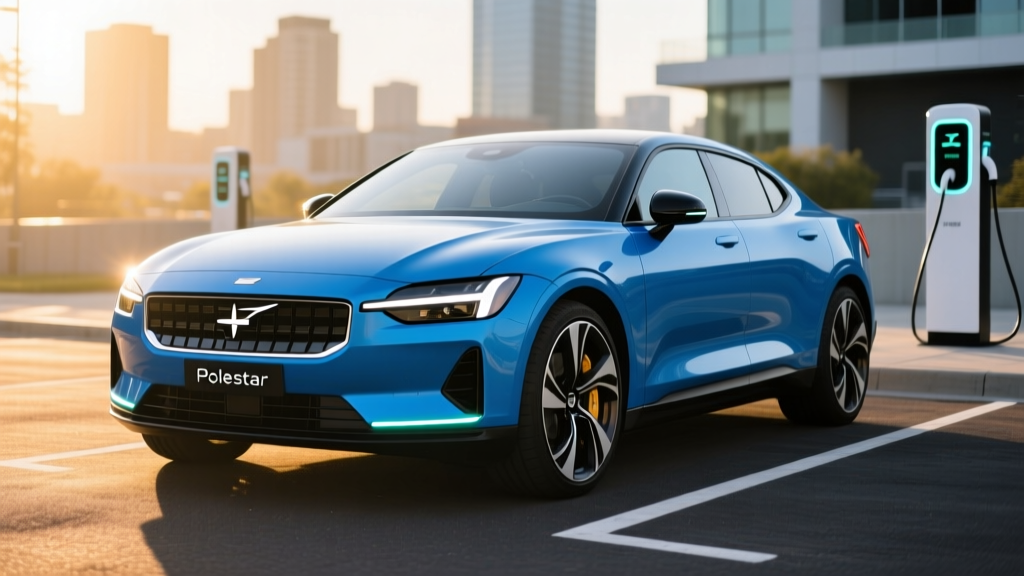
The Polestar 2 occupies a rare space in the premium EV sedan segment: Scandinavian design, a Google-native infotainment system, and genuine performance credentials — all at a price point that undercuts the Tesla Model 3 Performance and BMW i4 M50. For 2026, Polestar continues to offer the single-motor and dual-motor configurations with the larger 82 kWh battery pack, and the headline number many enthusiasts search for is the Polestar 2 0-60 mph time. The dual-motor variant hits 60 mph in a claimed 4.3 seconds (with the Performance Pack), while the single-motor rear-wheel-drive model clocks in at 5.9 seconds.
But acceleration is just one data point. In this review, we break down every spec that matters for real ownership — EPA range versus what you'll actually see on the highway, DC fast-charging curves and taper behavior, home charging logistics, federal tax credit eligibility under current IRS §30D rules, and whether the Polestar 2 makes financial sense against the Model 3, Hyundai Ioniq 6, and BMW i4.
2026 Polestar 2 Performance: 0-60, Horsepower, and Drivetrain
The Polestar 2 lineup splits cleanly into two performance tiers. The Long Range Single Motor (LRSM) sends power exclusively to the rear wheels, while the Long Range Dual Motor (LRDM) adds a front motor for all-wheel drive and substantially more output.
| Specification | Long Range Single Motor | Long Range Dual Motor | Dual Motor w/ Performance Pack |
|---|---|---|---|
| Drivetrain | RWD | AWD | AWD |
| Horsepower | 299 hp | 408 hp | 476 hp |
| Torque | 361 lb-ft | 487 lb-ft | 502 lb-ft |
| 0-60 mph | 5.9 sec | 4.3 sec | 4.1 sec |
| Top Speed | 99 mph | 127 mph | 127 mph |
| Battery (usable) | 82 kWh (NMC) | 82 kWh (NMC) | 82 kWh (NMC) |
| EPA Range | 320 miles | 298 miles | 276 miles |
| MPGe (combined) | 107 MPGe | 97 MPGe | 90 MPGe |
| Efficiency | 31 kWh/100mi | 35 kWh/100mi | 37 kWh/100mi |
| Base MSRP | $49,900 | $53,400 | $57,900 |
The 0-60 figures deserve context. The dual-motor Polestar 2 with the Performance Pack's 4.1-second sprint is competitive with the Tesla Model 3 Long Range AWD (4.2 seconds) and noticeably quicker than the BMW i4 eDrive40 (5.5 seconds). However, the Model 3 Performance (2.9 seconds) and BMW i4 M50 (3.7 seconds) occupy a different performance bracket entirely. The Polestar 2's acceleration feels urgent and linear — the torque is immediate, as expected from electric motors — but it's a grand-touring kind of fast rather than a track weapon.
The Öhlins dampers included in the Performance Pack are the real differentiator. They provide adjustable compression and rebound settings that transform the car's handling character, giving it a compliance-and-control balance that neither the Model 3 nor the Ioniq 6 can match. If driving dynamics matter to you, this option is worth its cost.
Real-World Range: What the EPA Number Doesn't Tell You
Real-World Expectation: Plan for 250–280 miles on a highway road trip at 70–75 mph in moderate temperatures. In cold weather (below 32°F), expect a 15–25% reduction, bringing highway range down to approximately 210–240 miles for the single-motor variant.
The 82 kWh usable battery capacity (NMC chemistry, supplied by LG Energy Solution and CATL depending on production batch) provides a solid energy reservoir, but the Polestar 2's efficiency is its weak point relative to competitors. At 31 kWh/100 miles for the single-motor model, it consumes more energy per mile than the Tesla Model 3 Long Range (~25 kWh/100mi) and the Hyundai Ioniq 6 (~27 kWh/100mi). The difference matters over time: charging the same distance costs more in the Polestar 2, and range suffers proportionally.
In mixed driving — a combination of city regenerative-braking opportunities and suburban cruising — owners commonly report achieving 90–95% of the EPA sticker. It's sustained highway travel where the gap widens. The Polestar 2's bluff-front design and taller sedan profile create more aerodynamic drag than the teardrop-shaped Ioniq 6, and at highway speeds, aero drag dominates energy consumption.
Cold weather compounds the issue. The Polestar 2 uses a heat pump (standard on all 2026 trims), which mitigates cabin-heating energy draw compared to resistive heaters. But lithium-ion batteries lose efficiency in cold temperatures regardless, and the NMC chemistry is not immune. If you live in the upper Midwest or Northeast and commute more than 80 miles round-trip in winter, plan your charging accordingly.
Charging Speed: DC Fast Charging and Home Level 2
Charging speed is where the Polestar 2 delivers a meaningful improvement over its earlier model years. The 2026 model supports DC fast charging at up to 200 kW on compatible stations, and the charge curve is relatively flat through the critical 10–80% window.
| Charging Method | Max Power | Speed / Time | Notes |
|---|---|---|---|
| Level 1 (120V household) | ~1.4 kW | ~3–4 miles/hour | Emergency/trickle only |
| Level 2 (240V home, 48A) | 11 kW onboard | ~30–32 miles/hour | Full charge in ~9 hours |
| DC Fast Charge (CCS2/NACS) | 200 kW peak | 10–80% in ~28 minutes | Tapers above 80%; preconditioning recommended |
A few ownership-critical notes on charging:
Preconditioning matters. The Polestar 2's navigation system will precondition the battery when you route to a DC fast charger, warming it to the optimal temperature for peak charge acceptance. If you arrive at a fast charger without preconditioning — especially in cold weather — your peak charge rate may be limited to 80–100 kW, nearly doubling your 10–80% time.
Charge curve taper. The Polestar 2 sustains close to its 200 kW peak from roughly 15% to 55% state of charge, then gradually tapers. From 80% to 100%, charging slows dramatically — plan to unplug at 80% on road trips unless you genuinely need the final 20%.
Connector compatibility. For 2026, the Polestar 2 ships with a NACS (Tesla-style) charge port in the North American market, granting native access to Tesla Superchargers. A CCS adapter is available for legacy Electrify America and other CCS-only networks. According to Polestar's official specifications page, all 2026 models support Plug & Charge on compatible networks.
Home charging reality. The 11 kW onboard charger means a 48-amp Level 2 home station (like a ChargePoint Home Flex or Tesla Wall Connector) will add roughly 30 miles of range per hour of charging. For most owners who charge overnight, this is more than sufficient — a depleted battery reaches full in about 9 hours. If your electrical panel supports only a 32-amp circuit (7.7 kW), expect roughly 22 miles per hour. Always have a licensed electrician assess your panel capacity before installation.
Pricing, Trims, and Federal Tax Credit Eligibility
The 2026 Polestar 2 is positioned as a premium-but-accessible EV sedan. Here's the trim-level breakdown with pricing before and after potential federal incentives:
| Trim | Base MSRP | Destination | As-Tested (typical) | §30D Credit Eligible? |
|---|---|---|---|---|
| Long Range Single Motor | $49,900 | $1,400 | $52,500–$56,000 | Yes (if sourcing & income qualify) |
| Long Range Dual Motor | $53,400 | $1,400 | $56,000–$61,000 | Yes (MSRP under $55K sedan cap) |
| Dual Motor + Performance Pack | $57,900 | $1,400 | $62,000–$67,000 | Exceeds $55K sedan MSRP cap |
Federal tax credit critical details: Under current IRS §30D rules, the Polestar 2 Long Range Single Motor and Dual Motor (without the Performance Pack pushing MSRP above $55,000) can qualify for up to $7,500 in federal tax credits — but only if you meet all of the following requirements:
- MSRP cap: Sedans must have an MSRP at or below $55,000. The LRSM at $49,900 clears this; the LRDM at $53,400 clears this; the Performance Pack variant at $57,900 does not.
- Buyer income cap: Modified adjusted gross income must not exceed $150,000 (single), $225,000 (head of household), or $300,000 (married filing jointly).
- Battery sourcing: A percentage of critical minerals and battery components must be sourced from the US or free-trade-agreement countries. These thresholds increase annually — verify current-year compliance on fueleconomy.gov before purchasing.
- Point-of-sale transfer: As of 2024, you can transfer the credit to the dealer at purchase, reducing your out-of-pocket cost immediately rather than waiting for tax filing.
The credit is not guaranteed for every buyer or every Polestar 2 configuration. Battery-sourcing compliance can change mid-model-year as supply chains shift. Always confirm the specific VIN's eligibility with your dealer and cross-reference fueleconomy.gov before signing.
Interior, Cargo, and Technology
The Polestar 2's interior is where the Scandinavian design ethos is most visible. The cabin uses vegan upholstery (WeaveTech or available Nappa leather), recycled materials, and a minimalist dashboard dominated by an 11.2-inch portrait touchscreen running Polestar's Android Automotive OS — a full Google-native system with Google Maps navigation, Google Assistant voice control, and access to the Google Play Store for in-car apps.
Cargo space: The Polestar 2 offers 14.4 cubic feet of trunk space (a traditional liftback, not a hatchback), plus a 1.4 cubic foot frunk. Compared to the Tesla Model 3's 23 cu ft (including its deeper frunk and hatchback design), the Polestar 2 gives up meaningful utility. Rear-seat legroom is 33.6 inches — adequate for adults on shorter trips but tight for six-foot passengers behind a tall driver.
Driver assistance: The Polestar 2 comes standard with Pilot Pack, which includes adaptive cruise control, lane-centering assist, and blind-spot monitoring. The optional Pilot Pack Plus adds a 360-degree camera and Pilot Assist with enhanced lane-centering on highways. This is SAE Level 2 driver assistance — it does not drive the car autonomously, and you must keep your hands on the wheel and eyes on the road at all times. It's competent for highway cruising but does not match Tesla's Autopilot or GM's Super Cruise in lane-change confidence or hands-free capability.
Standout tech: The Android Automotive integration is genuinely best-in-class. Google Maps with real-time traffic and charger routing works seamlessly, and the over-the-air update cadence is steady. The available Harman Kardon audio system and panoramic glass roof (with an electrochromic dimming option on higher trims) add premium touches.
Notable drawbacks: The rear visibility is compromised by the thick C-pillars and high trunk line. The rear seat is more cramped than competitors. The infotainment system, while powerful, can feel over-reliant on the touchscreen for basic climate controls. And the absence of Apple CarPlay on early Android Automotive builds has been addressed in recent updates, but iPhone users should verify current compatibility.
Battery Warranty and Long-Term Ownership
Polestar provides an 8-year/100,000-mile battery and drive unit warranty across all trims, which is industry-standard and matches Tesla, Hyundai, and BMW. The warranty covers defects and excessive capacity loss — typically defined as falling below 70% of original capacity within the warranty period.
The NMC (nickel manganese cobalt) chemistry in the Polestar 2's 82 kWh pack is energy-dense and well-proven, but it is more sensitive to sustained high-state-of-charge storage than LFP (lithium iron phosphate) batteries. For maximum longevity, Polestar recommends charging to 80–90% for daily use and only charging to 100% when you need maximum range for a trip. The car's software allows you to set a charge limit to automate this habit.
Real-world degradation data for the Polestar 2's current-generation pack is still accumulating, but similar NMC packs in the Volvo XC40 Recharge (which shares the CMA platform) show approximately 5–8% capacity loss over the first 60,000 miles based on fleet data. This is within normal expectations and well above the 70% warranty threshold.
The standard vehicle warranty is 4 years/50,000 miles, and Polestar includes 4 years of complimentary scheduled maintenance and roadside assistance. Insurance costs for the Polestar 2 tend to run 10–20% higher than a comparable gas sedan due to repair-cost factors common to EVs — get quotes before purchasing.
How the Polestar 2 Compares to Key Competitors
The Polestar 2 is not the rational efficiency choice — that crown goes to the Tesla Model 3 or Hyundai Ioniq 6. It's the emotional choice for buyers who want something distinctive, well-built, and genuinely engaging to drive without defaulting to Tesla. If you value design, material quality, and chassis tuning over maximum range and charging speed, the Polestar 2 is a compelling argument.
Who Should Buy the 2026 Polestar 2?
- You want a premium EV sedan that stands apart from the Tesla ubiquity
- Driving dynamics and chassis quality matter to you (especially with the Performance Pack)
- You prefer Google-native infotainment and clean Scandinavian design
- Your daily commute is under 100 miles and you have home Level 2 charging
- You rarely carry more than one rear-seat passenger
- Maximum range and efficiency are your top priorities (consider Model 3 or Ioniq 6)
- You need substantial cargo space for family duties or road-trip gear
- You want hands-free highway driving (GM Super Cruise or Ford BlueCruise vehicles)
- Your budget is under $45,000 (the Ioniq 6 SE or used EV market offers better value)
Pros and Cons at a Glance
- Strong 0-60 performance, especially with Performance Pack (4.1 sec)
- Öhlins dampers and Brembo brakes offer class-leading ride and handling
- Premium interior materials and build quality
- Google Android Automotive infotainment is fast and intuitive
- 200 kW DC fast charging with NACS native access
- Heat pump standard on all trims for cold-weather efficiency
- 8-year/100,000-mile battery warranty
- EPA range and efficiency trail Model 3 and Ioniq 6 competitors
- Tight rear-seat legroom (33.6 inches) and limited cargo space (14.4 cu ft)
- Performance Pack trim exceeds $55K MSRP cap, losing federal tax credit eligibility
- Rear visibility is compromised by thick pillars
- Insurance premiums run higher than average for the segment
- Climate controls rely heavily on touchscreen — no physical buttons
Frequently Asked Questions
What is the Polestar 2 0-60 mph time?
The 2026 Polestar 2 Long Range Single Motor reaches 60 mph in 5.9 seconds. The Long Range Dual Motor does it in 4.3 seconds, and the Dual Motor with the Performance Pack achieves a 4.1-second 0-60 time thanks to its 476 hp output.
What is the real-world range of the Polestar 2?
The EPA rates the single-motor Polestar 2 at 320 miles, but expect approximately 250–280 miles on sustained highway driving at 70+ mph. In freezing temperatures, highway range can drop to 210–240 miles. City driving with regenerative braking recovers more energy and gets closer to the EPA number.
How fast does the Polestar 2 charge?
On a DC fast charger, the 2026 Polestar 2 peaks at 200 kW and charges from 10% to 80% in approximately 28 minutes with battery preconditioning. On a 48-amp Level 2 home charger, it adds about 30–32 miles of range per hour, filling the 82 kWh battery in roughly 9 hours.
Does the Polestar 2 qualify for the $7,500 federal EV tax credit?
The Long Range Single Motor ($49,900 MSRP) and Long Range Dual Motor ($53,400 MSRP) can qualify for up to $7,500 under IRS §30D rules, provided the buyer meets income caps and the vehicle's battery meets current critical-mineral and component-sourcing thresholds. The Performance Pack variant ($57,900 MSRP) exceeds the $55,000 sedan MSRP cap and does not qualify. Always verify VIN-specific eligibility on fueleconomy.gov before purchasing.
Is the Polestar 2 worth buying over a Tesla Model 3?
The Polestar 2 is worth considering if you prioritize interior quality, distinctive design, and chassis dynamics over maximum range and Supercharger network convenience. The Model 3 is more efficient, has more cargo space, and offers the most mature charging ecosystem. The Polestar 2 wins on build quality, driving engagement (with the Performance Pack), and not blending into a sea of identical EVs.
What battery chemistry does the Polestar 2 use?
The 2026 Polestar 2 uses an NMC (nickel manganese cobalt) lithium-ion battery with 82 kWh of usable capacity. NMC offers high energy density but is more sensitive to prolonged high-state-of-charge storage than LFP chemistry. Set your daily charge limit to 80–90% for optimal long-term health.
Is Polestar's Pilot Assist self-driving?
No. Polestar's Pilot Assist and Pilot Pack are SAE Level 2 driver-assistance systems. They provide adaptive cruise control and lane-centering, but the driver must remain fully engaged, keep hands on the steering wheel, and monitor the road at all times. This is not autonomous driving.