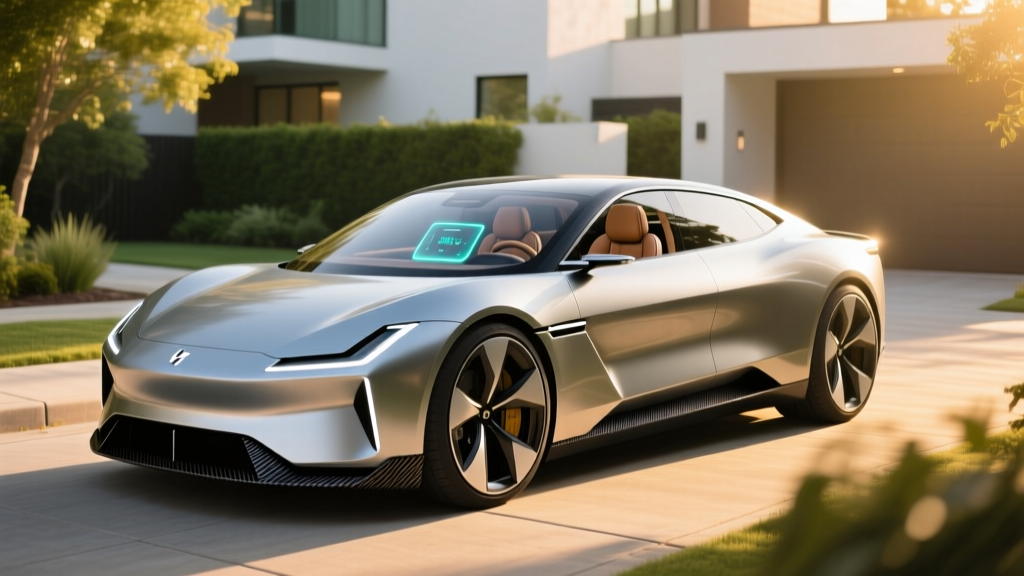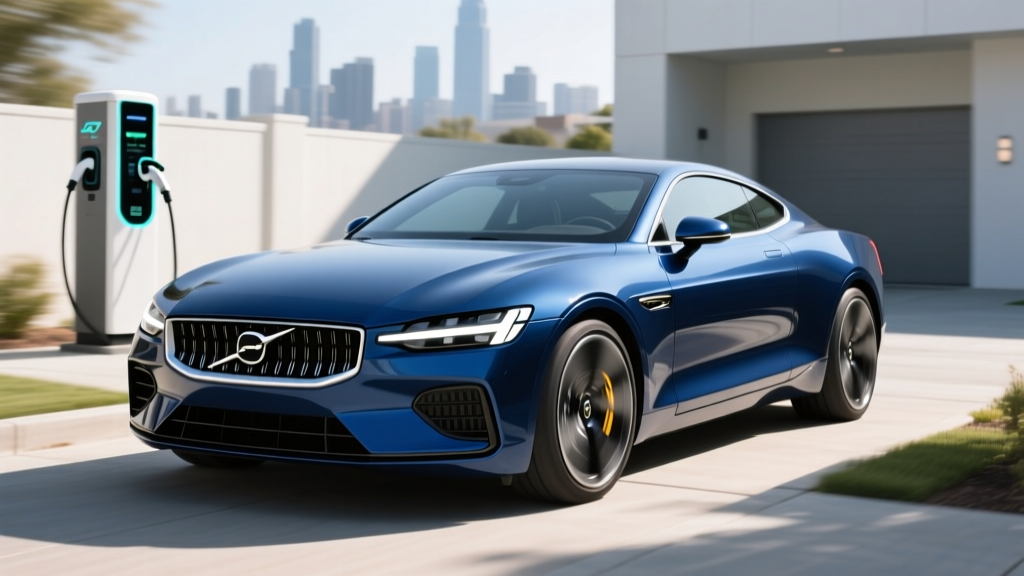
The Polestar 1 occupies a strange, fascinating corner of the electrified vehicle landscape. Introduced as a limited-production plug-in hybrid grand tourer, it served as the halo car that launched Volvo's performance sub-brand into the EV era. With only 1,500 units produced globally between 2020 and 2021, finding one today means navigating the pre-owned market or tracking down remaining dealer stock. But for those who can secure one, the Polestar 1 delivers a compelling blend of electric commuting capability and gas-powered grand-touring range — wrapped in carbon fiber and Scandinavian minimalism.
This deep-dive covers every Polestar 1 spec that matters to real buyers and owners: the actual electric-only range you can expect, charging logistics, the 619-horsepower powertrain, interior practicality, and the ownership math in 2026. Let's get into the numbers.
Core Polestar 1 Specs at a Glance
| Specification | Value |
|---|---|
| Powertrain Type | Plug-in Hybrid (PHEV) — Turbo/Supercharged 2.0L I4 + Twin Rear Electric Motors |
| Combined Horsepower | 619 hp |
| Combined Torque | 738 lb-ft |
| 0–60 mph | 4.0 seconds |
| Drivetrain | AWD (front engine drives front wheels; rear electric motors drive rear wheels) |
| Battery Capacity | 34 kWh (gross) / ~31.2 kWh usable — NMC (Nickel Manganese Cobalt) chemistry |
| EPA Electric-Only Range | 52 miles (early models) / 93 miles (2021 Performance Optimisation update) |
| EPA Combined Gas Range | ~370 miles (with 15.8-gallon tank) |
| EPA MPGe (EV mode) | 58 MPGe |
| EPA MPG (gas-only) | 26 MPG combined |
| Max DC Fast Charge | Not supported (no DC fast-charge port) |
| Level 2 Charge Rate | 3.6 kW (onboard charger) |
| Level 2 Charge Time (0–100%) | ~8–9 hours |
| Level 1 Charge Rate | ~1.4 kW (120V outlet) |
| Base MSRP (when new) | $156,500 (2020) / $157,750 (2021) |
| Battery/Powertrain Warranty | 8 years / 100,000 miles (hybrid components) |
| Bumper-to-Bumper Warranty | 4 years / 50,000 miles |
| Production Run | Limited to 1,500 units globally (2020–2021) |
Electric-Only Range: EPA Sticker vs. Real-World Driving
The Polestar 1's electric range story requires some context. Early 2020 models shipped with an EPA-rated 52 miles of electric-only range. However, a software and battery management update for 2021 models — which Polestar called the "Performance Optimisation" — unlocked additional usable capacity from the same 34 kWh NMC battery pack, pushing the EPA rating to 93 miles of pure electric driving. This made the 2021 Polestar 1 one of the longest-range PHEVs ever sold in the U.S.
EPA Rating: 93 miles (2021 models) / 52 miles (2020 models)
Expect in mixed real-world driving: 75–85 miles (2021) — the EPA test cycle favors city-style PHEV efficiency, and the regenerative braking system recovers well in stop-and-go traffic.
Highway-only (70–75 mph sustained): 60–70 miles — electric motors are less efficient at sustained high speeds, and the Polestar 1's 5,100+ lb curb weight demands more energy.
Cold weather (below 32°F): 50–60 miles — NMC chemistry loses roughly 25–35% of usable capacity in freezing temperatures, and cabin heating draws from the battery unless the gas engine activates.
For a daily commute under 60 miles round-trip, a 2021 Polestar 1 can operate almost entirely on electricity, with the gas engine serving as a range-extending safety net. According to fueleconomy.gov, the 93-mile electric range puts it well ahead of most PHEVs from its era — the BMW i8, by comparison, offered just 15 miles of electric range.
Charging Speed: The Polestar 1's Biggest Practical Limitation
Here's where the Polestar 1's grand-tourer priorities clash with modern EV expectations: there is no DC fast-charging capability. The car was designed around the assumption that owners would charge at home overnight and use the gasoline engine for longer trips. If you're accustomed to 250 kW Supercharger stops, this will be a significant adjustment.
| Charging Level | Power (kW) | Time (0–100%) | Miles of EV Range Added per Hour |
|---|---|---|---|
| Level 1 (120V household outlet) | ~1.4 kW | ~22 hours | ~5–6 miles/hr |
| Level 2 (240V home charger) | 3.6 kW | ~8–9 hours | ~12–14 miles/hr |
| DC Fast Charge | Not supported — no DC port | ||
The 3.6 kW onboard charger is the bottleneck. Even with a 48-amp Level 2 home charger capable of delivering 11.5 kW, the Polestar 1 will only accept 3.6 kW — meaning a full charge from empty takes the better part of a night. This is comparable to early-2010s EVs and significantly slower than modern PHEVs like the Toyota RAV4 Prime (which accepts up to 6.6 kW).
Practical charging setup: A standard 240V Level 2 home installation (such as a ChargePoint Home Flex or Emporia Level 2) works fine, but you won't need an expensive high-amperage unit. A 16-amp, 240V circuit delivering 3.8 kW is more than sufficient — the car's onboard charger caps the draw anyway. Expect $500–$1,500 for a basic Level 2 home installation depending on your electrical panel proximity; a full panel upgrade could push this higher.
Performance: 619 Horsepower Meets 5,100 Pounds
The Polestar 1's powertrain is an engineering showcase. The front axle is driven by a turbocharged and supercharged 2.0-liter four-cylinder engine producing 326 hp and 317 lb-ft of torque on its own. The rear axle is powered by two independent electric motors contributing a combined 232 hp and 321 lb-ft. An integrated starter-generator adds another 61 hp to the front axle during hard acceleration.
The result: 619 total horsepower, 738 lb-ft of torque, and a 4.0-second 0–60 mph time. That's supercar-adjacent acceleration from a 2+2 grand tourer that can also do 93 miles silently on electricity. The torque-vectoring rear electric motors give the Polestar 1 a rear-biased, sports-car feel in corners despite its substantial weight.
Three drive modes shape the experience:
- Pure mode: Electric-only rear-wheel drive, up to 78 mph, maximum efficiency
- Hybrid mode: Seamless blending of gas and electric for optimal efficiency
- Power mode: Full 619 hp, AWD, aggressive throttle mapping and shift points
The Öhlins dual-flow dampers (manually adjustable) and Akebono 6-piston front brakes underscore that this was engineered as a driver's car first. The ride quality is firm but compliant — this is a GT, not a track weapon, and it cruises beautifully at highway speeds.
Interior, Cargo, and Daily Practicality
The Polestar 1 is a 2+2 coupe, and that designation is generous. The rear seats are best suited for children or short trips — adult legroom is tight at approximately 29 inches. The front seats, however, are excellent: supportive, heated, and upholstered in premium Nappa leather or a textile/leather combination depending on spec.
Cargo capacity: The trunk offers approximately 5.7 cubic feet of space — enough for two carry-on bags or a week's groceries for one. The battery pack sits in the tunnel and rear, eliminating any possibility of fold-down rear seats or a pass-through. There is no frunk (front trunk).
The infotainment system uses Volvo's Sensus platform with a 9-inch portrait touchscreen. It supports Apple CarPlay and Android Auto, navigation, and a 14-speaker Bowers & Wilkins audio system. The interface is functional but dated by 2026 standards — it lacks the responsiveness and over-the-air update capabilities of modern systems like Polestar's own Android Automotive OS found in the Polestar 2.
Driver assistance: The Polestar 1 includes Volvo's Pilot Assist — a Level 2 SAE driver-assist system (not self-driving) that provides adaptive cruise control with lane-centering up to 80 mph. It also includes blind-spot monitoring, rear cross-traffic alert, run-off-road protection, and automatic emergency braking. Competent for highway cruising, but it does not offer automated lane changes or navigation-guided driving like newer systems.
Pricing, Tax Credits, and Ownership Economics
The Polestar 1's original MSRP was $156,500 for 2020 models and $157,750 for 2021 models, with a mandatory $1,050 destination charge. There were no trim levels or option packages — every Polestar 1 was essentially fully loaded, with the only choice being exterior color (matte or gloss) and interior upholstery.
On the pre-owned market in 2026, Polestar 1 values typically range from $85,000 to $120,000 depending on mileage, condition, and model year — with 2021 models (93-mile range) commanding a premium over 2020 examples.
The Polestar 1 does not qualify for the federal §30D new clean vehicle credit when purchased new, as its MSRP far exceeded the $55,000 sedan / $80,000 SUV cap. However, buyers of pre-owned examples may qualify for the Used Clean Vehicle Credit (IRC §25E) — up to $4,000 or 30% of the sale price (whichever is less) — if:
- The vehicle sale price is $25,000 or less (unlikely for a Polestar 1)
- Buyer income falls within IRS caps ($75,000 single / $150,000 joint)
- The vehicle is purchased from a licensed dealer
Given current Polestar 1 resale values, the $25,000 sale-price cap effectively disqualifies it from the used-EV credit as well. Consult IRS.gov or a tax professional for your specific situation. State-level incentives may also apply — check your local DMV or energy office for details.
Ownership costs to consider:
- Insurance: Expect $3,500–$5,000/year for a $100K+ limited-production PHEV with carbon fiber bodywork. Specialty insurers (Hagerty, Grundy) may offer agreed-value policies.
- Maintenance: The Volvo-derived 2.0L engine requires standard PHEV maintenance — oil changes, brake fluid, cabin filters. The Öhlins dampers and Akebono brakes are premium-priced when replacement is needed.
- Fuel/energy cost: At 58 MPGe in EV mode and 26 MPG on gas, fuel costs depend heavily on your electric-to-gas driving ratio. A commuter running 80% electric could see annual "fuel" costs under $800 (assuming home charging at $0.14/kWh).
- Depreciation: Limited-production halo cars often stabilize or appreciate after initial depreciation. The Polestar 1 has held value relatively well compared to mass-market luxury PHEVs.
Who Should Buy the Polestar 1?
Choose the Polestar 1 if:
- You want a rare, design-forward grand tourer that doubles as a daily EV commuter
- Your commute is under 80 miles and you have reliable home Level 2 charging
- You value exclusivity — only 1,500 exist worldwide
- You want 600+ hp performance without full EV range anxiety on road trips
- You appreciate the Volvo/Polestar engineering heritage and Scandinavian design language
Look elsewhere if:
- You need DC fast charging for frequent road trips
- You need practical rear seating or significant cargo space
- You want modern infotainment with OTA updates
- You're seeking a full battery-electric vehicle with 300+ mile range
- You want a low-cost-of-ownership daily driver
The Polestar 1 is best understood as a collector-grade PHEV grand tourer — a bridge-era vehicle that proved Polestar's performance credentials before the brand pivoted to full electrification with the Polestar 2, 3, and 4. It competes in spirit with the BMW i8 (now also discontinued), though the Polestar 1 offers substantially more electric range and horsepower.
Pros and Cons Summary
- 93 miles EV range (2021) — best-in-class for PHEVs
- 619 hp / 738 lb-ft — genuine supercar acceleration
- Carbon fiber body, Öhlins suspension, Akebono brakes
- Only 1,500 made — exclusivity and potential collectibility
- True grand-touring capability: electric commute + 370-mile gas range
- Standard full equipment — no options/packages needed
- No DC fast charging — 3.6 kW Level 2 only
- Extremely limited cargo (5.7 cu ft) and rear-seat space
- Dated Sensus infotainment, no OTA updates
- High purchase price ($85K–$120K used) and insurance costs
- No federal tax credit eligibility at current resale prices
- Limited dealer/service network for a low-volume brand
Frequently Asked Questions
What is the real-world range of the Polestar 1?
For 2021 models, the EPA rates the Polestar 1 at 93 miles of electric-only range. In real-world mixed driving, expect 75–85 miles. Highway-only driving at 70+ mph drops this to roughly 60–70 miles, and freezing temperatures can reduce it to 50–60 miles. The gasoline engine provides an additional ~370 miles of range for a total exceeding 430 miles combined.
How fast does the Polestar 1 charge?
The Polestar 1 does not support DC fast charging. On a Level 2 home charger (240V), it accepts a maximum of 3.6 kW, requiring approximately 8–9 hours for a full charge from empty. On a standard 120V outlet (Level 1), a full charge takes roughly 22 hours. This is the car's most significant practical limitation for buyers accustomed to modern EV charging speeds.
Does the Polestar 1 qualify for any federal tax credit?
No. When sold new, the Polestar 1's ~$157,000 MSRP far exceeded the §30D MSRP caps. On the used market, the §25E Used Clean Vehicle Credit requires a sale price of $25,000 or less — well below current Polestar 1 resale values of $85,000–$120,000. Always verify eligibility with IRS.gov or a tax professional, as rules can change.
Is the Polestar 1 worth buying versus competitors?
If you want a rare, design-significant PHEV grand tourer with genuine electric commuting capability and 619 hp, there's no direct substitute. The BMW i8 offers less electric range (15 miles) and less power. The Porsche Panamera E-Hybrid is more practical but less exclusive. The Polestar 1 is best compared to a collectible GT — its value proposition is emotional and design-driven as much as it is spec-driven.
What is the Polestar 1's battery chemistry and warranty?
The Polestar 1 uses a 34 kWh NMC (Nickel Manganese Cobalt) lithium-ion battery pack. Hybrid components — including the battery, electric motors, and power electronics — are covered by an 8-year / 100,000-mile warranty. The bumper-to-bumper warranty is 4 years / 50,000 miles. For pre-owned examples, verify remaining warranty coverage with a Polestar dealer using the VIN.
Can the Polestar 1 drive itself?
No. The Polestar 1's Pilot Assist is an SAE Level 2 driver-assistance system. It provides adaptive cruise control and lane-centering on marked highways, but the driver must remain fully engaged with hands on the wheel and eyes on the road at all times. It does not navigate intersections, change lanes autonomously, or handle urban driving. This is not a self-driving vehicle.