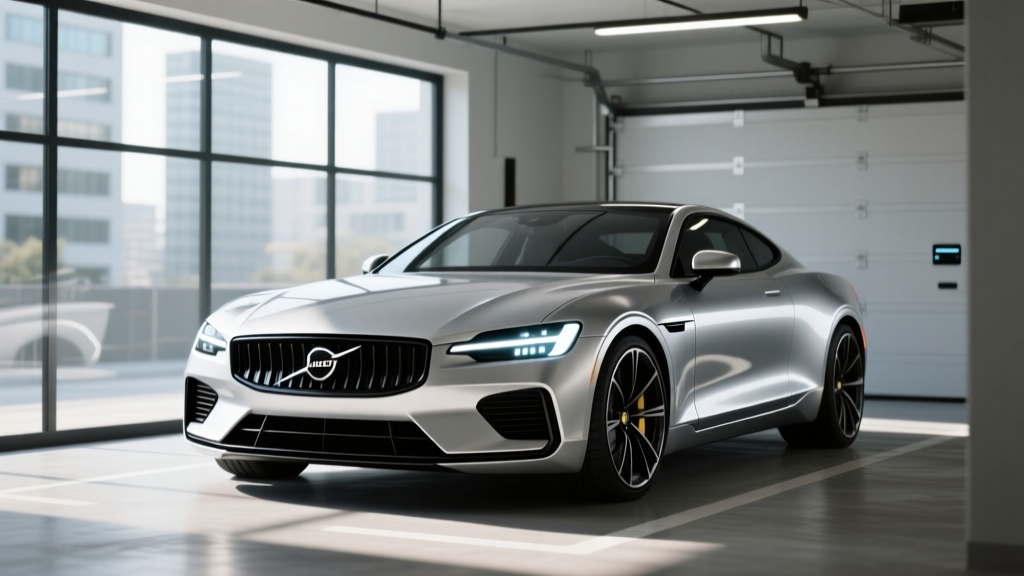
The Polestar 1 occupies a strange, fascinating corner of the electrified automotive world. Built between 2020 and 2021 as a limited run of just 1,500 units worldwide, it was Polestar's opening statement — a carbon-fiber grand tourer with 619 horsepower, a plug-in hybrid powertrain, and a price tag that rivaled supercars. If you're researching Polestar 1 specifications today, you're likely evaluating one on the used market or benchmarking it against modern PHEVs and EVs. This profile gives you every number that matters, plus the real-world context that spec sheets leave out.
Polestar 1 Powertrain and Performance Specifications
The Polestar 1 uses a front-mounted 2.0-liter turbocharged and supercharged four-cylinder engine paired with two rear-mounted electric motors. The result is an all-wheel-drive layout with torque vectoring across the rear axle — something few PHEVs at any price offer.
| Specification | Polestar 1 (Final Model Year 2021) |
|---|---|
| Powertrain Type | Plug-in Hybrid (PHEV) |
| Engine | 2.0L turbo + supercharged I-4 |
| Total System Horsepower | 619 hp (combined ICE + electric) |
| Total System Torque | 738 lb-ft |
| Electric Motors | Twin rear-axle PMSM (planetary gear set) |
| Drivetrain | AWD (ICE front / electric rear with torque vectoring) |
| Transmission | 8-speed automatic (front axle) |
| 0–60 mph | ~3.8 seconds (manufacturer claim) |
| Top Speed | Electronically limited to 124 mph |
| Curb Weight | ~5,184 lbs (2,351 kg) |
The 0–60 time of roughly 3.8 seconds places the Polestar 1 in sports-car territory, though the 5,184-pound curb weight is always present through high-speed direction changes. The Öhlins dampers (manually adjustable, 22 settings) and 6-piston Akebono front brakes help manage that mass with surprising composure.
Battery, Electric Range, and Efficiency
Unlike pure EVs, the Polestar 1's battery serves dual duty: enabling zero-emission city driving and filling torque gaps for the combustion engine. The pack is notably large for a PHEV — larger than many early dedicated EVs.
Real-World Expectation: Expect 40–48 miles of electric-only driving in mixed city/highway use at moderate temperatures. In cold weather (below 32°F), the battery's usable capacity shrinks and cabin heating draws from the pack, reducing electric range to roughly 30–38 miles. In pure electric mode, the car is rear-wheel drive only (the front engine is disengaged), which affects traction in winter conditions.
| Battery & Efficiency Spec | Value |
|---|---|
| Battery Capacity (Gross) | 34 kWh |
| Battery Capacity (Usable) | ~27–29 kWh (estimated, varies by model year update) |
| Battery Chemistry | NMC (Nickel Manganese Cobalt) lithium-ion |
| Battery Location | T-shaped, center tunnel + rear |
| EPA Electric-Only Range | 52 miles |
| EPA Combined MPGe (Electric + Gas) | 58 MPGe |
| EPA Combined MPG (Gas Only, Charge-Depleted) | 26 MPG |
| Fuel Tank Capacity | 15.9 gallons (60 liters) |
| Total System Range (EV + Gas) | ~520 miles (est.) |
The 52-mile EPA electric range was genuinely impressive for a PHEV when the car launched and still holds up well. For context, the 2026 Toyota RAV4 Prime delivers 42 miles of EV range, and the BMW XM Label offers roughly 30 miles. The Polestar 1's large battery means most daily commutes can be completed entirely on electricity.
Per fueleconomy.gov, the combined MPGe rating is 58, while charge-depleted gas-only operation returns 26 MPG combined — reasonable for a 5,184-lb grand tourer with a performance tune.
Charging Speeds: DC Fast Charge and Home Level 2
Charging is where the Polestar 1's age and PHEV architecture become apparent. Unlike modern EVs with 800V architectures and 200+ kW peak charge rates, the Polestar 1 was designed for overnight home charging and opportunistic top-ups.
| Charging Level | Power / Rate | Time (Empty to Full) | Notes |
|---|---|---|---|
| Level 1 (120V Household) | ~1.4 kW | ~20–24 hours | Emergency/trickle only |
| Level 2 (240V, 16A) | ~3.6 kW | ~8–9 hours | Standard home wallbox |
| Level 2 (240V, 32A) | ~7 kW | ~4.5–5 hours | Higher-amperage home charger |
| DC Fast Charge | Not supported | N/A | CCS/J1772 AC charge port only |
Critical limitation: The Polestar 1 does not support DC fast charging. There is no CCS or CHAdeMO inlet. The car charges exclusively via AC (J1772 connector for Level 1 and Level 2). This means road-trip top-ups are limited to whatever AC charging you can find — typically 6–7 kW at public Level 2 stations, adding roughly 15–20 miles of electric range per hour of charging.
For daily ownership, this isn't a dealbreaker. Plug in at home overnight on a 32A Level 2 unit, and the battery is full by morning. But if you're planning to rely on public charging infrastructure for longer electric-mode driving, the lack of DC fast charging is a genuine constraint.
Pricing, Tax Credits, and Used Market Value
The Polestar 1 launched with a base MSRP of $156,500 (including destination) for its sole trim level. There were no optional packages in the traditional sense — the car came fully equipped with Öhlins suspension, Akebono brakes, Bowers & Wilkins audio, and the carbon-fiber body.
| Pricing Detail | Amount |
|---|---|
| Original Base MSRP (2020–2021) | $156,500 |
| Federal §30D Tax Credit (New, at Launch) | $7,500 (was eligible when sold new) |
| Effective Price After Credit (New) | ~$149,000 |
| Current Used Market Value (2026 est.) | $95,000–$130,000 (varies by mileage, condition, matte paint) |
Federal tax credit for used buyers: Under current IRS rules (IRS §25E), the used clean vehicle credit offers up to $4,000 or 30% of the sale price (whichever is less) for qualifying used EVs and PHEVs. However, the Polestar 1's used market price far exceeds the $25,000 sale-price cap for the used-vehicle credit, making it ineligible. New-purchase §30D credits are no longer applicable since the car is discontinued.
The Polestar 1 was eligible for the full $7,500 federal credit when purchased new, as its battery sourcing and MSRP met the requirements at the time. Today, buyers are looking at a collector-grade used purchase without federal incentive support.
Interior, Cargo, and Practicality
The Polestar 1 is a 2+2 grand tourer, meaning rear seats exist but are best suited for children or cargo overflow. The carbon-fiber construction and low-slung roofline create compromises in everyday usability.
| Dimension | Measurement |
|---|---|
| Seating Capacity | 4 (2+2 layout) |
| Front Headroom | ~37.0 inches |
| Front Legroom | ~42.1 inches |
| Rear Headroom | ~33.5 inches (limited by roofline) |
| Rear Legroom | ~29.0 inches (tight for adults) |
| Trunk Volume | ~7.0 cu ft (limited by battery placement) |
| Frunk (Front Trunk) | None |
| Cargo With Rear Seats Folded | Not officially rated; pass-through limited |
The trunk is shallow and narrow due to the T-shaped battery pack occupying the center tunnel and rear area beneath the cargo floor. A week's luggage for two is feasible if you pack soft bags; a full set of golf clubs is a tight squeeze. This is a GT car designed for grand touring for two, not family hauling.
The interior features Volvo-derived architecture (the Polestar 1 shares its SPA platform with the Volvo S90 and XC90) with a portrait-oriented 9-inch touchscreen running a Symbian-based infotainment system. Apple CarPlay is supported; Android Auto was not available. The digital instrument cluster is clear but dated compared to 2026 EV offerings. Polestar's signature gold brake calipers, gold seatbelts, and gold valve caps add visual distinction.
Driver Assistance and Safety Technology
The Polestar 1 includes Volvo's Pilot Assist system, which provides adaptive cruise control with lane-centering steering. This is an SAE Level 2 driver-assistance system — the driver must remain fully engaged with hands on the wheel and eyes on the road at all times. It is not autonomous or self-driving.
Standard safety equipment includes automatic emergency braking with pedestrian and cyclist detection, run-off-road protection (a Volvo hallmark), blind-spot monitoring, and rear cross-traffic alert. The Polestar 1 was not crash-tested by NHTSA or IIHS due to its low production volume, though its SPA-platform siblings (Volvo S90, XC90) have earned top ratings from both agencies.
Warranty Coverage
| Warranty Component | Coverage |
|---|---|
| Basic Vehicle Warranty | 4 years / 50,000 miles |
| Powertrain Warranty | 4 years / 50,000 miles |
| High-Voltage Battery Warranty | 8 years / 100,000 miles (retains ≥70% capacity) |
| Corrosion Warranty | 12 years, unlimited miles |
| Roadside Assistance | 4 years / unlimited miles |
For used buyers in 2026, the high-voltage battery warranty is the critical item. Cars built in 2020–2021 may still have residual battery warranty coverage through 2028–2029, depending on mileage. Verify warranty transfer status with a Polestar service center before purchase, as the 70% capacity retention threshold applies.
Pros, Cons, and Verdict
Pros
- 619 hp and 738 lb-ft deliver genuine supercar-level acceleration
- 52-mile EPA electric range is exceptional for a PHEV
- Carbon-fiber body with stunning, timeless design
- Öhlins dampers and Akebono brakes are premium hardware
- Rear-axle torque vectoring provides agile handling for its weight
- Limited production (1,500 units) supports collector value
Cons
- No DC fast charging — AC only, severely limits road-trip utility
- Trunk space is minimal (~7 cu ft)
- Rear seats are impractical for adults
- Infotainment system is dated (no Android Auto, slow response)
- Heavy at 5,184 lbs — felt during braking and direction changes
- Service network is limited; parts availability may be challenging
- No federal tax credit available on the used market
Who the Polestar 1 suits best: This is a collector-grade GT car for someone who wants a rare, visually arresting plug-in hybrid with supercar acceleration and the ability to commute electrically during the week. It is not a practical daily driver for families, not a road-trip champion, and not a technology showcase by 2026 standards. Think of it as a future classic that happens to have a charge port.
Frequently Asked Questions
What is the real-world electric range of the Polestar 1?
The EPA rates the Polestar 1 at 52 miles of electric-only range. In real-world mixed driving at moderate temperatures, expect 40–48 miles. Cold weather (below freezing) reduces this to approximately 30–38 miles due to battery chemistry limitations and cabin heating demand. Highway-speed electric driving at 70+ mph will also deplete the battery faster than the EPA test cycle suggests.
How fast does the Polestar 1 charge?
The Polestar 1 does not support DC fast charging. On a 240V Level 2 home charger at 32 amps (~7 kW), the 34 kWh battery charges from empty to full in approximately 4.5–5 hours. On a standard 120V outlet (Level 1), a full charge takes 20–24 hours. Public AC chargers typically deliver 6–7 kW, adding about 15–20 miles of EV range per hour.
Does the Polestar 1 qualify for any federal EV tax credit?
The Polestar 1 qualified for the $7,500 federal §30D credit when purchased new. However, since the car is discontinued and only available used, the new-vehicle credit no longer applies. The used clean vehicle credit (§25E) has a $25,000 sale-price cap, and the Polestar 1's used market value ($95,000–$130,000) far exceeds that threshold, making it ineligible for any current federal incentive. Always consult the IRS guidelines and a tax professional for your specific situation.
Is the Polestar 1 worth buying vs. competitors?
Compared to modern PHEVs like the BMW XM ($180,000+, 30-mile EV range) or the Ferrari 296 GTB (~$330,000, 15-mile EV range), the Polestar 1 offers superior electric range at a lower used-market price. However, both competitors deliver newer technology, faster charging (the BMW XM supports DC fast charging), and more robust dealer networks. The Polestar 1's value proposition today is its rarity, design, and 52-mile EV range — not its technology or practicality. If you want a usable daily PHEV, the BMW XM or even a Porsche Panamera E-Hybrid may serve better. If you want a collectible GT, the Polestar 1 is compelling.
What are the biggest ownership concerns?
The three main concerns are: (1) lack of DC fast charging, which limits road-trip flexibility; (2) limited Polestar service infrastructure in the US, which can make warranty repairs and parts sourcing slow; and (3) the car's weight (5,184 lbs), which accelerates tire and brake wear. Budget for premium tire replacements (21-inch rubber) and expect brake service costs consistent with a high-performance GT.
What battery chemistry does the Polestar 1 use?
The Polestar 1 uses an NMC (Nickel Manganese Cobalt) lithium-ion battery pack with a gross capacity of 34 kWh. NMC chemistry offers high energy density, which was necessary to fit a large pack into a GT car's floor, but it is more sensitive to high state-of-charge storage and extreme temperatures than LFP chemistry. For long-term battery health, avoid routinely charging to 100% unless you plan to drive on electric power shortly after.