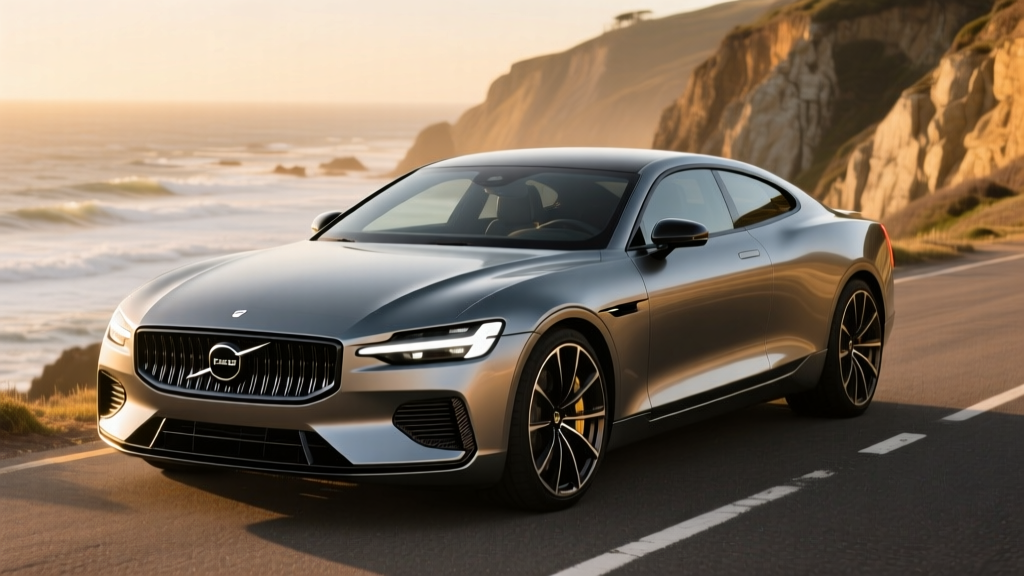
The Polestar 1 occupies a strange and fascinating corner of the electrified-vehicle world. Produced in limited numbers between 2020 and 2021, this plug-in hybrid grand tourer was Polestar's opening statement — a carbon-fiber-bodied, 626-horsepower halo car that bridged Volvo's engineering heritage with a pure-electric future. With only 1,500 units built globally, the Polestar 1 car is less a mass-market product and more a collector-grade PHEV that still turns heads. But does it hold up as a usable daily driver and a smart buy on the pre-owned market in 2026? We break down every spec that matters.
Polestar 1 at a Glance: Key Specifications
| Spec | Value |
|---|---|
| Powertrain | 2.0L turbo + supercharged I-4 (front) + twin electric motors (rear) |
| Total System Output | 626 hp / 738 lb-ft torque |
| Drivetrain | AWD (engine drives front axle, electric motors drive rear) |
| 0–60 mph | 4.2 seconds (manufacturer) |
| Battery Capacity | 34 kWh total / ~27 kWh usable (NMC lithium-ion) |
| EPA Electric-Only Range | 52 miles |
| EPA Combined MPGe (EV mode) | 58 MPGe |
| EPA Combined MPG (hybrid mode) | 26 MPG |
| DC Fast Charge (CCS) | 50 kW max |
| Level 2 Charge Rate | 3.6 kW (approx. 7 hours 0–100%) |
| Cargo Volume | 14.3 cu ft (trunk) |
| Curb Weight | 5,184 lbs |
| Original MSRP | $155,000 (single trim) |
| Production Years | 2020–2021 (limited to 1,500 units) |
Sources: EPA Fuel Economy, Polestar specifications.
Electric Range, Hybrid Efficiency, and Real-World Driving
Real-world expectation: Expect 40–45 miles of electric-only range in mixed highway/city driving at moderate temperatures. In cold weather (below 30°F), that figure can drop to 30–35 miles due to reduced battery efficiency and cabin heating demands. In warm city driving with gentle throttle input, some owners report reaching or slightly exceeding the 52-mile sticker.
The Polestar 1's 34 kWh battery pack (roughly 27 kWh usable) uses NMC (nickel manganese cobalt) chemistry — the high-energy-density standard for performance-oriented PHEVs and BEVs of its era. That pack is large by plug-in hybrid standards; for context, the Toyota RAV4 Prime carries an 18.1 kWh pack. The result is a genuine 52-mile EV-only commute capability that covers most Americans' daily driving, per fueleconomy.gov data.
When the battery depletes and the 2.0-liter turbocharged and supercharged four-cylinder engine kicks in, efficiency drops to a combined 26 MPG. That's respectable for a 5,184-pound grand tourer but unremarkable compared to lighter PHEVs. The combined MPGe rating of 58 when operating in electric mode reflects the energy cost of moving a heavy carbon-fiber coupe.
On the road, the powertrain handoff between electric and gas is seamless. The twin rear electric motors provide instant torque fill while the engine spools up, and the AWD system can vector torque side-to-side across the rear axle for sharper cornering. This is a GT car first and an efficiency play second.
Charging Speed: DC Fast and Level 2 Home Charging
| Charging Level | Power | Time / Rate |
|---|---|---|
| Level 1 (120V household) | ~1.4 kW | ~19 hours (0–100%) |
| Level 2 (240V home/public) | 3.6 kW | ~7 hours (0–100%); ~4 mi/hr added |
| DC Fast Charge (CCS) | 50 kW peak | ~35 minutes (0–80%) |
The Polestar 1's charging capabilities reflect its 2018-era engineering. The onboard AC charger tops out at 3.6 kW — meaning even a 48-amp Level 2 home charger won't push electrons any faster. A full overnight charge is easily achievable, but you won't see the rapid top-ups that modern BEVs with 11 kW onboard chargers deliver.
DC fast charging is limited to 50 kW via the CCS1 connector. On a 150 kW Electrify America or EVgo station, the Polestar 1 will only pull 50 kW at peak, and the charge curve tapers significantly above 80% state of charge. A 0–80% session takes roughly 35 minutes. By 2026 standards — where vehicles like the Hyundai Ioniq 5 pull 240 kW and charge 10–80% in 18 minutes — this is slow. But for a PHEV with a 34 kWh pack, 50 kW is adequate; you're rarely DC fast charging a plug-in hybrid unless you're on a road trip between EV-mode segments.
Practical charging tip: Most Polestar 1 owners charge exclusively at home on Level 2. The battery is small enough that a standard overnight session easily replenishes a full day's electric driving. Public DC fast charging is a convenience, not a necessity, for this vehicle.
Performance, Handling, and the Grand Tourer Experience
With 626 horsepower and 738 lb-ft of combined system torque, the Polestar 1 car delivers serious performance. The 0–60 mph sprint takes 4.2 seconds — brisk, though not supercar-quick by modern EV standards (a Tesla Model S Plaid does it in under 2 seconds). But raw acceleration isn't the point here.
The Polestar 1 was engineered as a grand tourer in the tradition of the Volvo P1800 and C70. The chassis uses a carbon-fiber monocoque that reduces weight and increases torsional rigidity. Öhlins dual-flow shock absorbers are manually adjustable — a feature typically found on dedicated track cars, not luxury coupes. The 21-inch wheels wear Pirelli P Zero rubber, and Akebono six-piston front brake calipers provide immense stopping power.
The driving experience is best described as confident and planted rather than twitchy or aggressive. The electric rear axle gives the car a rear-biased feel under acceleration, while the engine-driven front wheels pull you out of corners. It's a unique torque-vectoring AWD system that rewards smooth inputs.
Drawback: At 5,184 pounds, the mass is noticeable under hard direction changes. This is a GT car for sweeping highways and mountain passes, not a canyon carver.
Interior, Cargo, Technology, and Daily Usability
The Polestar 1's cabin is unmistakably Volvo-derived, which is both a compliment and a limitation. The materials are excellent — crystal gear selector from Orrefors, Nappa leather, carbon fiber trim — but the infotainment system is the previous-generation Volvo Sensus interface running on a portrait-oriented touchscreen. By 2026 standards, the UI feels dated, with slower response times and smaller touch targets than modern systems like Polestar's own Android Automotive OS found in the Polestar 2.
Technology highlights:
- 9-inch portrait touchscreen with navigation, Apple CarPlay, and Android Auto
- 14-speaker Bowers & Wilkins premium audio system
- Pilot Assist (SAE Level 2) adaptive cruise with lane-centering
- 360-degree surround-view camera
- Head-up display
- Panoramic glass roof (fixed)
SAE Level 2 driver assist: Pilot Assist provides adaptive cruise control and lane-centering on highways, but it requires continuous driver supervision. This is not autonomous driving — your hands must remain on the wheel and your eyes on the road at all times.
Cargo and passenger space:
- Trunk: 14.3 cu ft — adequate for a weekend trip for two, but the opening is narrow
- Rear seats: Technically a 2+2 configuration, but the rear seats are best suited for children or luggage. Adult legroom is extremely limited
- Front legroom: 41.3 inches — comfortable for tall drivers
- No front trunk (frunk) — the engine occupies the front bay
The Polestar 1 is a two-person car in practice. If you regularly carry rear-seat passengers, this is not the vehicle for you.
Pricing, Tax Credits, and Pre-Owned Value in 2026
| Cost Factor | Amount |
|---|---|
| Original MSRP (2020–2021) | $155,000 |
| Typical Pre-Owned Price (2026) | $80,000–$120,000 |
| Federal New EV Tax Credit | Not applicable (discontinued) |
| Federal Used EV Tax Credit (§25E) | Not applicable (price exceeds $25K cap) |
| Estimated Annual Insurance | $3,500–$5,000 |
| Estimated Annual Maintenance | $800–$1,500 |
Pre-owned Polestar 1 values have held surprisingly well given the car's niche status. Low production numbers (1,500 worldwide) create scarcity, and the car's striking design and carbon-fiber construction appeal to collectors. Expect to pay $80,000–$120,000 depending on mileage, condition, and color. Matte-finish examples and low-mileage specimens command premiums.
Ownership cost reality: Insurance is steep — this is a limited-production, carbon-fiber-bodied, 626-hp vehicle. Parts availability can be challenging for body repairs, though Volvo/Polestar's service network handles mechanical work. Budget for higher-than-average maintenance costs given the complex dual-powertrain architecture (turbocharged/supercharged engine plus twin electric motors).
Warranty Coverage and Battery Longevity
When new, the Polestar 1 carried the following warranty coverage:
- Limited vehicle warranty: 4 years / 50,000 miles
- Powertrain warranty: 4 years / 50,000 miles
- Hybrid battery warranty: 8 years / 100,000 miles (retains ≥70% capacity)
- Corrosion warranty: 12 years / unlimited miles
By 2026, most Polestar 1 examples have exceeded the basic 4-year/50,000-mile warranty. The 8-year/100,000-mile battery warranty may still apply to lower-mileage examples — verify the in-service date and current mileage before purchasing. NMC battery chemistry in a PHEV typically sees modest degradation because the pack is rarely cycled to full depth; the engine takes over before deep discharge. Real-world reports suggest 5–10% capacity loss over the first 5 years, which is within normal parameters.
Pre-purchase recommendation: Request a battery State of Health (SoH) report from a Polestar/Volvo dealer before buying. This diagnostic reveals the pack's actual capacity retention and flags any cell-balance issues.
Polestar 1 vs. Key Competitors
| Vehicle | Type | EV Range | Total HP | 0–60 | Typical 2026 Price |
|---|---|---|---|---|---|
| Polestar 1 | PHEV Coupe | 52 mi | 626 | 4.2s | $80K–$120K |
| BMW i8 (2019–2020) | PHEV Coupe | 18 mi | 369 | 4.2s | $60K–$85K |
| Porsche Panamera 4 E-Hybrid | PHEV Sedan | 30 mi | 455 | 4.4s | $70K–$95K |
| Lexus LC 500h | Hybrid Coupe | 0 mi (HEV) | 354 | 4.7s | $65K–$80K |
The BMW i8 is the most direct comparison — both are plug-in hybrid coupes from the same era. The Polestar 1 offers significantly more electric range (52 vs. 18 miles), more power (626 vs. 369 hp), and more exclusivity (1,500 vs. ~20,000 units built). The i8 is lighter and more agile, but its tiny EV range makes it less practical as a daily electric commuter. The Panamera 4 E-Hybrid offers four doors and more cargo space but lacks the Polestar's design drama.
Who Should Buy the Polestar 1 Car?
Pros and Cons
Pros
- Stunning carbon-fiber design — still one of the best-looking coupes on the road
- 52-mile EV range covers most daily commutes emission-free
- 626 hp with seamless electric/gas powertrain handoff
- Öhlins adjustable suspension and Akebono brakes — track-grade hardware
- Extreme rarity (1,500 built) supports long-term value retention
- DC fast charging capability (rare for PHEVs of this era)
Cons
- No federal tax credit eligibility (new or used)
- Slow 3.6 kW Level 2 charging and 50 kW DC fast charging by 2026 standards
- Dated Sensus infotainment system vs. modern Android Automotive
- Rear seats are essentially unusable for adults
- High insurance and maintenance costs
- Heavy at 5,184 lbs — mass is felt in corners
- Limited service/parts network for body and carbon-fiber repairs
Frequently Asked Questions
What is the real-world range of the Polestar 1?
The EPA rates the Polestar 1 at 52 miles of electric-only range. In real-world mixed driving, expect 40–45 miles. Cold weather can reduce that to 30–35 miles. In hybrid mode with the gas engine, total range extends to approximately 430 miles combined.
How fast does the Polestar 1 charge at home and on DC fast chargers?
On a Level 2 (240V) home charger, the Polestar 1 charges at 3.6 kW, taking about 7 hours for a full 0–100% charge. On a DC fast charger, it peaks at 50 kW, reaching 80% in roughly 35 minutes. Both figures are slow by 2026 BEV standards but adequate for a PHEV with a 34 kWh pack.
Does the Polestar 1 qualify for the federal EV tax credit?
No. The Polestar 1 is no longer produced, so the new-vehicle §30D credit does not apply. The used-EV credit (§25E) requires a sale price of $25,000 or less — far below the Polestar 1's typical $80,000–$120,000 pre-owned price. Check IRS guidelines for current rules and consult a tax professional.
Is the Polestar 1 worth buying in 2026 vs. competitors?
If you value exclusivity, design, and genuine electric-commute capability in a grand tourer, yes — the Polestar 1 is worth considering. It offers far more EV range than the BMW i8 and more power than the Lexus LC 500h. However, if you prioritize modern tech, rear-seat usability, or low running costs, a newer PHEV like the BMW XM or a pure EV like the Porsche Taycan may serve you better.
What are the biggest maintenance concerns for a used Polestar 1?
The dual powertrain (supercharged/turbocharged engine plus twin electric motors) is complex. Ensure the battery State of Health is checked before purchase. Carbon-fiber body repairs require specialized shops and can be very expensive. The Öhlins suspension is robust but costly to service if dampers need rebuilding. Verify all software updates have been applied through a Polestar/Volvo dealer.
Is the Polestar 1 self-driving?
No. The Polestar 1's Pilot Assist is an SAE Level 2 driver-assistance system. It provides adaptive cruise control and lane-centering on marked highways but requires the driver to remain fully engaged — hands on the wheel, eyes on the road — at all times. It does not autonomously navigate, change lanes on its own, or handle complex urban driving.