Quick Answer: What Is a Polaris EV?
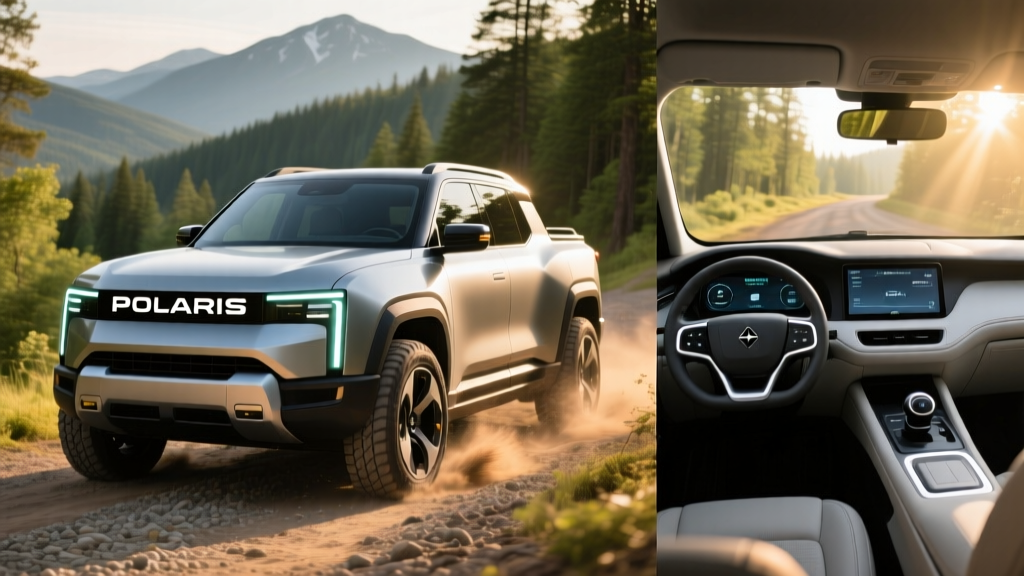
Polaris offers electric powertrains across three distinct categories: the Ranger XP Kinetic (a fully electric side-by-side UTV with ~45 miles of range and 110 hp), the Sportsman Electric (an electric ATV for light utility and recreation), and the GEM line (street-legal low-speed electric vehicles for neighborhood and campus use). These are not highway-capable passenger cars — they are purpose-built electric utility and neighborhood vehicles. If you're searching for an "EV Polaris," you're likely evaluating one of these three platforms for work, property management, or local commuting.
Who Should Consider a Polaris EV in 2026?
The Polaris EV lineup doesn't compete with Tesla, Hyundai, or Ford. It occupies a specialized niche: electrified off-road utility vehicles and neighborhood electric vehicles (NEVs). Understanding which Polaris EV product fits your use case is the first decision.
Ranger XP Kinetic buyers are typically ranchers, hunters, land managers, and outdoor workers who need a quiet, torque-heavy UTV with zero tailpipe emissions — especially useful in noise-sensitive environments like wildlife areas or early-morning operations. The Kinetic replaces a gas Ranger for users who can charge at a barn, garage, or workshop.
Sportsman Electric buyers want a lighter electric ATV for trail riding, small-property chores, or youth-friendly operation with instant torque and no fuel storage concerns.
GEM buyers are retirees, campus fleet operators, resort managers, and urban dwellers in planned communities who need a street-legal vehicle for trips under 30 miles at speeds up to 25 mph (federally limited for NEVs).
Polaris Ranger XP Kinetic: Specs, Range, and Real-World Performance
| Spec | Value |
|---|---|
| Powertrain | Dual electric motors, AWD |
| Horsepower | 110 hp |
| Torque | 140 lb-ft (instant) |
| Battery (usable) | ~14.9 kWh (lithium-ion, NMC chemistry) |
| Estimated Range (mixed use) | ~45 miles (Premium trim with dual batteries) |
| Top Speed | ~60 mph (off-road governed) |
| Towing Capacity | 2,500 lbs |
| Payload Capacity | 1,250 lbs |
| Charge Time (240V Level 2) | ~5 hours (0–100%) |
| Charge Time (120V Level 1) | ~10–12 hours (0–100%) |
| Base MSRP (Ultimate, single battery) | ~$29,999 |
| Premium MSRP (dual battery) | ~$34,999 |
| Warranty | 1-year factory; battery coverage varies by model year |
Real-World Range Reality
The Ranger XP Kinetic's ~45-mile range applies to the dual-battery Premium trim under moderate mixed use (light loads, flat terrain, moderate speeds). In real-world conditions, expect the following:
- Heavy towing or hauling (near payload/tow limits): Range drops to ~25–30 miles
- Cold weather (below 32°F): Expect 15–25% range reduction, bringing effective range to ~34–38 miles on the Premium trim
- Hilly terrain or aggressive riding: ~30–35 miles effective range
- Single-battery Ultimate trim: ~25–30 miles mixed use, significantly less under load
Unlike highway EVs, UTV range is highly dependent on load and terrain rather than speed alone. Plan your work loops accordingly.
Charging a Polaris EV: What You Need to Know
Charging infrastructure for a Polaris EV is fundamentally different from a passenger EV like a Tesla Model Y or Ford F-150 Lightning. Here's the practical breakdown:
| Level | Voltage | Power (kW) | 0–100% Time | Where You'll Charge |
|---|---|---|---|---|
| Level 1 | 120V (standard outlet) | ~1.4 kW | 10–12 hours | Barn, garage, any household outlet |
| Level 2 | 240V (dryer/outlet) | ~3.0 kW | ~5 hours | Workshop, installed 240V outlet |
| DC Fast Charging | N/A | N/A | N/A | Not supported on Ranger XP Kinetic |
Key takeaway: There is no DC fast charging on the Ranger XP Kinetic. This vehicle charges exclusively via AC power. For most owners, overnight Level 1 charging from a standard 120V outlet in a garage or barn is sufficient — the Kinetic's relatively small battery (~14.9 kWh) makes this practical. A 240V outlet (like a dryer plug or welder outlet in a workshop) cuts charge time roughly in half.
Home charging installation note: If you need a dedicated 240V circuit installed in a barn or detached garage, expect to pay $500–$2,000 depending on distance from your electrical panel, whether a panel upgrade is needed, and local permit requirements. Always use a licensed electrician for 240V installations. The Kinetic uses a standard J1772-compatible connector on some trims, but verify with your dealer as Polaris has used proprietary connectors on earlier model years.
Cost Comparison: Polaris Ranger XP Kinetic vs. Gas Ranger
The upfront cost of the electric Ranger XP Kinetic is significantly higher than a comparable gas-powered Ranger. But operational savings can narrow the gap over time, especially for high-use owners.
| Cost Category | Ranger XP Kinetic (Electric) | Ranger XP 1000 (Gas) |
|---|---|---|
| Base MSRP | ~$34,999 | ~$22,000 |
| Fuel/Energy (5 yrs, ~2,000 mi/yr) | ~$1,200 (at $0.14/kWh avg) | ~$4,500 (at $3.80/gal, ~20 mpg) |
| Oil Changes (5 yrs) | $0 | ~$500 |
| Air Filters / Spark Plugs | $0 | ~$300 |
| Belt / Clutch Maintenance | $0 | ~$600 |
| Estimated Total (5 yrs) | ~$36,199 | ~$27,900 |
The verdict: The Kinetic costs roughly $8,000–$8,500 more over five years when accounting for fuel and maintenance savings. The electric Ranger doesn't "pay for itself" purely on economics for most users — the premium buys you silent operation, instant torque, zero emissions, reduced vibration, and dramatically fewer moving parts. For noise-sensitive applications (hunting, wildlife management, early-morning farm work near residences), those non-monetary benefits are the real value proposition.
Polaris GEM: The Street-Legal Neighborhood EV
The Polaris GEM (Global Electric Motorcars) line is a low-speed vehicle (LSV) — federally classified to operate on roads with speed limits up to 35 mph, with a top vehicle speed of 25 mph. GEM vehicles are street-legal in most states with registration and insurance, but they are not highway vehicles.
| Attribute | Polaris GEM e2 | Gas Golf Cart (Street-Legal LSV) |
|---|---|---|
| Top Speed | 25 mph | 20–25 mph |
| Range | ~30 miles (lithium battery option) | ~100+ miles (gas tank) |
| Fuel/Energy Cost per Mile | ~$0.03/mile | ~$0.12/mile |
| Emissions | Zero tailpipe | Gas exhaust |
| Noise Level | Near-silent | Audible engine |
| MSRP Range | ~$12,000–$18,000 | ~$10,000–$15,000 |
| Safety Features | 3-point seatbelts, windshield, wipers, headlights | Varies; often minimal |
GEM models are popular in retirement communities (The Villages, FL is a major market), university campuses, resort properties, and military bases. The GEM e2, e4, and e6 seat 2, 4, or 6 passengers respectively. Polaris offers lithium-ion battery upgrades that extend range and reduce weight compared to legacy lead-acid configurations.
Federal tax credit note: GEM low-speed vehicles generally do not qualify for the IRS §30D Clean Vehicle Credit. That credit requires a vehicle with at least four wheels, a gross vehicle weight under 14,000 lbs, and specific battery sourcing and MSRP requirements — and LSVs have historically fallen outside the qualifying criteria. Always verify current-year eligibility on IRS.gov before assuming credit availability.
Polaris Sportsman Electric: The Lighter EV ATV
The Polaris Sportsman Electric is a lighter, single-rider electric ATV positioned for recreational trail riding and small-property utility. It offers lower power output than the Ranger XP Kinetic but at a significantly lower price point and with easier charging logistics.
Key specifications to expect from the Sportsman Electric platform:
- Power: Significantly less than the Kinetic — suited for trail speeds and light hauling
- Range: Typically 20–40 miles depending on terrain, speed, and load
- Charging: Standard 120V outlet, overnight charge
- Use case: Youth riders (quieter, no hot exhaust), small acreage, noise-restricted trails
Pricing for the Sportsman Electric is typically in the $10,000–$15,000 range depending on trim and battery configuration. Check current availability at Polaris.com, as Polaris has adjusted the electric ATV lineup across model years.
Decision Framework: Which Polaris EV (If Any) Is Right for You?
Choose Based on Your Actual Use Case
Choose the Ranger XP Kinetic if:
- You manage property, ranch, or hunting land and need a work-capable UTV
- Silent operation is a priority (wildlife, noise ordinances, early-morning work)
- You can charge overnight at a barn, garage, or workshop (120V minimum)
- Your typical daily work loops are under 35 miles
- You value instant torque for towing and hill climbing
- You're willing to pay a ~$13,000 premium over a gas Ranger for these benefits
Choose a gas Ranger instead if:
- You need 100+ miles of daily range without mid-day charging
- You operate in extreme cold regularly (below 10°F) where battery range drops significantly
- You need to refuel in under 3 minutes in remote locations without electrical access
- Upfront budget is a hard constraint
Choose the Polaris GEM if:
- You live in a planned community, retirement village, or campus with low-speed roads
- Your daily driving is under 25 miles at speeds under 35 mph
- You want zero-emission, near-silent local transportation
- You have access to a standard outlet for overnight charging
Choose a conventional passenger EV (Tesla, Hyundai, Ford, etc.) instead if:
- You need highway-capable transportation for commuting or road trips
- You need 200+ miles of range and DC fast charging for long-distance travel
- You need to carry 4–5 passengers at highway speeds safely
- You want to qualify for the federal §30D tax credit (up to $7,500 with eligibility requirements)
Common Misconceptions About Polaris EVs
| Myth | Fact |
|---|---|
| "The electric Ranger has the same range as a gas Ranger" | Gas Rangers routinely achieve 100+ miles on a tank. The Kinetic's ~45-mile max range is significantly less — plan work loops accordingly. |
| "Polaris EVs qualify for the $7,500 federal tax credit" | Off-road UTVs and ATVs are generally not eligible for §30D credits. LSVs like the GEM also typically don't qualify. Verify on IRS.gov. |
| "I can fast-charge the Ranger Kinetic at a public station" | The Kinetic does not support DC fast charging. It charges via AC only — Level 1 (120V) or Level 2 (240V). |
| "Electric UTVs have less torque than gas" | The opposite is true. Electric motors deliver peak torque at 0 RPM. The Kinetic's 140 lb-ft is available instantly, giving it superior low-speed pulling power. |
| "The GEM is just a golf cart" | GEM vehicles are federally classified Low-Speed Vehicles (LSVs) with required safety equipment: 3-point seatbelts, VIN numbers, windshields, wipers, and turn signals. They're registered and insured like cars in most states. |
Real-World Ownership Considerations
Home charging access: Every Polaris EV can charge from a standard 120V household outlet. This is a major advantage over passenger EVs — you don't need a dedicated 240V circuit, though one speeds things up. If you're running the Kinetic hard during the day and need a full charge by morning, a 240V outlet in your barn or garage is strongly recommended.
Climate impact: Lithium-ion batteries lose effective capacity in cold weather. If you operate in northern climates with sustained sub-freezing temperatures, budget for 15–25% range loss in winter. Store the vehicle in a heated or insulated space when possible to preserve battery health and reduce cold-start energy draw.
Maintenance reality: Electric Polaris vehicles eliminate oil changes, spark plugs, air filters, fuel filters, and clutch/belt replacements. The primary maintenance items are tires, brakes (regenerative braking reduces pad wear significantly), suspension components, and the cabin air filter (on enclosed GEM models). Long-term ownership costs are lower, but the battery is the single largest potential replacement expense — expect $3,000–$6,000 for a battery pack replacement out of warranty, depending on model.
Insurance: UTV insurance for the Ranger XP Kinetic typically runs $300–$700/year depending on your state, coverage level, and riding area. GEM insurance is usually comparable to golf cart or low-speed vehicle policies — $200–$500/year. Check with your insurer before purchasing, as some carriers classify electric UTVs differently than gas models.
Resale value: Electric UTVs are still a niche market. The Ranger XP Kinetic holds value reasonably well due to limited competition, but the used-EV UTV market is thin. Gas Rangers have a deeper and more predictable resale market.
Frequently Asked Questions
Is the Polaris Ranger XP Kinetic street-legal?
No. The Ranger XP Kinetic is an off-road UTV and is not street-legal in most jurisdictions. It lacks the required DOT equipment (airbags, crash-tested structure, highway-speed certification) for on-road use. If you need a street-legal Polaris electric vehicle, look at the GEM line.
Can I tow with the electric Polaris Ranger?
Yes. The Ranger XP Kinetic has a rated towing capacity of 2,500 lbs — comparable to many gas-powered Ranger trims. Electric motors deliver peak torque at zero RPM, which actually makes the Kinetic excellent for low-speed towing and hill starts. However, towing near max capacity will significantly reduce range (expect ~25–30 miles instead of 45).
How long will the Polaris EV battery last?
Polaris uses lithium-ion (NMC chemistry) battery packs. With proper care — avoiding prolonged storage at 0% or 100% state of charge, keeping the battery out of extreme heat — expect 5–8 years of usable service before significant degradation. The battery won't "die" suddenly; it will gradually lose capacity, similar to a phone battery. Polaris battery warranties vary by model year — confirm the specific warranty terms (typically 1 year factory, with some models offering extended battery coverage) with your dealer.
Does Polaris make a full-size electric truck or SUV?
No. As of 2026, Polaris does not manufacture highway-capable passenger vehicles. Their electric lineup is limited to UTVs (Ranger), ATVs (Sportsman), and low-speed vehicles (GEM). If you're looking for a full-size electric truck, consider the Ford F-150 Lightning, Rivian R1T, Chevrolet Silverado EV, or Tesla Cybertruck.
Where can I charge a Polaris EV away from home?
Public EV charging stations (Electrify America, ChargePoint, EVgo) are designed for passenger vehicles and are generally not accessible or practical for UTVs and ATVs. For trail-side or job-site charging, you'll need access to a standard 120V or 240V outlet — some campgrounds, farm co-ops, and workshops can accommodate this. The GEM, being street-legal, can technically use public Level 2 chargers in some communities, but verify connector compatibility first.
Are there any tax incentives for buying a Polaris EV?
The federal §30D Clean Vehicle Credit is designed for on-road passenger vehicles meeting specific battery sourcing, MSRP, and buyer income requirements. Off-road UTVs, ATVs, and most low-speed vehicles do not qualify. Some states or local utilities may offer separate incentives for electric off-road equipment or NEVs — check your state energy office and local utility programs. Always verify current rules on IRS.gov or consult a tax professional.