Can You Buy a Peugeot EV in the US?
Short answer: No — not directly. Peugeot does not sell vehicles in the United States as of 2026. The brand exited the US market in 1991 and parent company Stellantis has confirmed no plans to reintroduce Peugeot stateside. However, if you're a US-based EV enthusiast researching global models, an expat considering a European purchase, or a fleet buyer exploring grey-market imports, this guide breaks down the real-world specs, costs, and ownership experience of Peugeot's current EV lineup — the e-208, e-2008, and e-3008 — with honest numbers and comparison context.
The 2026 Peugeot EV Lineup at a Glance
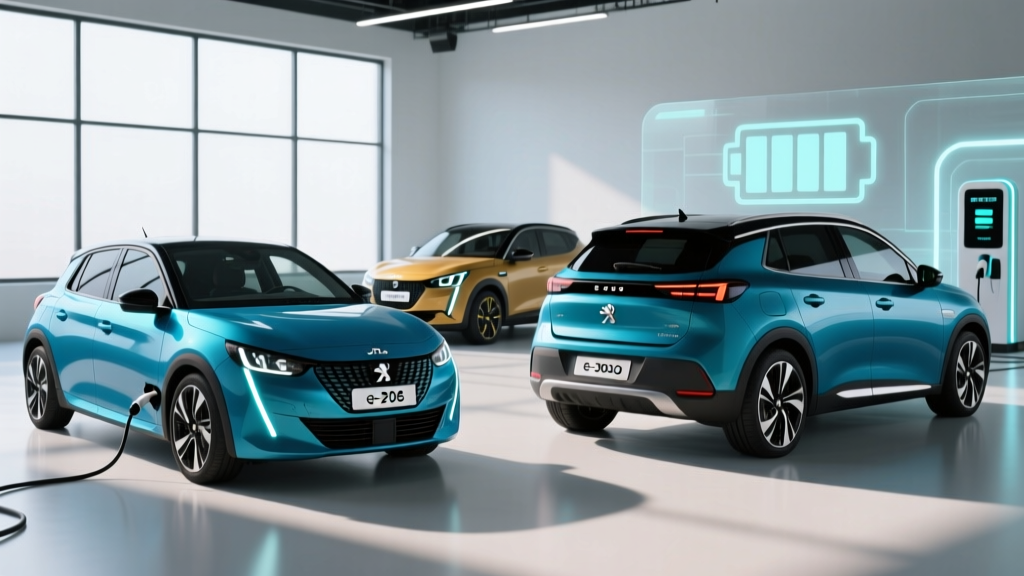
Peugeot has fully embraced electrification under Stellantis, offering battery-electric versions of nearly every model in its European range. Unlike some legacy automakers still hedging between ICE and EV, Peugeot committed to an all-electric European lineup by 2030. The current trio most relevant to global EV watchers:
| Model | Battery (usable kWh) | WLTP Range | Est. EPA-Equivalent Range | Peak DC Charge | 10–80% Time | 0–100 km/h | EU MSRP (approx.) |
|---|---|---|---|---|---|---|---|
| Peugeot e-208 | 51 kWh (NMC) | 400 km / 249 mi | ~210 mi | 100 kW | ~28 min | 8.1 sec | €35,500 (~$38,700) |
| Peugeot e-2008 | 54 kWh (NMC) | 406 km / 252 mi | ~215 mi | 100 kW | ~30 min | 8.6 sec | €40,200 (~$43,800) |
| Peugeot e-3008 | 73 kWh (NMC) / 98 kWh (extended) | 527 km / 327 mi (73 kWh) or 700 km / 435 mi (98 kWh) | ~280 mi / ~370 mi | 160 kW | ~26 min | 8.8 sec (73 kWh) | €47,000 (~$51,200) |
Important range note: WLTP testing (used in Europe) produces higher range figures than EPA testing (used in the US). As a rule of thumb, multiply WLTP by roughly 0.85 for a realistic EPA-equivalent estimate. Real-world highway driving at 70+ mph in cold weather can reduce range by an additional 15–25%.
Peugeot EV vs. US-Market Competitors: A Reality Check
If Peugeot sold in the US, here's how its lineup would stack up against vehicles American buyers can actually purchase:
| Category | Peugeot Model | US Equivalent | Range Advantage | Price Difference |
|---|---|---|---|---|
| Subcompact EV | e-208 (~210 mi EPA est.) | Chevrolet Bolt EV (259 mi EPA) / Nissan LEAF (212 mi EPA) | Bolt wins by ~49 mi | Bolt ~$26,500 — Peugeot ~$12K more |
| Subcompact SUV | e-2008 (~215 mi EPA est.) | Hyundai Kona Electric (261 mi EPA) / Kia Niro EV (239 mi EPA) | Kona wins by ~46 mi | Kona ~$33,000 — Peugeot ~$11K more |
| Compact Crossover | e-3008 98 kWh (~370 mi EPA est.) | Tesla Model Y LR (320 mi EPA) / Hyundai Ioniq 5 (303 mi EPA) | e-3008 98 kWh wins by ~50 mi | Model Y ~$45,000 — Peugeot ~$6K more |
The e-3008 with the 98 kWh extended-range battery is the standout — its estimated 370-mile EPA-equivalent range would compete directly with the longest-range crossovers available in the US. However, European pricing translates to a significant premium, and US buyers benefit from aggressive domestic pricing, federal tax credits, and established dealer networks that Peugeot simply can't match stateside.
Charging Infrastructure and Battery Technology
Peugeot's EVs use the CCS2 connector standard across Europe (distinct from the NACS connector now dominant in North America). Here's what the charging experience looks like in practice:
Charging Speed Breakdown (European Infrastructure)
- Level 2 home charging (7.4 kW, single-phase): Full charge in ~7–10 hours depending on battery size. A 51 kWh e-208 battery goes from 10% to 100% overnight.
- Level 2 home charging (11 kW, three-phase): Available on e-3008; cuts full-charge time to ~6–7 hours.
- DC fast charging (100 kW, e-208/e-2008): 10–80% in roughly 28–30 minutes. The charge curve tapers significantly above 80%, so charging to full at a DC station is rarely worth the wait.
- DC fast charging (160 kW, e-3008): 10–80% in about 26 minutes. The larger 98 kWh battery sustains higher charge rates longer, making road-trip charging genuinely practical.
Battery chemistry: All current Peugeot EVs use NMC (nickel manganese cobalt) lithium-ion cells supplied primarily by CATL and Samsung SDI. NMC offers higher energy density than LFP (lithium iron phosphate), which matters in Peugeot's compact European vehicle platforms where space is at a premium. The trade-off: NMC cells degrade slightly faster under extreme heat and repeated 100% charging, though Peugeot's thermal management system and 8-year/160,000 km battery warranty (70% capacity retention threshold) mitigate this.
For context, US-market competitors like the base Tesla Model 3 RWD and several BYD models use LFP chemistry, which sacrifices some energy density for longer cycle life and the ability to charge to 100% regularly without accelerated degradation. If Peugeot ever enters the US, offering an LFP variant of the e-3008 would be a smart move for cost and longevity perception.
Ownership Costs: Peugeot EV vs. Gas Equivalent
Even though US buyers can't purchase these vehicles, the cost comparison is instructive for understanding global EV economics. Here's a 5-year ownership projection for the e-2008 vs. the gasoline 2008, based on European driving and energy costs:
| Cost Category | e-2008 (Electric) | 2008 PureTech 130 (Gas) | Difference |
|---|---|---|---|
| Purchase price | €40,200 | €29,500 | +€10,700 (EV) |
| Fuel / electricity (75,000 km) | €2,850 (home charging avg.) | €8,400 (avg. €1.85/L) | –€5,550 (EV savings) |
| Maintenance (5 years) | €1,200 | €2,800 | –€1,600 (EV savings) |
| Insurance (5 years) | €4,500 | €3,900 | +€600 (EV) |
| 5-Year Total | €48,750 | €44,600 | +€4,150 (EV) |
Key takeaway: Even in Europe, where fuel is expensive and EV incentives exist, the e-2008 does not fully close the purchase-price gap over five years for an average driver covering 15,000 km/year. The crossover point where EV savings overtake the gas car happens around year 7–8 for moderate mileage drivers, or year 5–6 for high-mileage drivers (25,000+ km/year). This mirrors the US ownership dynamic: EVs save on fuel and maintenance, but the upfront premium takes years to recoup without substantial incentives.
Common Misconceptions About Peugeot EVs
| Myth | Fact |
|---|---|
| "Peugeot EVs use the same platform as US Stellantis EVs, so parts and service would transfer easily." | Peugeot uses the STLA Medium and e-CMP platforms, which are distinct from the platforms underpinning US-market Chrysler, Dodge, and Jeep EVs. Even within Stellantis, cross-market parts compatibility is limited. |
| "European EVs get much better range than American EVs." | WLTP testing inflates range figures by 15–20% compared to EPA methodology. The e-3008's headline 700 km WLTP range translates to roughly 370 miles EPA-equivalent — competitive with US offerings, not dramatically superior. |
| "I can grey-market import a Peugeot EV to the US." | Importing a non-conforming vehicle under EPA/DOT rules requires the car to be at least 25 years old (DOT) or undergo extremely costly federalization (EPA emissions compliance is irrelevant for EVs, but NHTSA safety standards, lighting, and bumper regulations still apply). For a brand-new Peugeot, this is economically impractical. |
| "The e-3008 with 700 km range is the best EV crossover in the world." | The 98 kWh extended-range e-3008 is impressive, but at €57,000+ and with 160 kW peak charging (vs. 250–350 kW on Hyundai E-GMP and Tesla platforms), it's competitive — not class-leading. Real-world highway range in winter will likely drop to 280–300 miles. |
Decision Framework: Should You Care About Peugeot EVs?
Who Should Pay Attention to Peugeot's EV Lineup?
Choose to follow Peugeot EVs if:
- You're a US expat living in Europe evaluating a purchase — the e-3008 extended-range is a strong family crossover option with genuine 370-mile capability.
- You work in the EV industry and track STLA Medium platform development, which will eventually underpin US-market Jeep and Dodge EVs.
- You're benchmarking global EV pricing and want to understand the premium European consumers pay compared to US and Chinese markets.
Look elsewhere if:
- You're a US-based buyer shopping for an EV today — Peugeot is not an option, and you have better-value alternatives from Hyundai, Tesla, Chevrolet, and Ford with US warranties, dealer service, and federal tax credit eligibility.
- You need fast DC charging above 200 kW — Peugeot's 100–160 kW peak rates lag behind the 800V architectures from Hyundai/Kia (up to 350 kW) and Lucid (up to 300 kW).
- You want LFP battery chemistry for maximum longevity — Peugeot currently offers only NMC across its EV range.
What US Buyers Should Do Instead
If the Peugeot e-3008's blend of European design and long-range capability appeals to you, here are US-available alternatives that deliver similar (or better) specs with full domestic support:
- Hyundai Ioniq 5 (Long Range AWD): 303 mi EPA range, 350 kW peak charging on 800V architecture (10–80% in ~18 min), $46,000 MSRP, eligible for the §30D federal tax credit (up to $7,500, subject to income and sourcing rules — consult a tax professional).
- Tesla Model Y Long Range: 320 mi EPA range, 250 kW peak charging, ~$45,000 MSRP, NACS native access to the Supercharger network.
- Ford Mustang Mach-E (Extended Range): 320 mi EPA range, 150 kW peak charging, ~$48,000 MSRP, strong dealer network for service.
Each of these is available today, backed by US warranties, and serviced through established dealer or mobile-technician networks — advantages Peugeot cannot offer regardless of how compelling the e-3008 looks on paper.
Frequently Asked Questions
Will Peugeot ever return to the US market?
Stellantis CEO Carlos Tavares (through 2024) and subsequent leadership have not announced any US return for Peugeot. The brand is focused on European, African, and select Asian markets. Stellantis is instead channeling US EV investment through Jeep, Dodge, Chrysler, and Ram. A Peugeot US return before 2030 appears unlikely.
What is the real-world range of the Peugeot e-3008?
The 73 kWh standard battery delivers roughly 280 miles of real-world mixed driving (EPA-equivalent), dropping to ~230 miles in cold-weather highway use. The 98 kWh extended-range variant achieves an estimated 370 miles in mild conditions, with winter highway driving reducing that to approximately 290–310 miles. These figures are based on WLTP-to-EPA conversion and European owner reports — official EPA numbers do not exist since the vehicle is not sold in the US.
How does Peugeot's charging speed compare to Tesla or Hyundai?
Peugeot's peak 160 kW DC charging (e-3008) is noticeably slower than Tesla's 250 kW V3 Superchargers and Hyundai/Kia's 800V platforms capable of 350 kW. In a real-world road-trip scenario, the e-3008 takes roughly 26 minutes for 10–80%, while the Hyundai Ioniq 5 achieves the same in about 18 minutes at a compatible 350 kW station. Over a 600-mile road trip with two charging stops, that difference adds up to ~15–20 extra minutes in the Peugeot.
Are Peugeot EV batteries reliable long-term?
Peugeot provides an 8-year/160,000 km warranty guaranteeing at least 70% battery capacity retention. This is comparable to most European EV warranties but less generous than Hyundai/Kia's 10-year/100,000-mile warranty (also 70% threshold) or Tesla's 8-year/120,000-mile warranty. Long-term degradation data for the newest e-3008 platform is not yet available, but earlier e-208 and e-2008 models (2020–2023) have shown typical NMC degradation curves of roughly 8–12% capacity loss over the first 100,000 km, per European fleet data.
Can I get federal tax credits on a Peugeot EV?
No. The IRS §30D clean vehicle credit applies only to vehicles purchased for use in the United States from manufacturers with qualifying North American final assembly. Since Peugeot does not sell in the US and does not assemble vehicles here, no Peugeot EV qualifies. US buyers should verify current credit eligibility for any vehicle at fueleconomy.gov, as sourcing and MSRP requirements change frequently.
Sources: Peugeot Official EV Range, IRS §30D Clean Vehicle Credit, fueleconomy.gov. European pricing converted at approximate 2026 exchange rates; actual costs vary. All range figures are estimates where EPA certification is unavailable.