The Bottom Line on Peugeot Electric Cars for U.S. Buyers
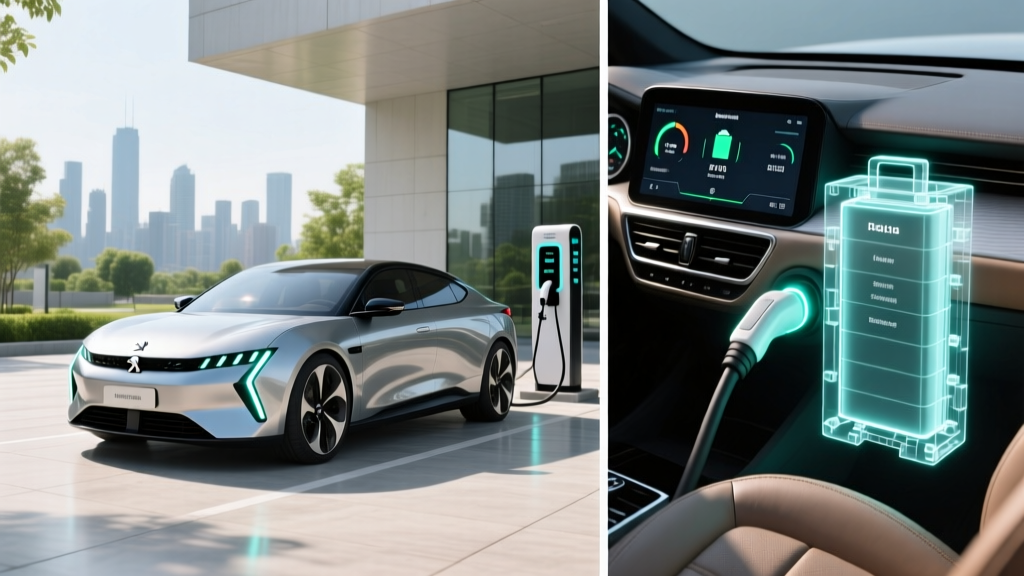
Peugeot does not sell vehicles in the United States and has no announced plans to return to the U.S. market. The brand's electric lineup — including the e-208, e-308, e-3008, and e-5008 — is built on Stellantis platforms and sold exclusively in Europe, the UK, and select global markets. If you're a U.S.-based shopper researching Peugeot electric cars, the closest Stellantis alternatives available stateside are the Jeep Avenger (Europe-only), the Fiat 500e (limited U.S. availability), or non-Stellantis competitors like the Hyundai Kona Electric, Chevrolet Equinox EV, and Volvo EX30. None of Peugeot's EVs qualify for the U.S. federal §30D tax credit because they are not sold through U.S. dealerships.
Peugeot's Full Electric Lineup: Specs at a Glance
Peugeot has electrified its entire passenger range under Stellantis, using the EMP2 and STLA Medium platforms. Below are the 2026 model-year specs based on WLTP testing (the European standard — expect roughly 10-15% lower figures if EPA-rated). Peugeot quotes all battery sizes in usable kWh.
| Model | Body Style | Battery (usable kWh) | Chemistry | WLTP Range | Peak DC Charge | 10–80% Time | HP | 0–62 mph | Starting Price (Europe, €) |
|---|---|---|---|---|---|---|---|---|---|
| e-208 | Subcompact hatch | 48.1 | NMC | ~227 mi (366 km) | 100 kW | ~28 min | 154 | 8.1s | €33,900 |
| e-2008 | Subcompact SUV | 50.0 | NMC | ~227 mi (365 km) | 100 kW | ~30 min | 154 | 8.6s | €37,950 |
| e-308 | Compact hatch/wagon | 54.0 | NMC | ~258 mi (415 km) | 100 kW | ~28 min | 154 | 8.0s | €40,900 |
| e-3008 | Mid-size SUV | 73.0 | NMC | ~310 mi (500 km) | 160 kW | ~25 min | 210 | 7.5s | €44,900 |
| e-5008 | 3-row SUV | 73.0 | NMC | ~298 mi (480 km) | 160 kW | ~27 min | 210 | 8.2s | €51,900 |
Chemistry note: Peugeot's current EVs use NMC (nickel manganese cobalt) lithium-ion cells supplied primarily by CATL and Samsung SDI. Stellantis has announced LFP (lithium iron phosphate) packs for future entry-level models, but as of 2026, the Peugeot lineup remains NMC across the board. NMC offers higher energy density (more range per kilogram) but degrades slightly faster than LFP over thousands of cycles and is more sensitive to sustained 100% SoC storage.
Why Peugeot EVs Aren't Sold in the U.S.
Peugeot exited the U.S. market in 1991 after the 505 sedan was discontinued. The brand has not returned despite Stellantis (Peugeot's parent company, formed from the FCA-PSA merger in 2021) having a massive U.S. footprint through Jeep, Ram, Dodge, Chrysler, and Alfa Romeo.
The barriers are structural:
- Federal homologation costs: Certifying vehicles for U.S. FMVSS safety standards, EPA emissions (even for EVs), and crash-test compliance requires significant investment for a brand with zero existing U.S. dealer network.
- No dealer network: Peugeot would need to build a sales and service infrastructure from scratch. Stellantis has prioritized electrifying its existing U.S. brands instead.
- §30D tax credit ineligibility: Even if Peugeot imported EVs to the U.S., the vehicles would need to meet IRS §30D requirements including North American final assembly, battery-component sourcing rules, and critical-mineral thresholds. Peugeot's EVs are assembled in France, Spain, and Slovakia — disqualifying them from the up-to-$7,500 federal credit.
- The Inflation Reduction Act effect: The IRA's sourcing requirements have pushed automakers to localize battery supply chains in North America. Peugeot's European supply chain would need significant restructuring to qualify.
U.S. Alternatives: What to Buy Instead
If Peugeot's European EVs caught your eye, here are the closest U.S.-market equivalents matched to each Peugeot model's size and positioning. All prices are 2026 base MSRP before any applicable tax credits.
| Peugeot Model | U.S. EV Alternative | EPA Range | Battery (kWh) | Peak DC kW | Base MSRP (USD) | §30D Eligible? |
|---|---|---|---|---|---|---|
| e-208 (subcompact hatch) | Mini Cooper SE | 114 mi | 40.7 | 95 kW | $31,900 | No (UK-built) |
| e-2008 (subcompact SUV) | Hyundai Kona Electric | 261 mi | 65.0 | 100 kW | $33,550 | No (Korea-built) |
| e-308 (compact hatch) | Volkswagen ID.4 | 275 mi | 77.0 | 170 kW | $39,735 | Partial (U.S.-built trims) |
| e-3008 (mid-size SUV) | Chevrolet Equinox EV | 319 mi | 85.0 | 150 kW | $33,600 | Yes (up to $7,500) |
| e-5008 (3-row SUV) | Kia EV9 | 304 mi | 100.0 | 236 kW | $54,900 | Partial (GA-built trims) |
Key takeaway: The Chevrolet Equinox EV at $33,600 (potentially $26,100 after the full $7,500 §30D credit, subject to income and sourcing rules) delivers more EPA-rated range than the Peugeot e-3008's WLTP figure — at a significantly lower effective price. U.S.-built EVs have a decisive cost advantage thanks to the tax credit.
Stellantis EVs You Can Actually Buy in the U.S.
If brand loyalty to the Stellantis family matters, these electrified options are available through U.S. dealerships as of 2026:
- Jeep Wrangler 4xe (PHEV): 22 miles electric-only, 49 MPGe combined, 17.3 kWh battery, $51,795 base. Eligible for up to $3,750 in federal PHEV credit.
- Jeep Grand Cherokee 4xe (PHEV): 26 miles electric-only, 56 MPGe combined, 17.3 kWh battery, $56,095 base. Same credit tier.
- Chrysler Pacifica Hybrid (PHEV): 32 miles electric-only, 82 MPGe combined, 16 kWh battery, $51,095 base.
- Fiat 500e (BEV): 149 miles EPA range, 42 kWh battery, 85 kW DC charging, $32,500 base. Limited availability.
- Alfa Romeo Tonale PHEV: 30 miles electric-only, 77 MPGe combined, 15.5 kWh battery, $47,495 base.
Stellantis has announced the STLA Large platform for future U.S. BEVs (expected for Dodge Charger Daytona and Jeep Recon), but volume deliveries remain limited. The Stellantis brand portfolio is still heavily PHEV-focused in North America.
Real-World Ownership: What U.S. EV Buyers Should Know
Whether you're cross-shopping Peugeot alternatives or evaluating any EV for the first time, these ownership realities shape the experience far more than spec sheets suggest.
Home Charging Is the Make-or-Break Factor
Over 80% of EV charging happens at home. If you have a garage or dedicated parking spot with access to a 240V circuit, a Level 2 home charger (7–11 kW) adds 25–44 miles of range per hour of charging — enough to fully replenish most EVs overnight. Installation costs range from $500 (simple outlet near the panel) to $3,000+ (panel upgrade, long conduit runs).
If you rely solely on public charging, your cost-per-mile roughly doubles and your time investment increases dramatically. Check the Alternative Fuels Data Center map for DC fast charger density in your area before buying.
Cold Weather Cuts Range 20–30%
Lithium-ion batteries lose efficiency in cold temperatures, and cabin heating draws significant power. A 300-mile EPA-rated EV may deliver only 210–240 real-world miles at 20°F. Peugeot's European-market EVs include heat pumps (standard on e-3008/e-5008), which reduce heating energy consumption by roughly 30% compared to resistive heaters. When evaluating U.S. alternatives, confirm whether a heat pump is standard or optional — it matters enormously in northern climates.
Charging Curves Aren't Linear
Automakers advertise peak DC charge rates (e.g., "160 kW"), but that peak is sustained only between roughly 10–50% State of Charge. Above 80%, charging slows dramatically to protect battery health — often dropping below 40 kW. A "25-minute 10–80%" claim doesn't mean 0–100% in 30 minutes. Plan road-trip stops around the 10–80% window for optimal time efficiency.
Common EV Misconceptions — Fact-Checked
| Myth | Fact |
|---|---|
| "EV batteries need replacing every 5 years." | Modern NMC and LFP packs are warranted for 8 years/100,000 miles at 70%+ capacity retention. Real-world data from fueleconomy.gov and fleet studies show most packs retain 85–92% capacity at 100K miles. |
| "EVs are more expensive to own than gas cars." | Upfront cost is higher, but the DOE estimates electricity at ~$0.04/mile vs. ~$0.12/mile for gas (at $3.50/gal, 30 MPG). Over 5 years and 75,000 miles, fuel savings alone can reach $6,000–$8,000 — before factoring in reduced maintenance (no oil changes, less brake wear from regen). |
| "You can't take an EV on a road trip." | The U.S. now has over 7,000 DC fast-charging stations. With 10–80% charges taking 18–30 minutes on a 150+ kW charger, road-trip stops align with typical rest breaks. Route planners like A Better Routeplanner optimize stops automatically. |
| "All EVs qualify for the $7,500 tax credit." | Fewer than half of new EVs on the U.S. market qualify for the full credit in 2026. Eligibility depends on MSRP caps ($55K sedans, $80K SUVs/trucks), buyer income limits ($150K single/$300K joint), North American assembly, and battery-sourcing requirements. Always verify on IRS.gov before purchasing. |
| "European EVs like Peugeot are better than U.S. options." | European EVs tend to be smaller and more efficiency-focused, but U.S.-market EVs now match or exceed them in range, charging speed, and value — particularly when the §30D credit applies. The Equinox EV at ~$26K after credit undercuts every Peugeot EV on a cost-per-mile-of-range basis. |
Cost Breakdown: EV vs. Gas Over 5 Years
Below is a representative 5-year/75,000-mile cost comparison between a typical U.S.-market compact EV (like the Equinox EV at $33,600, eligible for $7,500 credit) and a comparable gas-powered compact SUV at similar MSRP.
| Cost Category | Compact EV (e.g., Equinox EV) | Gas Compact SUV (e.g., Chevy Equinox Gas) |
|---|---|---|
| Purchase Price (MSRP) | $33,600 | $31,900 |
| Federal Tax Credit | −$7,500 | $0 |
| Effective Purchase Price | $26,100 | $31,900 |
| Fuel/Energy (75K miles) | $3,000 (home L2, $0.13/kWh avg) | $8,750 ($3.50/gal, 30 MPG avg) |
| Maintenance (5 yr) | $1,800 | $4,200 |
| Insurance (5 yr avg) | $9,500 | $7,800 |
| Total 5-Year Cost | $40,400 | $52,650 |
| Cost Per Mile | $0.54 | $0.70 |
Caveats: EV insurance premiums run 15–25% higher on average due to repair costs and battery replacement risk. Home electricity rates vary widely ($0.08–$0.30/kWh depending on state and utility). Public DC fast charging costs significantly more ($0.30–$0.50/kWh), which erodes savings if you can't charge at home. These figures assume predominantly home Level 2 charging.
Decision Framework: Which EV Path Is Right for You?
If you were researching Peugeot EVs, here's where to go next:
- If you want a subcompact EV like the e-208: Look at the Hyundai Kona Electric (261 mi EPA, $33,550) or Mini Cooper SE (114 mi, $31,900 — best for city-only driving). The Kona is the clear range-and-value winner.
- If you want a compact SUV like the e-3008: The Chevrolet Equinox EV (319 mi EPA, from ~$26,100 after credit) is the strongest value play. The Hyundai Ioniq 5 (303 mi, $42,500) offers faster 10–80% charging (~18 min at 240 kW) and 800V architecture.
- If you need 3 rows like the e-5008: The Kia EV9 (304 mi EPA, $54,900) is the only mainstream electric 3-row SUV in the U.S. market. The Rivian R1S is larger and more capable but starts above $75,000.
- If Stellantis brand loyalty matters: The Jeep Wrangler 4xe or Grand Cherokee 4xe plug-in hybrids give you 22–26 miles of electric-only commuting with a gas engine for longer trips — no range anxiety, no charging infrastructure dependency.
- If you live abroad or have European access: Peugeot's e-3008 is genuinely competitive in Europe with its 310-mile WLTP range, 160 kW charging, and premium interior. For European-based buyers, it's a strong choice against the VW ID.4 and Renault Scénic E-Tech.
Frequently Asked Questions
Will Peugeot ever return to the U.S. market?
Peugeot's CEO has occasionally floated a U.S. return, but Stellantis has made no formal announcement and no homologation work has been publicly confirmed. The brand's priority is expanding in Europe, Africa, and India. A U.S. return before 2030 is unlikely.
Can I import a Peugeot EV to the U.S. personally?
Importing a non-U.S.-certified vehicle requires compliance with FMVSS safety standards and EPA regulations — a process that typically costs $10,000–$30,000+ in modifications and testing, with no guarantee of approval. The NHTSA's "Show or Display" exemption applies only to historically significant vehicles, not current-production EVs. It is not a practical path.
Are Peugeot EVs reliable compared to U.S. alternatives?
Stellantis EVs share powertrain components across brands, so Peugeot's electric drivetrains are mechanically similar to those in the Fiat 500e and Opel Corsa-e. European reliability surveys (ADAC, TÜV) rate them as average for the segment. Long-term U.S. data doesn't exist since the vehicles aren't sold here. For U.S. buyers, Hyundai/Kia (10-year powertrain warranty) and Tesla (extensive fleet data) offer more reliability visibility.
What's the best EV for someone who can't charge at home?
If you lack home charging access, prioritize: (1) an EV with 300+ miles of EPA range to minimize public-charge frequency, (2) fast DC charging capability (200+ kW peak), and (3) proximity to reliable DC fast chargers. The Hyundai Ioniq 5, Tesla Model 3 Long Range, and Chevrolet Equinox EV are strong candidates. Alternatively, a PHEV like the Toyota RAV4 Prime (42 miles electric-only, 38 MPG gas) eliminates charging dependency entirely.
Do Peugeot EVs support NACS (Tesla-style) charging?
No. Peugeot EVs sold in Europe use the CCS2 connector (the European standard). The NACS connector is a North American standard adopted by Ford, GM, Rivian, and others starting in 2025. Since Peugeot doesn't sell in North America, NACS compatibility is irrelevant to its current lineup.