Quick Answer: Is a Peterbilt Electric Truck Right for Your Fleet?
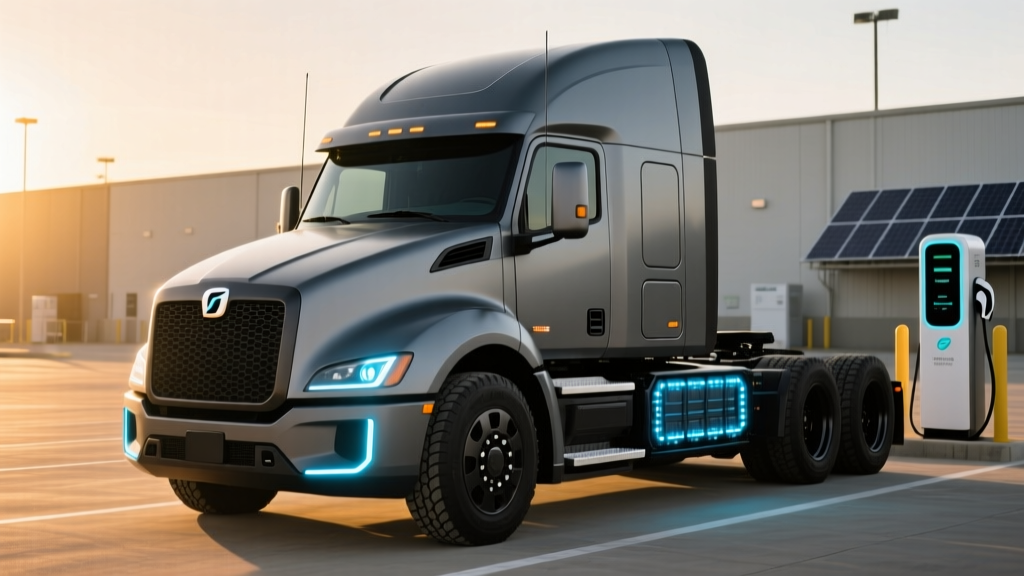
Peterbilt currently offers three battery-electric Class 8 and medium-duty models: the Model 520EV (refuse/vocational, ~150-mile range), Model 579EV (regional haul, ~150-mile range), and Model 220EV (last-mile delivery, ~150-mile range). Base pricing typically falls between $250,000–$400,000 depending on configuration, before federal and state incentives. These trucks are purpose-built for depot-based, return-to-base duty cycles under 200 miles per day — they are not long-haul replacements. Fleet operators with predictable routes, access to depot charging infrastructure, and operations in regions with favorable electricity rates see the strongest payback, often within 5–7 years through fuel and maintenance savings.
Peterbilt's Electric Lineup: Specs at a Glance
Peterbilt, a division of PACCAR, has been one of the more aggressive legacy truck manufacturers in electrifying commercial platforms. Rather than building a ground-up electric architecture, Peterbilt electrified proven chassis — which means familiar serviceability but packaging compromises on battery placement. Here is how the three current models compare:
| Specification | Model 520EV | Model 579EV | Model 220EV |
|---|---|---|---|
| Class | Class 8 | Class 8 | Class 5–7 |
| Application | Refuse, vocational | Regional haul, drayage | Last-mile delivery, P&D |
| Battery Capacity | ~396 kWh (LFP) | ~396 kWh (LFP) | ~169 kWh (LFP/NMC) |
| EPA-Est. Range | ~150 miles | ~150 miles | ~150 miles |
| Real-World Range* | 100–130 miles | 110–140 miles | 110–140 miles |
| Motor Output | ~536 hp peak | ~536 hp peak | ~250 hp peak |
| DC Fast Charge (peak) | ~150 kW | ~150 kW | ~80 kW |
| Charge Time (0–100%) | ~3–4 hours | ~3–4 hours | ~2.5–3 hours |
| GVWR | Up to 80,000 lbs | Up to 82,000 lbs | Up to 33,000 lbs |
| Estimated Base Price | ~$350,000–$400,000 | ~$350,000–$400,000 | ~$250,000–$300,000 |
*Real-world range varies significantly based on payload, terrain, ambient temperature, and accessory load (e.g., hydraulic systems on refuse trucks). Cold-weather operation at 20°F or below can reduce range by 20–35%.
Electric vs. Diesel: The Real Cost Comparison
The purchase price of a Peterbilt electric truck is roughly 2.5x–3x that of a comparable diesel model. A diesel Class 8 tractor typically runs $140,000–$180,000, while the 579EV sits well above $350,000 before incentives. The economic case therefore rests entirely on operating cost savings and incentive stacking.
| Cost Factor | Peterbilt 579EV (Electric) | Peterbilt 579 (Diesel) |
|---|---|---|
| Purchase Price (est.) | $375,000 | $160,000 |
| Federal Tax Credit (§45W) | Up to $40,000 | $0 |
| State/Local Incentives (varies) | $25,000–$120,000+ | $0 |
| Effective Purchase Price | $215,000–$310,000 | $160,000 |
| Fuel/Energy Cost per Mile | $0.15–$0.30 (electricity) | $0.55–$0.80 (diesel) |
| Annual Fuel/Energy (80k mi/yr) | $12,000–$24,000 | $44,000–$64,000 |
| Annual Maintenance | $3,000–$5,000 | $8,000–$15,000 |
| 5-Year Operating Cost | $75,000–$145,000 | $260,000–$395,000 |
| 5-Year Total Cost (Purchase + Ops) | $290,000–$455,000 | $420,000–$555,000 |
The breakeven point typically arrives between years 4 and 7, heavily dependent on route mileage, local electricity rates, and available incentive stacking. Fleets operating in California with access to CARB's HVIP incentives can see payback in under 4 years. For the §45W Commercial Clean Vehicle Credit (not the consumer §30D credit — this is a separate provision for commercial vehicles over 14,000 lbs GVWR), qualifying vehicles can receive up to $40,000 per unit. Always verify current eligibility with the IRS §45W guidelines and consult a tax professional, as battery sourcing and MSRP-equivalent rules apply.
Charging Infrastructure: The Hidden Capital Expense
No Peterbilt electric truck purchase makes sense without a charging plan. Unlike consumer EVs that can rely on public networks, Class 8 electric trucks require depot-based charging infrastructure — and this is often the most underestimated cost in fleet electrification.
| Infrastructure Component | Estimated Cost per Stall | Notes |
|---|---|---|
| Level 2 AC Charger (19–22 kW) | $7,000–$15,000 | Overnight charging; 8–12 hour fill |
| DC Fast Charger (50–150 kW) | $40,000–$120,000 | 3–4 hour fill; opportunity charging |
| DC Ultra-Fast (180–350 kW) | $100,000–$250,000+ | 1.5–2.5 hour fill; future-proofing |
| Electrical Panel/Transformer Upgrade | $25,000–$200,000+ | Depends on existing service capacity |
| Trenching, Conduit, Permits | $10,000–$50,000 | Varies by site and local code |
| Software/Fleet Management | $2,000–$10,000/yr | Charge scheduling, load management |
For a 10-truck fleet installing 150 kW DC chargers, total infrastructure investment can range from $500,000 to over $1.5 million before utility rebates. Many utilities offer make-ready programs that cover the cost of wiring and transformers — contact your local utility early in the planning process. The Alternative Fuels Data Center maintains a database of state and utility incentives for charging infrastructure.
Battery Chemistry, Degradation, and Warranty
Peterbilt's current electric models predominantly use LFP (lithium iron phosphate) battery chemistry. This matters for fleet buyers for several reasons:
| Factor | LFP (Peterbilt Standard) | NMC (Alternative) |
|---|---|---|
| Energy Density | Lower (heavier pack for same kWh) | Higher (lighter pack) |
| Cycle Life | 3,000–5,000+ cycles | 1,000–2,500 cycles |
| Thermal Stability | Excellent (lower runaway risk) | Good (requires more active cooling) |
| Cold-Weather Performance | Moderate (20–35% range loss at 20°F) | Slightly better (15–30% loss) |
| Cost per kWh | Lower | Higher |
| Best For | Daily-cycle depot operations | Weight-sensitive, long-range |
For refuse and delivery routes that cycle the battery daily, LFP's superior cycle life is a significant advantage. Peterbilt typically warrants the battery system for 5 years or 300,000 miles, with a capacity retention threshold of approximately 70–75% — though exact terms vary by model year and configuration. Battery replacement on a Class 8 electric truck currently runs $80,000–$150,000, making warranty coverage a critical negotiation point.
Common Misconceptions About Electric Class 8 Trucks
| Myth | Fact |
|---|---|
| "Electric trucks can't handle heavy loads" | The 579EV and 520EV are rated for full Class 8 GVWR (80,000–82,000 lbs). Payload capacity is reduced by battery weight (~4,000–6,000 lbs), but most refuse and regional routes don't max out weight limits. |
| "Charging takes too long for commercial ops" | Depot charging overnight (8–10 hours on Level 2) covers a full day's range for most duty cycles. DC fast charging at 150 kW fills in 3–4 hours for midday top-ups. |
| "Batteries won't last the life of the truck" | LFP batteries rated for 3,000+ cycles can last 8–12 years at one cycle per day. Most fleet first-owners retire trucks at 7–10 years, meaning the battery often outlasts the first ownership period. |
| "Electric trucks are zero-maintenance" | While they eliminate oil changes, DPF/EGR service, and transmission maintenance, electric trucks still require suspension, brake, tire, cooling system, and high-voltage system inspections. Expect 40–60% lower maintenance costs, not zero. |
| "All fleets should go electric now" | Only fleets with depot return patterns, sub-200-mile daily routes, and access to charging infrastructure are current candidates. Long-haul and irregular-route operations are not yet viable for battery-electric. |
Decision Framework: Should Your Fleet Go Electric?
Choose Peterbilt Electric If:
- Your trucks return to the same depot nightly
- Daily routes are consistently under 150 miles (or under 100 miles in cold climates)
- You operate in a state with strong commercial EV incentives (CA, NY, NJ, WA, CO)
- Your utility offers favorable commercial EV charging rates or make-ready programs
- You face regulatory pressure (e.g., CARB Advanced Clean Trucks rule, port drayage mandates)
- Fuel cost volatility is a significant budget risk for your operation
Stick with Diesel (or Consider Hydrogen) If:
- Your routes regularly exceed 250 miles per day
- You operate in regions with extreme cold (sustained sub-0°F temperatures)
- Your fleet lacks a fixed depot or has distributed overnight parking
- Utility service at your depot cannot support the electrical load without a multi-year upgrade
- Your operation is long-haul or irregular-route with no predictable charging windows
What First-Time Electric Fleet Buyers Must Know
If you're evaluating your first Peterbilt electric truck, these are the operational realities that don't appear in the brochure:
- Start with 1–2 units, not a full fleet. Pilot programs reveal route-specific energy consumption, charging bottlenecks, and driver adaptation issues before you commit capital.
- Engage your utility 12–18 months before truck delivery. Transformer upgrades and service panel expansions can take over a year to permit and install.
- Budget for driver training. Regenerative braking behavior, charge management, and range awareness require retraining. Drivers who understand energy recovery can extend real-world range by 10–15%.
- Plan for charging redundancy. If a single charger goes down, you need backup capacity or a contingency plan. Fleet uptime depends on charger uptime.
- Track kWh/mile, not just miles. Energy efficiency per mile is the metric that determines whether a route is sustainable as payloads, seasons, and battery health change.
Frequently Asked Questions
What federal tax credit applies to Peterbilt electric trucks?
The §45W Commercial Clean Vehicle Credit provides up to $40,000 for qualified commercial clean vehicles with a GVWR over 14,000 pounds. This is distinct from the consumer §30D credit. Eligibility depends on battery component sourcing and critical mineral requirements. Always verify current-year rules on IRS.gov and consult a tax professional for fleet-specific guidance.
Can a Peterbilt 579EV handle highway speeds fully loaded?
Yes. The 579EV is governed at typical highway speeds (65–70 mph) and can sustain them fully loaded. However, sustained highway driving at 65+ mph consumes significantly more energy than stop-and-go urban routes with regenerative braking recovery. Expect highway-heavy routes to reduce real-world range to 100–120 miles.
How does cold weather affect range?
In testing and fleet reports, LFP-equipped Class 8 trucks see 20–35% range reduction at temperatures below 20°F. Battery thermal management systems mitigate this but consume energy themselves. Fleets in northern climates should spec routes with a 30% range buffer in winter months.
What is the expected battery replacement cost?
Current estimates for Class 8 battery pack replacement range from $80,000 to $150,000 depending on capacity and chemistry. However, LFP packs rated for 3,000–5,000 cycles may not require replacement during a typical first-owner lifecycle (7–10 years at one cycle/day).
Do Peterbilt electric trucks support CCS or NACS connectors?
Peterbilt's current electric models use the CCS1 (Combined Charging System) connector standard for DC fast charging, which is the dominant standard for commercial vehicles. NACS adoption in the Class 8 segment is still emerging and has not been widely adopted on heavy-duty platforms as of current model years.