If you've spent any time in EV forums or deep-dived into Tesla's engineering history, you've likely encountered the name Pete Bannon. Unlike the celebrity CEOs who dominate headlines, Bannon operated in the silicon trenches — the kind of engineer whose fingerprints are on every Tesla vehicle rolling off the line today, even if most owners have never heard his name.
Bannon served as Tesla's Vice President of Silicon Engineering, leading the team that designed Tesla's custom Full Self-Driving (FSD) chip — formally known as Hardware 3 (HW3) and later evolved into HW4. His departure from Tesla in 2022 marked the end of an era, but the hardware architectures he championed continue to define Tesla's vehicle lineup in 2026. To understand why a Tesla Model 3 or Model Y processes sensor data the way it does, you need to understand the engineering decisions Bannon's team made years ago.
This profile examines Bannon's contributions through the lens of the vehicles they enabled — specifically the current-generation 2026 Tesla Model Y, the best-selling EV in America and the primary beneficiary of the silicon engineering Bannon oversaw.
Who Was Pete Bannon and What Did He Build at Tesla?
Pete Bannon joined Tesla in 2016 after a career at Apple, where he worked on the A-series chips powering iPhones and iPads. At Tesla, he was tasked with an audacious goal: design a custom neural-network processor from scratch that could handle the massive computational load of real-time autonomous driving — replacing the NVIDIA-based hardware Tesla had been licensing.
The result was Tesla's FSD Computer (Hardware 3), introduced in April 2019. Key specs of the Bannon-era HW3 architecture:
- Dual neural network processors running at up to 144 TOPS (trillions of operations per second)
- Redundant design — two independent compute paths for safety-critical failover
- Custom image signal processor handling 8 camera feeds simultaneously at 36 frames per second
- Power draw of approximately 72 watts — critical for vehicle thermal management
By 2023, Tesla had evolved to Hardware 4 (HW4), which Bannon's team initiated before his departure. HW4 roughly doubled compute throughput, upgraded camera resolution from 1.2 megapixels to 5 megapixels, and eliminated radar reliance entirely in favor of Tesla Vision (camera-only perception). As of 2026, all new Tesla vehicles ship with HW4.
The Vehicle Bannon's Silicon Powers: 2026 Tesla Model Y
The 2026 Tesla Model Y — now in its "Juniper" refresh generation — is the direct beneficiary of Bannon's architectural vision. Every Autopilot lane-keeping decision, every FSD (Supervised) intersection negotiation, every automatic emergency braking activation runs through silicon that traces its lineage to his team's work.
Here's what the current Model Y Long Range AWD delivers:
| Spec | Value |
|---|---|
| EPA Range | 320 miles |
| Battery Capacity | ~78 kWh usable (NMC chemistry) |
| Drivetrain | Dual-motor AWD |
| Horsepower | 384 hp (combined) |
| 0-60 mph | 4.8 seconds |
| Top Speed | 125 mph |
| Efficiency | 122 MPGe / 28 kWh/100mi |
| Cargo Volume | 72 cu ft (rear seats folded) |
| Rear Legroom | 41.6 inches |
| Compute Hardware | HW4 (FSD Computer, 2nd gen) |
| Base MSRP | $46,630 |
Charging Performance: From Silicon to Supercharger
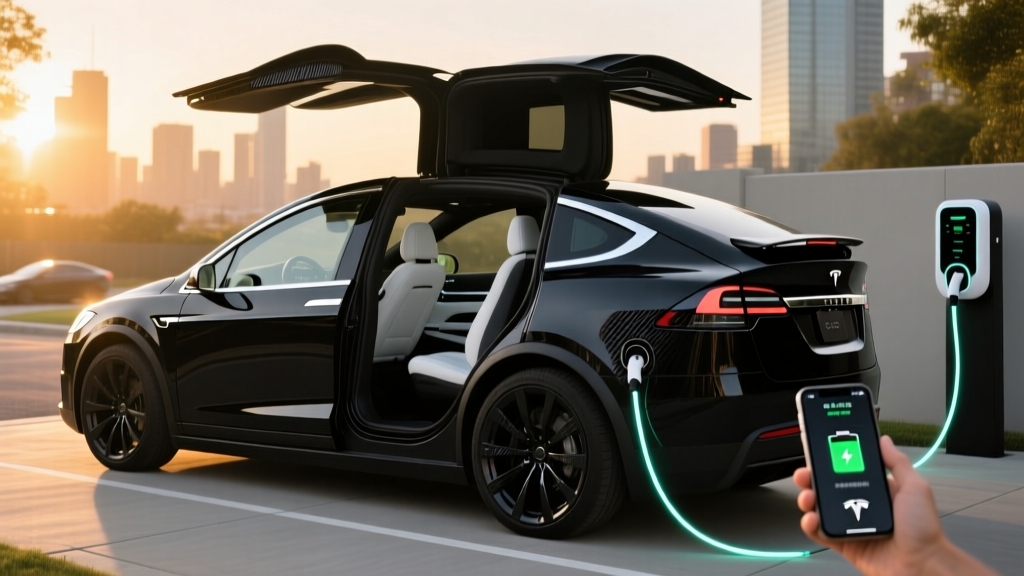
The compute architecture Bannon's team designed doesn't just process camera data — it manages thermal preconditioning, charge-curve optimization, and battery state estimation. When you navigate to a Supercharger and the car begins warming the battery, that's the FSD computer coordinating with the battery management system.
| Charging Level | Power / Rate | Speed | Notes |
|---|---|---|---|
| Level 1 (120V) | 1.4 kW | ~3-4 mi/hr | Emergency/trickle only |
| Level 2 (240V, 48A) | 11.5 kW | ~37 mi/hr | Home Wall Connector; full charge in ~8 hrs |
| DC Fast (Supercharger V3) | Peak 250 kW | 10-80% in ~25 min | Peak sustained to ~50% SoC, then tapers |
| DC Fast (Supercharger V4) | Peak 250 kW | 10-80% in ~25 min | Newer stall design, same vehicle-side limit |
Charging curve reality: The Model Y Long Range peaks at approximately 250 kW but only sustains that rate between roughly 10-30% state of charge. From 30-50%, expect ~170-200 kW. Above 60%, the rate drops to ~100 kW, and above 80%, it falls below 50 kW. This is why Tesla's navigation system recommends charging to 80% at Superchargers — the time penalty from 80-100% is severe. On a road trip, plan 20-25 minute stops for 10-80% sessions.
Per fueleconomy.gov, the 2026 Model Y Long Range AWD achieves 122 MPGe combined, translating to roughly 28 kWh per 100 miles. At the national average electricity rate of $0.17/kWh, that's approximately $0.048 per mile — compared to roughly $0.12/mile for a 30 MPG gas vehicle at $3.50/gallon.
Driver Assistance: What the Bannon-Era Silicon Actually Enables
The HW4 computer processes input from 8 cameras (up from the 1.2MP sensors in HW3 to 5MP in HW4) to deliver:
- Autopilot (included): Traffic-aware cruise control, lane centering, automatic emergency braking, blind-spot monitoring
- Enhanced Autopilot ($6,000 option): Auto lane change, navigate on Autopilot (highway exits/interchanges), auto park, summon
- FSD (Supervised) ($8,000 option or $99/month): City street driving with stop-sign and traffic-light recognition, intersection handling, turn execution — still requires active driver supervision
The Bannon-era architectural decision to pursue a camera-only, neural-network-centric approach (eliminating radar and ultrasonic sensors by 2023) remains controversial. Proponents argue it simplifies sensor fusion and allows end-to-end neural processing. Critics point to edge cases in low-visibility conditions where radar redundancy could help. As of 2026, Tesla has not reintroduced radar, and the HW4 system's higher-resolution cameras and improved low-light processing have narrowed — but not eliminated — the gap.
Pricing, Tax Credits, and Ownership Economics
| Trim | MSRP | Est. After §30D Credit |
|---|---|---|
| Long Range AWD | $46,630 | ~$39,130 (if eligible) |
| Performance AWD | $51,630 | ~$44,130 (if eligible) |
Federal tax credit eligibility (IRS §30D) — critical caveats: The $7,500 credit is NOT automatic. Per IRS guidelines, you must meet ALL of the following:
- MSRP cap: Vehicle must be under $80,000 (SUVs/vans) — Model Y qualifies at all trims
- Income cap: Modified AGI must not exceed $300,000 (joint), $225,000 (head of household), or $150,000 (single)
- Battery sourcing: Critical minerals and battery components must meet escalating domestic-content thresholds — Tesla has largely localized supply chains, but verify current-year compliance on the IRS eligible vehicle list
- Point-of-sale transfer: As of 2024+, you can transfer the credit to the dealer at purchase for an immediate price reduction, rather than waiting for tax filing
- VIN registration: The dealer must report the sale and your VIN to the IRS within 3 days
Consult a tax professional before relying on credit eligibility. Rules change annually, and your personal tax situation determines qualification.
5-Year Total Cost of Ownership (estimated):
- Purchase (after credit): ~$39,130
- Electricity (15,000 mi/yr × 5 yrs at $0.17/kWh): ~$3,570
- Insurance (national EV average): ~$12,500
- Maintenance (tires, cabin filter, wiper fluid): ~$1,800
- Estimated depreciation (5 yr): ~$15,000
- Total 5-year cost: ~$72,000
Warranty Coverage and Battery Longevity
Tesla provides the following warranty coverage for the 2026 Model Y:
- Basic Vehicle: 4 years / 50,000 miles
- Battery & Drive Unit: 8 years / 120,000 miles (Long Range AWD), with minimum 70% capacity retention
- Restraint System: 5 years / 60,000 miles
The NMC (nickel manganese cobalt) battery in the Long Range variant has demonstrated approximately 10-12% degradation over 100,000 miles based on fleet data from sources like Teslanomics. Real-world battery replacement costs outside warranty range from $12,000-$16,000 depending on the pack, though most Model Y batteries are projected to retain usable capacity well beyond 200,000 miles. For longevity, Tesla recommends daily charging to 80-90% and only charging to 100% when needed for long trips.
Pros, Cons, and the Verdict
Pros
- Class-leading Supercharger network access (17,000+ NA stations)
- HW4 compute is the most powerful vision system in any consumer EV
- 320-mile EPA range covers most daily needs with margin
- 250 kW peak DC charging keeps road-trip stops under 30 min
- Spacious 72 cu ft cargo with flat load floor
- OTA updates continuously add features post-purchase
- $7,500 federal credit available (if eligible)
Cons
- FSD (Supervised) still requires full driver attention — $8K for Level 2
- No radar redundancy (camera-only Tesla Vision)
- Cold-weather range loss of 20-30% is significant in northern states
- Insurance premiums run 15-25% above comparable non-Tesla EVs
- Ride quality on 20" wheels is firm over rough pavement
- Touchscreen-only climate/media controls lack physical redundancy
- Panel gaps and paint quality still inconsistent vs. legacy luxury brands
Who Should Buy the 2026 Model Y — And Who Shouldn't
Decision Framework
Choose the Model Y if: You want the broadest fast-charging network in North America, you value OTA feature updates, you need family-friendly cargo space with 320+ miles of range, and you're comfortable with a screen-centric interface.
Look at the Hyundai Ioniq 5 or Ford Mustang Mach-E if: You prefer physical buttons, want 800V-class charging architecture (Ioniq 5 charges 10-80% in ~18 min at 350 kW stations), or want a more traditional dealership service experience.
Consider a PHEV (like the Toyota RAV4 Prime) if: You lack reliable home charging access, frequently drive in extreme cold, or want to avoid range variability entirely.
The Bannon Legacy: What It Means for Your Purchase Decision
Pete Bannon left Tesla in 2022, but the silicon architecture his team designed remains the computational backbone of every Tesla sold in 2026. The HW4 chip processes approximately 2,500 frames per second across 8 high-resolution cameras, running neural networks that handle everything from pedestrian detection to traffic-light classification. That's not marketing — it's the engineering specification.
For buyers, the practical takeaway is this: Tesla's compute advantage is real and measurable, but it's a necessary condition for autonomous driving, not a sufficient one. The software running on Bannon's silicon (FSD Supervised) is impressive but remains Level 2. You're buying the most powerful driver-assistance hardware in the consumer EV market — paired with software that still demands your full attention.
The 2026 Model Y Long Range AWD at ~$39,130 after the federal credit (if eligible) remains the default recommendation for families seeking a single-vehicle EV solution with genuine road-trip capability. The Bannon-era engineering makes that recommendation possible. Just don't mistake the silicon for autonomy.
Frequently Asked Questions
What is the real-world range of the 2026 Tesla Model Y?
The EPA rates it at 320 miles. Real-world highway driving at 70 mph yields approximately 270-290 miles. In freezing temperatures, expect 225-255 miles. City driving with regen can exceed 330 miles in mild weather.
How fast does the Model Y charge at home and on the road?
At home on a Level 2 Tesla Wall Connector (48A/240V), you get ~37 miles of range per hour, fully charging overnight in about 8 hours. On DC fast charging (Supercharger V3/V4), 10-80% takes approximately 25 minutes, with peak rate of 250 kW tapering significantly above 50% SoC.
How much does the 2026 Model Y cost after tax credits?
The Long Range AWD starts at $46,630 MSRP. If you qualify for the full $7,500 federal §30D credit (income, sourcing, and MSRP requirements all met), the effective price drops to approximately $39,130. State incentives may reduce this further — check your state's energy office.
Does the Tesla Model Y qualify for the $7,500 federal EV tax credit?
The Model Y qualifies on MSRP (under $80,000 SUV cap) and Tesla has worked to meet battery-sourcing requirements. However, YOUR eligibility depends on income caps ($150K single / $300K joint), and sourcing compliance can change. Verify on the IRS eligible vehicle list and consult a tax professional before purchasing.
Is the Model Y worth buying vs. the Hyundai Ioniq 5 or Ford Mach-E?
The Model Y wins on charging network breadth (Supercharger), cargo space (72 cu ft), and compute hardware (HW4). The Ioniq 5 wins on DC charge speed (10-80% in ~18 min at 350 kW chargers) and has physical controls. The Mach-E offers a more traditional dealership experience. All three are strong — test drive each.
What did Pete Bannon actually do at Tesla?
Bannon was VP of Silicon Engineering and led the design of Tesla's custom FSD chip (HW3, later HW4). His team created the custom neural-network processor that replaced NVIDIA hardware, enabling Tesla's camera-only autonomous driving approach. He departed in 2022, but his architecture remains in every Tesla vehicle produced today.