The Short Answer: Is a Personal EV Right for You?
A personal EV saves most drivers $800–$1,500 annually on fuel and maintenance compared to a gas car, but the math only works if you have reliable home or workplace charging, drive under ~350 miles daily, and qualify for incentives that offset the higher upfront price. If you lack Level 2 charging access or regularly drive in sub-20°F climates without a garage, a hybrid may be the smarter bridge. Below, we break down every cost, limitation, and decision factor with real numbers.
The Real Cost of Owning a Personal EV vs. Gas and Hybrid
The sticker price of an EV is typically $3,000–$8,000 higher than a comparable gas car before incentives, but operating costs are dramatically lower. Here's how a mid-range personal EV like the 2026 Hyundai Ioniq 6 SE (EPA 361 miles, $39,000 MSRP) stacks up against the 2026 Toyota Camry LE gas ($29,500) and the 2026 Toyota Camry Hybrid LE ($31,000) over five years and 75,000 miles.
| Cost Category | EV (Ioniq 6 SE) | Gas (Camry LE) | Hybrid (Camry Hybrid LE) |
|---|---|---|---|
| Base MSRP | $39,000 | $29,500 | $31,000 |
| Federal Tax Credit (§30D) | –$3,750 to $7,500* | $0 | $0 |
| Effective Purchase Price | $31,500–$35,250 | $29,500 | $31,000 |
| 5-Year Fuel/Energy Cost | $3,750 (home L2 @ $0.14/kWh) | $8,440 (30 MPG @ $3.38/gal) | $5,630 (52 MPG @ $3.38/gal) |
| 5-Year Maintenance | ~$1,500 | ~$3,200 | ~$2,800 |
| 5-Year Insurance (avg) | ~$9,200 | ~$7,500 | ~$7,800 |
| 5-Year Total Cost of Ownership | $45,950–$49,700 | $48,640 | $47,230 |
*§30D credit eligibility depends on MSRP caps ($55,000 sedans), buyer income limits ($150K single / $300K joint), and battery critical-mineral sourcing. The Ioniq 6 qualifies for $3,750–$7,500 depending on sourcing compliance — verify at IRS.gov qualified vehicle list. Point-of-sale transfer is available from the dealer.
The EV wins on fuel and maintenance by roughly $4,700–$6,200 over five years, but insurance premiums run 15–25% higher for EVs due to battery replacement costs in collisions. If you can charge primarily at home on off-peak electricity rates ($0.10–$0.16/kWh), the EV's total cost rivals or beats the hybrid. If you rely entirely on public DC fast charging at $0.35–$0.50/kWh, your energy cost nearly doubles to ~$6,000–$7,500, erasing much of the advantage.
What a First-Time EV Buyer Must Know Before Purchasing
Buying your first personal EV involves considerations that don't exist with gas cars. Here's what actually matters once you drive off the lot.
Home Charging Is the Make-or-Break Factor
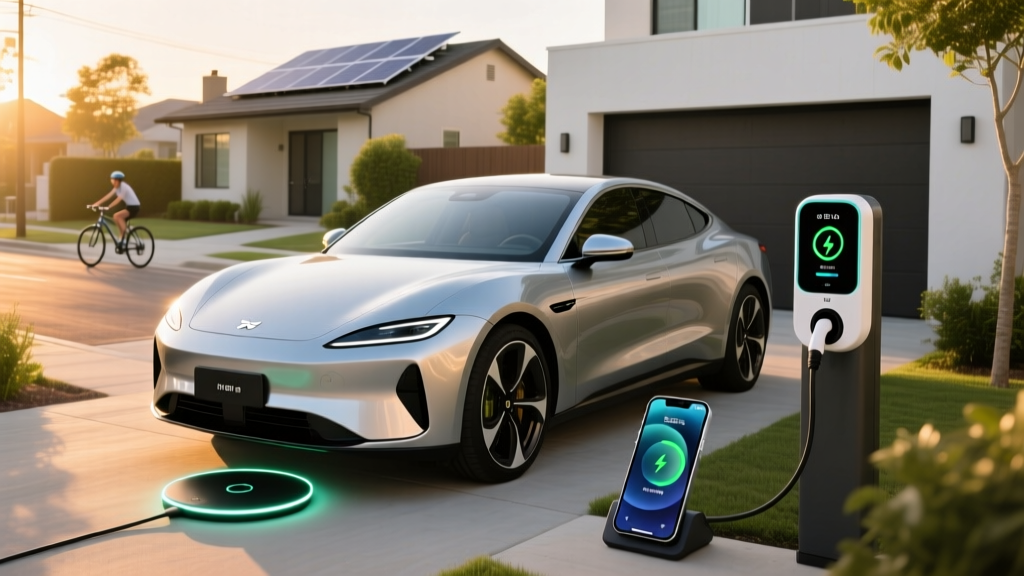
Over 80% of EV charging happens at home. A Level 2 home charger (240V, 32–48 amps) adds 25–36 miles of range per hour and costs $500–$1,500 for equipment plus $800–$2,500 for professional installation by a licensed electrician, depending on whether your panel needs an upgrade to 200 amps. If you live in an apartment without charging access or park on the street, you'll depend on public infrastructure — which adds time, cost, and unpredictability to ownership.
EPA Range vs. Real-World Range
The EPA range sticker is measured under ideal conditions. In practice, expect:
- Highway driving (70+ mph): 15–20% less than EPA. A 300-mile EPA EV delivers ~240–255 real highway miles.
- Cold weather (below 30°F): 20–35% range loss without a heat pump; 10–20% with one. A 300-mile EV may drop to 195–240 miles in winter.
- DC fast charging taper: Peak charge rates (e.g., 250 kW) only hold from ~10–50% SoC. Charging from 80–100% can take as long as 10–80% due to the charge curve taper.
Tax Credits Are Not Guaranteed
The federal §30D credit offers up to $7,500, but you must meet all of these requirements simultaneously:
- Vehicle MSRP under $55,000 (sedans/wagons) or $80,000 (SUVs/trucks/vans)
- Buyer modified AGI under $150,000 (single) or $300,000 (joint)
- Battery components manufactured in North America (phased percentages increase yearly)
- Critical minerals sourced from the US or FTA partners
- Final assembly in North America
Many popular EVs qualify for only $3,750 (meeting critical minerals but not component sourcing) or $0. Always check the IRS qualified models list before committing to a purchase.
EV vs. Gas vs. Hybrid: Which Powertrain Fits Your Life?
| Factor | Battery EV (BEV) | Plug-in Hybrid (PHEV) | Hybrid (HEV) | Gas (ICE) |
|---|---|---|---|---|
| Upfront Cost | $$–$$$ | $$–$$$ | $$ | $ |
| Fuel Cost per Mile | $0.04–$0.06 (home) | $0.04 electric / $0.11 gas | $0.07–$0.09 | $0.11–$0.14 |
| Daily Range | 220–380 mi EPA | 25–45 mi electric + 350–450 mi gas | 450–600 mi | 350–500 mi |
| Home Charging Needed? | Strongly recommended | Recommended for EV mode | No | No |
| Maintenance Cost | Lowest (no oil, fewer moving parts) | Moderate (two powertrains) | Low–moderate | Highest |
| Cold-Weather Impact | 20–35% range loss | Moderate (gas engine supplements) | Minimal | Minimal |
| Best For | Home chargers, daily commutes <150 mi | One-car households, mixed driving | High-mileage, no charging access | Low annual miles, budget buyers |
The data is clear: if you charge at home and drive under 150 miles daily, a BEV delivers the lowest operating cost. If you take frequent road trips over 300 miles, live in extreme cold, or lack home charging, a PHEV like the 2026 Toyota RAV4 Prime (42 miles electric-only, 38 MPG combined after depletion) gives you EV daily driving with gas-car road-trip flexibility. A conventional hybrid is the pragmatic choice when charging access is nonexistent.
Common Personal EV Misconceptions — Fact-Checked
| Myth | Fact |
|---|---|
| "EV batteries need replacing every 5 years." | Federal law mandates 8-year/100,000-mile battery warranties retaining ≥70% capacity. Real-world data from fueleconomy.gov and fleet studies show most NMC and LFP batteries retain 85–92% capacity at 100,000 miles. Full replacement costs $8,000–$18,000 but is rarely needed within the first decade. |
| "EVs are worse for the environment because of battery mining." | Lifetime emissions for a US-charged EV are 60–68% lower than a comparable gas car, even accounting for battery manufacturing, according to lifecycle analyses from Argonne National Laboratory. The grid is also decarbonizing yearly. |
| "Public charging is always unreliable." | Tesla Superchargers maintain 99%+ uptime. Non-Tesla networks (Electrify America, EVgo) average 80–90% uptime. With NACS adoption spreading across Ford, GM, Hyundai, and Rivian in 2025–2026, reliable Supercharger access is expanding to most EVs. |
| "I'll save money no matter what." | If you pay $0.40+/kWh at public chargers, drive under 6,000 miles/year, or pay above-average insurance, your savings may shrink to break-even versus a hybrid. Run your own numbers. |
| "Level 2 chargers charge a car in 30 minutes." | A 48-amp Level 2 charger delivers ~11.5 kW — adding roughly 35–45 miles per hour. A full charge of an 80 kWh battery takes 7–8 hours. DC fast charging (50–350 kW) is what delivers 10–80% in 18–35 minutes. |
Your Personal EV Decision Framework
Use This If/Then Logic to Choose Your Powertrain
- IF you have a garage or driveway with a 240V outlet (or can install one) AND your daily driving is under 150 miles → THEN a battery EV maximizes your savings. Target models: Hyundai Ioniq 6, Tesla Model 3, Chevrolet Equinox EV.
- IF you lack home charging but your workplace offers Level 2 charging → THEN a BEV is still viable, but budget extra time for charging and confirm your workplace chargers aren't congested.
- IF you have no home or workplace charging AND you drive over 200 miles daily → THEN choose a hybrid (HEV) for lowest hassle, or a PHEV if you can charge somewhere occasionally.
- IF you live where winter temperatures regularly drop below 15°F AND you take highway trips over 200 miles → THEN a PHEV eliminates cold-weather range anxiety while still giving you electric-only commuting.
- IF your household has two cars → THEN make the daily-driver a BEV and keep a gas/hybrid for road trips. This is the highest-savings, lowest-risk setup.
- IF your annual mileage is under 6,000 miles → THEN the EV fuel savings may not justify the premium. A hybrid or efficient gas car could be more economical over 5 years.
Charging Costs: Home vs. Public vs. Gas
Understanding the energy cost per mile is critical to projecting your savings. Here's the breakdown for a typical personal EV consuming 3.5 miles/kWh (about 28.5 kWh/100 miles, similar to a Tesla Model 3 RWD):
| Charging Method | Cost per kWh | Cost per Mile | Annual Cost (12,000 mi) |
|---|---|---|---|
| Home Level 2 (off-peak utility rate) | $0.10–$0.16 | $0.03–$0.05 | $360–$600 |
| Home Level 2 (standard rate) | $0.14–$0.20 | $0.04–$0.06 | $480–$720 |
| Public Level 2 (ChargePoint, etc.) | $0.20–$0.35 | $0.06–$0.10 | $720–$1,200 |
| DC Fast Charging (EA, EVgo) | $0.35–$0.55 | $0.10–$0.16 | $1,200–$1,920 |
| Gas Car (30 MPG, $3.38/gal) | — | $0.11 | $1,320 |
| Hybrid (50 MPG, $3.38/gal) | — | $0.07 | $840 |
The takeaway: home charging is where the EV economics shine. At $0.14/kWh, you spend roughly $500/year on energy — less than half what a 30-MPG gas car costs. But if 100% of your charging happens at DC fast chargers at $0.48/kWh, you'd spend ~$1,650/year — still less than gas, but not the dramatic savings EV marketing promises.
Frequently Asked Questions
How long does an EV battery actually last?
Most modern EV batteries (NMC and LFP chemistries) retain 85–92% of original capacity at 100,000 miles based on fleet data. Federal law requires manufacturers to warranty the battery for at least 8 years/100,000 miles with no more than 30% degradation. Many batteries outlast 150,000–200,000 miles before dropping below 70% capacity. LFP batteries (used in base Tesla Model 3, some Ford and Rivian models) tolerate daily 100% charging and typically show slower degradation than NMC.
Do I need to upgrade my electrical panel for a home charger?
Possibly. A 48-amp Level 2 charger draws 11.5 kW and requires a 60-amp dedicated circuit. If your home has a 100-amp panel or limited spare breaker slots, an upgrade to 200 amps may cost $1,500–$3,500. Homes with existing 200-amp panels and spare capacity typically need only a $300–$800 electrician visit for the circuit and outlet. Always get a load calculation from a licensed electrician before purchasing equipment.
Is a personal EV practical for apartment dwellers?
It can be, but it's harder. Look for buildings with existing EV charging infrastructure or a landlord willing to install it (some states mandate landlord accommodation). Workplace charging, public Level 2 near your routine stops, and occasional DC fast charging can work — but expect to spend $1,000–$1,800/year more on energy than a home-charging EV owner. A PHEV may be a more practical choice if apartment charging is your only option.
What happens if I run out of charge on the road?
The same thing that happens when you run out of gas: you call roadside assistance. Most EV manufacturers include 3–4 years of complimentary roadside assistance. AAA and other services now offer mobile EV charging trucks in major metro areas that can add 10–20 miles of range to get you to the nearest station. Modern EVs also provide accurate range predictions and will route you to chargers well before you reach zero.
Are EVs more expensive to insure?
Yes, typically 15–25% more than comparable gas vehicles, primarily because battery packs are expensive to repair or replace after a collision. Average annual EV insurance runs $1,800–$2,200 versus $1,400–$1,700 for a gas sedan. Shop quotes from multiple insurers — some now offer EV-specific discounts. States with lower collision rates see smaller premiums gaps.
Should I buy or lease my first EV?
Leasing is often the smarter first-EV move. You avoid long-term battery degradation risk, benefit from rapid technology improvements (better range and charging every 2–3 years), and many lease deals pass through the $7,500 federal credit as a lease incentive even when the buyer wouldn't qualify for purchase. If you drive over 15,000 miles/year or plan to keep the car 8+ years, buying may be more economical — especially with the §30D point-of-sale credit reducing your financed amount.