Quick Answer: Is the Pebble Light Travel Trailer Worth It?
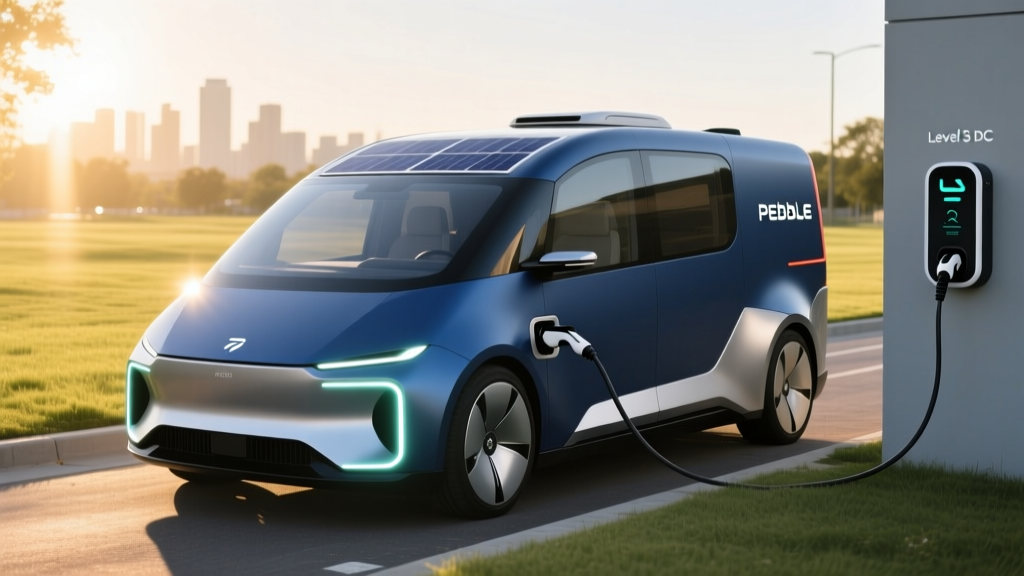
Electric RV startup Pebble begins deliveries of its Light travel trailer in 2026, starting around $50,000 before options. The trailer packs a 45 kWh LFP battery, integrated solar panels generating roughly 15 miles of range per day while parked, and an electric axle that reduces tow-vehicle energy consumption. It's designed for EV owners who want to tow without losing 30–40% of their range. However, it's a premium product targeting a niche: if you tow fewer than 10 times a year or don't own an EV with 5,000+ lb towing capacity, a conventional lightweight trailer may make more financial sense.
What Is the Pebble Light, and Why Does It Matter for EV Owners?
The Pebble Light is a ~2,400 lb (dry weight) travel trailer with a fully integrated electric powertrain. Unlike a traditional trailer that acts as dead weight — forcing your EV to work harder and consume significantly more energy — the Light uses its onboard battery and electric axle to partially self-propel. The trailer communicates with the tow vehicle via a proprietary hitch system, matching acceleration and braking forces to reduce the net load on your EV's battery.
The result: where towing a conventional 2,500 lb trailer might drop an F-150 Lightning's range from its EPA-estimated 320 miles down to roughly 180–210 miles, Pebble claims the Light's active propulsion can recover a substantial portion of that loss. Real-world results will depend on terrain, speed, and ambient temperature, but the physics are sound — regenerative braking on descents and assist on inclines genuinely reduce net energy draw from the tow vehicle.
The integrated 45 kWh LFP (lithium iron phosphate) battery serves double duty. While towing, it powers the electric axle. When parked at a campsite, it runs appliances, climate control, and lighting — eliminating the need for a noisy, fuel-burning generator. The roof-mounted solar array (approximately 1.5 kW peak) can add roughly 3–5 kWh per day in good sun, enough to extend off-grid stays significantly.
Pebble Light Specs: Battery, Range, Charging, and Pricing
Here's what we know from Pebble's published specifications and early-delivery configurations as of 2026:
| Specification | Pebble Light (Base) | Pebble Light (Full Option) |
|---|---|---|
| Base MSRP | ~$50,000 | ~$65,000+ |
| Dry Weight | ~2,400 lbs | ~2,700 lbs |
| Battery Capacity | 45 kWh (LFP) | 45 kWh (LFP) |
| Solar Array | ~1.5 kW peak | ~1.5 kW peak |
| Shore Power Charging | Level 2 (240V, up to 11.5 kW) | Level 2 (240V, up to 11.5 kW) |
| Estimated Campsite Range (off-grid) | ~3–7 days | ~3–7 days |
| Tow-Vehicle Range Recovery | Estimated 30–50% of towing loss | Estimated 30–50% of towing loss |
| Warranty (Battery) | 8 years / unlimited | 8 years / unlimited |
| Sleeping Capacity | 2–4 | 2–4 |
Note: Pebble is a startup and specifications may shift between announced figures and production units. Always confirm final specs with the manufacturer before placing a deposit.
EV Towing vs. Gas Truck Towing: The Real Cost Comparison
The core promise of the Pebble Light is that it makes EV towing viable without brutal range penalties. But how do the economics compare to towing with a gas truck?
| Factor | EV + Pebble Light | Gas Truck + Conventional Trailer |
|---|---|---|
| Trailer Purchase Price | $50,000–$65,000 | $15,000–$30,000 (comparable lightweight) |
| Energy/Fuel per 200-mi Tow Trip | ~$12–$20 (at $0.13/kWh home rate) | ~$45–$70 (at $3.50/gal, 10 MPG towing) |
| Annual Maintenance (Trailer) | Minimal — no axle bearings to repack, no generator oil | $200–$500 (bearings, brakes, generator service) |
| Campsite Power Cost | $0 (off-grid solar + battery) | $0–$5/night (generator fuel) or hookup fees |
| 5-Year Trailer Cost (purchase + energy + maint.) | ~$53,000–$68,000 | ~$18,000–$37,000 |
| 5-Year Tow-Vehicle Fuel Savings (EV vs gas) | ~$4,000–$8,000 saved | Baseline |
The math is clear: the Pebble Light costs significantly more upfront. The energy savings per trip are real — roughly $30–$50 saved per 200-mile tow — but it would take hundreds of trips to close a $20,000–$35,000 price gap. This trailer isn't a cost-saving play; it's a convenience and experience play for EV owners who already have the tow vehicle and want to preserve range and enjoy silent, generator-free camping.
Real-World Ownership Considerations
Home Charging Access Is Essential
You'll want a dedicated 240V / 50A outlet (NEMA 14-50) near your parking spot to charge the trailer between trips. A full recharge from 10% to 100% at 11.5 kW takes roughly 4 hours. If you rely on public charging or street parking, keeping the trailer charged becomes a logistical headache — you'd need to tow it to a Level 2 station or rely solely on solar, which adds only 3–5 kWh per day.
Tow Vehicle Compatibility
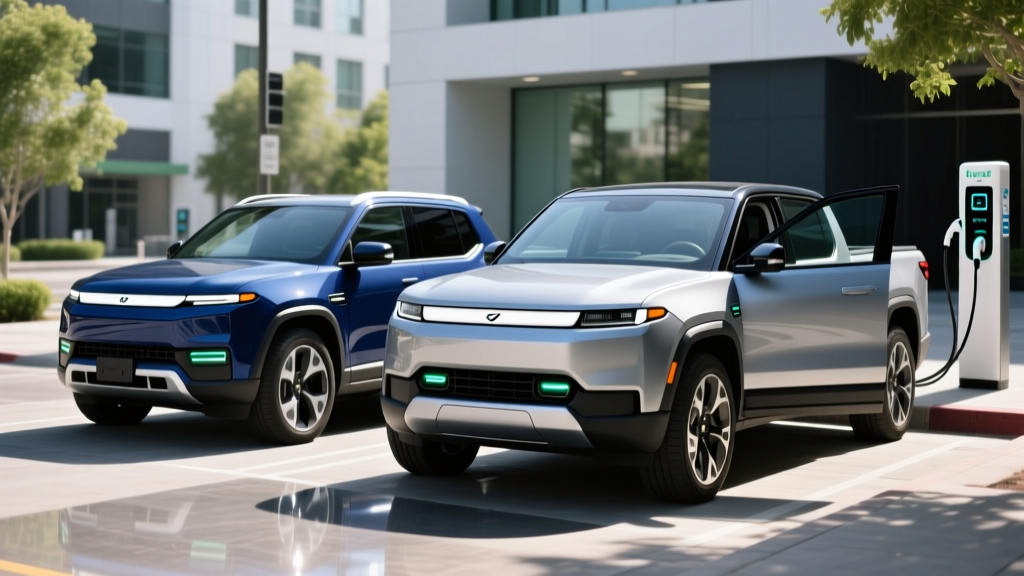
The Light's active propulsion system requires communication with the tow vehicle. At launch, compatibility is limited. Pebble has indicated support for vehicles with standard 7-pin trailer wiring, but the full range-recovery features work best with EVs that can share data via the hitch interface. Confirm compatibility with your specific EV model year before ordering. Popular tow vehicles include the Ford F-150 Lightning, Rivian R1T, Chevrolet Silverado EV, and Tesla Cybertruck.
Cold-Weather Impact
LFP batteries are more tolerant of deep cycling than NMC chemistries, but they still lose efficiency in freezing temperatures. Expect 15–25% reduced battery performance in sustained sub-32°F conditions. The solar array's output also drops in winter due to shorter days and lower sun angle. If you primarily camp in cold climates, plan for shorter off-grid durations and more frequent shore-power charging.
Insurance and Registration
As a trailer, the Light requires separate registration and insurance in most states. Given its $50,000+ value, expect annual insurance premiums in the $400–$800 range depending on your state, driving record, and coverage level. This is notably higher than insuring a $20,000 conventional trailer (~$200–$350/year).
Tax Credit Eligibility: Does the Pebble Light Qualify?
This is a common question, and the answer requires precision. The federal §30D Clean Vehicle Credit applies to new clean vehicles — specifically cars, trucks, and vans that meet battery-component and critical-mineral sourcing requirements, MSRP caps ($80,000 for trucks/SUVs/vans; $55,000 for sedans), and buyer income limits ($300K joint / $150K single for 2026).
A travel trailer is not a motor vehicle under IRS definitions — it has no VIN as a drivable vehicle and cannot propel itself independently on public roads. As of 2026, the Pebble Light does not qualify for the §30D federal EV tax credit. It may, however, qualify for certain state-level energy storage or solar incentives depending on your jurisdiction. Check with your state energy office and a tax professional for current eligibility.
Common Misconceptions About Electric Trailers
| Myth | Fact |
|---|---|
| "The trailer extends my EV's total range." | It reduces the range penalty of towing, but you're still using more total energy than driving without a trailer. Net range is lower than solo driving — just not as dramatically lower. |
| "Solar panels fully recharge the battery." | A 1.5 kW array in ideal conditions produces ~6–8 kWh/day. Recharging a 45 kWh battery from empty via solar alone takes 6–8 full sun days. |
| "It qualifies for the $7,500 federal EV tax credit." | Trailers are not motor vehicles under §30D rules. No federal purchase credit applies as of 2026. |
| "I can tow it with any vehicle." | The active propulsion system requires specific EV communication protocols. Compatibility is limited at launch — confirm with Pebble before purchasing. |
| "No maintenance means zero costs." | Tires still wear, the hitch mechanism needs inspection, and the battery will degrade over time (though LFP degrades slowly — expect ~90% capacity retention at 8 years). |
Decision Framework: Is the Pebble Light Right for You?
Choose the Pebble Light if:
- You already own an EV with 5,000+ lb towing capacity and tow 8+ times per year
- You have home Level 2 charging access with capacity for a dedicated trailer circuit
- You value silent, generator-free camping and want to boondock off-grid for 3–5 days
- Range loss while towing is a dealbreaker for your typical trip distances (200+ miles)
- The $50,000+ price fits within your recreation budget without strain
Stick with a conventional lightweight trailer if:
- You tow fewer than 5 times per year — the premium won't pay for itself
- You don't have reliable home charging access for a second EV battery system
- Your tow vehicle is a gas or diesel truck — you won't benefit from the EV communication features
- You primarily stay at campgrounds with full electrical hookups — the off-grid battery advantage is moot
- Budget is a primary concern — a $20,000 Airstream Bambi or Scamp 16' plus a few nights of generator fuel costs far less over 5 years
What First-Time EV Trailer Buyers Should Know
If you're new to both EVs and towing, understand that towing is the single biggest range killer for any electric vehicle — electric trailer or not. Even with the Pebble Light's active assist, expect a 15–25% range reduction compared to solo driving, depending on speed and elevation. A Rivian R1T with its EPA-estimated 352 miles of range might realistically deliver 260–290 miles with the Light in tow on a flat highway at 65 mph.
Plan your routes around charging infrastructure. Use tools like fueleconomy.gov to understand your tow vehicle's rated efficiency, and map DC fast chargers along your route. Even with a range-preserving trailer, highway towing at 75 mph in cold weather will compress your margins. Arrive at chargers with a 15–20% buffer — don't gamble on making the next station.
Finally, practice towing in an empty parking lot before your first trip. Trailer backing, lane changes, and braking distances all require adjustment, regardless of how advanced the trailer's propulsion system is.
Frequently Asked Questions
How long does it take to charge the Pebble Light battery?
At a 240V Level 2 connection (11.5 kW), a full charge from 10% to 100% takes approximately 4 hours. On a standard 120V household outlet (Level 1, ~1.4 kW), a full charge would take over 30 hours — impractical for regular use. Solar-only replenishment adds roughly 3–5 kWh per day, meaning a full recharge could take over a week.
Can I use the Pebble Light battery to power my home during an outage?
Pebble has discussed vehicle-to-home (V2H) capability, but as of early deliveries, the primary function is trailer self-propulsion and campsite power. Check with Pebble directly on bidirectional power features and whether your home electrical panel supports the necessary transfer switch.
What happens if the trailer battery depletes while towing?
If the 45 kWh battery reaches a low state of charge while towing, the electric axle assist disengages and the trailer functions as a conventional (non-powered) trailer. Your tow vehicle will then bear the full load, and you'll experience the typical 30–40% range reduction associated with towing. This is a safe fail-state, but plan your trips to avoid it.
Is the LFP battery chemistry better than NMC for a trailer?
For this use case, yes. LFP (lithium iron phosphate) offers superior cycle life (3,000+ full cycles before significant degradation), better thermal stability, and doesn't require the cobalt and nickel that create supply-chain concerns. The trade-off is lower energy density — LFP packs are heavier for the same kWh — but in a trailer where weight distribution can be engineered around the battery, this is an acceptable compromise. Learn more about LFP vs NMC battery chemistry from NREL.
Where can I get the Pebble Light serviced?
As a startup, Pebble's service network is limited at launch. Early deliveries are concentrated in specific regions, and the company has indicated a mix of mobile service technicians and partner RV service centers. Before purchasing, confirm that service support is available within a reasonable distance of your home.