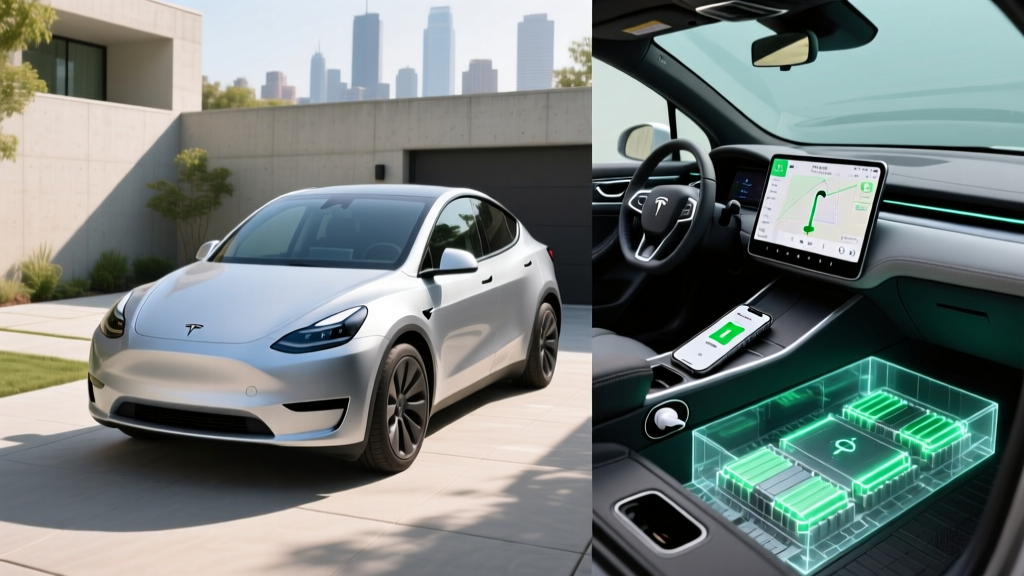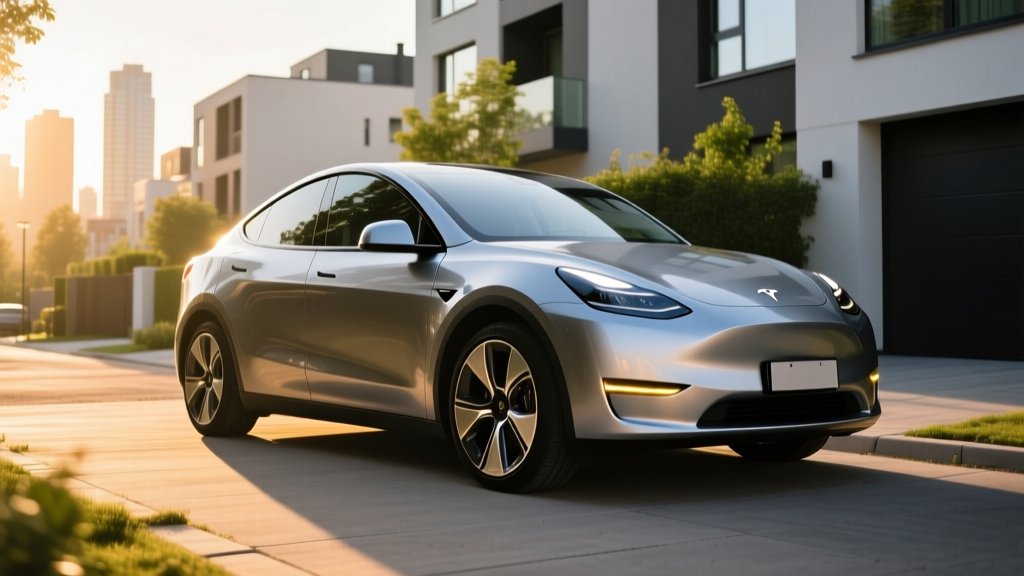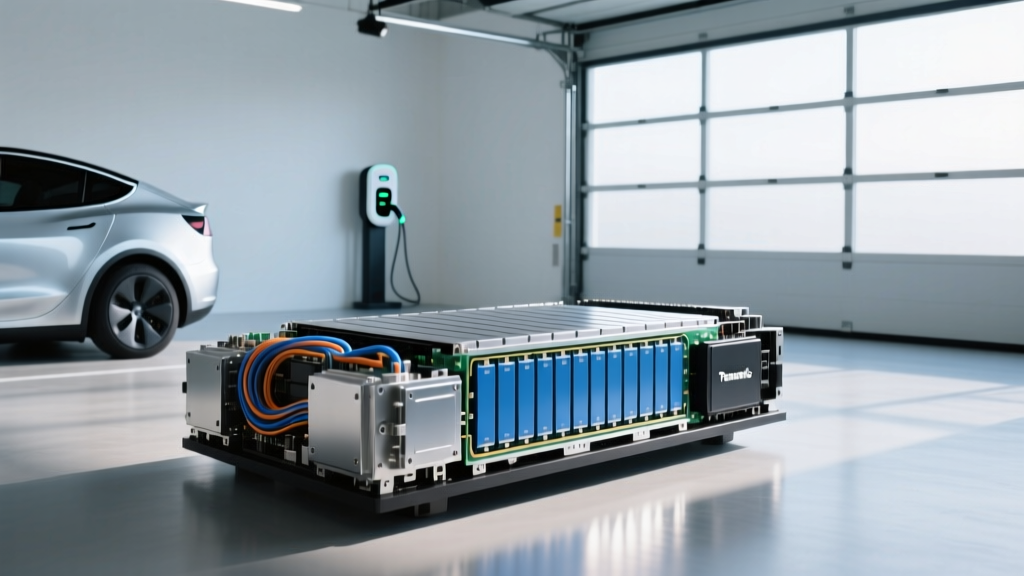
If you've researched Tesla ownership for more than an hour, you've encountered the phrase "Panasonic Tesla battery." Panasonic has been Tesla's longest-running cell supplier, manufacturing the 2170 cylindrical lithium-ion cells at Giga Nevada that power some of the most popular EVs on American roads. For 2026, Panasonic-supplied cells continue to underpin the Tesla Model 3 Long Range and Model Y Long Range — two vehicles that consistently top EPA efficiency charts and real-world range tests.
This guide breaks down exactly what Panasonic's NMC (nickel-manganese-cobalt) and nickel-cobalt-aluminum (NCA) chemistries deliver in the 2026 Tesla lineup: real-world range versus EPA stickers, DC fast-charge curves, home charging rates, degradation expectations, and whether these vehicles still qualify for the §30D federal tax credit.
What "Panasonic Tesla" Actually Means in 2026
Tesla sources battery cells from multiple suppliers — Panasonic, CATL, LG Energy Solution, and BYD — depending on model, trim, and production batch. Panasonic cells, specifically the 2170 form factor produced at Giga Nevada, primarily equip:
- Tesla Model 3 Long Range AWD (78.2 kWh usable, NMC/NCA chemistry)
- Tesla Model Y Long Range AWD (78.1 kWh usable, NMC/NCA chemistry)
- Tesla Model 3 Performance (same pack, different software mapping)
- Tesla Model Y Performance (same pack, higher discharge rate)
The base Model 3 RWD, by contrast, typically uses a CATL-supplied LFP (lithium iron phosphate) prismatic pack at ~57.5 kWh usable. This matters because chemistry determines charging behavior, longevity, cold-weather performance, and daily charging recommendations. Panasonic's NMC/NCA cells offer higher energy density than LFP — more range per kilogram — but Tesla recommends charging them to 80% daily and 100% only for trips, whereas LFP packs can (and should) be charged to 100% regularly for cell balancing.
| Specification | Model 3 Long Range AWD | Model Y Long Range AWD |
|---|---|---|
| Battery Chemistry | NMC/NCA (Panasonic 2170) | NMC/NCA (Panasonic 2170) |
| Usable Capacity | 78.2 kWh | 78.1 kWh |
| EPA Range | 363 miles | 320 miles |
| EPA Efficiency | 132 MPGe (25 kWh/100mi) | 117 MPGe (29 kWh/100mi) |
| Max DC Fast Charge | 250 kW (peak) | 250 kW (peak) |
| 10–80% DCFC Time | ~27 minutes | ~27 minutes |
| Level 2 Home Charge | 11.5 kW (~44 mi/hr) | 11.5 kW (~44 mi/hr) |
| 0–60 mph | 4.2 seconds | 4.8 seconds |
| Horsepower | 346 hp (dual motor) | 384 hp (dual motor) |
| Drivetrain | AWD (dual motor) | AWD (dual motor) |
| Battery Warranty | 8 yr / 120,000 mi | 8 yr / 120,000 mi |
| Base MSRP | $47,740 | $48,630 |
Real-World Range: What Panasonic Cells Actually Deliver
Model 3 LR AWD: EPA 363 mi → Expect ~310–330 mi highway (70 mph, 72°F); ~250–275 mi in freezing temps (32°F or below) at highway speed.
Model Y LR AWD: EPA 320 mi → Expect ~270–290 mi highway (70 mph, 72°F); ~220–245 mi in freezing temps at highway speed.
The EPA test cycle includes significant low-speed and regenerative-braking segments that favor EVs. Sustained highway driving at 75+ mph, cold weather, headwinds, and elevation gain all reduce range. Panasonic NMC cells lose roughly 15–25% range in sub-freezing conditions — less than older packs thanks to Tesla's heat pump and octovalve thermal management, but still meaningful for road-trippers in northern states.
In mixed suburban-and-highway commuting at moderate temperatures, owners consistently report achieving 90–95% of EPA range in the Model 3 LR. The Model Y, with its higher drag coefficient and greater mass, tends to land closer to 85–90% of sticker in similar conditions. Both figures remain best-in-class for their segments — the Hyundai Ioniq 6 SE Long Range (361 mi EPA) is the closest efficiency rival to the Model 3, while the Model Y faces stiffer competition from the Ford Mustang Mach-E Extended Range (312 mi EPA) and Kia EV9 Long Range (304 mi EPA, three-row).
One nuance with Panasonic NMC cells: Tesla recommends keeping daily charge at 80%, which gives you roughly 290 usable miles in the Model 3 LR and 256 in the Model Y LR for everyday driving. That's still ample for most commutes, but if your routine involves frequent 250+ mile days, you'll be charging to 100% more often, which accelerates degradation slightly.
Charging Speed: DC Fast Charge and Home Level 2
| Charging Level | Power / Rate | Speed (Approx.) | Notes |
|---|---|---|---|
| Level 1 (120V) | 1.4 kW | ~5 mi/hr | Emergency/trickle only |
| Level 2 (240V, 48A) | 11.5 kW | ~44 mi/hr | Full overnight charge in ~8 hrs |
| DC Fast (Tesla Supercharger V3) | 250 kW peak | ~175 mi in 15 min | Peak only below ~52% SoC |
| DC Fast (10–80%) | Avg ~130 kW sustained | ~27 minutes | Precondition battery via nav |
The Panasonic 2170 cells in the Model 3 and Y Long Range accept a peak of 250 kW at Tesla V3 Superchargers, but — and this is critical for road-trip planning — that peak is sustained only between roughly 10% and 52% state of charge. Above 52%, the charge curve tapers significantly. By 70% SoC, you're typically seeing 80–100 kW; by 85%, it drops below 50 kW. This is why Tesla's quoted "up to 175 miles in 15 minutes" applies to a low-SoC arrival, not a mid-pack top-up.
The 10–80% time of approximately 27 minutes assumes you've navigated to the Supercharger using the car's built-in navigation, which triggers battery preconditioning — warming the pack to optimal charging temperature. Skip preconditioning (for example, arriving at a charger without routing through nav) and your 10–80% time can stretch to 35+ minutes, especially in cold weather.
At home, the onboard charger maxes at 11.5 kW (48 amps on a 60-amp circuit). A Wall Connector or equivalent Level 2 unit on a NEMA 14-50 or hardwired 60A circuit will fully replenish either pack overnight. Expect to add roughly 44 miles of range per hour of Level 2 charging — enough to recover a full day's driving in 4–5 hours.
Performance, Efficiency, and Daily Drivability
The dual-motor AWD powertrain in both Long Range models pairs a permanent-magnet rear motor with an induction front motor. The front motor freewheels (disconnects) during light-load cruising to reduce drag losses — one reason these vehicles achieve such strong highway efficiency.
The Model 3 LR hits 0–60 mph in 4.2 seconds with 346 combined horsepower. The Model Y LR, despite weighing roughly 400 lbs more and presenting a larger frontal area, manages 4.8 seconds and 384 hp (the extra power compensates for mass). Both feel immediate in city driving; the Model 3's lower center of gravity and lighter weight give it a noticeably sportier character on back roads.
Efficiency is where the Panasonic NMC pack and Tesla's thermal management shine. According to fueleconomy.gov, the 2026 Model 3 LR AWD achieves 132 MPGe combined (25 kWh per 100 miles), making it one of the most efficient AWD EVs sold in the US. The Model Y LR lands at 117 MPGe combined (29 kWh/100mi) — strong for a crossover, though the Hyundai Ioniq 5 (114 MPGe, 30 kWh/100mi) is close despite offering less range.
Cargo space is another Model Y advantage: 76 cu ft with the rear seats folded (30 cu ft behind the second row) versus the Model 3's 23 cu ft trunk plus a small frunk. The Model 3 offers 106 cu ft of passenger volume; the Model Y provides 107 cu ft with a notably higher seating position and more rear legroom.
2026 Pricing and Federal Tax Credit Eligibility
| Trim | Base MSRP | §30D Credit (if eligible) | Effective Price |
|---|---|---|---|
| Model 3 Long Range AWD | $47,740 | Up to $7,500 | ~$40,240 |
| Model 3 Performance | $52,990 | Up to $7,500 | ~$45,490 |
| Model Y Long Range AWD | $48,630 | Up to $7,500 | ~$41,130 |
| Model Y Performance | $52,490 | Up to $7,500 | ~$44,990 |
Under the IRS §30D clean vehicle credit, both the Model 3 and Model Y Long Range (with Panasonic NMC cells) currently qualify for up to $7,500 in federal tax credits, provided the buyer meets all requirements. Key eligibility rules for 2026:
- Income caps: Modified adjusted gross income (MAGI) must not exceed $150,000 (single), $225,000 (head of household), or $300,000 (joint filers).
- MSRP caps: Vans, SUVs, and pickup trucks are capped at $80,000; sedans at $55,000. The Model 3 (sedan) at $47,740 clears this easily; the Model Y (classified as an SUV) at $48,630 also qualifies with headroom.
- Battery sourcing: A percentage of critical minerals must be sourced from the US or FTA partners, and battery components must be manufactured or assembled in North America. Panasonic cells manufactured at Giga Nevada satisfy the North American assembly requirement; critical-mineral sourcing percentages have been increasing annually per IRA mandates.
- Point-of-sale transfer: Buyers can transfer the credit to the dealer at purchase, reducing the out-of-pocket price immediately rather than waiting for tax filing.
Critical caveat: sourcing requirements tighten each year. A vehicle that qualifies in early 2026 may see partial ($3,750) or no credit if supply-chain compositions shift mid-year. Always verify current eligibility on fueleconomy.gov before purchasing.
Battery Longevity and Degradation: What Panasonic Data Shows
Tesla warranties the battery pack in both Long Range models for 8 years or 120,000 miles, whichever comes first, with a guaranteed minimum of 70% capacity retention. In practice, Panasonic 2170 NMC/NCA cells have demonstrated stronger longevity than this floor.
Real-world fleet data aggregated by Tesla owners and third-party trackers (including Teslalogger and Recurrent Auto) shows that Panasonic-equipped Model 3 and Model Y packs typically retain:
- ~92–95% capacity at 30,000 miles / 2 years
- ~88–92% capacity at 60,000 miles / 4 years
- ~84–89% capacity at 100,000 miles / 6 years
These figures assume typical usage: daily charging to 80%, occasional 100% charges for trips, and moderate Supercharging frequency. Heavy reliance on DC fast charging (3+ sessions per week) and frequent 100% charges will accelerate degradation. Panasonic's NMC chemistry is more sensitive to high-SoC storage than LFP, so if you park for extended periods, Tesla recommends leaving the pack at 50%.
Out-of-warranty replacement cost for a Long Range pack currently ranges from $12,000 to $16,000 depending on the service center and whether a refurbished pack is available. However, full-pack replacements remain rare — most degradation-related claims involve individual module or sensor replacements under warranty.
Tech, Driver Assistance, and Standout Features
Both vehicles ship with Tesla's 15.4-inch center touchscreen running Tesla's proprietary infotainment OS — no Apple CarPlay or Android Auto, which remains a dealbreaker for some buyers. What Tesla does offer natively is strong: integrated navigation with Supercharger routing, over-the-air updates, Spotify/YouTube/Netflix streaming, and a robust phone-as-key system.
Driver assistance comes in three tiers:
- Basic Autopilot (included): Traffic-aware cruise control and lane centering on highways.
- Enhanced Autopilot ($6,000 add-on): Auto lane change, navigate-on-autopilot, autosteer on city streets (limited), smart summon, and auto-park.
- Full Self-Driving (Supervised) ($8,000 add-on or $99/month): Full traffic-light and stop-sign recognition, city-street autosteer with turn execution.
All Tesla driver-assistance features — including FSD (Supervised) — are SAE Level 2 systems. This means the driver must remain fully attentive, hands on or near the wheel, and ready to take over at any moment. These are not self-driving systems. Only SAE Level 4 services (like Waymo in select metro areas) operate without a human driver. Never treat any Tesla assist feature as a substitute for active driving engagement.
Other notable tech: the Tesla app provides best-in-class remote preconditioning, charge monitoring, and Sentry Mode camera access. The Model Y offers an optional third row (very tight, best for small children), and both models include a heat pump for improved cold-weather cabin heating and range preservation.
Pros, Cons, and Who Should Buy
Pros
- Class-leading EPA range and efficiency (132 MPGe, Model 3 LR)
- 250 kW Supercharger network with reliable plug-and-charge
- Strong battery longevity data on Panasonic 2170 cells
- Excellent OTA update track record — car improves over time
- Qualifies for up to $7,500 §30D federal tax credit (verify sourcing)
- Heat pump standard for cold-weather efficiency
Cons
- No Apple CarPlay or Android Auto
- NMC chemistry requires 80% daily charge limit (vs. 100% for LFP)
- FSD (Supervised) remains Level 2 — not self-driving despite the name
- Model Y rear visibility is limited; camera reliance can frustrate
- Panel gaps and build consistency still vary by production batch
- Insurance premiums run 15–30% higher than comparable non-Tesla EVs
Who This EV Suits Best
Choose the Model 3 Long Range if: You prioritize efficiency and driving dynamics, commute 30–80 miles daily, want maximum range per dollar, and rarely need more than 23 cu ft of cargo space.
Choose the Model Y Long Range if: You need crossover cargo versatility (76 cu ft folded), prefer a higher seating position, have a family of 4–5 (optional third row for small kids), and can accept ~43 fewer miles of EPA range.
Look elsewhere if: You want CarPlay integration, prefer a traditional dealership experience, need a truck bed, or want LFP chemistry for hassle-free 100% daily charging (consider the Model 3 RWD with CATL LFP instead).
Frequently Asked Questions
What is the real-world range of a Panasonic-equipped Tesla Model 3 Long Range?
The EPA rates it at 363 miles. In real-world highway driving at 70–75 mph and moderate temperatures, expect 310–330 miles. In sub-freezing winter conditions at highway speeds, range drops to approximately 250–275 miles. City driving with regenerative braking recovers more energy and can approach or even exceed the EPA figure in stop-and-go traffic.
How fast does a Panasonic Tesla charge on DC fast chargers and at home?
On a Tesla V3 Supercharger (250 kW peak), the 10–80% charge takes approximately 27 minutes with proper battery preconditioning. Peak rates of 250 kW are only sustained up to roughly 52% SoC, then taper. At home on a 48-amp Level 2 charger (11.5 kW), both the Model 3 and Model Y Long Range add about 44 miles per hour, reaching a full charge from 10% in roughly 8 hours.
Does the 2026 Tesla Model Y Long Range qualify for the $7,500 federal tax credit?
As of early 2026, the Model Y Long Range qualifies for up to $7,500 under IRS §30D, provided the buyer's MAGI is under $300,000 (joint), $225,000 (head of household), or $150,000 (single), and the MSRP stays under the $80,000 SUV cap (it does, at $48,630). Battery sourcing requirements must also be met — Panasonic cells assembled at Giga Nevada satisfy North American assembly rules, but critical-mineral thresholds tighten annually. Always check fueleconomy.gov for the latest eligibility before purchasing. The credit can be transferred at point of sale to reduce your purchase price immediately.
Is a Panasonic Tesla battery better than CATL or LG cells?
"Better" depends on your use case. Panasonic 2170 NMC/NCA cells offer the highest energy density in Tesla's lineup — that's why Long Range and Performance models use them. They deliver more range per kilogram and sustain higher discharge rates. However, CATL's LFP cells (used in the Model 3 RWD) tolerate daily 100% charges, have longer cycle life (3,000+ vs. ~1,500 full cycles), and cost less to replace. If you want maximum range and performance, Panasonic NMC is the right choice. If you want simpler daily charging habits and maximum longevity, LFP has advantages.
How long will a Panasonic Tesla battery last before needing replacement?
Based on fleet data, Panasonic 2170 packs typically retain 84–89% capacity at 100,000 miles. Tesla warranties the pack for 8 years or 120,000 miles at 70% minimum retention. Many high-mileage Teslas with Panasonic cells have exceeded 150,000 miles with 80%+ capacity remaining. Full pack replacement is uncommon and costs $12,000–$16,000 out of warranty, but most degradation-related service involves individual module swaps covered under warranty.
Is a Panasonic-equipped Tesla worth buying over competitors in 2026?
For range-per-dollar and charging-network reliability, the Model 3 LR and Model Y LR remain benchmarks. The Hyundai Ioniq 6 matches the Model 3's range but lacks Tesla's Supercharger network (though Ioniq 5/6 now have NACS adapters for Supercharger access). The Ford Mustang Mach-E Extended Range offers a compelling alternative with CarPlay support but trails on efficiency. If you value OTA updates, integrated Supercharger routing, and proven battery longevity data, the Panasonic-equipped Tesla models are still strong buys — particularly with the §30D credit reducing effective price to the low $40,000s.