More than a decade after it first disrupted the automotive industry, the original Tesla Model S remains a compelling — and increasingly affordable — entry into electric vehicle ownership. But buying a used Model S in 2026 requires navigating battery degradation realities, outdated charging hardware, and warranty limitations that don't apply to newer EVs. This guide breaks down exactly what you need to know before purchasing the car that started the EV revolution.
Real-World Range: What to Actually Expect
EPA Original Rating (85 kWh, 2012-2016): 265 miles (early models) to 270 miles
Real-World Expectation in 2026: Expect 180-220 miles depending on battery health, driving style, and climate. Highway driving at 75+ mph reduces range by 15-20%. Cold weather (below 32°F) can cut range by 25-35% due to battery resistance and cabin heating demands.
The original Model S launched with battery options ranging from 40 kWh to 100 kWh, but the 85 kWh variant was the volume seller and remains the most common on the used market. These packs used NMC (nickel-manganese-cobalt) chemistry, which offers good energy density but is more susceptible to calendar degradation than the LFP (lithium iron phosphate) batteries in newer, cheaper EVs.
Battery degradation is the single biggest variable when evaluating a used Model S. Most 8-10 year old packs show 10-20% capacity loss, meaning a car that originally delivered 265 EPA miles might now provide 210-240 miles when new. However, degradation isn't linear — it typically accelerates in the first 2-3 years, then slows. A well-maintained 2015 Model S with 80,000 miles might retain 82-85% of original capacity.
To assess battery health, request a Tesla vehicle history report or use third-party diagnostics that read the Battery Management System (BMS) directly. Look for the "usable kWh" figure — a healthy 85 kWh pack should show 68-72 kWh usable capacity.
Charging Speeds: The Hardware Limitation
| Charging Level | Original Model S (2012-2016) | Refresh Model S (2017+) | 2026 Comparison: Model 3 |
|---|---|---|---|
| DC Fast Charge (Peak) | 120 kW (V2 Supercharger) | 150-200 kW (V3 Supercharger) | 250 kW (V4 Supercharger) |
| 10-80% Time | ~40-50 minutes | ~25-35 minutes | ~15-20 minutes |
| Level 2 Home (Max) | 10 kW (40A onboard charger) | 11.5 kW (48A onboard charger) | 11.5 kW (48A onboard charger) |
| Miles Added/Hour (L2) | ~29 mi/hr | ~34 mi/hr | ~44 mi/hr |
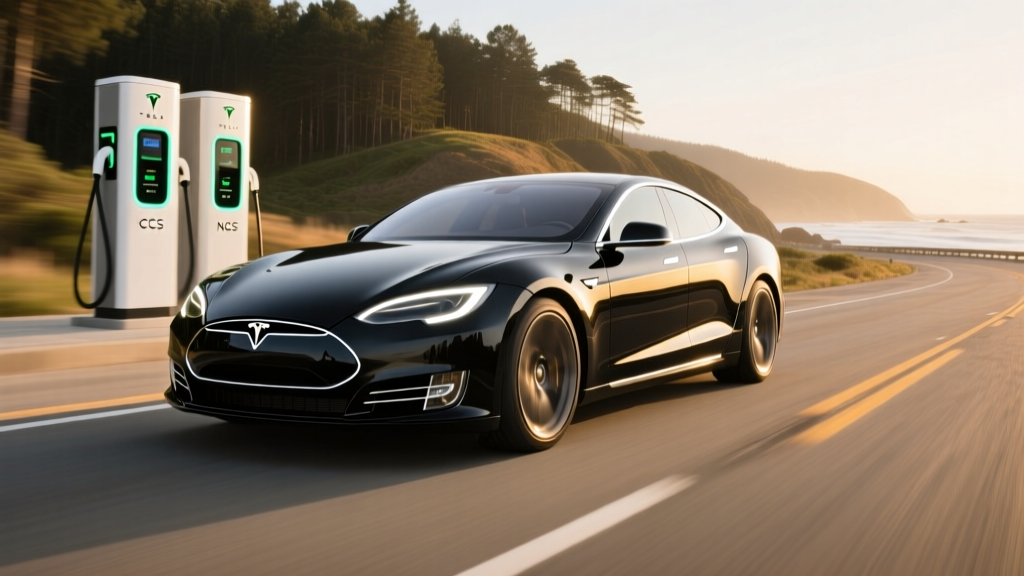
The original Model S maxes out at 120 kW on DC fast charging, and that's only on Tesla's older V2 Superchargers. On newer V3 and V4 stations, it's still limited to 120 kW by its onboard hardware. This means a 10-80% charge takes roughly 40-50 minutes — acceptable for road trips but noticeably slower than modern EVs.
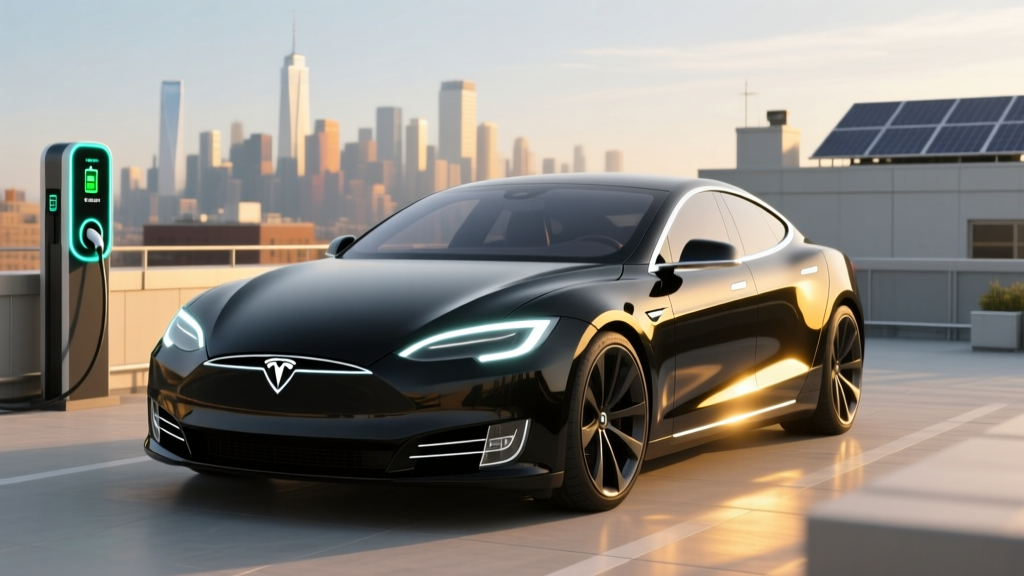
For home charging, most original Model S vehicles came with a 40-amp onboard charger (10 kW max), though some early models had a dual-charger option enabling 80 amps (20 kW) on compatible Level 2 stations. A standard 240V/40A home charger will add about 29 miles of range per hour — sufficient for overnight charging if you drive less than 150 miles daily.
Charge curve reality: The Model S charges fastest between 20-60% state of charge, then tapers significantly. Don't expect sustained 120 kW — average charge rate over a 10-80% session is closer to 80-90 kW.
Performance Specs: Still Impressive
| Specification | Model S 85 (2013-2016) | Model S P85D (2015-2016) | Model S 100D (2017-2019) |
|---|---|---|---|
| 0-60 mph | 5.4 seconds | 3.2 seconds (Ludicrous: 2.8s) | 4.2 seconds |
| Horsepower | 362 hp | 691 hp (combined) | 518 hp |
| Drivetrain | Rear-wheel drive | Dual-motor AWD | Dual-motor AWD |
| Battery (Usable) | ~81 kWh (NMC) | ~81 kWh (NMC) | ~98 kWh (NMC) |
| EPA Range (Original) | 265 miles | 253 miles | 335 miles |
| Efficiency | 38 kWh/100mi (89 MPGe) | 40 kWh/100mi (84 MPGe) | 35 kWh/100mi (97 MPGe) |
Even by 2026 standards, a P85D with Ludicrous mode delivers supercar-rivaling acceleration. The dual-motor AWD system provides excellent traction and torque vectoring. However, the original Model S lacks the heat pump found in newer Teslas, relying on resistive cabin heating that significantly impacts cold-weather range.
Interior Space and Practicality
The Model S offers genuine full-size sedan practicality:
- Cargo volume: 26.3 cu ft trunk + 5.3 cu ft frunk (31.6 cu ft total) — more than most midsize SUVs
- Rear legroom: 35.4 inches (adequate for adults, less than luxury competitors)
- Seating: 5 passengers standard; some 2014-2016 models offered rear-facing third-row seats for 7-passenger capacity (tight fit for children only)
Build quality on pre-2016 models is inconsistent — panel gaps, interior rattles, and premature wear on door handles and window regulators are common complaints. The 17-inch touchscreen was revolutionary in 2012 but feels dated compared to modern infotainment systems, and MCU1 (Media Control Unit 1) hardware is prone to failure and expensive to replace ($1,500-2,500).
Used Pricing and Tax Credit Reality
| Model Year/Trim | Typical Used Price (2026) | Federal Tax Credit Eligibility | Effective Cost |
|---|---|---|---|
| 2013-2014 Model S 85 | $18,000-$24,000 | Not eligible (over $25k used EV cap) | $18,000-$24,000 |
| 2015-2016 Model S 85D/90D | $24,000-$32,000 | Not eligible (over $25k used EV cap) | $24,000-$32,000 |
| 2015-2016 Model S P85D/P90D | $28,000-$38,000 | Not eligible (over $25k used EV cap) | $28,000-$38,000 |
| 2017-2018 Model S 100D | $35,000-$45,000 | Not eligible (over $25k used EV cap) | $35,000-$45,000 |
Critical tax credit note: The IRS §25E used EV tax credit provides up to $4,000 or 30% of the sale price (whichever is lower) for qualifying used electric vehicles. However, the vehicle must be purchased for $25,000 or less to qualify. Most original Model S vehicles on the used market in 2026 exceed this cap, making them ineligible for the federal credit.
If you find a high-mileage 2013-2014 Model S 60 or 85 under $25,000 from a licensed dealer (private sales don't qualify), you could claim up to $4,000. Income limits apply: modified adjusted gross income cannot exceed $75,000 (single), $112,500 (head of household), or $150,000 (joint). Verify current-year rules at IRS.gov, as incentive programs evolve.
Warranty Coverage: What's Left?
Tesla's original new-vehicle warranty included:
- Basic vehicle: 4 years / 50,000 miles (expired on all original Model S)
- Battery and drive unit: 8 years / unlimited miles (85 kWh) or 8 years / 150,000 miles (100 kWh)
For a 2013-2014 Model S, the 8-year battery warranty has expired or will expire soon. For 2015-2016 models, you may have 1-2 years of battery coverage remaining, but only if the vehicle is under 150,000 miles. The battery warranty covers defects and capacity loss below 70% of original capacity — but proving degradation and getting Tesla to honor the claim can be challenging.
Out-of-warranty battery replacement: A refurbished 85 kWh pack costs $12,000-$16,000 installed at a Tesla Service Center. Third-party specialists offer replacements for $8,000-$12,000. This is a significant ownership risk that doesn't exist with newer EVs still under warranty.
Autopilot and Driver Assistance
SAE Level 2 Driver Assistance — Not Self-Driving: Original Model S vehicles with Hardware 1 (2014-2016) offer basic Autopilot features including adaptive cruise control and lane-keeping assist. The driver must remain fully engaged, hands on the wheel, and ready to take over at any moment. This is not autonomous driving — it's a driver-assist system that can reduce fatigue on highways but requires constant supervision.
Hardware 1 cannot support Full Self-Driving (FSD) capability or modern Autopilot features. Vehicles with Hardware 2.0+ (late 2016+) can be upgraded to FSD, but the $8,000-$12,000 cost rarely makes financial sense on a used vehicle.
Who Should Buy an Original Model S?
Pros
- Spacious interior with massive cargo capacity (31.6 cu ft)
- Strong acceleration and refined driving dynamics
- Access to Tesla Supercharger network (though slower than newer EVs)
- Over-the-air updates still add features to older hardware
- Lower purchase price than new EVs with similar range
Cons
- Battery degradation reduces range; replacement is expensive
- Slower DC fast charging (120 kW max) vs. modern 250+ kW EVs
- Outdated MCU1 infotainment prone to failure
- No federal tax credit on most used examples (over $25k cap)
- Inconsistent build quality on pre-2016 models
- Limited or expired battery warranty
Best for: Budget-conscious buyers who need a spacious, comfortable daily driver with 150-200 miles of real-world range and can accept the risk of battery replacement. Ideal if you have home charging and drive less than 120 miles daily. The Model S excels as a commuter car or family hauler for those who can't afford a new EV but want premium space and performance.
Not ideal for: High-mileage road trippers (slow charging and range degradation make long trips challenging), buyers in extreme cold climates (significant range loss), or those who need the latest driver-assist technology and infotainment features.
Competition: How Does It Compare?
For $20,000-$35,000 in 2026, you could also consider:
- Used Chevrolet Bolt EV (2017-2022): 238-259 EPA miles, newer battery chemistry, eligible for $4,000 used EV credit, but smaller and less powerful
- Used Nissan Leaf Plus (2019-2023): 212-226 EPA miles, widely available, but CHAdeMO charging standard is becoming obsolete and lacks DC fast charging on older models
- Used Tesla Model 3 (2018-2020): 220-310 EPA miles, faster charging, more modern interior, but less cargo space and higher used prices
- New Hyundai Ioniq 5 or Kia EV6 (base trims): $40,000+ after incentives, but full warranty, 300+ mile range, and 800V ultra-fast charging
The original Model S wins on interior space, cargo capacity, and prestige. It loses on charging speed, warranty coverage, and long-term ownership risk compared to newer alternatives.
Frequently Asked Questions
What is the real-world range of a used Tesla Model S?
Expect 180-220 miles from a 2013-2016 Model S 85 with average battery degradation (10-20% capacity loss). Highway driving at 75+ mph reduces this by 15-20%. Cold weather below freezing can cut range by 25-35% due to battery resistance and resistive cabin heating. Always verify the vehicle's current usable kWh capacity before purchase.
How fast does the original Model S charge?
DC fast charging peaks at 120 kW on Tesla V2 Superchargers, with a 10-80% charge taking 40-50 minutes. On newer V3/V4 Superchargers, it's still limited to 120 kW by onboard hardware. Home Level 2 charging at 240V/40A adds about 29 miles of range per hour (10 kW max). This is significantly slower than modern EVs that charge at 250+ kW.
Does a used Model S qualify for the federal EV tax credit?
Most used Model S vehicles do not qualify for the IRS §25E used EV tax credit because the vehicle must be purchased for $25,000 or less. High-mileage 2013-2014 Model S 60 or 85 examples under $25,000 from a licensed dealer may qualify for up to $4,000 (30% of sale price), subject to income limits ($75k single / $150k joint). Verify current-year eligibility at IRS.gov.
Is it worth buying a used Model S vs. a new budget EV?
A used Model S offers more space, cargo capacity, and performance than a new Chevrolet Bolt or Nissan Leaf, but comes with battery degradation risk, slower charging, and limited warranty. If you can afford $40,000+, a new Hyundai Ioniq 5 or Tesla Model 3 provides full warranty, faster charging, and modern features. Choose the used Model S if you need maximum interior space on a tight budget and can accept ownership risk.
What are the biggest problems with the original Model S?
Common issues include battery degradation (10-20% over 8-10 years), MCU1 touchscreen failures ($1,500-2,500 replacement), door handle malfunctions, air suspension failures (2013-2016 models with adaptive suspension), and drive unit whine or failure. Build quality inconsistencies are also common on pre-2016 vehicles. Always get a pre-purchase inspection from a Tesla-certified technician.
How much does it cost to replace a Model S battery?
Out-of-warranty battery replacement for an 85 kWh pack costs $12,000-$16,000 at a Tesla Service Center or $8,000-$12,000 from third-party specialists. This is a significant ownership risk that doesn't exist with newer EVs still under warranty. Factor this potential cost into your purchase decision, especially for vehicles over 100,000 miles or with significant range degradation.
The original Tesla Model S remains a capable, spacious electric sedan that pioneered the EV category. In 2026, it's an affordable used option for buyers who understand the trade-offs: slower charging, battery degradation risk, and limited warranty coverage. If you prioritize interior space and can accept the ownership risks, a well-maintained Model S offers compelling value. But if you need fast charging, full warranty protection, and the latest technology, newer EVs — even at higher prices — may be the smarter long-term investment.