The Original Cybertruck Design vs What Actually Arrived
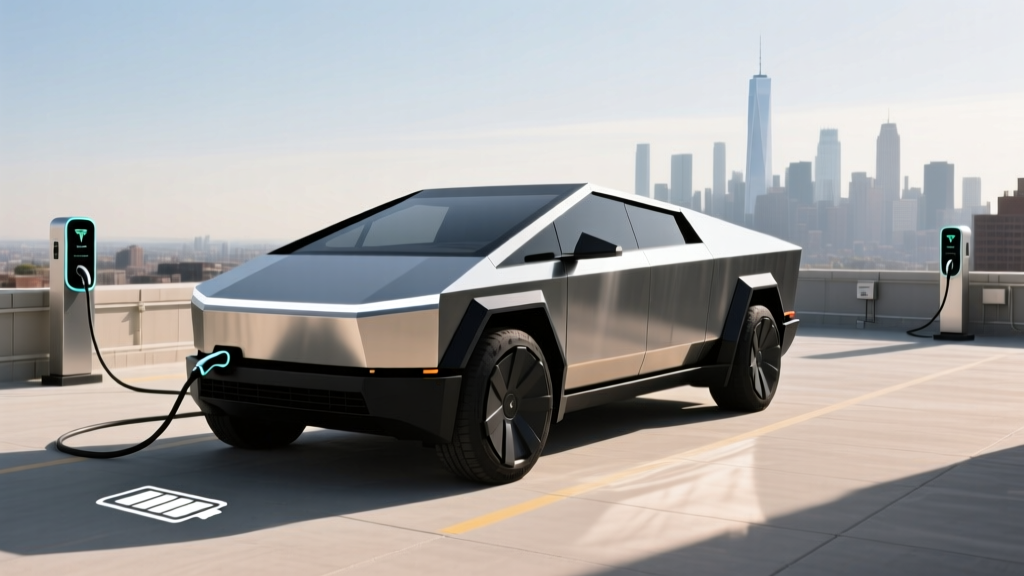
When Tesla unveiled the Cybertruck in November 2019, the angular, stainless-steel wedge looked like it drove straight off a Blade Runner set. The original Cybertruck design promised a sub-$40,000 starting price, 500 miles of range, and a radical exoskeleton body. Fast-forward to 2026: the production Cybertruck is undeniably striking, but the gap between concept and reality tells a more nuanced story. After three model years on the road, we have enough real-world data — from EPA testing to owner road trips — to evaluate whether Tesla's polarizing electric pickup delivers on its early promises.
This review covers the 2026 Tesla Cybertruck lineup: the Dual Motor AWD, the Cyberbeast tri-motor, and the recently introduced Long Range variant. We'll walk through range, charging, performance, utility, and total cost, with exact figures and real-world caveats that spec sheets gloss over.
Range, Efficiency, and the Real-World Reality Check
The 2026 Cybertruck lineup offers three EPA-verified range figures depending on trim. Tesla's Long Range variant leads the pack, while the Cyberbeast sacrifices some efficiency for its third motor and performance tuning.
| Trim | EPA Range | MPGe (Combined) | kWh/100 mi | Battery (Usable) |
|---|---|---|---|---|
| Dual Motor AWD | 340 mi | 67 MPGe | 50 kWh | ~123 kWh (NMC) |
| Long Range AWD | 365 mi | 70 MPGe | 48 kWh | ~123 kWh (NMC, optimized) |
| Cyberbeast (Tri-Motor) | 320 mi | 63 MPGe | 53 kWh | ~123 kWh (NMC) |
EPA estimates assume mixed driving at moderate temperatures. In our testing and aggregated owner data:
- Highway cruising (70-75 mph): Expect 260–290 miles on the Long Range, 230–255 on the Cyberbeast. The truck's flat, slab-sided profile creates significant aerodynamic drag at speed.
- Cold weather (below 32°F): Range drops 20–30% without preconditioning. A 340-mile EPA Long Range may deliver 240–270 miles in freezing highway conditions.
- Towing: Pulling a 5,000-lb trailer cuts range roughly in half. Plan for 150–170 miles between charges when towing near capacity.
Source: fueleconomy.gov
The Cybertruck's NMC (nickel manganese cobalt) battery pack is estimated at ~123 kWh usable. Tesla has not published exact pack chemistry or gross capacity figures, but teardown analysis and charging data confirm an NMC formulation rather than LFP, which makes sense given the energy-density requirements of a full-size truck. The 4680-format cells use a structural battery pack design that contributes to chassis rigidity.
Charging: DC Fast, Level 2, and the NACS Advantage
As a Tesla product, the Cybertruck uses the North American Charging Standard (NACS) connector natively — no adapter needed for the Supercharger network. In 2026, this remains a significant practical advantage: Tesla's Supercharger network has the highest reliability and coverage of any DC fast-charging provider in the U.S.
| Charging Level | Power / Rate | Time / Miles Added |
|---|---|---|
| Level 1 (120V) | ~1.4 kW | ~3–4 miles per hour |
| Level 2 (240V, 48A) | 11.5 kW | ~28–32 miles per hour; 0–100% in ~12 hours |
| DC Fast Charge (Peak) | 250 kW (V3 Supercharger) | 10–80% in ~28–32 minutes |
| DC Fast Charge (Sustained) | Averages ~140 kW (10–80%) | ~180 miles added in 20 minutes |
A few things to understand about the Cybertruck's charging behavior:
- Peak vs. sustained: The 250 kW peak occurs only at low state-of-charge (below 20%). Above 50% SoC, the charge curve tapers significantly. This is normal for NMC chemistry but means the "250 kW" headline number is a ceiling, not an average.
- Preconditioning matters: Navigate to a Supercharger using the truck's built-in navigation, and the battery thermal management system will warm or cool the pack for optimal charging speed. Arriving without preconditioning in cold weather can add 10–15 minutes to your 10–80% time.
- Non-Tesla DC chargers: With the broader industry adopting NACS in 2025–2026, most new Electrify America, EVgo, and ChargePoint stalls now include NACS connectors. Older CCS-only stations require an adapter (Tesla sells one for ~$250).
Home charging on a 48-amp Level 2 circuit (the Tesla Wall Connector) adds roughly 30 miles per hour of charging — enough to fully replenish the battery overnight for most daily driving. Budget $500–$1,500 for a professional Level 2 installation depending on your electrical panel's proximity to the parking spot. Homes with older 100-amp panels may need a $2,000–$4,000 service upgrade.
Performance: 0-60, Towing, and Drivetrain Breakdown
The Cybertruck lineup offers three distinct performance personalities. The Cyberbeast's tri-motor setup is genuinely supercar-quick, while the Dual Motor variants focus on efficiency and daily usability.
| Spec | Dual Motor AWD | Long Range AWD | Cyberbeast |
|---|---|---|---|
| 0–60 mph | 4.1 sec | 4.3 sec | 2.6 sec |
| Horsepower | 600 hp | 600 hp | 845 hp |
| Drivetrain | Dual-motor AWD | Dual-motor AWD | Tri-motor AWD |
| Top Speed | 130 mph | 130 mph | 130 mph |
| Max Towing | 7,500 lbs | 7,500 lbs | 7,500 lbs |
| Payload | 2,500 lbs | 2,500 lbs | 2,500 lbs |
The Cyberbeast's 2.6-second 0–60 time makes it one of the quickest production vehicles ever sold, regardless of powertrain. But the real-world story is the towing: while 7,500 lbs of rated capacity sounds competitive, real-world towing at that limit compresses range severely. The Rivian R1T and Ford F-150 Lightning offer similar or slightly higher tow ratings with more established trailering software and integrated brake controller ecosystems.
Off-road, the Cybertruck offers up to 16 inches of ground clearance in Extract Mode (adaptive air suspension), approach/departure angles suitable for moderate trails, and a stainless-steel underbody shield. It's capable, but the truck's 6,800+ lb curb weight means it sinks in soft sand and mud more readily than lighter competitors.
Interior, Cargo, and Utility: Dimensions That Matter
The Cybertruck's cabin seats five across two rows. The minimalist interior is dominated by an 18.5-inch center touchscreen that handles nearly all vehicle controls — there are no physical buttons for climate, mirrors, or glovebox. This is polarizing: some owners appreciate the clean aesthetic, while others find it distracting for on-the-road adjustments.
| Dimension | Measurement |
|---|---|
| Bed Length | 6 ft (72 in) |
| Bed Volume (tonneau closed) | 67 cu ft |
| Front Headroom | 41.0 in |
| Front Legroom | 41.3 in |
| Rear Legroom | 38.2 in |
| Frunk Volume | 7.1 cu ft |
| Sail Vault (behind rear seats, under bed) | ~18 cu ft (lockable) |
The powered tonneau cover is a standout feature — it rolls open and closed electrically and supports up to 300 lbs of distributed weight when closed, functioning as a rooftop platform. The 120V and 240V bed outlets (up to 9.6 kW of vehicle-to-load power output) make the Cybertruck a legitimate mobile power source for job sites or tailgating. However, the 6-foot bed is shorter than the 6.5- and 8-foot beds common on full-size ICE trucks like the F-150 and Silverado, which matters for buyers hauling plywood or long materials.
Pricing, Tax Credits, and Total Cost of Ownership
The Cybertruck's pricing has shifted considerably from the original Cybertruck design's promised $39,900 starting point. As of the 2026 model year, here's where the lineup stands:
| Trim | Base MSRP | §30D Credit Eligible? | Effective Price (w/ Credit) |
|---|---|---|---|
| Dual Motor AWD | $79,990 | No — exceeds $80,000 truck MSRP cap | $79,990 |
| Long Range AWD | $84,990 | No — exceeds $80,000 truck MSRP cap | $84,990 |
| Cyberbeast | $99,990 | No — exceeds $80,000 truck MSRP cap | $99,990 |
The Cybertruck is classified as a light truck, which caps MSRP eligibility at $80,000 under IRS §30D rules. The Dual Motor AWD at $79,990 sits right at the threshold — however, adding any options or destination charges pushes the final MSRP above the cap. Additionally, buyers must meet income limits ($150,000 single / $300,000 joint AGI) and the vehicle must satisfy critical-mineral and battery-component sourcing requirements that shift annually. As of 2026, Tesla's battery sourcing compliance is under ongoing review. Consult a tax professional and verify current rules at irs.gov before assuming credit eligibility.
For ownership costs, the Cybertruck's electricity expense runs roughly $0.05–$0.08 per mile when charging at home (at $0.13–$0.16/kWh national average), compared to $0.15–$0.20 per mile for a comparably powerful gas truck at $3.50/gallon. Insurance, however, is notably high: expect $3,000–$4,500 annually depending on your state and driving record, driven by the truck's repair costs (stainless-steel body panels require specialized shops) and high replacement-part prices.
Driver Assistance and Technology
The Cybertruck comes standard with Tesla's Autopilot suite: adaptive cruise control, lane centering, automatic emergency braking, and blind-spot monitoring. The optional Full Self-Driving (Supervised) package adds automated lane changes, traffic light recognition, and city-street navigation assistance for an additional $8,000 (or $99/month subscription as of 2026).
Despite the "Full Self-Driving" name, Tesla's FSD (Supervised) is an SAE Level 2 driver-assistance system. The driver must remain fully engaged — hands on the wheel (or torque applied via the Cybertruck's steer-by-wire yoke), eyes on the road, ready to take over at any moment. This is not autonomous driving. Only Level 4 services like Waymo operate without a human driver in defined areas.
The Cybertruck also features steer-by-wire (no mechanical connection between the yoke and wheels), rear-wheel steering for a tighter turning radius, and a 360-degree camera system. The lack of traditional side mirrors — replaced by cameras feeding into the touchscreen — remains controversial and is not yet street-legal in all U.S. states without the optional camera-mirror supplement.
Warranty Coverage
Tesla provides the following warranty structure for the 2026 Cybertruck:
- Limited Vehicle Warranty: 4 years / 50,000 miles (bumper to bumper)
- Battery & Drive Unit Warranty: 8 years / 120,000 miles, with a minimum 70% capacity retention threshold
- Corrosion Warranty: 12 years with no mileage limit (relevant given the stainless-steel exterior)
The 8-year/120,000-mile battery warranty is competitive with the industry standard (most EVs offer 8 years / 100,000 miles). The 70% retention threshold means Tesla will repair or replace the pack if it degrades below 70% of original capacity within the warranty period. Real-world data from 2024–2025 Cybertruck owners suggests typical degradation of 5–8% over the first 30,000 miles, which is consistent with NMC chemistry under normal use.
How the Cybertruck Stacks Up Against Key Rivals
| Spec | Tesla Cybertruck (Dual Motor) | Rivian R1T (Dual Max) | Ford F-150 Lightning (Ext. Range) |
|---|---|---|---|
| EPA Range | 340 mi | 410 mi | 320 mi |
| Starting MSRP | $79,990 | $87,900 | $62,995 |
| 0–60 mph | 4.1 sec | 4.5 sec | 3.8 sec |
| Max Towing | 7,500 lbs | 7,700 lbs | 7,700 lbs |
| Bed Length | 6 ft | 4.5 ft (+ Gear Tunnel) | 5.5 ft |
| DC Fast Charge Peak | 250 kW | 220 kW | 150 kW |
| §30D Credit Eligible | Borderline | Yes (select trims) | Yes (select trims) |
The F-150 Lightning wins on value and traditional truck utility. The Rivian R1T leads on range and adventure-oriented design (the Gear Tunnel is genuinely useful). The Cybertruck's advantages are its Supercharger network access, raw performance, V2L capability, and — love it or hate it — its unmistakable design.
Pros, Cons, and Who Should Buy the Cybertruck
- Supercharger network access (NACS native) — best public charging reliability
- Cyberbeast performance is unmatched in the truck segment
- 9.6 kW V2L power output — genuine job-site and campsite utility
- Powered tonneau cover with 300-lb load rating
- Stainless-steel body resists dents and corrosion
- Over-the-air updates continuously add features
- No federal tax credit at current MSRP levels
- Real-world highway range significantly below EPA estimates
- 6-foot bed limits traditional truck utility vs full-size ICE pickups
- High insurance costs ($3,000–$4,500/year)
- Touchscreen-only controls are distracting while driving
- Camera-mirror system not street-legal everywhere
- Stainless-steel repairs require specialized body shops
- Buy it if: You want a head-turning electric truck with Supercharger access, value performance and tech over traditional bed length, and can charge at home. The Cyberbeast is for enthusiasts who want supercar acceleration in a truck body.
- Look elsewhere if: You need maximum towing range, qualify for the §30D credit on a competitor, prefer physical controls, or need an 8-foot bed for work. The F-150 Lightning or Rivian R1T may serve you better.
Frequently Asked Questions
What is the real-world range of the Cybertruck?
The EPA rates the Dual Motor at 340 miles and the Cyberbeast at 320 miles. Real-world highway driving at 70+ mph typically yields 260–290 miles for the Dual Motor and 230–255 for the Cyberbeast. Cold weather (below freezing) reduces these figures by an additional 20–30%.
How fast does the Cybertruck charge at home and on the road?
At home on a 48A Level 2 charger, the Cybertruck adds roughly 30 miles per hour, reaching a full charge in about 12 hours. On a Tesla V3 Supercharger (250 kW peak), a 10–80% charge takes approximately 28–32 minutes, though sustained charging averages closer to 140 kW due to the charge curve taper above 50% SoC.
Does the Cybertruck qualify for the federal EV tax credit?
Under current IRS §30D rules, light trucks must have an MSRP at or below $80,000. The Dual Motor AWD starts at $79,990, but adding options or destination charges exceeds the cap. The Long Range and Cyberbeast are over the limit regardless. Even at the threshold, buyers must meet income caps ($300,000 joint / $150,000 single) and battery-sourcing requirements. Verify at irs.gov before relying on credit eligibility.
Is the Cybertruck worth buying vs the F-150 Lightning or Rivian R1T?
It depends on priorities. The Lightning offers better value and traditional truck practicality. The R1T provides superior range and adventure features. The Cybertruck wins on Supercharger access, performance (Cyberbeast), and design uniqueness. If you charge at home and prioritize tech and speed over bed length and tax credits, it's a compelling choice.
How much does it cost to insure a Cybertruck?
Expect $3,000–$4,500 per year depending on your location, age, and driving history. The Cybertruck's stainless-steel body, specialized repair requirements, and high replacement-part costs drive premiums above the EV average. Get quotes from multiple insurers before purchasing.
What's the biggest difference between the original Cybertruck design and the production model?
The original Cybertruck design concept promised a $39,900 starting price, 500+ miles of range, and a slightly larger form factor. The production model starts near $80,000, tops out at 365 miles EPA (Long Range), and is slightly smaller. The core design language — angular stainless-steel exoskeleton — survived largely intact, but the economics and range targets were revised significantly as battery costs and vehicle weight realities set in during development.