Oregon's EV Incentive Landscape in 2026
If you're shopping for an electric vehicle in Oregon, you're positioned in one of the most incentive-rich states for EV adoption. Between federal tax credits, state programs, and utility rebates, Oregon buyers can potentially stack thousands of dollars in savings on top of already-lower operating costs. But navigating the Oregon electric vehicle rebate landscape requires precision — eligibility rules change frequently, and the actual savings depend heavily on your income, the vehicle you choose, and where you live.
This guide breaks down exactly what's available in 2026, how much you'll actually save over five years of ownership, and where the hidden costs lurk. No marketing fluff — just the numbers you need to make an informed purchase decision.
Federal Tax Credit: Up to $7,500 (With Strict Eligibility Rules)
The federal EV tax credit under IRS §30D remains the single largest incentive available to Oregon EV buyers, but it's far from universal. The credit tops out at $7,500, split between two components: $3,750 for meeting critical-mineral sourcing requirements and $3,750 for battery-component manufacturing requirements. Many vehicles only qualify for one half ($3,750) or none at all.
IRS §30D Federal Tax Credit Eligibility Checklist (2026)
- Adjusted Gross Income Caps: $300,000 (married filing jointly), $225,000 (head of household), $150,000 (all other filers)
- MSRP Caps: $80,000 for vans, SUVs, and pickup trucks; $55,000 for sedans and other vehicles
- Battery Sourcing: Critical minerals must be sourced from the U.S. or FTA-partner countries; battery components cannot contain materials from foreign entities of concern (primarily China)
- Point-of-Sale Transfer: You can now transfer the credit to the dealer at purchase, reducing your out-of-pocket cost immediately rather than waiting for tax-time refund
- Vehicle Assembly: Final assembly must occur in North America
The point-of-sale transfer provision is particularly valuable: instead of waiting until you file taxes to claim the credit, you can apply it directly to your purchase price at the dealership. This effectively reduces your down payment or loan amount. However, if you transfer the credit and later discover you didn't qualify (income exceeded the cap, for example), you'll owe the IRS the full amount plus potential penalties.
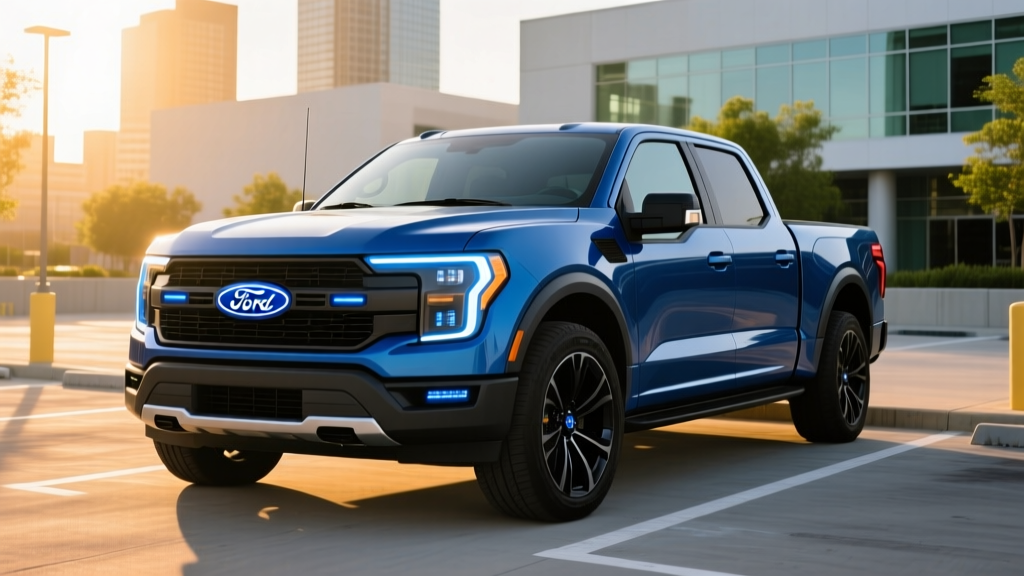
Current qualifying vehicles (partial list, 2026): Tesla Model Y (Long Range, Performance), Ford F-150 Lightning, Chevrolet Equinox EV, Volkswagen ID.4, and select trims of the Hyundai Ioniq 5. Always verify eligibility on the IRS qualified vehicles list before purchasing — the list updates frequently as manufacturers adjust supply chains.
Oregon State Incentives and Utility Rebates
Oregon's state-level EV incentives have evolved significantly. The Oregon Department of Environmental Quality (DEQ) administers the Charge Ahead Rebate Program, which targets low- and moderate-income residents. As of 2026, income-qualified Oregonians can receive rebates ranging from $2,000 to $7,000 for new or used EV purchases, with higher amounts for lower-income households and those in designated "disadvantaged communities."
Important: Local Incentives Vary Significantly
State and utility incentives change frequently and are often subject to funding availability. Oregon's programs are administered at the state level and through individual utilities. Always check current program status with the Oregon DEQ and your local utility before making purchase decisions. Some programs have waitlists or have exhausted current funding rounds.
Utility rebates worth investigating:
- Pacific Power: Offers rebates for home Level 2 charger installation (typically $250-$500) and time-of-use rate plans that reduce charging costs
- Portland General Electric (PGE): EV charging rebates and special EV rate plans; some programs include charger hardware discounts
- Eugene Water & Electric Board (EWEB): Residential EV charging rebates and commercial fleet incentives
- Salem Electric: Level 2 charger rebates for residential customers
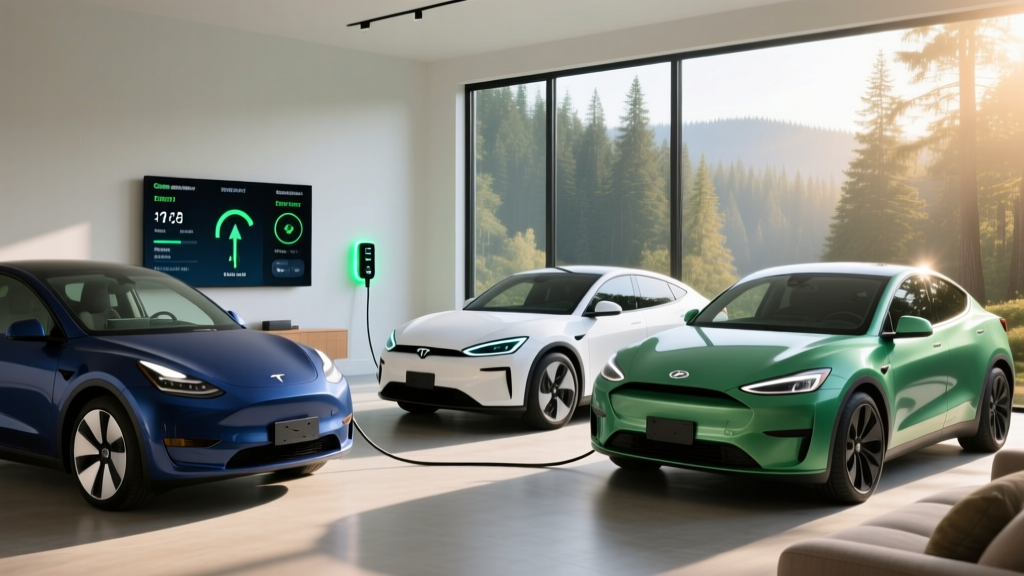
These utility programs are separate from state rebates and can often be stacked. A typical Oregon buyer might combine the federal credit ($7,500), a state Charge Ahead rebate (if income-qualified), and a utility charger rebate ($300-$500) for total incentives exceeding $8,000. However, the state program's income targeting means higher-income buyers will primarily rely on the federal credit and utility programs.
5-Year Total Cost of Ownership: EV vs. Gas Vehicle
The purchase price is just the starting point. To understand true EV economics, we need to model five years of ownership including fuel/charging, maintenance, insurance, and depreciation. Here's a realistic breakdown comparing a 2026 Tesla Model Y Long Range (one of the most popular EVs in Oregon) against a comparable gas-powered compact SUV like the Toyota RAV4.
| Cost Category | Tesla Model Y LR (EV) | Toyota RAV4 (Gas) | Difference |
|---|---|---|---|
| Purchase Price (MSRP) | $48,990 | $35,000 | +$13,990 (EV) |
| Federal Tax Credit | -$7,500 | $0 | -$7,500 (EV savings) |
| Effective Purchase Price | $41,490 | $35,000 | +$6,490 (EV) |
| Fuel/Charging (5 years, 60k miles) | $3,600 | $9,000 | -$5,400 (EV savings) |
| Maintenance (5 years) | $1,500 | $3,500 | -$2,000 (EV savings) |
| Insurance (5 years) | $12,500 | $8,500 | +$4,000 (EV cost) |
| Depreciation (5 years) | $18,000 | $12,000 | +$6,000 (EV cost) |
| Total 5-Year Cost | $77,090 | $68,000 | +$9,090 (EV) |
| Cost Per Mile | $0.50 | $0.45 | +$0.05/mile (EV) |
Key assumptions: 12,000 miles/year, Oregon average electricity rate of $0.12/kWh, gas at $4.00/gallon, Model Y efficiency of 3.5 miles/kWh (286 Wh/mile), RAV4 at 30 MPG combined. Insurance estimates based on Oregon averages for good drivers. Depreciation based on current EV resale trends.
The math shows that even with substantial fuel and maintenance savings, the higher purchase price, insurance premiums, and depreciation keep the EV's total cost higher over five years. However, this gap narrows significantly if you qualify for state rebates, drive more miles annually (amplifying fuel savings), or plan to keep the vehicle longer than five years (allowing depreciation to stabilize).
Charging vs. Gas: The Per-Mile Cost Reality
This is where EVs consistently win, but the savings depend heavily on your charging setup and electricity rates.
Cost Per Mile: EV Charging vs. Gasoline (Oregon, 2026)
Home charging (Level 2, $0.12/kWh):
- Model Y efficiency: 3.5 miles per kWh (286 Wh/mile)
- Cost per mile: $0.12 ÷ 3.5 = $0.034/mile
Public DC fast charging ($0.35-$0.50/kWh):
- Cost per mile: $0.35 ÷ 3.5 = $0.10/mile (low end)
- Cost per mile: $0.50 ÷ 3.5 = $0.14/mile (high end)
Gasoline vehicle (30 MPG, $4.00/gallon):
- Cost per mile: $4.00 ÷ 30 = $0.133/mile
The takeaway: Home charging delivers massive savings — roughly 75% cheaper per mile than gasoline. But if you rely primarily on public DC fast charging, your costs can equal or exceed gasoline, especially at premium networks like Electrify America or EVgo during peak hours. Oregon's relatively low electricity rates (compared to California or the Northeast) make home charging particularly advantageous.
For a driver covering 12,000 miles annually with 90% home charging and 10% public fast charging, annual fuel costs would be approximately:
- EV: (10,800 miles × $0.034) + (1,200 miles × $0.12) = $506/year
- Gas vehicle: 12,000 miles × $0.133 = $1,596/year
- Annual savings: ~$1,090
Over five years, that's roughly $5,450 in fuel savings — substantial, but not enough alone to offset the higher purchase price without incentives.
Maintenance Savings: Real but Modest
EVs require less maintenance than internal combustion vehicles, but the savings are often overstated in marketing materials. Here's what you'll actually skip and what you'll still pay for:
| Maintenance Item | EV Cost | Gas Vehicle Cost | EV Savings |
|---|---|---|---|
| Oil changes | $0 | $600 (10 changes) | $600 |
| Brake pads/rotors | $400 | $800 | $400 |
| Transmission fluid | $0 | $200 | $200 |
| Air filters | $100 | $200 | $100 |
| Tire rotation/replacement | $1,200 | $1,000 | -$200 (EV costs more) |
| Cabin air filter | $200 | $200 | $0 |
| Wiper blades, bulbs, misc. | $300 | $300 | $0 |
| Coolant/service | $100 | $200 | $100 |
| Total (5 years) | $2,300 | $3,500 | $1,200 |
Why EVs cost less: No oil changes, fewer moving parts in the drivetrain, and regenerative braking significantly extends brake pad life (many EV owners report 80,000-100,000 miles on original brake pads).
Why the gap isn't larger: EVs are heavier due to battery weight, which accelerates tire wear. Expect to replace tires every 30,000-40,000 miles on an EV versus 50,000-60,000 miles on a comparable gas vehicle. High-quality EV-rated tires (like Michelin Pilot Sport EV or Continental EcoContact) cost $200-$350 per tire.
Net maintenance savings over five years: approximately $1,200-$2,000 depending on driving habits and vehicle model. Meaningful, but not transformative.
Insurance: The Hidden EV Cost
EV insurance premiums run 15-30% higher than equivalent gas vehicles, and this is consistently the biggest surprise for new EV owners. For the Model Y vs. RAV4 comparison, expect to pay roughly $800-$1,000 more per year in insurance premiums.
Why EVs cost more to insure:
- Higher repair costs: Battery packs are expensive to replace if damaged (even minor undercarriage impacts can total an EV). Specialized training and equipment are required for high-voltage system repairs.
- Higher vehicle values: Comprehensive and collision coverage costs scale with vehicle price.
- Limited repair network: Fewer body shops have EV-certified technicians, increasing repair time and cost.
- Advanced technology: Sensors, cameras, and ADAS systems integrated into bumpers and windshields increase replacement costs after minor accidents.
Mitigation strategies:
- Shop multiple insurers — Tesla Insurance, Progressive, and GEICO often offer competitive EV rates
- Consider higher deductibles ($1,000 vs. $500) to reduce premiums
- Maintain a clean driving record — EV surcharges compound with at-fault accidents
- Some insurers offer EV-specific discounts or telematics programs
Budget an extra $800-$1,200 annually for insurance when comparing EV ownership costs. Over five years, this adds $4,000-$6,000 to your total cost of ownership — often erasing a significant portion of fuel and maintenance savings.
Depreciation and Resale Value: EVs Losing Ground
EV depreciation has been a moving target, and not in a favorable direction for owners. Early EVs (2018-2021 models) held value reasonably well due to limited supply and high demand. But the market has shifted dramatically:
Current EV depreciation trends (2026):
- Year 1: 20-25% depreciation (similar to gas vehicles)
- Year 3: 40-50% depreciation (worse than gas vehicles, which average 35-40%)
- Year 5: 55-65% depreciation (gas vehicles average 45-50%)
Why EVs depreciate faster:
- Rapid technology advancement: Newer models offer more range, faster charging, and better features, making older EVs less desirable
- Battery degradation concerns: Used buyers worry about battery health and replacement costs ($10,000-$20,000 for most models)
- Price wars: Tesla and other manufacturers have aggressively cut new-vehicle prices, instantly reducing used-EV values
- Tax credit uncertainty: Changes to federal incentives create market volatility
- Leasing dominance: High lease volumes flood the used market with off-lease vehicles every 2-3 years
What this means for your wallet: A $48,990 Model Y might be worth $18,000-$22,000 after five years, representing $27,000-$31,000 in depreciation. A $35,000 RAV4 might retain $18,000-$20,000, or $15,000-$17,000 in depreciation. That's a $10,000-$14,000 gap in depreciation costs alone.
Exceptions: High-demand, limited-supply EVs (like the Ford F-150 Lightning in its first two years) have defied depreciation trends temporarily. But the broader market has normalized toward faster EV depreciation.
If you plan to keep your EV for 8-10 years (well past the steep initial depreciation curve), the per-year depreciation cost drops significantly. But for 3-5 year ownership cycles, depreciation is a major financial disadvantage.
Frequently Asked Questions
How much does it really cost to own an EV over 5 years in Oregon?
For a mid-range EV like the Tesla Model Y, expect total 5-year costs of $75,000-$80,000 including purchase (after incentives), charging, maintenance, insurance, and depreciation. A comparable gas SUV costs $65,000-$70,000 over the same period. The EV costs roughly $8,000-$10,000 more over five years, primarily due to higher purchase price, insurance, and depreciation. However, if you qualify for Oregon's state rebates (up to $7,000 for income-qualified buyers), drive high annual mileage (amplifying fuel savings), or keep the vehicle longer than five years, the gap narrows substantially or reverses.
Do I qualify for the federal $7,500 EV tax credit?
Eligibility depends on three factors: (1) your adjusted gross income must be below $300,000 (married filing jointly), $225,000 (head of household), or $150,000 (other filers); (2) the vehicle MSRP must be under $80,000 for SUVs/trucks/vans or $55,000 for sedans; (3) the vehicle must meet battery-sourcing requirements for critical minerals and components. Many popular EVs only qualify for $3,750 (half credit) or $0 due to supply-chain rules. Check the IRS qualified vehicles list for current eligibility before purchasing. You can transfer the credit to the dealer at point-of-sale to reduce your purchase price immediately.
How much do I save on fuel and maintenance with an EV?
In Oregon, with home charging at $0.12/kWh and a typical EV efficiency of 3-4 miles per kWh, expect to pay $0.03-$0.04 per mile for electricity versus $0.13-$0.15 per mile for gasoline (at $4.00/gallon, 30 MPG). That's roughly $1,000-$1,200 in annual fuel savings for a driver covering 12,000 miles. Maintenance savings average $300-$500 annually (no oil changes, extended brake life), but EV tires wear faster due to vehicle weight, partially offsetting savings. Combined fuel and maintenance savings typically total $1,300-$1,700 per year, or $6,500-$8,500 over five years. However, these savings are often insufficient to fully offset the higher purchase price and insurance costs.
Are EVs more expensive to insure?
Yes, typically 15-30% more expensive than comparable gas vehicles. For a Tesla Model Y versus a Toyota RAV4, expect to pay $800-$1,200 more annually in insurance premiums. Higher repair costs (battery replacement, specialized technicians), higher vehicle values, and advanced sensor systems all contribute to elevated premiums. Shop multiple insurers, consider higher deductibles, and maintain a clean driving record to minimize costs. Budget an extra $4,000-$6,000 over five years for the insurance premium difference.
How well do EVs hold their value?
Current data shows EVs depreciate faster than gas vehicles: 55-65% depreciation over five years versus 45-50% for comparable gas vehicles. A $45,000-$50,000 EV might be worth $18,000-$22,000 after five years. Factors driving faster depreciation include rapid technology advancement (newer models offer better range/charging), battery degradation concerns among used buyers, manufacturer price cuts, and high lease volumes flooding the used market. If you plan to keep your EV for 8-10 years, the annual depreciation cost drops significantly. But for 3-5 year ownership cycles, depreciation is a major financial disadvantage that often outweighs fuel and maintenance savings.
What Oregon-specific incentives are available beyond the federal tax credit?
Oregon's Charge Ahead Rebate Program offers $2,000-$7,000 for income-qualified residents purchasing new or used EVs, with higher rebates for lower-income households and those in disadvantaged communities. Utility companies like Pacific Power, Portland General Electric, and Eugene Water & Electric Board offer additional rebates for home Level 2 charger installation ($250-$500) and special EV electricity rate plans. These programs are subject to funding availability and eligibility requirements that change frequently. Check current program status with the Oregon DEQ and your local utility before making purchase decisions. Higher-income buyers who don't qualify for state rebates can still access utility charger rebates and the federal tax credit (if eligible).
The Bottom Line: Is an EV Financially Smart in Oregon?
The Oregon electric vehicle rebate landscape offers meaningful incentives, but EV ownership economics in 2026 remain nuanced. If you qualify for the full federal tax credit ($7,500), Oregon's state rebates (if income-eligible), drive 15,000+ miles annually, have access to affordable home charging, and plan to keep the vehicle 7-10 years, an EV can deliver genuine long-term savings. The fuel and maintenance advantages compound over time and high mileage.
However, if you're a moderate-mileage driver (under 10,000 miles/year), don't qualify for income-targeted state rebates, rely primarily on public charging, or plan to trade in every 3-5 years, the higher purchase price, insurance premiums, and accelerated depreciation will likely result in higher total costs than a comparable gas vehicle.
Run your own numbers using your specific driving patterns, electricity rates, insurance quotes, and intended ownership duration. The incentives are real, but they're not universal — and they don't automatically make EVs cheaper to own for every buyer.