Stacking Oregon's EV Incentives With Federal Tax Credits
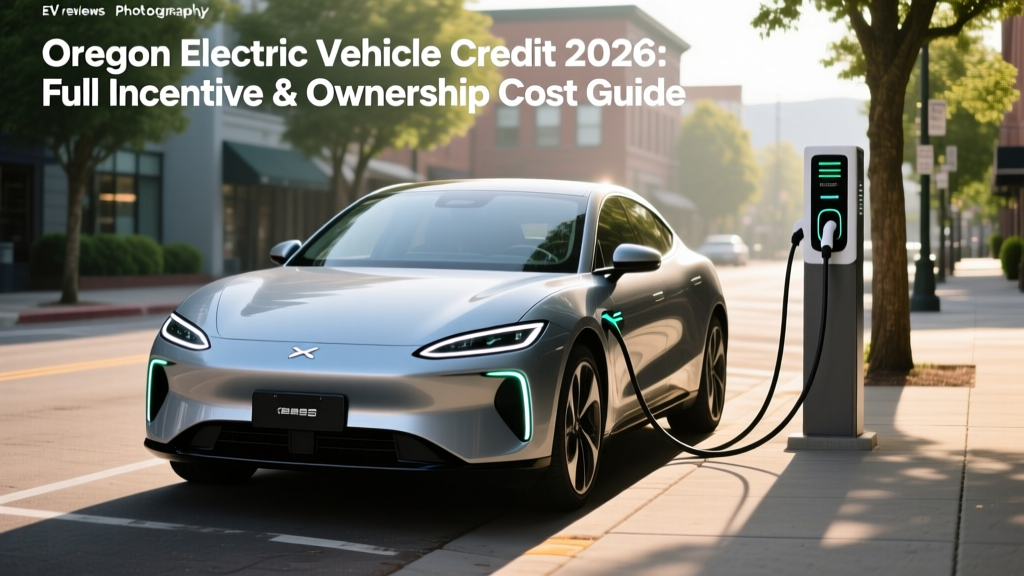
Oregon ranks among the most EV-friendly states in the U.S., thanks to a combination of progressive state rebates, utility incentives, and some of the lowest average electricity rates in the country. If you're shopping for an electric vehicle in the Beaver State, the Oregon electric vehicle credit landscape — combined with the federal §30D tax credit — can knock thousands off your effective purchase price. But the savings story doesn't end at the dealership. Real EV ownership economics depend on charging costs, insurance premiums, maintenance realities, and how well the vehicle holds its value over time.
This guide breaks down every layer of Oregon EV ownership cost for 2026, from the moment you drive off the lot through five years of real-world driving. We'll use concrete numbers — dollars per mile, kWh rates, insurance averages — so you can make a data-driven decision rather than relying on marketing claims.
Federal §30D Tax Credit: Current Rules for 2026
The federal Clean Vehicle Credit under IRS §30D remains the single largest incentive available to most EV buyers, offering up to $7,500 for qualifying new electric vehicles and up to $4,000 for qualifying used EVs. However, eligibility is anything but universal. The rules have tightened significantly since the Inflation Reduction Act reshaped the program, and for 2026, several critical constraints apply.
§30D New EV Credit Eligibility Checklist (2026)
- MSRP Caps: Vans, SUVs, and pickups must have an MSRP at or below $80,000. Sedans and other passenger cars must be at or below $55,000.
- Buyer Income Limits: Modified adjusted gross income (MAGI) must not exceed $300,000 (joint filers), $225,000 (head of household), or $150,000 (single filers).
- Battery Sourcing Requirements: A percentage of critical minerals must be sourced from the U.S. or a free-trade-agreement partner, and battery components must meet North American manufacturing thresholds. These percentages increase annually.
- North American Assembly: The vehicle must undergo final assembly in North America.
- Point-of-Sale Transfer: Buyers can now transfer the credit to the dealer at purchase, reducing the upfront cost immediately rather than waiting for a tax refund.
- One Vehicle Per Year: The credit is limited to one new EV per taxpayer per year.
For the full and most current rules, always verify eligibility against the IRS Clean Vehicle Credits page and confirm your specific vehicle's qualification on fueleconomy.gov. Tax professionals should be consulted for individual situations — this guide is informational, not tax advice.
Oregon Electric Vehicle Credit & State Incentives
Oregon's state-level EV incentive structure has evolved considerably. The Oregon Department of Environmental Quality (DEQ) administers the Charge Ahead Rebate Program, which provides rebates primarily aimed at low- and moderate-income Oregon residents purchasing new or used EVs. As of 2026, the program offers:
- Standard Rebate: Up to $2,000 for new battery-electric vehicles (BEVs) for income-qualified applicants.
- Plus-Up Rebate: Additional funds may be available for lower-income households, potentially stacking with the standard rebate for a combined state incentive approaching $5,000–$7,000 in some cases, often applied to both vehicle purchase and home charging equipment.
- Used EV Rebate: Lower-income Oregon residents may qualify for rebates on used EV purchases, typically in the $2,000–$5,000 range depending on income tier and funding availability.
Important: State and Local Incentives Vary
Oregon's Charge Ahead Rebate funding is subject to legislative appropriations and can run out or change eligibility criteria mid-year. Additionally, utility-specific rebates (Pacific Power, Portland General Electric, Eugene Water & Electric Board) may offer separate incentives for EV purchases or Level 2 home charger installation — often $250–$1,000. Always check the Oregon DEQ website and your local utility for current program status and application deadlines before relying on specific rebate amounts.
Utility Rebates in Oregon
Oregon's major utilities frequently offer additional incentives that stack with state and federal programs:
- Portland General Electric (PGE): Has historically offered rebates for Level 2 home charger purchase and installation, plus time-of-use rate plans that reduce charging costs during off-peak hours.
- Pacific Power: Offers EV incentive programs that may include charger rebates and special electricity rates for EV owners.
- EWEB (Eugene): Provides residential EV charger rebates and competitive electricity rates that make home charging particularly affordable.
When combining the federal §30D credit (up to $7,500), the Oregon Charge Ahead rebate (up to $7,000 for qualifying lower-income buyers), and a utility charger rebate ($250–$1,000), an Oregon EV buyer could potentially reduce their effective purchase cost by $7,750 to $15,500. However, stacking all maximums requires meeting every program's specific eligibility criteria — income caps, vehicle qualification, and funding availability.
5-Year Total Cost of Ownership: EV vs. Gas in Oregon
Incentives lower the purchase price, but the real financial story unfolds over years of ownership. Below is a realistic 5-year total cost of ownership (TCO) comparison for a mid-range EV (e.g., 2026 Hyundai Ioniq 5 SEL, ~$46,000 MSRP) versus a comparable gasoline crossover (e.g., 2026 Toyota RAV4 XLE AWD, ~$33,500 MSRP) driven 12,000 miles per year in Oregon.
| Cost Category | EV (Ioniq 5 SEL) | Gas (RAV4 XLE AWD) |
|---|---|---|
| Base MSRP | $46,000 | $33,500 |
| Federal Tax Credit (§30D) | −$7,500 | $0 |
| Oregon State Rebate (estimated) | −$2,000 | $0 |
| Effective Purchase Price | $36,500 | $33,500 |
| Fuel/Energy (5 yrs, 60k mi) | $3,450 | $7,500 |
| Maintenance (5 yrs) | $1,500 | $3,800 |
| Insurance (5 yrs) | $9,500 | $7,200 |
| Depreciation (est. 5-yr) | $18,250 | $14,400 |
| Total 5-Year Cost | $69,200 | $66,400 |
The numbers tell a nuanced story. After incentives, the EV's effective purchase price comes within $3,000 of the gas alternative. Over five years, the EV saves roughly $4,050 on fuel and $2,300 on maintenance, but those savings are partially offset by $2,300 higher insurance and $3,850 greater depreciation. The net result: the EV costs approximately $2,800 more over five years in this scenario — a gap that narrows further or flips in the EV's favor if you qualify for the larger Oregon Charge Ahead Plus-Up rebate, drive more miles annually, or if gas prices rise above the $3.50/gallon assumption used here.
Charging vs. Gas: Oregon's Cost-Per-Mile Advantage
Oregon's electricity rates are among the lowest in the nation, averaging roughly $0.12–$0.14 per kWh for residential customers (compared to the national average of ~$0.17/kWh). This makes the fuel math particularly favorable for EV owners who charge at home.
| Metric | EV (Home Charging) | EV (Public DC Fast) | Gas Vehicle (28 MPG) |
|---|---|---|---|
| Energy/Fuel Price | $0.13/kWh | $0.40/kWh | $3.50/gallon |
| Efficiency | 3.5 mi/kWh (119 MPGe) | 3.5 mi/kWh | 28 MPG combined |
| Cost Per Mile | $0.037 | $0.114 | $0.125 |
| Annual Cost (12,000 mi) | $444 | $1,368 | $1,500 |
Home charging in Oregon is roughly 3.4× cheaper per mile than gasoline at $3.50/gallon. Even public DC fast charging — typically the most expensive way to power an EV — is slightly cheaper than gas per mile. The critical caveat: these savings depend heavily on charging predominantly at home. Oregon EV owners who rely exclusively on public fast charging will see their fuel costs approach or match gasoline.
For Oregon residents on time-of-use (TOU) rate plans through PGE or Pacific Power, off-peak charging (typically overnight, 10 PM–6 AM) can push residential rates as low as $0.08–$0.10/kWh, reducing the cost per mile to under $0.03.
Maintenance Savings: Where EVs Genuinely Shine
EVs eliminate the most routine and costly maintenance items associated with internal combustion engines. Here's a realistic comparison of 5-year maintenance costs:
| Maintenance Item | EV Cost | Gas Vehicle Cost |
|---|---|---|
| Oil Changes | $0 | $450–$750 |
| Transmission Fluid | $0 | $150–$300 |
| Brake Pads/Rotors | $200–$400 | $800–$1,500 |
| Engine Air Filter | $0 | $100–$200 |
| Spark Plugs | $0 | $200–$400 |
| Coolant Flush | $100–$200 | $200–$400 |
| Cabin Air Filter | $100–$200 | $100–$200 |
| Tire Rotation/Replacement | $1,000–$1,800 | $800–$1,500 |
| Total Estimated | $1,400–$2,600 | $2,800–$5,250 |
EVs typically save $1,400–$2,650 on maintenance over five years. The brake savings are substantial: regenerative braking handles most deceleration, meaning brake pads on an EV often last 100,000+ miles. The one area where EVs can cost more is tires — the additional weight and instant torque of EVs can accelerate tire wear by 10–20%, making tire replacement the single largest maintenance line item for most EV owners.
Insurance Cost Reality: The EV Premium
Insurance is consistently the cost category where EVs underperform against gas equivalents. On average, EV insurance premiums run 15–30% higher than comparable gasoline vehicles. For our Ioniq 5 vs. RAV4 comparison, that translates to roughly $1,900/year vs. $1,440/year — a $460 annual gap that adds up to $2,300 over five years.
The reasons are structural, not arbitrary:
- Higher repair costs: EV battery packs, power electronics, and specialized components are expensive to repair or replace after collision damage.
- Total-loss thresholds: Even moderate battery damage can trigger a total-loss declaration, increasing insurer payouts.
- Limited repair network: Fewer body shops have the certifications and equipment to safely repair high-voltage EV systems, driving up labor rates.
- Vehicle value: Higher purchase prices mean higher insured values, which directly affect premium calculations.
Oregon EV buyers can mitigate the insurance premium by shopping quotes across multiple carriers (Geico, Progressive, State Farm, and Tesla Insurance for Tesla vehicles all price EVs differently), bundling with home insurance, and selecting vehicles with strong IIHS safety ratings — top safety picks often receive lower premiums regardless of powertrain.
EV Depreciation and Resale Value Trends
Depreciation is the single largest ownership cost for any vehicle, and EVs have experienced a turbulent resale-value environment. As of 2026, the typical 5-year depreciation picture looks like this:
- Average EV: 45–55% depreciation over 5 years (retaining 45–55% of original value)
- Average gas vehicle: 38–48% depreciation over 5 years (retaining 52–62% of original value)
- Tesla Model 3/Y: 40–50% depreciation (slightly better than EV average, aided by brand recognition and Supercharger network)
- Hyundai/Kia EVs: 45–55% depreciation (competitive pricing but strong market competition)
- Luxury EVs (BMW iX, Mercedes EQS): 55–65% depreciation (steep luxury-segment drop compounded by EV uncertainty)
Several factors have pressured EV resale values in recent years: aggressive price cuts by Tesla that cascaded through the used market, rapid battery technology improvements making older models feel dated, and buyer hesitation around long-term battery health. However, there are stabilizing signals — as the used EV market matures and more buyers understand battery longevity data (most modern NMC and LFP packs retain 85–92% capacity at 100,000 miles), depreciation curves are expected to normalize.
Oregon's strong EV adoption culture and robust charging infrastructure provide a modest resale-value advantage over states with weaker EV ecosystems. An EV sold in Portland or Eugene will typically attract more interested buyers than the same vehicle sold in a rural market with limited charging access.
Maximizing Your Oregon EV Incentives: A Decision Framework
Oregon EV Purchase Decision Framework
Choose to buy now if:
- You qualify for the full $7,500 federal §30D credit (income under cap, vehicle under MSRP cap, battery sourcing compliant)
- You qualify for the Oregon Charge Ahead rebate (income-qualified, funding available)
- You have access to home Level 2 charging (garage or driveway with 240V outlet or planned installation)
- You drive 12,000+ miles annually, maximizing the fuel-cost savings advantage
Consider waiting or choosing a PHEV if:
- Your income exceeds §30D caps and you don't qualify for Oregon state rebates
- You lack reliable home charging access and would rely primarily on public DC fast charging
- You drive fewer than 8,000 miles annually (fuel savings shrink and take longer to offset the purchase premium)
- You plan to own the vehicle fewer than 3 years (insufficient time to recoup higher upfront cost through savings)
Frequently Asked Questions
How much does it really cost to own an EV over 5 years in Oregon?
Based on our mid-range crossover comparison (Ioniq 5 vs. RAV4), the 5-year total cost for the EV is approximately $69,200 vs. $66,400 for the gas vehicle — a difference of about $2,800 after accounting for incentives, fuel, maintenance, insurance, and depreciation. However, qualifying for the full Oregon Charge Ahead Plus-Up rebate could swing the math $3,000–$5,000 in the EV's favor. Your mileage, local electricity rates, and specific vehicle choice will shift these numbers.
Do I qualify for the federal §30D tax credit?
Eligibility depends on three factors: (1) your modified adjusted gross income must be under $300,000 (joint), $225,000 (head of household), or $150,000 (single); (2) the vehicle MSRP must be under $80,000 for SUVs/trucks/vans or $55,000 for cars; and (3) the vehicle must meet battery critical-mineral and component sourcing requirements that tighten annually. Check the fueleconomy.gov tax credit lookup for your specific vehicle and consult a tax professional for your personal situation.
How much do I save on fuel and maintenance with an EV in Oregon?
Oregon's low electricity rates (~$0.13/kWh residential) mean home charging costs roughly $0.037 per mile vs. $0.125 per mile for a 28 MPG gas vehicle — a savings of about $0.088 per mile, or roughly $1,056 per year at 12,000 miles. Maintenance savings average $1,400–$2,650 over five years, primarily from eliminated oil changes, reduced brake wear, and fewer fluid services. Combined fuel and maintenance savings typically total $5,000–$7,000 over five years in Oregon.
Are EVs more expensive to insure in Oregon?
Yes, typically 15–30% more than equivalent gas vehicles. For a mid-range EV crossover, expect to pay roughly $400–$600 more per year in insurance premiums. The higher cost reflects more expensive collision repairs, specialized high-voltage components, and higher vehicle values. Shopping multiple carriers and bundling policies can narrow the gap.
How well do EVs hold their value compared to gas cars?
As of 2026, EVs depreciate faster than gas vehicles on average — roughly 45–55% over five years vs. 38–48% for gas vehicles. However, this gap is narrowing as the used EV market matures and battery longevity data improves. Oregon's strong EV adoption provides a modest resale advantage over states with less charging infrastructure and lower EV demand. Tesla models and popular mainstream EVs like the Ioniq 5 tend to hold value better than luxury EVs.
Can I stack the Oregon state rebate with the federal tax credit?
Yes, Oregon's Charge Ahead Rebate and the federal §30D credit are separate programs and can be combined, provided you meet the eligibility requirements for each. A qualifying lower-income Oregon buyer purchasing a §30D-eligible EV could potentially receive up to $7,500 federal + up to $7,000 state (with Plus-Up) + utility rebates, totaling $14,500–$15,500 in combined incentives. However, both programs have income requirements, and state rebate funding is subject to availability.
Does Oregon offer any EV registration fee surcharges?
Yes. Oregon imposes an additional registration fee on EVs to compensate for lost gas-tax revenue that funds road maintenance. As of 2026, Oregon's EV registration surcharge is approximately $115 annually (subject to legislative changes). Factor this into your annual ownership cost — it partially offsets the fuel-cost savings but does not eliminate the advantage.