Quick Verdict: The Orange Cybertruck Is a Statement Piece With Real Capability
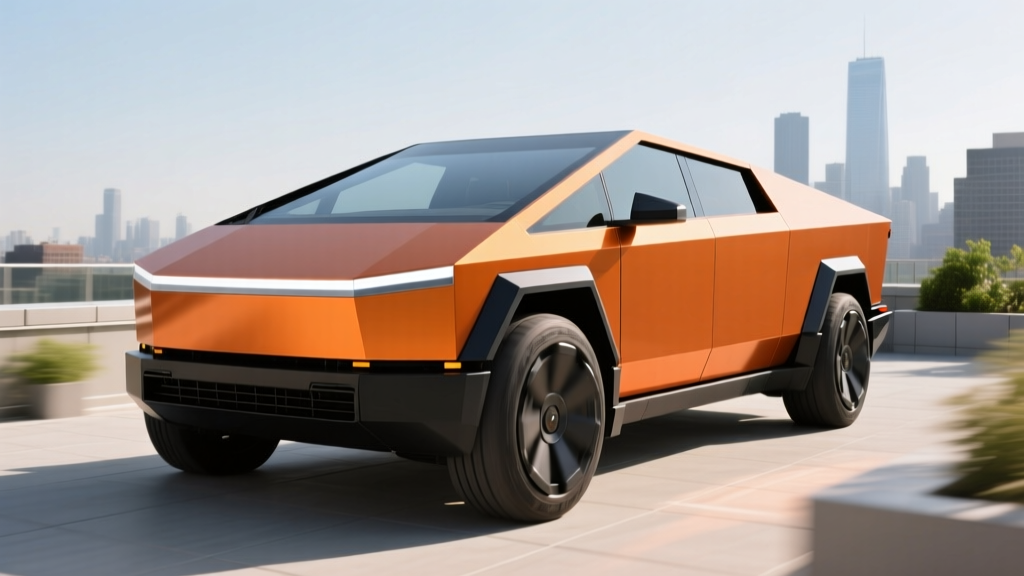
If you've seen the orange Cybertruck tearing through social media feeds, you're not alone. Tesla's Cybertruck wrapped in vibrant orange vinyl (or the increasingly popular factory-adjacent orange PPF) has become one of the most recognizable EVs on the road. But beyond the head-turning aesthetics, the 2026 Cybertruck lineup delivers serious electric truck capability — along with some notable compromises that every prospective buyer should understand before signing a purchase agreement.
Whether you're drawn to the AWD dual-motor or the tri-motor Cyberbeast, this review breaks down exactly what you're getting: real-world range, charging speeds, towing utility, and whether the federal tax credit actually applies to your situation in 2026.
2026 Cybertruck Specs at a Glance
| Spec | AWD (Dual Motor) | Cyberbeast (Tri Motor) |
|---|---|---|
| EPA Range | 340 miles | 320 miles |
| Battery Capacity (usable) | ~123 kWh (NMC) | ~123 kWh (NMC) |
| Max DC Fast Charge | 250 kW | 250 kW |
| 10–80% DC Charge Time | ~28 minutes | ~28 minutes |
| Level 2 Home Charging | 11.5 kW (~37 mi/hr) | 11.5 kW (~37 mi/hr) |
| 0–60 mph | 4.1 seconds | 2.6 seconds |
| Horsepower | 600 hp | 845 hp |
| Drivetrain | Dual-Motor AWD | Tri-Motor AWD |
| Towing Capacity | 11,000 lbs | 11,000 lbs |
| Efficiency | 2.0 kWh/mi (50 MPGe) | 2.1 kWh/mi (48 MPGe) |
| Base MSRP | $79,990 | $99,990 |
| Battery Warranty | 8 yr / 120,000 mi | 8 yr / 120,000 mi |
Sources: fueleconomy.gov, Tesla Cybertruck Specs
Real-World Range: What to Actually Expect
EPA Sticker: 340 miles (AWD) / 320 miles (Cyberbeast)
Real-World Highway (70 mph, mild weather): ~260–290 miles
Cold Weather (below 32°F): ~200–240 miles
Towing (5,000+ lb trailer): ~150–180 miles
The Cybertruck's angular stainless-steel exoskeleton looks futuristic, but it creates a brick-like drag coefficient that punishes highway efficiency. In real-world testing at sustained 70–75 mph speeds, expect roughly 260–290 miles from the AWD model before you need to find a Supercharger. The Cyberbeast's tri-motor powertrain and stickier rear tires reduce that figure further.
Cold weather compounds the problem. The Cybertruck's ~123 kWh NMC (nickel manganese cobalt) battery pack loses usable capacity in freezing temperatures, and cabin heating demands significant energy. Plan for 200–240 miles of range on sub-freezing winter road trips. Tesla's heat pump helps, but it can't fully overcome the physics of a 6,600+ lb stainless-steel wedge pushing through cold, dense air.
If you're primarily a city and suburban driver with regenerative braking opportunities and lower average speeds, you'll see numbers much closer to the EPA estimate — sometimes exceeding 300 miles in stop-and-go traffic.
Charging Speed: DC Fast Charging and Home Setup
| Charging Level | Power | Speed (Miles Added) | Typical Use Case |
|---|---|---|---|
| Level 1 (120V outlet) | ~1.4 kW | ~4–5 mi/hr | Emergency/overnight trickle |
| Level 2 (240V, 48A) | 11.5 kW | ~37 mi/hr | Daily home charging |
| DC Fast Charge (peak) | 250 kW | ~200+ mi in 15 min | Road trips, Supercharger network |
The Cybertruck charges at a peak rate of 250 kW on Tesla's V3 and V4 Superchargers, as well as compatible CCS stations using Tesla's included NACS-to-CCS adapter (or at NACS-native third-party networks increasingly adopting the standard). A 10–80% session takes approximately 28 minutes under ideal conditions — battery preconditioned, moderate ambient temperature, and a station capable of sustaining that power.
Here's the charging-curve reality that spec sheets don't advertise: the Cybertruck only sustains peak 250 kW for a narrow window between roughly 10–25% state of charge. By 50% SoC, you're typically seeing 150–170 kW. Above 80%, charging slows dramatically to protect the NMC cells — expect 50 kW or less. This is why Tesla's navigation system recommends charging to 80% on road trips rather than topping off completely.
For home charging, the Cybertruck accepts up to 11.5 kW on a 240V / 48-amp Level 2 circuit (requiring a 60-amp breaker). That adds roughly 37 miles of range per hour, meaning a full overnight charge from 20% to 100% takes about 8–9 hours. If your home electrical panel only supports a 40-amp circuit (32 amps), you'll see closer to 7.7 kW and ~25 mi/hr — still adequate for most daily commutes but slower for heavy-use days.
Home install cost reality: Budget $800–$2,500 for a professional Level 2 installation (Tesla Wall Connector or equivalent) assuming your panel has capacity. If you need a 200-amp panel upgrade, add $1,500–$3,500. Always get a quote from a licensed electrician before committing.
Performance: From 0–60 to Off-Road Capability
The dual-motor AWD Cybertruck hits 60 mph in 4.1 seconds — quicker than most sports sedans and astonishing for a truck weighing over 6,600 pounds. The Cyberbeast shaves that down to 2.6 seconds with its tri-motor setup producing 845 horsepower, putting it in hypercar territory off the line.
But straight-line speed is only part of the story. The Cybertruck's steer-by-wire system and 48-volt electrical architecture deliver sharp, responsive handling that defies its mass. The adaptive air suspension offers up to 17 inches of ground clearance in Extract mode, making it genuinely capable on moderate off-road trails. Approach and departure angles are competitive with body-on-frame trucks, and the stainless-steel panels don't care about brush scratches the way painted aluminum does.
The 11,000-pound towing capacity matches or exceeds many conventional half-ton pickups, but remember the range penalty: towing a 5,000-pound trailer on the highway can cut your range nearly in half. Plan charging stops accordingly on any tow-heavy road trip.
Pricing, Trims, and Federal Tax Credit Eligibility
| Trim | Base MSRP | Federal §30D Credit Eligible? | Effective Price (if eligible) |
|---|---|---|---|
| AWD (Dual Motor) | $79,990 | No — exceeds $80,000 truck cap | $79,990 |
| Cyberbeast (Tri Motor) | $99,990 | No — exceeds $80,000 truck cap | $99,990 |
This is where the orange Cybertruck dream meets IRS reality. Under current IRS §30D rules, the federal EV tax credit for new vehicles has an MSRP cap: $80,000 for vans, SUVs, and pickup trucks. The AWD Cybertruck at $79,990 sits just under that threshold — but destination fees, mandatory options, and any dealer-installed accessories push the transaction price above $80,000, which the IRS uses to determine eligibility.
In practice, this means most Cybertruck buyers will not qualify for the $7,500 federal tax credit. Even if your modified adjusted gross income falls under the limits ($300,000 joint / $150,000 single), the MSRP cap is the disqualifier. The Cyberbeast at $99,990 is firmly ineligible regardless of income.
Additionally, the credit requires battery components and critical minerals to meet domestic-sourcing thresholds that tighten annually. Tesla's battery supply chain is among the most vertically integrated, but buyers should verify current-year eligibility on the IRS clean vehicle credit page before counting on any credit at point of sale.
Bottom line on price: Budget the full MSRP plus destination ($1,390), taxes, and registration. A well-equipped AWD Cybertruck with the Foundation Series or equivalent package lands in the $85,000–$95,000 range before the orange wrap.
Cargo, Interior Space, and Daily Practicality
The Cybertruck's 6-foot vault (bed) offers 67 cubic feet of lockable cargo space with the tonneau cover closed. The motorized cover is one of the best in the truck segment — rigid, weather-sealed, and operable from the touchscreen or your phone. The bed includes built-in 120V and 240V outlets, enabling the Cybertruck to power tools at a job site or appliances during an outage (up to 11.5 kW continuous via Powershare).
Inside, the cabin seats five adults. Front legroom is generous at 41.2 inches, though the rear seat, while adequate at 36.4 inches of legroom, has a relatively upright seatback that compromises long-distance comfort for taller passengers. The 18.5-inch center touchscreen controls nearly every vehicle function — there are no physical buttons, which some owners love and others find frustrating while driving.
The frunk (front trunk) adds 7.1 cubic feet of secure storage, useful for groceries or charging cables. Total interior cargo volume behind the rear seats is limited compared to an SUV, but the vault compensates for most truck-buyer needs.
Tech, Driver Assistance, and What's Missing
The Cybertruck ships with Tesla's latest hardware suite (HW4/AI5 depending on build date) and includes Basic Autopilot as standard — adaptive cruise control and lane-centering on highways. This is a SAE Level 2 driver-assistance system, meaning you must keep your hands on the yoke and eyes on the road at all times. It is not self-driving.
Full Self-Driving (Supervised) is available as a $8,000 add-on or $99/month subscription. FSD handles city streets, intersections, and highway lane changes with increasing competence, but remains Level 2 — driver supervision is mandatory and legally required. Tesla's naming convention is aspirational, not descriptive.
The 18.5-inch infotainment screen runs Tesla's latest software with Netflix, YouTube, and gaming capabilities while parked. The 15-speaker premium audio system is among the best in any vehicle at this price point. However, the Cybertruck lacks Apple CarPlay and Android Auto — a dealbreaker for some buyers accustomed to phone-mirrored navigation and music interfaces.
Notable drawbacks:
- The yoke-style steering wheel is standard and non-optional; many drivers find it impractical for low-speed parking maneuvers and three-point turns despite steer-by-wire's variable ratio.
- Panel gaps and build quality remain inconsistent — better than early 2024 deliveries but still not at German-luxury levels.
- Rear visibility is compromised by the vault walls and lack of a rear window; the camera-based rearview mirror is mandatory and takes adjustment.
- Insurance premiums run 30–50% higher than comparable trucks due to stainless-steel body repair costs and high theft/vandalism rates on high-profile wraps.
The Orange Wrap: What You Need to Know
Most "orange Cybertrucks" on the road aren't factory-painted orange — Tesla doesn't offer an orange paint option from the Gigafactory. Instead, owners achieve the look through two primary methods:
- Paint Protection Film (PPF) in orange: $5,000–$8,000 for a full-body install. Protects the stainless steel from scratches and fingerprints while adding color. Reversible but expensive.
- Vinyl wrap: $3,000–$5,000 for quality cast vinyl. Wider color selection, easier to change, but less durable than PPF (typically 3–5 year lifespan). Matte, satin, and gloss orange finishes are all available.
Either option adds $3,000–$8,000 to your total cost of ownership. Factor this into your budget if the orange aesthetic is a primary draw. Note that wraps and PPF don't affect your insurance classification, but some insurers may require documentation of the modification.
Pros and Cons
- Class-leading 11,000-lb towing for an EV truck
- 250 kW DC fast charging with access to Tesla Supercharger network
- Stainless-steel exoskeleton resists dents, scratches, and corrosion
- 600–845 hp with sub-4-second 0–60 (AWD)
- Best-in-class vehicle-to-load (V2L) power output
- Lockable 67 cu ft vault with integrated 120V/240V outlets
- Over-the-air updates continuously add features
- Poor highway efficiency due to aerodynamic drag (~260–290 real-world highway miles)
- Likely ineligible for $7,500 federal tax credit due to MSRP cap
- No Apple CarPlay or Android Auto
- Yoke steering is mandatory and divisive
- Rear seat comfort lags behind Ford F-150 Lightning and Rivian R1T
- Build quality still inconsistent
- Insurance costs significantly above truck average
- Cold-weather range loss is substantial
Who Should Buy the Orange Cybertruck?
Choose the Cybertruck if:
- You want a high-performance electric truck with genuine towing and off-road capability
- You have reliable home Level 2 charging and access to Tesla Superchargers for road trips
- You value V2L power output for job sites, camping, or backup power
- You want the most distinctive-looking truck on the road (especially in orange)
- You prioritize acceleration and tech over traditional truck refinement
Look elsewhere if:
- You need maximum range for frequent long-distance highway driving (consider the Rivian R1T Dual-Motor Max or wait for next-gen competitors)
- You rely on the $7,500 federal tax credit to make the math work
- Back-seat passenger comfort is a priority (Ford F-150 Lightning is significantly better here)
- You want CarPlay, physical buttons, or conventional steering
- Your budget is firm below $75,000
Frequently Asked Questions
What is the real-world range of the orange Cybertruck?
The AWD Cybertruck achieves approximately 260–290 miles on the highway in mild weather, dropping to 200–240 miles in freezing temperatures. City driving with regenerative braking can push closer to the 340-mile EPA estimate. Towing a trailer cuts range to 150–180 miles.
How fast does the Cybertruck charge at home and on the road?
On a 240V Level 2 home charger (48 amps), the Cybertruck adds about 37 miles of range per hour, fully charging overnight in 8–9 hours. On a 250 kW DC fast charger, a 10–80% session takes approximately 28 minutes, though the charge curve tapers significantly above 50% SoC.
Does the Cybertruck qualify for the federal EV tax credit?
Most likely not. The IRS §30D credit caps eligible pickup trucks at $80,000 MSRP. While the AWD Cybertruck starts at $79,990, destination fees and typical options push the transaction price above the cap. The Cyberbeast at $99,990 is firmly ineligible. Always verify current rules at irs.gov and consult a tax professional.
Is the orange Cybertruck worth buying vs. the Ford F-150 Lightning or Rivian R1T?
It depends on your priorities. The F-150 Lightning offers better rear-seat comfort, CarPlay, and a lower entry price (with tax credit eligibility on lower trims). The Rivian R1T delivers superior interior quality, a more practical quad-motor option, and better highway range with the Max battery. The Cybertruck wins on towing capacity, V2L power, Supercharger network access, and sheer presence. If the orange aesthetic and Tesla ecosystem matter to you, the Cybertruck is compelling — just budget for the full MSRP and higher insurance.
Can I get the Cybertruck in orange from the factory?
No. Tesla does not offer orange as a factory paint color. The orange Cybertruck look is achieved through aftermarket paint protection film (PPF, $5,000–$8,000) or vinyl wrap ($3,000–$5,000). Both are reversible, with PPF offering better durability and scratch protection for the stainless-steel body.
What's the battery warranty on the Cybertruck?
Tesla covers the Cybertruck's battery and drive unit for 8 years or 120,000 miles, whichever comes first, with a minimum 70% capacity retention threshold. This is competitive with the broader EV truck segment and provides reasonable long-term peace of mind for the ~123 kWh NMC pack.