Why Tesla's Open-Source Patent Pledge Still Matters in 2026
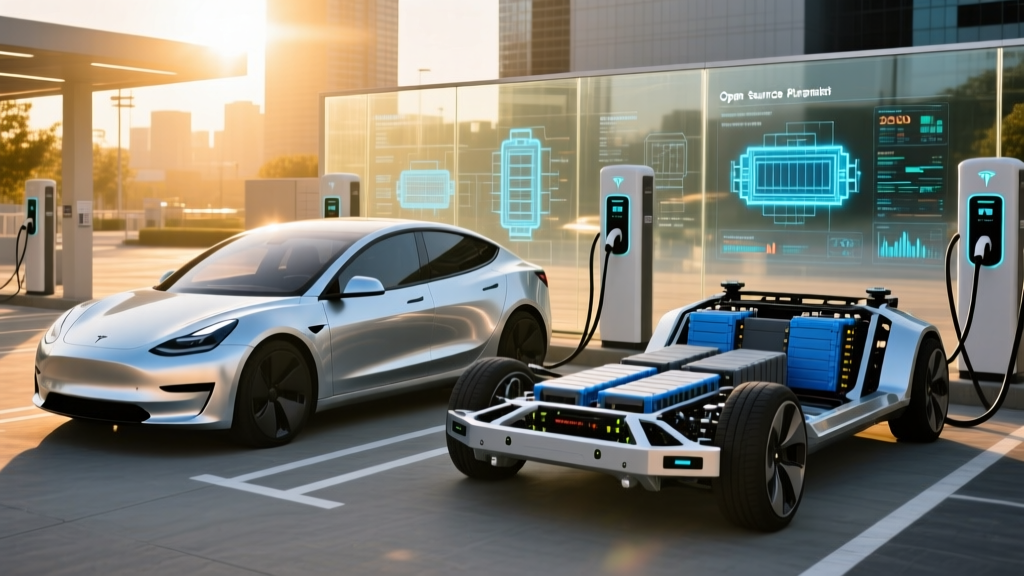
Back in 2014, Elon Musk published a blog post titled "All Our Patent Are Belong To You," announcing that Tesla would not initiate patent lawsuits against anyone who, in good faith, wanted to use its technology. The move was unprecedented in the auto industry. More than a decade later, the ripple effects of those open source Tesla patents are embedded in vehicles from rival manufacturers — from battery thermal management systems to structural pack designs and charging connector standards.
This isn't a review of a single Tesla model. Instead, we're examining how Tesla's patent-sharing commitment reshaped the broader EV market you're shopping in right now, and what the 2026 lineup looks like as a direct result. We'll also benchmark the current 2026 Tesla Model Y Long Range AWD — the vehicle most directly descended from those foundational patents — against the competitors it helped create.
The Patents That Changed the Industry
Tesla's patent portfolio spans several critical EV subsystems. Here's where the open-source approach had the most tangible impact on vehicles you can buy today:
- Battery pack thermal management: Tesla's early patents on liquid-cooled battery modules with serpentine cooling channels informed thermal architectures across Hyundai/Kia's E-GMP platform, GM's Ultium, and Ford's Mustang Mach-E battery system.
- Structural battery packs: The concept of using the battery as a stressed chassis member — pioneered in the Model S and refined in the 4680-cell Model Y — is now adopted by multiple OEMs for weight and stiffness benefits.
- NACS charging connector: Tesla's proprietary connector, opened to the industry in late 2022, became the de facto North American standard by 2025. Ford, GM, Rivian, Hyundai, Volvo, and nearly every major automaker adopted NACS for their 2025-2026 models, granting access to the Supercharger network.
- Motor and inverter design: Tesla's permanent-magnet reluctance motor patents and silicon-carbide inverter architecture influenced next-gen drive units from suppliers like Bosch and BorgWarner.
- Over-the-air (OTA) software architecture: Tesla's approach to vehicle firmware updates via cellular connection is now standard practice industry-wide.
The "good faith" clause matters: companies using Tesla's patents can't then sue Tesla for patent infringement, can't copy Tesla trademarks, and can't reverse-engineer Tesla vehicles to extract trade secrets. Within those guardrails, the technology transfer has been substantial.
2026 Tesla Model Y Long Range AWD: The Patent Beneficiary
To ground this analysis in a vehicle you can actually buy, let's profile the 2026 Tesla Model Y Long Range AWD — the current-generation refresh that consolidates a decade of Tesla's open (and proprietary) engineering into a single package.
| Attribute | Specification |
|---|---|
| EPA Range | 320 miles |
| Battery Capacity | 78.1 kWh usable (NMC lithium-ion) |
| Drivetrain | Dual-motor AWD |
| Horsepower | 384 hp combined |
| 0-60 mph | 4.8 seconds |
| Max DC Fast Charge | 250 kW peak |
| 10-80% DC Charge Time | ~25 minutes |
| Level 2 Home Charge Rate | 11.5 kW (~44 miles/hr) |
| EPA Efficiency | 111 MPGe combined / 28 kWh/100 mi |
| Cargo Volume | 30.2 cu ft (rear seats up) / 72.1 cu ft (folded) |
| Rear Legroom | 38.1 inches |
| Base MSRP | $47,990 (includes destination) |
| Battery Warranty | 8 years / 120,000 miles |
| Basic Warranty | 4 years / 50,000 miles |
Source: EPA fueleconomy.gov, Tesla.com 2026 specifications.
The EPA rates the 2026 Model Y Long Range at 320 miles. In real-world highway driving at 70-75 mph, expect roughly 275-290 miles on a full charge. In cold weather (below 32°F), range drops to approximately 240-260 miles due to cabin heating demands and increased battery resistance. Tesla's heat pump — itself an evolution of thermal management concepts rooted in early Tesla patents — mitigates cold-weather loss better than resistive heating, but physics still applies. City driving with frequent regenerative braking can push real-world range close to or slightly above the EPA figure.
Charging: NACS Dominance and the Supercharger Advantage
The Model Y uses the NACS connector natively — the same connector Tesla opened to competitors, which now defines North American charging infrastructure. Here's what charging looks like in practice:
| Charging Level | Power (kW) | Miles Added per Hour | Typical Use Case |
|---|---|---|---|
| Level 1 (120V outlet) | ~1.4 kW | ~5 mi/hr | Emergency/trickle only |
| Level 2 (240V home) | 11.5 kW | ~44 mi/hr | Daily home charging |
| DC Fast (Supercharger V3) | 250 kW peak | ~162 mi in 15 min | Road trips |
| DC Fast (Supercharger V4) | 250 kW (cable-limited) | Similar to V3 | Newer stations |
Charging curve reality: The Model Y peaks at 250 kW only between roughly 10-30% State of Charge (SoC). Above 50%, the rate tapers to ~120 kW, and above 80% it drops further to ~45 kW to protect the NMC cells. The published 10-80% time of ~25 minutes reflects this curve — not a sustained 250 kW rate. Always precondition the battery (via the car's navigation-routed Supercharger preconditioning) before arriving at a DC fast charger to hit peak speeds.
Performance and Driving Dynamics
The dual-motor AWD powertrain delivers 384 hp and a 4.8-second 0-60 mph time — brisk for a family crossover. The Model Y's low center of gravity (battery pack under the floor, a concept Tesla's structural patents helped popularize) gives it composed handling for its class. Regenerative braking is aggressive and enables near one-pedal driving in most conditions.
Notable drawbacks: the ride quality remains firmer than competitors like the Hyundai Ioniq 5 or Ford Mustang Mach-E, particularly on rough pavement. Road noise insulation has improved in the 2025-2026 refresh with acoustic glass and additional damping, but it's still a step behind luxury alternatives.
Pricing, Tax Credits, and Total Cost
| Trim | MSRP | Federal Credit (§30D) | Effective Price |
|---|---|---|---|
| Long Range RWD | $44,990 | Up to $7,500* | ~$37,490 |
| Long Range AWD | $47,990 | Up to $7,500* | ~$40,490 |
| Performance | $51,490 | Up to $7,500* | ~$43,990 |
*IRS §30D eligibility requirements (2026):
- MSRP cap: SUVs/crossovers must be under $80,000 — all Model Y trims qualify.
- Buyer income cap: Modified AGI ≤ $150,000 (single) / $300,000 (joint). Exceed these and the credit phases out.
- Battery sourcing: Critical minerals and battery components must meet escalating North American/content thresholds. As of 2026, the Model Y's battery supply chain qualifies for the full $7,500 credit for most buyers. Verify current sourcing compliance on the IRS qualified vehicles list.
- Point-of-sale transfer: You can apply the credit as an instant discount at purchase rather than waiting for tax filing.
Consult a tax professional to confirm your individual eligibility — income, filing status, and tax liability all affect the final credit.
Tech, Interior, and Driver Assistance
Infotainment: The 15.4-inch center touchscreen runs Tesla's proprietary OS — no Apple CarPlay or Android Auto. Navigation, media, and vehicle controls are all screen-based. The 2026 refresh adds ventilated front seats, ambient lighting, and a rear-seat entertainment screen as standard on Long Range trims.
Driver assistance: Tesla's Autopilot (SAE Level 2) includes adaptive cruise control and lane-centering as standard. Full Self-Driving (Supervised) remains a $8,000 add-on or $99/month subscription. Important: FSD is Level 2 automation — the driver must remain fully engaged, hands on or near the wheel, and eyes on the road at all times. It is not self-driving.
Tesla Autopilot and FSD (Supervised) are SAE Level 2 driver-assistance systems. They require continuous driver supervision. They do not make the vehicle autonomous. You are responsible for all driving decisions. Misuse or inattention can result in serious accidents. See NHTSA guidance on automated vehicle safety.
How Open Patents Created the Model Y's Competitors
Here's where the open source Tesla patents story comes full circle. The vehicles competing with the Model Y in 2026 exist partly because Tesla's technology sharing accelerated industry-wide EV development:
- Hyundai Ioniq 5: Uses an 800V architecture and advanced thermal management that draws on concepts Tesla pioneered. Its structural battery integration echoes Tesla's pack-as-chassis philosophy.
- Ford Mustang Mach-E: Ford adopted NACS for 2025+ models and leveraged Tesla-style OTA update architecture. The Mach-E's battery cooling system reflects lessons from Tesla's early patents.
- GM Equinox EV / Blazer EV: GM's Ultium platform uses large-format pouch cells in a structural pack — an evolution of the structural battery concept Tesla demonstrated at scale.
- Rivian R2 (2026): Rivian adopted NACS and uses a similar skateboard architecture with integrated structural battery, concepts validated by Tesla's production success.
The competitive field is stronger because of the patent pledge — and buyers benefit from better alternatives at every price point.
Pros
- Best-in-class Supercharger network access (18,000+ stalls in North America)
- Strong real-world efficiency (28 kWh/100 mi)
- Excellent cargo versatility (72.1 cu ft with seats folded + front trunk)
- Continuous OTA improvements post-purchase
- Full $7,500 federal tax credit eligibility for qualifying buyers
- Proven battery longevity data from high-mileage fleet
Cons
- No Apple CarPlay / Android Auto support
- Firm ride quality vs. competitors
- FSD costs $8,000 extra and remains Level 2 — not autonomous
- Minimalist interior lacks physical buttons (HVAC, mirrors all screen-controlled)
- Insurance premiums run 15-25% higher than comparable non-Tesla EVs
- Service center wait times can stretch weeks in some metro areas
Who Should Buy the Model Y — And Who Shouldn't
Buy the Model Y if: You want access to the most reliable DC fast-charging network in North America, value OTA software updates, need strong cargo space for a family, and prioritize efficiency over ride comfort. It's ideal for road-trippers who regularly drive 200+ mile routes and want predictable 25-minute Supercharger stops.
Look elsewhere if: You demand Apple CarPlay, prefer a softer ride, want physical buttons for climate controls, or need a vehicle for heavy towing (3,500 lb max — the Ford Mach-E and Hyundai Ioniq 5 offer similar limits, but trucks like the F-150 Lightning tow 7,700+ lbs).
Frequently Asked Questions
What is the real-world range of the 2026 Tesla Model Y?
The EPA rates it at 320 miles. Real-world highway driving yields approximately 275-290 miles. Cold weather (below freezing) reduces that to 240-260 miles. City driving with regenerative braking can approach or slightly exceed the EPA figure.
How fast does the Model Y charge at home and on the road?
At home on a 240V Level 2 charger, it charges at 11.5 kW, adding roughly 44 miles of range per hour — a full charge overnight. On DC fast charging, it peaks at 250 kW and reaches 10-80% in approximately 25 minutes, though the rate tapers significantly above 50% SoC.
How much does the Model Y cost after the federal tax credit?
The Long Range AWD starts at $47,990 MSRP. Qualifying buyers (meeting income caps and sourcing requirements under IRS §30D) can receive up to $7,500 as a point-of-sale discount, bringing the effective price to approximately $40,490. Verify your eligibility on the IRS qualified vehicles list and with a tax professional.
Does the Model Y qualify for the $7,500 federal EV tax credit?
Yes — all 2026 Model Y trims fall under the $80,000 SUV MSRP cap. Eligibility depends on your modified AGI (≤$150K single / ≤$300K joint), the battery's critical-mineral and component sourcing meeting 2026 thresholds, and your federal tax liability. The credit can be transferred at point of sale.
Is the Model Y worth buying vs. the Hyundai Ioniq 5 or Ford Mach-E?
The Model Y wins on charging infrastructure (Supercharger network), efficiency, and cargo space. The Ioniq 5 wins on ride comfort, 800V charging architecture (faster 10-80% at compatible chargers), and CarPlay support. The Mach-E offers a more traditional interior layout. Test-drive all three — the decision often comes down to ride feel and infotainment preference.
What Tesla patents are actually open source?
Tesla pledged not to enforce its patents against parties acting in "good faith" — meaning you can use Tesla's patented technology as long as you don't sue Tesla for patent infringement, copy its trademarks, or reverse-engineer its trade secrets. This covers battery thermal management, structural packs, motor designs, and charging systems, among others. The pledge remains in effect as of 2026.
Is Tesla's FSD actually self-driving?
No. Full Self-Driving (Supervised) is an SAE Level 2 driver-assistance system. The driver must remain fully engaged and responsible for all vehicle operation at all times. Only Level 4 services like Waymo operate without a human driver, and those are geofenced robotaxis, not consumer vehicles.
For the latest EPA range and efficiency data, visit fueleconomy.gov. For current federal tax credit rules, see the IRS clean vehicle credit page. Safety ratings available at IIHS.org and NHTSA.gov.