Quick Answer: Opel's 2026 electric car lineup — the Corsa Electric, Mokka Electric, Astra Electric, and Combo-e Life — offers 205–260 miles of WLTP range with 50–54 kWh LFP/NMC batteries and up to 100 kW DC fast charging. However, Opel does not sell vehicles in the United States. US buyers seeking Stellantis-platform EVs should look to the closely related Peugeot e-208/e-2008 (available in some export markets) or consider domestic alternatives like the Chevrolet Equinox EV or Hyundai Kona Electric for similar specs and full US warranty support, federal tax credit eligibility, and service infrastructure.
Opel, the German brand under Stellantis, has aggressively electrified its lineup for the European market. If you've encountered the term "Opel electric car" in international EV coverage or are considering an import, this guide provides the exact specifications, ownership economics, and practical realities you need to make an informed decision — whether you're shopping in Europe or searching for a comparable vehicle available in the US.
The 2026 Opel Electric Car Lineup at a Glance
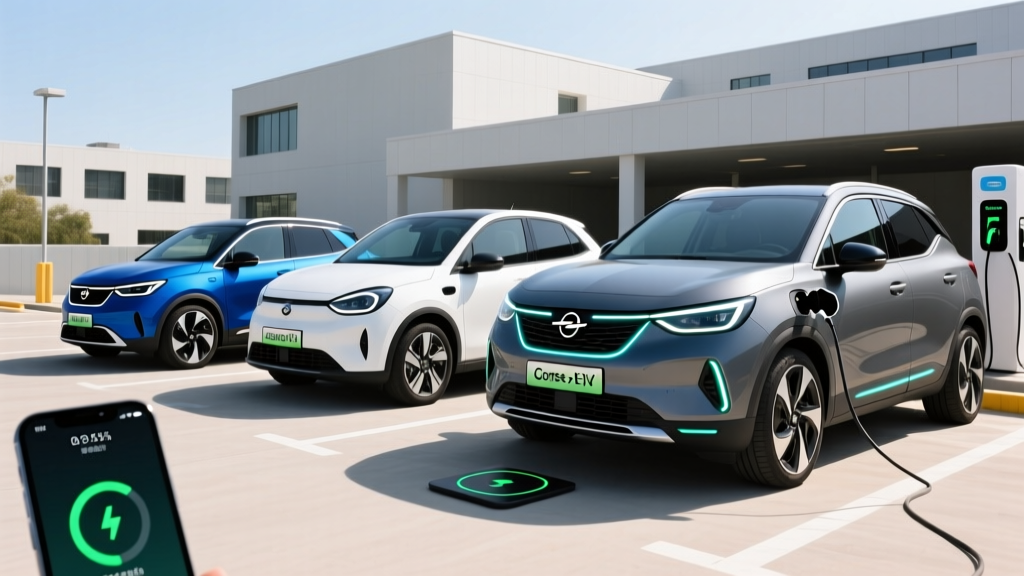
Opel currently offers four primary battery-electric models in Europe, all built on Stellantis's e-CMP (Common Modular Platform) architecture. Here are the hard numbers for the current model year:
| Model | Body Style | Battery (kWh usable) | Chemistry | WLTP Range | Est. Real-World Range | Max DC Charge (kW) | 10–80% Time | 0–60 mph | HP | Base MSRP (Europe €) |
|---|---|---|---|---|---|---|---|---|---|---|
| Corsa Electric | Subcompact hatch | 51 kWh | NMC | 246 mi (WLTP) | ~185–205 mi | 100 kW | ~27 min | 8.1 sec | 156 hp | €33,900 |
| Mokka Electric | Subcompact SUV | 50 kWh | NMC | 239 mi (WLTP) | ~175–195 mi | 100 kW | ~28 min | 8.7 sec | 156 hp | €37,900 |
| Astra Electric | Compact hatch | 54 kWh | NMC | 260 mi (WLTP) | ~195–215 mi | 100 kW | ~26 min | 7.6 sec | 156 hp | €39,900 |
| Combo-e Life | Compact van/MPV | 50 kWh | NMC | 205 mi (WLTP) | ~155–175 mi | 100 kW | ~30 min | 11.2 sec | 136 hp | €35,500 |
Critical range note: WLTP testing, the European standard, produces more optimistic figures than the US EPA cycle. As a rule of thumb, expect real-world highway range at 70 mph to be roughly 20–25% below the WLTP sticker. In cold weather (below 32°F / 0°C), add another 15–25% reduction due to battery resistance and cabin heating load. A Corsa Electric rated at 246 mi WLTP may deliver as little as 145–160 miles on a cold-weather highway drive.
Charging Speeds and Infrastructure Realities
All current Opel EVs use the CCS2 connector standard in Europe and support Level 2 AC charging at up to 11 kW (three-phase) or 7.4 kW (single-phase). Here's what that means in practical terms:
| Charging Level | Power (kW) | Miles Added per Hour | Best Use Case |
|---|---|---|---|
| Level 1 (standard outlet, 230V EU) | ~2.3 kW | ~8–10 mi/hr | Overnight trickle; emergency top-ups |
| Level 2 (home wallbox, 7.4 kW single-phase) | 7.4 kW | ~28–32 mi/hr | Daily overnight charging; full charge in ~7 hours |
| Level 2 (11 kW three-phase) | 11 kW | ~40–45 mi/hr | Faster home/workplace charging; ~5 hours to full |
| DC Fast Charging | Up to 100 kW | ~180–200 mi/hr (peak) | Road trips; 10–80% in ~27 min |
Charging curve reality: The 100 kW peak rate applies only between roughly 10–50% State of Charge (SoC). Above 50%, the charge rate tapers progressively — dropping to around 60 kW by 70% SoC and roughly 30 kW above 85%. This taper is managed by the battery management system to protect cell longevity, but it means the final 20% takes nearly as long as the first 50%. Plan road-trip stops to charge from 10–80% rather than topping off completely.
Opel EVs feature battery preconditioning when a DC fast-charger destination is set in the navigation system. This warms the battery pack to an optimal temperature before arrival, which is critical in cold weather — without preconditioning, a cold-soaked battery may accept only 40–50 kW at a 100 kW station, extending your 10–80% time to 40+ minutes.
Opel EV vs Gas Equivalent: Ownership Cost Comparison
For European buyers comparing the Corsa Electric against the gasoline Corsa 1.2 Turbo, the math looks like this over a 5-year / 60,000-mile ownership period:
| Cost Category | Corsa Electric (51 kWh) | Corsa 1.2 Turbo (Gas) |
|---|---|---|
| Purchase Price (base) | €33,900 | €22,500 |
| Government EV Incentive (Germany, 2026) | -€4,500 (net after manufacturer share) | €0 |
| Adjusted Purchase Price | €29,400 | €22,500 |
| Energy/Fuel Cost (60,000 mi) | €3,600 (home charging avg €0.30/kWh) | €7,200 (avg €1.80/L, 38 mpg combined) |
| Maintenance (5 years) | €1,200 (no oil changes, fewer brake replacements) | €3,000 (scheduled services, brake pads, fluids) |
| Insurance (5-year avg) | €4,500 | €3,800 |
| Estimated Resale Value (Year 5) | €14,000 | €9,500 |
| Total 5-Year Net Cost | €24,700 | €27,000 |
The electric Corsa costs roughly €2,300 less over five years despite a higher sticker price, driven primarily by fuel and maintenance savings. However, this calculation assumes reliable access to home charging at residential electricity rates. Buyers who must rely exclusively on public DC fast charging (at €0.50–0.70/kWh in many European markets) will see their energy costs nearly double, erasing much of the savings advantage.
Battery Longevity and Warranty Coverage
Opel provides an 8-year / 100,000-mile (160,000 km) battery warranty across its EV lineup, guaranteeing a minimum of 70% State of Health (SoH) — meaning the battery must retain at least 70% of its original usable capacity. If degradation falls below this threshold within the warranty period, Opel will repair or replace the battery pack.
For context on real-world degradation: Stellantis-platform EVs using NMC chemistry typically show 5–8% capacity loss in the first two years, then settle into a slower linear decline of roughly 1–2% per year. Based on fleet data from European ride-share and taxi operators, a well-maintained 50 kWh pack should retain 82–88% SoH at 100,000 miles. Key longevity practices include:
- Avoid sustained 100% SoC: Charge to 80% for daily use; reserve 100% charges for road trips.
- Minimize DC fast charging in extreme heat: Repeated high-power charging above 95°F accelerates degradation.
- Use preconditioning: Always enable battery preconditioning before fast charging, especially in cold weather.
- Store at moderate SoC: If the car will sit unused for weeks, leave it at 40–60% SoC.
Out-of-warranty battery replacement for a 50–54 kWh Stellantis pack currently runs €10,000–€14,000 through authorized dealers, though prices have been declining as the supply of refurbished packs grows.
US Availability: The Hard Truth for American Buyers
Opel has not sold vehicles in the United States since the brand was part of General Motors and marketed the Opel Kadett and Astra through Buick dealerships decades ago. Following PSA Group's acquisition of Opel in 2017 and the subsequent Stellantis merger in 2021, Opel's sales territory is focused on Europe, with no announced plans for a US return as of 2026.
This means US buyers face three significant barriers even if they wanted to import an Opel EV:
- No federal EPA certification: Opel's EVs are not certified by the US EPA, making them non-compliant for standard road registration in most states.
- No US service network: There are no authorized Opel service centers, parts distribution channels, or warranty support in the US.
- No federal tax credit: The IRS §30D clean vehicle credit requires vehicles to be assembled by a qualified manufacturer with a US dealer network. An Opel import would not qualify for the up-to-$7,500 credit, regardless of battery sourcing.
Comparable EVs Available in the US Market
If the Opel Corsa Electric or Mokka Electric caught your eye for their compact dimensions and ~200-mile range, here are US-market alternatives with similar profiles — and full warranty, service, and tax-credit support:
| Specification | Opel Corsa Electric (EU) | Chevrolet Equinox EV 2LT (US) | Hyundai Kona Electric SEL (US) | Nissan LEAF SV PLUS (US) |
|---|---|---|---|---|
| EPA / WLTP Range | 246 mi (WLTP) / ~195 EPA est. | 319 mi (EPA) | 261 mi (EPA) | 212 mi (EPA) |
| Battery (usable kWh) | 51 kWh | 85 kWh | 65 kWh | 62 kWh |
| Max DC Fast Charge | 100 kW | 150 kW | 100 kW | 100 kW |
| 10–80% DCFC Time | ~27 min | ~20 min | ~43 min | ~45 min |
| HP | 156 hp | 213 hp | 201 hp | 214 hp |
| Base MSRP (USD) | N/A (not sold in US) | $33,600 | $32,975 | $36,190 |
| Federal Tax Credit (§30D) | Not eligible | Up to $7,500 (verify current sourcing) | Up to $7,500 (verify current sourcing) | Not eligible (Japan assembly) |
| Connector | CCS2 (EU) | NACS (2025+) | CCS1 | CHAdeMO |
The Chevrolet Equinox EV offers substantially more EPA-certified range and faster charging for a similar price point, while the Hyundai Kona Electric provides a closer dimensional match to the Mokka Electric with full US infrastructure support. Per IRS §30D rules, tax credit eligibility depends on battery component and critical mineral sourcing, MSRP caps ($55,000 for cars, $80,000 for SUVs/trucks), and buyer income limits ($150,000 single / $300,000 joint) — always verify current-year requirements with a tax professional before purchasing.
Decision Framework: Should You Buy an Opel EV?
Choose an Opel electric car if:
- You live in Europe and have access to home Level 2 charging (wallbox or workplace).
- Your daily driving is under 100 miles and you rarely take trips exceeding 180 miles without a charging stop.
- You qualify for your country's EV purchase incentive (Germany's Umweltbonus, France's bonus écologique, etc.).
- You value compact dimensions for urban driving and tight parking.
Look elsewhere (or choose a US-market alternative) if:
- You live in the United States — Opel is not available, has no service network, and vehicles are not EPA-certified.
- You rely exclusively on street parking with no access to home or workplace charging.
- You regularly drive in extreme cold (below 15°F / -10°C) and need maximum range — consider a larger battery pack or a heat-pump-equipped model.
- You need DC fast charging above 150 kW for frequent long-distance travel — the 100 kW cap on Opel EVs means longer stops than competitors like the Hyundai Ioniq 5 (240 kW) or Tesla Model Y (250 kW).
Common Misconceptions About Opel EVs
| Myth | Fact |
|---|---|
| "Opel EVs are just rebadged Peugeots with no differences." | While they share the e-CMP platform and powertrain with the Peugeot e-208/e-2008, Opel tunes the suspension, steering, and software differently. Interior materials, infotainment interface, and brand-specific ADAS calibrations vary. They're mechanically similar but not identical. |
| "100 kW charging is too slow for road trips." | A 100 kW peak rate delivers a 10–80% charge in roughly 27 minutes — comparable to a sit-down meal or restroom break. The limitation is more about frequency: if you need 2+ fast charges per trip, the taper curve adds time versus a 200+ kW vehicle. |
| "The battery will need replacing within 5 years." | NMC batteries in the Stellantis e-CMP platform show ~5–8% degradation over the first 2 years, then stabilize. Fleet data indicates 82–88% SoH at 100,000 miles with normal use. The 8-year/100,000-mile warranty at 70% SoH provides substantial protection. |
| "I can import an Opel EV to the US and register it." | Importing a non-EPA-certified vehicle requires a 25-year exemption (Show or Display) or full federalization, which costs $50,000+ and is rarely approved for mass-market vehicles. This is not a practical path for consumer EVs. |
Frequently Asked Questions
Does Opel make an electric SUV?
Yes. The Opel Mokka Electric is a subcompact SUV with a 50 kWh battery, 156 hp, and a WLTP range of 239 miles (~175–195 mi real-world). It competes with the Hyundai Kona Electric and Kia Niro EV in size and price, though it is not available in the US market.
What is the cheapest Opel electric car?
The Corsa Electric starts at approximately €33,900 in Germany (2026 pricing). After applicable European incentives — which vary significantly by country — effective prices can drop to €25,000–€29,000. There is no US pricing as Opel does not sell in the American market.
Do Opel EVs use LFP or NMC batteries?
Current Opel EVs use NMC (nickel manganese cobalt) lithium-ion chemistry across the lineup. NMC offers higher energy density than LFP, which helps keep pack size and weight manageable in compact vehicles, but it requires more careful SoC management for long-term longevity (avoiding sustained 100% charges).
Can I charge an Opel EV at a Tesla Supercharger?
In Europe, Tesla has opened select Supercharger stations to non-Tesla EVs via the CCS2 connector. An Opel EV can charge at these open stations, though at rates limited by the vehicle's 100 kW maximum. In the US, this question is moot since Opel EVs are not sold there, and the US Supercharger network uses the NACS connector.
How does Opel's EV range compare to Tesla or Hyundai?
Opel's 100 kW DC fast-charging peak and ~200-mile real-world range place it a tier below the Hyundai Ioniq 5 (240 kW, 303 mi EPA) and Tesla Model Y (250 kW, 320 mi EPA). Opel targets urban and suburban European buyers who prioritize compact size and lower purchase price over maximum range and charging speed.
Is the Opel Astra Electric a good family car?
The Astra Electric offers the most range in Opel's lineup (260 mi WLTP, ~195–215 mi real-world) and a practical hatchback body. For a family of four with moderate daily driving, it works well in Europe. However, the rear seat and cargo space are tighter than a Tesla Model Y or Volkswagen ID.4, and the 100 kW charge rate means longer stops on road trips.