Quick Answer: The 2026 Opel Corsa Electric (Corsa-e) delivers a WLTP-rated range of up to 402 km (~250 miles) from its 54 kWh usable battery pack. In real-world mixed driving, expect roughly 310–340 km (~193–211 miles), dropping to around 250–270 km (~155–168 miles) in cold weather or sustained motorway use. DC fast charging peaks at 100 kW, taking approximately 30 minutes from 10–80%. Starting at roughly €34,900 across European markets, the Corsa Electric makes sense for urban and suburban drivers with access to home Level 2 charging who cover under 300 km daily. It does not qualify for the US federal §30D tax credit, as Opel (Stellantis) does not sell the Corsa in North America.
Opel Corsa Electric: What This EV Actually Is
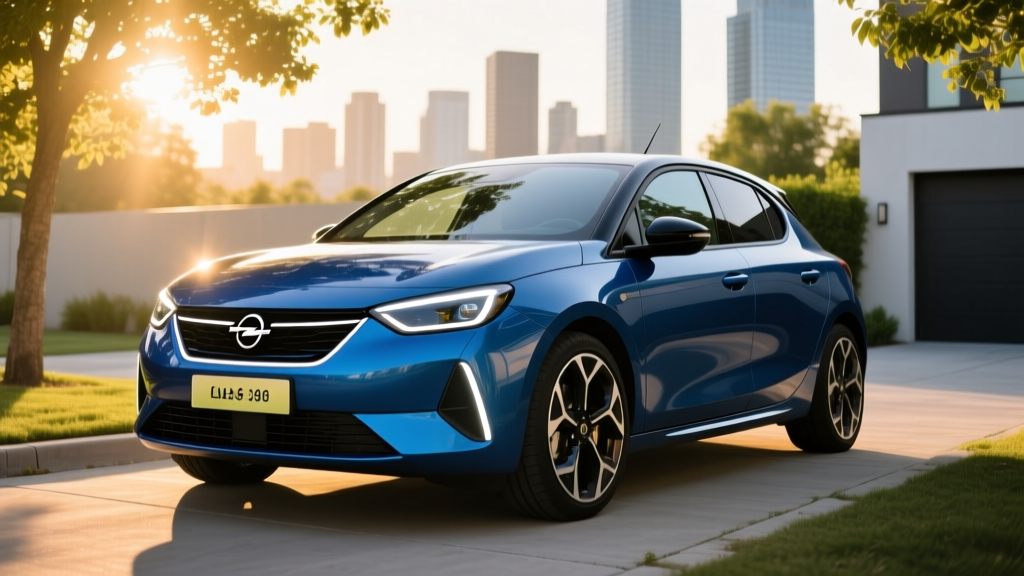
The Opel Corsa Electric is the battery-electric variant of Opel's long-running B-segment supermini. Sold across Europe and the UK (as the Vauxhall Corsa Electric), it rides on Stellantis's e-CMP2 platform, sharing its underpinnings with the Peugeot e-208 and the Jeep Avenger. For the 2026 model year, Opel has consolidated the lineup around the larger 54 kWh battery (51 kWh usable), dropping the earlier 50 kWh variant that offered a shorter WLTP range of roughly 359 km.
This is not a long-range touring EV. It is a city-and-commute hatchback designed to be affordable, compact, and efficient. If you are cross-shopping the Corsa Electric against vehicles like the Renault Zoe, the MG4, or the Volkswagen ID.2 (announced for late 2026), you are looking at the entry point of European EV ownership.
Key 2026 specs at a glance:
- Battery: 54 kWh gross / 51 kWh usable, NMC (nickel manganese cobalt) chemistry
- Motor: 115 kW (156 hp), front-wheel drive
- WLTP range: Up to 402 km (250 miles)
- DC fast charge: Up to 100 kW, 10–80% in ~30 minutes
- AC Level 2 charge: 11 kW onboard charger (three-phase), ~5.5 hours 0–100%
- 0–100 km/h: 8.1 seconds
- Starting MSRP: ~€34,900 (varies by market and trim)
Real-World Range: WLTP Sticker vs. What You Actually Get
The WLTP test cycle is more optimistic than the US EPA cycle, and both are more optimistic than aggressive motorway driving or winter conditions. Here is how the Corsa Electric's 402 km WLTP figure translates to real-world scenarios based on efficiency data from independent testing bodies and owner reports:
| Driving Scenario | Efficiency (kWh/100 km) | Estimated Range |
|---|---|---|
| City driving, mild weather (15–25°C) | 13.5–14.5 | 350–375 km (217–233 mi) |
| Mixed suburban/commute | 15.0–16.5 | 310–340 km (193–211 mi) |
| Motorway (120 km/h sustained) | 18.0–20.0 | 255–285 km (158–177 mi) |
| Winter city driving (-5 to 5°C) | 17.0–19.0 | 270–300 km (168–186 mi) |
| Winter motorway | 20.0–22.5 | 225–255 km (140–158 mi) |
The Corsa Electric does not come equipped with a heat pump as standard on all trims — it is optional on some lower trims in certain markets. Without a heat pump, cabin heating draws directly from the traction battery via resistive heating, which can reduce winter range by 20–30%. If you live in a climate with regular sub-10°C winters, spec the heat pump. It is one of the most cost-effective options on any EV.
Charging Speeds: Home, Public, and the 100 kW Curve
Understanding the Corsa Electric's charging profile requires separating kW (power, or how fast energy flows) from kWh (energy, or how much the battery holds). The Corsa Electric has a 51 kWh usable battery. Here is how long it takes to fill at different charge levels:
| Charge Level | Power (kW) | Rate | Time (10–80%) |
|---|---|---|---|
| Level 1 (domestic socket, 230V) | ~2.3 kW | ~15 km/hr | ~18 hours |
| Level 2 home wallbox (single-phase, 7.4 kW) | 7.4 kW | ~48 km/hr | ~5.5 hours (0–100%) |
| Level 2 public (three-phase, 11 kW) | 11 kW | ~70 km/hr | ~3.7 hours (0–100%) |
| DC fast charge (CCS2) | Up to 100 kW | Up to 650 km/hr (peak) | ~30 minutes |
Charging curve reality: The 100 kW peak is not sustained across the entire session. Like most EVs, the Corsa Electric charges fastest between 10–40% State of Charge (SoC), then progressively tapers. Expect roughly 85–100 kW from 10–40%, dropping to 50–65 kW from 40–60%, and further tapering to 30–40 kW from 60–80%. The 10–80% time of approximately 30 minutes accounts for this taper. Charging from 80–100% on DC is very slow (often 20+ additional minutes) and generally not worth the wait at a public fast charger.
For daily ownership, a home Level 2 wallbox at 7.4 kW is the practical sweet spot. Plug in when you get home, and the car is fully charged by morning. A 7.4 kW wallbox installation in Europe typically costs €800–€1,500 including equipment and electrician labor, depending on your electrical panel's capacity and the cable run distance.
Cost Breakdown: Corsa Electric vs. Gas Corsa
The purchase price of the Corsa Electric is higher than the equivalent petrol Corsa, but operating costs are substantially lower — particularly if you charge at home. Here is a five-year ownership comparison based on 15,000 km driven annually (75,000 km total), using average European energy and fuel prices as of early 2026:
| Cost Category | Corsa Electric (54 kWh) | Corsa 1.2 Turbo Petrol (100 hp) |
|---|---|---|
| Purchase price (approx. MSRP) | €34,900 | €22,500 |
| Purchase incentive (varies by country) | -€3,000 to -€6,000 (e.g., Germany, France) | €0 |
| Fuel/energy (75,000 km total) | €2,040 (home charging at €0.30/kWh, 15 kWh/100 km avg.) | €7,875 (petrol at €1.75/L, 6.0 L/100 km avg.) |
| Maintenance (5 years) | ~€600 (cabin filter, brake fluid, wipers) | ~€2,200 (oil changes, filters, spark plugs, brakes) |
| Insurance (5-year estimate) | ~€4,500 (slightly higher EV premiums in some markets) | ~€3,750 |
| Estimated 5-year depreciation | ~€14,000 (EV depreciation stabilizing but still steep for B-segment) | ~€10,500 |
| Total 5-year cost of ownership | ~€44,040–€47,040 | ~€46,825 |
The numbers show that the Corsa Electric approaches cost parity with the petrol model over five years, primarily through fuel and maintenance savings of roughly €7,400 combined. The break-even point depends heavily on three variables:
- Purchase incentives in your country. France's bonus écologique (up to €4,000 for income-qualified buyers), Germany's reinstated environmental bonus (if active in 2026), or similar programs can shift the math dramatically. Check your national transport ministry for current eligibility.
- Home charging access. If you rely on public DC fast charging at €0.50–€0.70/kWh, your energy cost roughly doubles to €3,800–€5,300 over five years, eroding much of the savings advantage.
- Annual mileage. The more you drive, the faster the fuel savings offset the higher purchase price. Below 10,000 km/year, the petrol Corsa likely remains cheaper over five years.
Battery Longevity, Warranty, and Degradation
The Corsa Electric's 54 kWh NMC battery is manufactured by CATL and integrated by Stellantis. Opel provides an 8-year / 160,000 km battery warranty that guarantees at least 70% of original capacity retention. If the battery degrades below that threshold within the warranty period, Opel will repair or replace it to bring capacity back above 70%.
Realistic degradation expectations: Based on data from earlier Stellantis e-CMP vehicles (the 50 kWh Peugeot e-208 and Opel Corsa-e from 2020–2023), NMC batteries in this platform typically lose 8–12% capacity over the first 100,000 km, then degradation slows. Owners reporting on platforms like Spritmonitor and EV-specific forums show most vehicles retaining 88–92% State of Health (SoH) at 60,000–80,000 km. The 70% warranty floor is conservative — you would need to see unusually aggressive degradation to hit it.
To maximize battery lifespan:
- Avoid routinely charging to 100% on DC fast chargers; 80% is the practical daily ceiling.
- Use scheduled charging on your wallbox to finish charging to 80–90% just before departure, rather than sitting at 100% for hours.
- In extreme heat (above 35°C), avoid consecutive DC fast charges without letting the battery cool.
- The Corsa Electric's battery management system (BMS) includes active liquid cooling, which significantly helps longevity compared to passively cooled packs.
Common Misconceptions About the Corsa Electric
| Myth | Fact |
|---|---|
| "The range is only 250 miles — that is not enough." | For 90%+ of daily driving in Europe, where the average commute is under 40 km round-trip, 250 miles of real-world range provides a 6–8x buffer. The limitation appears only on long motorway trips, where a 30-minute DC stop resolves it. |
| "EV batteries need replacing every few years and cost a fortune." | The 8-year/160,000 km warranty covers capacity loss. Real-world data from Stellantis e-CMP vehicles shows 88–92% capacity retention at 80,000 km. Full battery replacement is rare and, if needed out of warranty, currently costs approximately €8,000–€12,000 — but most owners will sell the vehicle before this becomes relevant. |
| "Charging takes too long." | At home on a 7.4 kW wallbox, charging is passive — you plug in and sleep. The car is full by morning. Only on road trips does the 30-minute DC fast charge matter, and that aligns with a typical rest stop. |
| "The Corsa Electric qualifies for the US $7,500 tax credit." | Opel does not sell vehicles in the United States. The Corsa Electric is a European-market vehicle. US buyers looking for a similar compact EV should consider the Chevrolet Equinox EV or Nissan Leaf, which have their own §30D eligibility under IRS rules. |
| "Electric cars are worse in winter." | Range does drop 15–30% in cold weather due to cabin heating demand and reduced battery efficiency. However, EVs start reliably in cold (no engine cranking), and preconditioning the cabin while plugged in eliminates the range penalty for your initial departure. |
Who Should Buy the Opel Corsa Electric — and Who Should Not
Buy the Corsa Electric if:
- You have access to home charging (garage, driveway, or apartment wallbox).
- Your daily driving is under 200 km, with occasional longer trips you can plan around DC charging.
- You live in a European country with active EV purchase incentives that narrow the price gap with petrol.
- You want lower running costs and minimal maintenance over 5+ years of ownership.
- You primarily drive in urban or suburban environments where regenerative braking maximizes efficiency.
Consider the petrol Corsa or a PHEV alternative if:
- You lack any access to home or workplace charging and would rely entirely on public infrastructure.
- You regularly drive 400+ km motorway trips and cannot accommodate a 30-minute charging stop.
- Your annual mileage is below 8,000 km — the fuel savings will not offset the higher purchase price.
- You live in an extremely cold climate (regular -15°C or below) where winter range loss is severe and a heat pump is essential.
- You need to tow — the Corsa Electric is rated for only light braked towing (if at all, depending on market).
Frequently Asked Questions
Does the Opel Corsa Electric support vehicle-to-load (V2L) or bidirectional charging?
As of the 2026 model year, the Corsa Electric does not offer V2L or vehicle-to-grid (V2G) capability. The e-CMP2 platform does not currently support bidirectional charging. If V2L is a priority, consider the Hyundai Kona Electric or MG4, which offer limited V2L functionality.
What is the real cost to charge the Corsa Electric at home?
At an average European residential electricity rate of €0.30/kWh, a full 0–100% charge of the 51 kWh usable battery costs approximately €15.30. That provides roughly 310–340 km of real-world range, working out to €0.044–€0.049 per kilometer. Compare that to the petrol Corsa at roughly €0.105/km at current fuel prices — home charging is approximately 55% cheaper per kilometer.
How does the Corsa Electric compare to the Peugeot e-208?
Both vehicles share the Stellantis e-CMP2 platform, the same 54 kWh battery, and the 115 kW motor. The differences are primarily styling, interior trim, and infotainment software. The Peugeot e-208 has a slightly smaller steering wheel (i-Cockpit) and a marginally higher starting price in most markets. Range and charging performance are effectively identical. Choose based on which dealer network and design you prefer.
Is the Corsa Electric safe?
The Corsa (including the Electric variant) was tested by Euro NCAP and received a 4-star rating in its most recent assessment. Standard safety equipment includes autonomous emergency braking (AEB), lane-keeping assist, traffic sign recognition, and driver attention monitoring. It does not offer Level 2 highway driving assist like some competitors — the adaptive cruise control requires hands on the wheel at all times per SAE Level 1 classification.
What happens if I need to charge on a road trip?
The Corsa Electric uses the CCS2 connector standard, which is compatible with virtually all European DC fast-charging networks: Ionity, Fastned, EnBW, Shell Recharge, and Tesla Superchargers that have opened to non-Tesla vehicles. Plan stops at chargers rated 50 kW or higher; at a 100+ kW station, you will add roughly 200 km of range in 20 minutes. The OpelConnect app and the car's built-in navigation can route you through compatible chargers and precondition the battery for faster charging upon arrival.
Sources: Opel Corsa Electric official specifications, Euro NCAP safety ratings, and independent efficiency testing via EV database platforms. Pricing and incentive figures reflect early 2026 European market data and vary by country.