The Quick Answer: Is a One Person Electric Jet Boat Right for You?
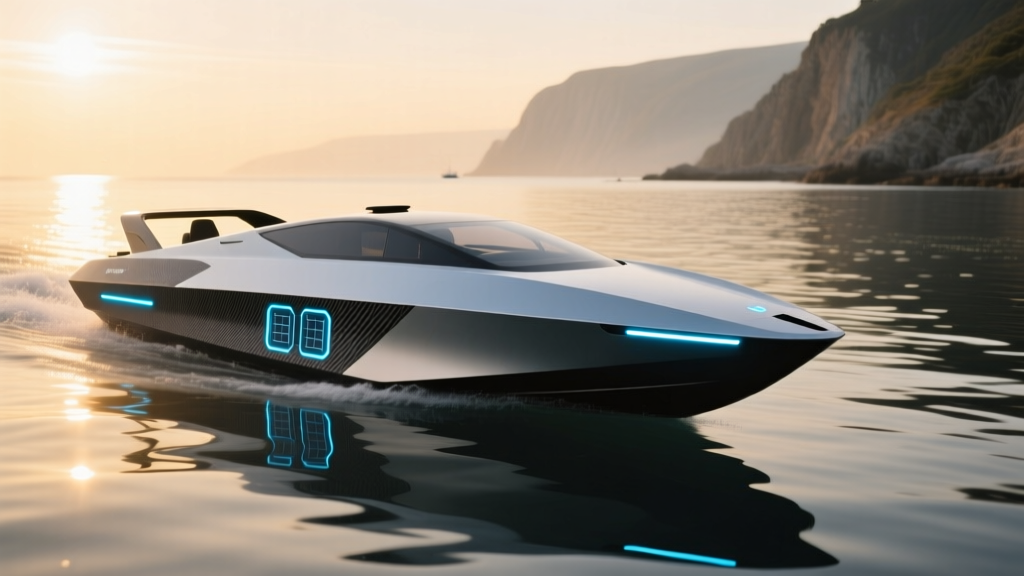
A one person electric jet boat is a compact, battery-powered personal watercraft designed for a single rider, using an electric motor and jet propulsion instead of a gasoline engine. As of 2026, the market for these craft is still emerging — with options like the Radinn Freeride (electric jetboard, ~$12,500) and small electric jet skis from brands like Sea-Doo (GTX Electric, announced) and niche manufacturers filling the space. Expect 30–60 minutes of ride time per charge, battery capacities in the 5–15 kWh range, and top speeds of 25–35 mph. They cost significantly more upfront than comparable gas jet skis but offer near-zero maintenance, silent operation, and no emissions on the water. However, limited range, long recharge times (4–8 hours on Level 1/2), and sparse public marine charging infrastructure remain real limitations.
Important scope note: AutoEdgeView specializes in electric cars, trucks, SUVs, and road-going EVs. Electric watercraft fall outside our core coverage area. This guide applies our EV battery, charging, and ownership-cost expertise to the personal electric watercraft space, but for definitive marine reviews, consult dedicated boating publications. We will not cover non-electrified gas boats except as a cost/performance baseline.
What Exactly Is a One Person Electric Jet Boat?
The term "one person electric jet boat" covers a spectrum of battery-powered personal watercraft:
- Electric jetboards (e-foils and motorized surfboards): Stand-up or prone boards with integrated jet drives. Examples: Radinn Freeride, Awake Ravik, Lift Foils. Battery: 5–8 kWh typical.
- Electric personal watercraft (e-PWC): Sit-down craft similar in form to a Sea-Doo Spark or Yamaha SuperJet but battery-powered. Examples: Narke GT-95, smaller craft from emerging brands. Battery: 10–25 kWh typical.
- Compact electric runabouts: Small single-rider hard-hull boats with jet drives. These remain rare and mostly custom/prototype as of 2026.
All share the same core architecture: a lithium-ion battery pack (NMC chemistry dominates for energy density), an electric motor (typically 5–15 kW continuous output), and a water jet pump for propulsion. Unlike road-going EVs, marine electric craft must manage waterproofing, buoyancy, and corrosion — adding weight and cost.
Battery, Range, and Charging: The Numbers That Matter
The single biggest limitation of any one person electric jet boat is energy capacity. Water creates far more drag than rolling resistance on a road, so even modest-speed operation drains batteries quickly.
| Spec | Electric Jetboard (e.g., Radinn-class) | Electric PWC (e.g., Narke-class) |
|---|---|---|
| Battery Capacity | 5–8 kWh (NMC) | 10–25 kWh (NMC) |
| Motor Power | 7–11 kW continuous | 15–40 kW continuous |
| Top Speed | 25–35 mph | 30–50 mph |
| Ride Time (moderate use) | 30–45 minutes | 60–90 minutes |
| Charge Time (standard outlet, 120V/1.4 kW) | 4–6 hours | 8–18 hours |
| Charge Time (240V Level 2, if supported) | 1.5–3 hours | 3–6 hours |
| Weight (craft + battery) | 60–90 lbs | 400–700 lbs |
| Base Price | $8,000–$15,000 | $20,000–$40,000+ |
Understanding kW vs. kWh on the Water
This distinction matters just as much on water as on the road. kW (kilowatts) measures power — how fast the motor can deliver energy, determining acceleration and top speed. kWh (kilowatt-hours) measures energy — the total capacity of the battery, determining how long you can ride. A jetboard with a 7 kW motor drawing from a 6 kWh battery will drain that battery in under an hour at full throttle. Real-world ride time at mixed speeds is typically 1.5–2x what full-throttle calculations suggest, because most riders don't hold the throttle wide open continuously.
Charging Reality: No Fast-Charging Network on the Lake
Unlike electric cars, which can access DC fast chargers delivering 50–350 kW, personal electric watercraft almost universally charge from standard AC power:
- Level 1 (120V, ~1.4 kW): The default. Plugging into a standard household outlet. Adds roughly 1–1.5 kWh per hour. A 6 kWh jetboard battery charges in about 4–5 hours.
- Level 2 (240V, 3–7 kW): Some higher-end e-PWC models support 240V charging via a dock-installed outlet. This cuts charge times roughly in half. Installation at a dock or marina requires a licensed electrician and may cost $500–$2,000+ depending on distance from the panel and marine-grade conduit requirements.
- DC Fast Charging: Essentially nonexistent for personal watercraft in 2026. Battery packs are too small and not designed for high-C-rate charging. Swappable batteries (offered by Radinn and Awake) are the practical alternative — buy a second battery (~$2,500–$4,000) and swap in under a minute.
Electric vs. Gas: Personal Watercraft Cost Comparison
The closest gas-powered equivalent to a one person electric jet boat is a stand-up jet ski (Yamaha SuperJet, Kawasaki SX-R) or a small sit-down PWC (Sea-Doo Spark). Here's how the economics compare:
| Factor | Electric Jetboard (Radinn-class) | Gas Stand-Up PWC (e.g., Yamaha SuperJet) |
|---|---|---|
| Purchase Price | $10,000–$13,000 | $9,500–$11,000 |
| Fuel/Energy (100 hrs/year) | ~$90–$150/year (electricity at $0.15/kWh) | ~$600–$900/year (gas at $3.50/gal, ~8–12 GPH) |
| Annual Maintenance | ~$50–$100 (impeller inspection, winterization) | ~$300–$600 (oil changes, spark plugs, winterization, fuel stabilizer) |
| 5-Year Fuel + Maintenance | ~$750–$1,250 | ~$4,500–$7,500 |
| Estimated Resale (Year 5) | 40–50% of purchase (battery degradation a factor) | 50–65% of purchase |
| Noise Level | Near-silent (major lake-access advantage) | 75–85 dB at speed |
| On-Water Emissions | Zero | Unburned hydrocarbons, CO, NOx |
The electric option breaks even on operating costs within 2–3 years for riders who log 80+ hours per season. But the gas PWC offers dramatically more range — a 5-gallon tank provides 2–3 hours of riding versus 30–45 minutes on electric. For all-day lake sessions, gas still wins on endurance.
Real-World Ownership: What First-Time Buyers Must Know
Battery Degradation and Lifespan
NMC lithium-ion batteries in marine environments face the same degradation mechanisms as EV car batteries — cycle wear, calendar aging, and thermal stress — but with added moisture and vibration exposure. Expect 80–90% capacity retention after 500 charge cycles (roughly 5–7 years of moderate use). Most manufacturers warrant the battery for 1–2 years, far shorter than the 8-year/100,000-mile warranties common in road-going EVs. A replacement battery pack costs $2,500–$5,000 depending on the model — a significant ownership cost to budget for.
Cold Water and Storage
Lithium-ion batteries lose performance below 50°F (10°C). In cold-water conditions, expect 15–25% reduced ride time compared to summer operation. Winter storage requires bringing the battery indoors and maintaining a 40–60% state of charge — identical best practices to storing an EV car battery through winter.
Charging Access at the Dock
Not all marinas and docks have accessible power. Before purchasing, confirm:
- Does your dock or slip have a GFCI-protected 120V outlet within cord-reach?
- If you want 240V charging, does your marina allow electrician access for a dedicated circuit?
- For trailer-based use: can you charge at home in your garage or driveway between outings?
If the answer to all three is no, a swappable-battery system becomes essential — you charge the spare battery at home and swap it at the launch ramp.
Insurance and Registration
Most states require PWC registration regardless of propulsion type. Insurance for electric watercraft is available through major marine insurers but may carry a 10–20% premium over equivalent gas models due to higher replacement costs and limited claims data. Expect $200–$500/year depending on your state, coverage level, and riding history.
Common Misconceptions — Myth vs. Fact
| Myth | Fact |
|---|---|
| "Electric jet boats are just toys, not real watercraft." | Modern electric jetboards hit 30+ mph and are used in professional freestyle competitions. Electric PWCs like the Narke GT-95 reach 50 mph with 90-minute ride times. |
| "You can charge at any marina." | Most marinas lack dedicated charging infrastructure. Plan around home charging or swappable batteries. |
| "Electric means zero maintenance." | No oil changes, yes — but jet pump impellers wear, seals need inspection, hulls need cleaning, and batteries require proper storage. Budget $50–$100/year minimum. |
| "The battery will last forever." | NMC marine batteries degrade like all lithium-ion cells. Plan for a replacement at year 5–8 at a cost of $2,500–$5,000. |
| "Federal EV tax credits apply to electric boats." | The IRS §30D clean vehicle credit applies only to road-legal motor vehicles meeting specific MSRP, income, and battery-sourcing requirements. Personal watercraft do not qualify. |
Decision Framework: Should You Buy a One Person Electric Jet Boat?
Choose Electric If:
- You ride on lakes with noise restrictions or "electric-only" boating rules (common on reservoirs and protected waterways)
- Your typical session is under 45 minutes — quick rides, trick practice, or short cruises
- You have home charging access (garage outlet or dock power) and can charge between sessions
- You value silent operation for wildlife observation, fishing access, or neighborhood-lake courtesy
- You want to eliminate gas storage, fuel mixing, and engine winterization from your routine
Stick With Gas (or Wait) If:
- You regularly ride for 2+ hours per session — electric range can't support this without a battery swap mid-session
- You ride in remote areas with no power access and don't want to invest $3,000+ in a spare battery
- Your budget is under $8,000 — gas stand-up PWCs start lower and offer more range per dollar
- You need a craft that can tow a tube or skier — most electric jetboards lack the sustained power output for towing
- You're looking for tax incentives — marine EVs don't qualify for §30D or most state EV rebates
Frequently Asked Questions
How long does a one person electric jet boat battery last per charge?
Most electric jetboards deliver 30–45 minutes of mixed-speed riding per charge from a 5–8 kWh battery. Larger electric PWCs with 15–25 kWh packs can run 60–90 minutes. Full-throttle operation cuts these figures roughly in half. For comparison, a gas PWC with a 5-gallon tank runs 2–3 hours.
Can I charge an electric jet boat from a regular outlet?
Yes. Nearly all models ship with a 120V charger that plugs into a standard GFCI-protected outlet. Expect 4–6 hours for a full charge on a jetboard-class battery (5–8 kWh). If your dock or marina supports 240V, some models accept Level 2 charging, cutting time to 1.5–3 hours.
Do electric jet boats qualify for the $7,500 federal EV tax credit?
No. The IRS §30D clean vehicle credit applies exclusively to qualified road-going motor vehicles — cars, trucks, SUVs, and vans meeting MSRP caps, buyer income limits, and battery-sourcing requirements. Personal watercraft, boats, and off-road vehicles are excluded. Check irs.gov for current eligibility rules.
What happens if the battery dies on the water?
You'll float — electric watercraft are designed with positive buoyancy. You won't be stranded in open water the way a dead gas tank leaves you, since most electric jetboard riding happens within swimming distance of shore. Carry a paddle or arrange a tow from a companion boat as a precaution. Some models include a low-battery "limp mode" that limits speed to conserve enough energy to motor back to shore.
Is an electric jetboard safer than a gas jet ski?
Electric jetboards eliminate risks associated with gasoline (fire, fumes, fuel spills) and are quieter, which improves situational awareness. However, they are typically stand-up craft requiring more balance and skill than sit-down PWCs. Always wear a USCG-approved life jacket and a jetboard-specific leash. There is no NHTSA-equivalent crash-safety rating body for personal watercraft — check uscgboating.org for safety courses and regulations.
How much does it cost to run an electric jetboard per season?
Assuming 100 hours of riding per year, a 7 kWh battery, and electricity at $0.15/kWh, you'll spend roughly $105–$150 per season on electricity. Add $50–$100 for basic maintenance (impeller inspection, hull cleaning, winterization supplies). Total operating cost: approximately $155–$250/year. A comparable gas PWC costs $900–$1,500/year in fuel and maintenance combined.