The Quick Answer on the Olinia Electric Car
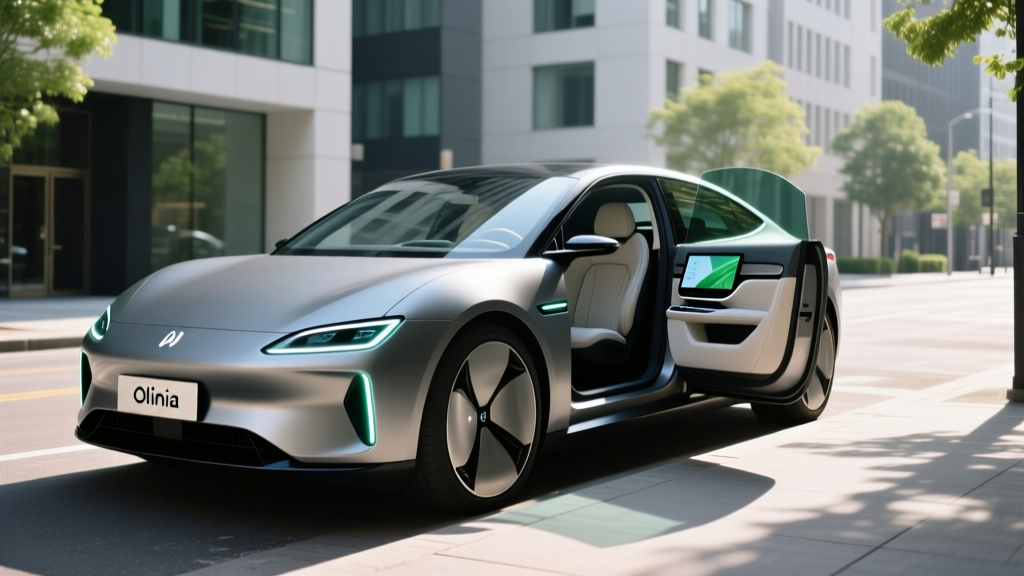
As of early 2026, there is no mass-production vehicle sold under the "Olinia" brand in the U.S. market. Searches for an "Olinia electric car" most often trace back to viral social-media concept renders, speculative startup listings, or misidentified model names. No National Highway Traffic Safety Administration (NHTSA) VIN database entry, EPA fueleconomy.gov listing, or IRS §30D qualified-vehicle record currently exists for an Olinia-branded EV.
What to do instead: If you're researching an affordable, compact electric car in the $30,000–$40,000 range, this guide breaks down what real 2026 EV buyers should prioritize — range, charging speed, tax-credit eligibility, and total ownership cost — using verified models you can actually order today.
Why the Olinia EV Keeps Showing Up in Searches
The name "Olinia" surfaces periodically in EV forums and YouTube concept-car videos. These are typically AI-generated design studies or unverified startup pitch decks rather than vehicles with homologated safety ratings, supply-chain battery sourcing, or dealer networks. Before committing a deposit to any unfamiliar EV brand, confirm these three checkpoints:
- EPA listing: Does the model appear on fueleconomy.gov with an official MPGe and range figure?
- NHTSA filing: Is the manufacturer registered with NHTSA and does the model have crash-test data?
- IRS §30D eligibility: Is the vehicle on the IRS qualified clean-vehicle list for the current tax year?
If any of these return no results, the vehicle is either not yet U.S.-legal, not yet in production, or does not exist outside of concept imagery.
What 2026 EV Buyers Actually Need to Decide
Whether you discovered EVs through an Olinia search or a mainstream model, the purchase framework is the same. Your decision hinges on five concrete variables:
- Daily driving distance: The average U.S. driver covers ~37 miles round-trip. A 250-mile EPA-range EV handles this for nearly a week between charges.
- Home charging access: Can you install a 240V Level 2 charger (typically a NEMA 14-50 outlet or hardwired wallbox)? If not, public DC fast charging becomes your primary fuel source — and it costs 2–3× more per mile.
- Climate: Cold weather (below 32°F) reduces usable range by 15–30% in most EVs due to cabin heating demands and reduced battery chemistry efficiency. A heat pump mitigates this.
- Budget after incentives: The federal §30D credit offers up to $7,500, but only if you meet income caps ($150K single / $300K joint), the vehicle's MSRP is under the cap ($55K for sedans, $80K for SUVs/trucks), and battery minerals/sourcing requirements are satisfied. Point-of-sale transfer is available at participating dealers.
- Ownership timeline: EVs typically cost more upfront but less per mile. Break-even vs. a comparable gas car is usually 4–6 years depending on local electricity and fuel prices.
Real 2026 EVs in the Price Range Olinia Targets
Based on the sub-$40K compact EV segment that concept cars like the "Olinia" appear to target, here are verified models available in 2026 with exact specs:
| Spec | Chevrolet Equinox EV 2LT | Hyundai Kona Electric SEL | Nissan Ariya Engage | Typical Gas Compact SUV |
|---|---|---|---|---|
| Base MSRP | $34,900 | $33,975 | $39,590 | $28,000–$32,000 |
| EPA Range | 319 mi | 261 mi | 216 mi | 380–420 mi (tank) |
| Battery (usable kWh) | 85 kWh (NMC) | 64.8 kWh (NMC) | 63 kWh (NMC) | N/A |
| Peak DC Charge Rate | 150 kW | 100 kW | 130 kW | N/A |
| 10–80% DC Charge Time | ~30 min | ~43 min | ~35 min | ~5 min (gas station) |
| Level 2 Charge Rate | 11.5 kW | 7.2 kW | 7.4 kW | N/A |
| Combined MPGe | 95 MPGe | 105 MPGe | 97 MPGe | 28–32 MPG |
| 0–60 mph | 7.9 sec | 7.4 sec | 7.5 sec | 8.0–9.5 sec |
| Horsepower | 213 hp | 201 hp | 214 hp | 170–190 hp |
| Battery Warranty | 8 yr / 100K mi | 10 yr / 100K mi | 8 yr / 100K mi | 5 yr / 60K mi (powertrain) |
| Federal §30D Credit Eligible? | Up to $7,500* | Up to $7,500* | Up to $7,500* | No |
*Eligibility depends on buyer income, MSRP caps, and battery critical-mineral/sourcing requirements per current IRS rules. Verify on IRS.gov before purchase. Point-of-sale transfer available at participating dealers.
EV vs. Gas: The Real 5-Year Cost Breakdown
The sticker price of an EV is usually higher than a comparable gas car. But total cost of ownership (TCO) tells a different story when you factor in fuel, maintenance, and incentives. Here's a 5-year / 75,000-mile projection using national averages:
| Cost Category | 2026 EV (e.g., Equinox EV) | Gas Compact SUV (28 MPG avg) |
|---|---|---|
| Purchase Price (after $7,500 credit) | $27,400 | $30,000 |
| Home Charging Install (Level 2) | $1,200 (avg) | $0 |
| Fuel/Energy Cost (75K mi) | $3,750 ($0.05/mi at $0.15/kWh) | $8,036 ($3.50/gal, 28 MPG) |
| Maintenance (5 yr) | $1,500 (tires, cabin filter, fluid top-offs) | $3,500 (oil, filters, brakes, belts) |
| Insurance (5 yr avg) | $9,500 (~$1,900/yr) | $7,500 (~$1,500/yr) |
| Depreciation (est. 5 yr) | $12,000 | $11,000 |
| Total 5-Year Cost | $55,350 | $60,036 |
Net savings with EV: ~$4,686 over 5 years. The EV wins primarily on fuel and maintenance, partially offset by higher insurance premiums (EV collision repair costs remain elevated) and slightly steeper depreciation. Your actual savings depend on local electricity rates, annual mileage, and whether you qualify for the full federal credit.
First-Time EV Buyer: What Nobody Tells You
Common EV Misconceptions vs. Reality
| Myth | Fact (with data) |
|---|---|
| "EV batteries need replacing every few years." | Modern NMC and LFP packs are warrantied for 8–10 years / 100,000 miles at ≥70% capacity retention. Real-world data shows ~10–15% degradation at 150K miles for liquid-cooled packs. |
| "Charging takes too long." | At a 150 kW DC fast charger, a 2026 EV like the Equinox EV adds ~200 miles in 30 minutes (10–80%). Home Level 2 charging overnight (8–10 hours) refills the entire battery — you wake up "full" every morning. |
| "EVs don't work in cold weather." | Range drops 15–30% in sub-freezing temps, but preconditioning (warming the battery while plugged in) recovers much of this. EVs start instantly in cold — no cranking, no warm-up idle. |
| "The power grid can't handle EVs." | Most EV charging happens overnight during off-peak hours. A single EV charging at 7.2 kW draws roughly the same as an electric dryer. Utilities are upgrading distribution transformers in high-EV-adoption neighborhoods. |
| "EVs are worse for the environment." | Even on a coal-heavy grid, EVs produce fewer lifecycle emissions than gas cars (per Argonne National Laboratory GREET model). On a clean grid, the advantage is 60–70%+. |
Home Charging Realities
If you have a garage or dedicated parking spot with access to a 240V circuit, Level 2 home charging is the single best ownership experience in EVs. Here's what installation actually costs:
- Simple install (existing 240V outlet nearby, panel has capacity): $300–$800 for electrician labor + $400–$700 for a quality Level 2 wallbox (e.g., ChargePoint Home Flex, Emporia Vue).
- Standard install (new 50A circuit run 30–60 ft from panel): $1,200–$2,500 total.
- Panel upgrade needed (older home with 100A service): $2,000–$4,000 additional for a 200A panel upgrade. This is the budget surprise that catches some buyers off guard.
Always get a quote from a licensed electrician who will assess your panel capacity, wire gauge, and local permit requirements before committing.
Decision Framework: Should You Buy an EV Now?
If/Then EV Buying Guide
- IF you drive <60 miles/day and have home charging access → THEN a 250+ mile EPA-range EV is an excellent fit. You'll charge 2–3× per week and rarely need public chargers.
- IF you regularly drive 200+ mile one-way trips → THEN prioritize DC fast-charge speed (look for 150+ kW peak, 10–80% under 30 min) and plan routes around reliable networks (Tesla Supercharger, Electrify America).
- IF you live in an apartment without charging access → THEN consider a PHEV (plug-in hybrid) like the Toyota RAV4 Prime (42 mi electric-only range, 94 MPGe) as a bridge — you get electric commuting without range dependency on public infrastructure.
- IF you live in extreme cold (frequently below 10°F) → THEN choose an EV with a heat pump (Hyundai/Kia E-GMP models, Tesla) and oversize your range buffer by 30% vs. your daily needs.
- IF your household income exceeds §30D caps ($150K single / $300K joint) → THEN the federal credit won't apply, but check your state's EV incentives (many have separate income thresholds or none at all).
- IF the vehicle you want isn't on the IRS qualified list → THEN the $7,500 credit is unavailable regardless of price. Verify before signing a purchase agreement.
If the Olinia EV Ever Reaches Production
Should an Olinia-branded vehicle eventually enter U.S. production or import, here's the minimum spec sheet to demand before placing a deposit:
- EPA-certified range and MPGe (not just manufacturer claims or WLTP figures from other markets)
- Battery chemistry (LFP or NMC), usable kWh capacity, and thermal management type (liquid-cooled vs. passive)
- DC fast-charge peak kW and a published 10–80% charge time
- NHTSA crash-test ratings and IIHS evaluation (if available)
- Battery warranty with a clear capacity-retention threshold (e.g., ≥70% at 8 years/100K miles)
- Confirmed §30D eligibility on the IRS qualified-vehicle list
Until those data points exist from verifiable government and manufacturer sources, treat any "Olinia electric car" listing as speculative.
Frequently Asked Questions
Is the Olinia electric car a real vehicle I can buy in 2026?
No. As of 2026, there is no EPA-listed, NHTSA-registered, or IRS §30D-qualified vehicle sold under the Olinia brand in the United States. The name appears in concept renders and speculative startup discussions but has no verified production model.
What's the cheapest real EV I can buy with a tax credit in 2026?
The Chevrolet Equinox EV (starting ~$34,900) and Hyundai Kona Electric (~$33,975) are among the most affordable new EVs that may qualify for up to $7,500 in federal §30D credits, depending on your income, the vehicle's battery sourcing, and MSRP caps. Always verify current eligibility on IRS.gov before purchasing.
How much does it cost to charge an EV at home vs. buying gas?
At the U.S. average residential electricity rate of ~$0.15/kWh, charging a 75 kWh battery from empty to full costs about $11.25 — yielding roughly 250+ miles of range. That's equivalent to about $0.04–$0.05 per mile. A 28 MPG gas car at $3.50/gallon costs ~$0.125 per mile — roughly 2.5× more per mile driven.
Do EV batteries degrade quickly and cost a fortune to replace?
Modern liquid-cooled EV batteries degrade approximately 1–2% per year under normal use. At 150,000 miles, most packs retain 85–90% of original capacity. Full battery replacement (rarely needed within the warranty period) costs $5,000–$15,000 depending on pack size, but is covered if capacity falls below the warranty threshold (typically 70%) within 8 years / 100,000 miles.
Should I wait for a cheaper EV or buy now?
If you qualify for the §30D credit and find a model that fits your range and charging needs, buying now locks in current incentives — which could change with future legislation. However, if your current vehicle is reliable and you lack home charging access, waiting 12–18 months may bring more affordable LFP-battery models and expanded public charging networks.