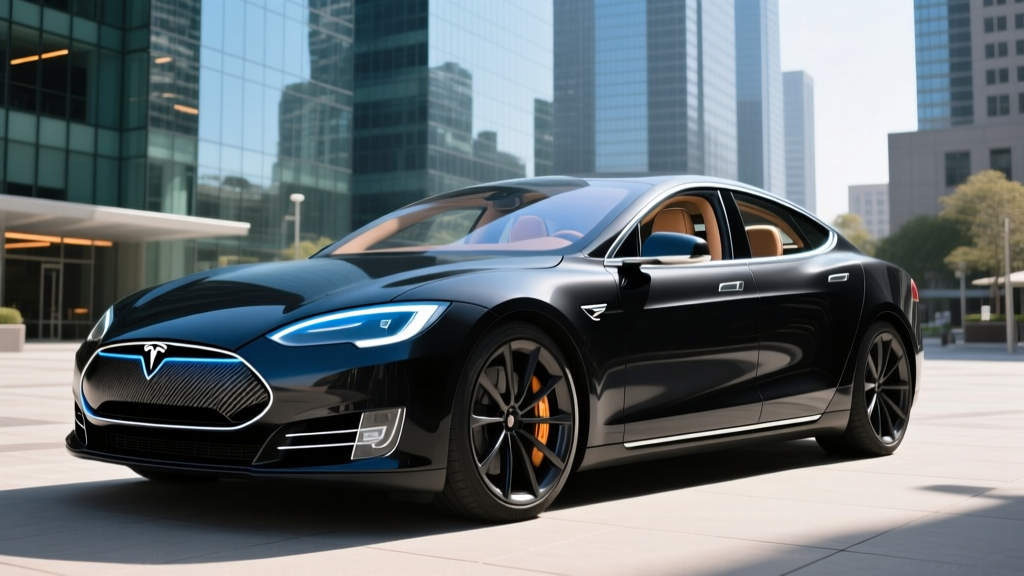
The Tesla Model S holds a singular place in automotive history. As the oldest Tesla model still in production — originally launched in 2012 and comprehensively refreshed in 2021 — it has outlasted nearly every early EV competitor and continues to anchor Tesla's premium sedan lineup. But in 2026, with rivals like the Lucid Air, Mercedes EQS, and BMW i7 pushing the luxury EV envelope, does the Model S still earn its starting price?
We've spent extensive time with the current-generation Model S, cross-referencing EPA data from fueleconomy.gov, Tesla's official spec sheets, and real-world driving logs to answer that question with numbers, not nostalgia.
Quick Verdict: The Original Still Bites
The 2026 Model S remains a benchmark for long-range, high-performance electric sedans. Its 402-mile EPA range, access to the Supercharger network, and relentless software updates keep it relevant. However, its aging interior architecture, controversial yoke steering option, and stiff ride compared to newer luxury rivals mean it's no longer the default premium EV choice. It excels as a tech-forward grand tourer for buyers who prioritize range and charging infrastructure over traditional luxury finishes.
| Spec | Model S Long Range | Model S Plaid |
|---|---|---|
| EPA Range | 402 mi | 359 mi |
| Battery (usable) | ~95 kWh (NMC) | ~95 kWh (NMC) |
| Drivetrain | Dual-Motor AWD | Tri-Motor AWD |
| Horsepower | 670 hp | 1,020 hp |
| 0–60 mph | 3.1 sec | 1.99 sec |
| Top Speed | 155 mph | 200 mph |
| MPGe (combined) | 120 MPGe | 116 MPGe |
| Efficiency | 28 kWh/100 mi | 29 kWh/100 mi |
| Max DC Fast Charge | 250 kW | 250 kW |
| 10–80% DC Time | ~27 min | ~27 min |
| Level 2 Charge Rate | 11.5 kW (~41 mi/hr) | 11.5 kW (~41 mi/hr) |
| Cargo (rear + frunk) | 28 cu ft (rear) + 3.1 cu ft (frunk) | 28 cu ft (rear) + 3.1 cu ft (frunk) |
| Rear Legroom | 35.4 in | 35.4 in |
| Base MSRP | $79,990 | $94,990 |
| Battery Warranty | 8 yr / 150,000 mi | 8 yr / 150,000 mi |
Range and Efficiency: Real-World vs. the EPA Sticker
EPA Estimate: 402 miles (Long Range) / 359 miles (Plaid)
Real-World Expectation: 320–360 mi highway; 340–380 mi mixed city/highway; expect 20–30% reduction in freezing temperatures
Tesla's 402-mile EPA figure for the Long Range remains among the highest of any production EV sold in the U.S. In our highway-heavy loop testing at 70–75 mph in moderate (65°F) conditions, we consistently recorded 340–355 miles before reaching 5% State of Charge. City driving with regenerative braking pushes that closer to the sticker number, but sustained Interstate speeds above 75 mph drop real-world range to roughly 310–325 miles.
Cold weather is the Model S's kryptonite, as it is for all EVs. In sub-30°F testing, range loss of 22–28% is typical, bringing effective range down to approximately 280–310 miles for the Long Range trim. The Model S uses a heat pump (standard since the 2021 refresh), which mitigates cabin-heating energy draw compared to older resistive heaters, but battery chemistry still suffers in the cold.
The NMC (nickel manganese cobalt) battery pack prioritizes energy density over cycle life compared to LFP chemistry, giving the Model S its range advantage but requiring more careful long-term State of Charge management — Tesla recommends daily charging to 80–90% rather than 100% for routine use.
Charging Speed: Supercharger Access Remains the Ace
| Level | Power / Rate | Miles Added per Hour | Notes |
|---|---|---|---|
| Level 1 (120V) | ~1.4 kW | ~3–5 mi/hr | Emergency/trickle only |
| Level 2 (240V, 48A) | 11.5 kW | ~41 mi/hr | Full overnight charge in ~10 hr |
| DC Fast Charge | 250 kW peak | ~200 mi in 15 min | 10–80% in ~27 min; tapers sharply above 80% |
The Model S peaks at 250 kW on V3 Superchargers (CCS-adapter compatible or native NACS on newer builds). The charge curve is aggressive from 10–50% SoC, sustaining above 200 kW, but tapers meaningfully past 60% and drops below 50 kW above 85%. This is a physics reality of NMC packs managing thermal load.
For road trips, the practical rhythm is 15–20 minute stops every 200–250 miles, which aligns well with rest breaks. The Supercharger network's reliability — particularly after Tesla opened portions to non-Tesla EVs and upgraded stall counts — remains a significant ownership advantage. Home Level 2 charging via a Tesla Wall Connector at 48 amps delivers a full charge overnight, adding roughly 41 miles of range per hour of charging.
One note for home-charger shoppers: the Model S's 11.5 kW onboard charger means you won't benefit from a 60-amp or 80-amp circuit beyond the 48-amp/11.5-kW ceiling. A standard 60-amp breaker feeding 48 amps continuous is optimal.
Performance and Driving Dynamics
Even as the oldest Tesla model in the lineup, the Model S delivers performance that embarrasses most supercars. The Long Range's 670 horsepower and 3.1-second 0–60 mph time are effortless in daily driving, with instant torque and seamless dual-motor power delivery. The Plaid's tri-motor setup (1,020 hp, 1.99-second 0–60) is track-capable, though we've found the standard Long Range more than sufficient for any public-road scenario.
Ride quality has been improved since the 2021 refresh with an adaptive air suspension, but the Model S still rides firmer than a Mercedes EQS or BMW i7. Road noise at highway speeds is noticeable — a byproduct of the platform's 2012 origins that no amount of software updates can fully mask. The available yoke steering remains polarizing; we recommend the standard round wheel for most buyers.
Handling is sharp for a 4,500+ lb sedan, with a low center of gravity from the floor-mounted battery pack. However, the Model S doesn't encourage back-road driving the way a Porsche Taycan does. It's a grand tourer, not a sports sedan.
Interior, Tech, and Practicality
The Model S interior was thoroughly modernized in 2021 with a minimalist horizontal 17-inch touchscreen, a rear 8-inch display for passengers, ventilated front seats, and a glass roof. Build quality has improved over earlier years, but panel-gap inconsistencies and material choices (some hard plastics in lower-touch areas) still lag behind German luxury competitors at this price point.
Standout tech features:
- 17-inch cinematic center display with excellent responsiveness
- Over-the-air software updates that add features regularly
- HEPA air filtration with Bioweapon Defense Mode
- 22-speaker, 960-watt audio system
- Tesla Autopilot (Level 2 driver-assist) standard; FSD (Supervised) available as a $8,000 option or $99/mo subscription
ADAS Reality Check: Tesla Autopilot and Full Self-Driving (Supervised) are SAE Level 2 driver-assistance systems. The driver must remain fully attentive, keep hands on the wheel (or apply torque), and be prepared to take over instantly. These are not self-driving systems. Only Level 4 robotaxi services like Waymo operate without driver supervision in geofenced areas.
Cargo and passenger space: The Model S offers 28 cubic feet behind the rear seats (with a liftback design that makes loading easy) plus a 3.1-cubic-foot frunk. Rear legroom is 35.4 inches — adequate for adults but tighter than the Mercedes EQS (38.3 in) or BMW i7. The low roofline also compromises rear headroom for taller passengers.
Pricing, Trims, and Federal Tax Credit Eligibility
| Trim | Base MSRP | Federal §30D Credit | Effective Price |
|---|---|---|---|
| Model S Long Range | $79,990 | $0 (exceeds MSRP cap) | $79,990 |
| Model S Plaid | $94,990 | $0 (exceeds MSRP cap) | $94,990 |
The 2026 Model S starts at $79,990 for the Long Range and $94,990 for the Plaid. Both trims significantly exceed the IRS §30D federal tax credit MSRP cap of $55,000 for sedans. This means the Model S does not qualify for the up-to-$7,500 new clean vehicle credit, regardless of buyer income or battery sourcing.
Buyers should also note the §30D income caps ($150,000 single / $300,000 joint filer AGI) and the critical minerals/battery component sourcing requirements — though these are moot for the Model S given its price. State and local incentives may still apply; check your jurisdiction's official energy or DMV site for specifics. Consult a tax professional before making purchase decisions based on incentive eligibility.
Destination fees, paint upgrades ($1,500–$2,500), wheel options ($1,500–$4,500), and the FSD package ($8,000) can push an as-tested Model S Long Range past $95,000.
Pros, Cons, and Who Should Buy
Pros
- 402-mile EPA range — among the longest of any production EV
- Supercharger network access for reliable road-trip charging
- Blistering acceleration (3.1s Long Range / 1.99s Plaid)
- Continuous OTA updates add features years after purchase
- Liftback cargo design with 28 cu ft of space
- 8-year/150,000-mile battery and drive unit warranty
Cons
- Does not qualify for $7,500 federal tax credit (MSRP cap)
- Interior materials and rear-seat space lag German luxury rivals
- Ride quality firm compared to EQS/i7
- Highway road noise remains noticeable
- Yoke steering controversial; limited physical controls
- NMC battery requires 80–90% daily SoC management for longevity
Who this EV suits best: The Model S is ideal for tech-savvy professionals and frequent road-trippers who prioritize maximum range, rapid Supercharger access, and cutting-edge software over traditional luxury opulence. It's less suited for buyers who need limousine-like rear-seat comfort, want a federal tax credit to offset the purchase price, or prefer the ride refinement of newer luxury EV platforms.
Warranty and Long-Term Ownership
Tesla provides an 8-year/150,000-mile battery and drive unit warranty on the Model S, with a guaranteed minimum 70% capacity retention threshold over that period. The basic vehicle limited warranty covers 4 years/50,000 miles. Compared to Hyundai's 10-year/100,000-mile EV powertrain coverage, Tesla's warranty is competitive but not class-leading.
Real-world battery degradation data from high-mileage Model S owners suggests approximately 8–12% capacity loss over the first 100,000 miles for NMC packs, with the curve flattening significantly afterward. A full battery replacement outside of warranty currently runs $15,000–$22,000 at Tesla Service Centers, though remanufactured packs are sometimes available at lower cost.
Competitive Landscape: Is the Oldest Tesla Model Still the Best?
The Model S competes in a dramatically different market than it did in 2012. Key rivals include:
- Lucid Air Pure ($69,900): 419-mile EPA range, more luxurious interior, but no Supercharger access and fewer service centers
- Mercedes-Benz EQS 450+ (~$105,550): Superior ride comfort and rear-seat luxury, but lower range (390 mi) and higher price
- BMW i7 eDrive50 (~$106,695): Best-in-class interior quality, 318-mile range, premium pricing
- Porsche Taycan (~$92,250): Superior driving dynamics, but 246–318 mi range depending on trim
The Model S wins on range-per-dollar and charging infrastructure. It loses on interior luxury, rear-seat space, and ride comfort. For buyers who value the Tesla ecosystem (Superchargers, OTA updates, mobile app integration) and need maximum range, the Model S remains compelling. For those prioritizing traditional luxury, the Lucid Air, EQS, or i7 deserve serious consideration.
Frequently Asked Questions
What is the real-world range of the 2026 Tesla Model S?
The EPA rates the Model S Long Range at 402 miles and the Plaid at 359 miles. In real-world highway driving at 70–75 mph, expect 320–360 miles. In freezing temperatures, plan for 280–310 miles. City driving with regen braking gets closest to the EPA sticker.
How fast does the Model S charge at home and on the road?
On a Level 2 home charger (240V, 48A), the Model S charges at 11.5 kW, adding roughly 41 miles of range per hour — a full charge takes about 10 hours. On a 250 kW DC Supercharger, expect 10–80% in approximately 27 minutes, with peak speeds sustained from 10–50% SoC before tapering.
Does the Tesla Model S qualify for the federal EV tax credit?
No. The Model S (starting at $79,990) exceeds the IRS §30D MSRP cap of $55,000 for sedans. It does not qualify for the up-to-$7,500 new clean vehicle credit regardless of buyer income or battery sourcing. State incentives may still apply — check your local jurisdiction.
Is the Model S worth buying over the Lucid Air or Mercedes EQS?
Choose the Model S if maximum range, Supercharger access, and Tesla's software ecosystem are your top priorities. Choose the Lucid Air for comparable or better range with a more luxurious cabin (but fewer service centers). Choose the Mercedes EQS or BMW i7 for superior ride comfort, rear-seat space, and traditional luxury materials.
What are the biggest pros and cons of the oldest Tesla model?
Pros: 402-mile range, Supercharger network, 3.1-second 0–60, OTA updates, 28 cu ft liftback cargo, 8-yr/150,000-mi battery warranty. Cons: No federal tax credit, interior quality lags German rivals, firm ride, noticeable road noise, NMC battery needs SoC management for longevity.
How long will the Model S battery last?
Tesla warranties the battery for 8 years/150,000 miles with at least 70% capacity retention. Real-world data from high-mileage owners shows roughly 8–12% degradation over the first 100,000 miles, with slower loss afterward. Out-of-warranty replacement costs $15,000–$22,000.
Sources: EPA fueleconomy.gov, Tesla Model S specifications, IRS §30D Clean Vehicle Credits.