What Does "Oldest Tesla Car" Mean for Buyers in 2026?
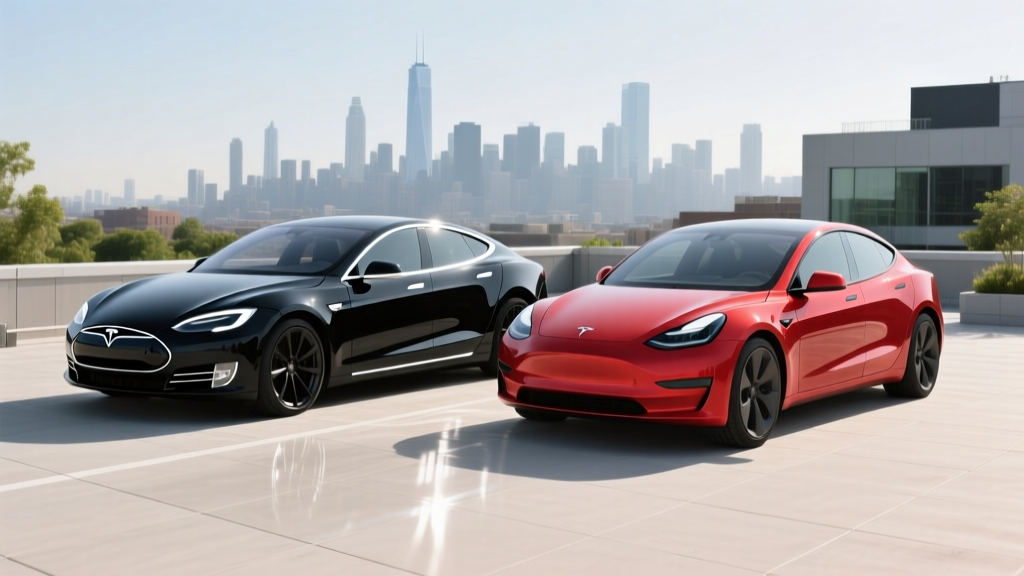
When shoppers search for the oldest Tesla car, they're usually asking one of two questions: What was Tesla's first production vehicle, and can I still buy an early Tesla that holds up today? The answer spans more than a decade of EV evolution — from the original Roadster (2008–2012) through the early Model S (2012–2015) to the first-generation Model 3 (2017–2019). Each represents a different risk-and-reward proposition on the used market.
This guide focuses on the oldest Tesla models you can realistically buy and drive daily in 2026: the 2012–2015 Model S (Tesla's first mass-production sedan) and the 2017–2019 Model 3 (the car that brought Tesla to the mainstream). We'll cover battery degradation realities, charging limitations of older hardware, real-world range, and whether any of these qualify for federal tax incentives as used purchases.
Early Model S variants carried EPA ratings of 208–265 miles when new. Expect 15–25% degradation on 10+ year-old NMC packs, meaning a 2013 Model S 85 originally rated at 265 miles EPA may now deliver 195–225 miles in mixed driving. Highway speeds above 70 mph and winter temperatures below 40°F can cut that by another 15–20%. A 2018 Model 3 Long Range (310 mi EPA new) typically retains 260–285 miles depending on charging habits and mileage.
Oldest Tesla Model S (2012–2015): Specs That Still Matter
| Spec | Model S 60 | Model S 85 | Model S P85/P85D |
|---|---|---|---|
| Battery Capacity (usable) | ~60 kWh (NMC) | ~81 kWh (NMC) | ~81 kWh (NMC) |
| EPA Range (when new) | 208 mi | 265 mi | 253 mi (P85D) |
| Expected Range Today | 150–175 mi | 195–225 mi | 185–215 mi |
| 0–60 mph | 5.9 sec | 5.4 sec | 3.1 sec (P85D, Dual Motor) |
| Horsepower | 302 hp | 362 hp | 691 hp (P85D) |
| Drivetrain | RWD | RWD | AWD (Dual Motor) |
| Max DC Fast Charge | ~100 kW (Supercharger V1/V2) | ~120 kW | ~120 kW |
| 10–80% DC Charge Time | ~45 min | ~50 min | ~50 min |
| Level 2 Home Charging | ~20 mi/hr (10 kW onboard) | ~29 mi/hr (dual charger optional, up to 20 kW) | ~29 mi/hr (dual charger optional) |
| Efficiency (EPA) | 95 MPGe | 89 MPGe | 89 MPGe (P85D) |
| Cargo Volume | 26.3 cu ft (rear) + 5.3 cu ft (frunk) | ||
| Battery Warranty (original) | 8 yr / 125,000 mi | 8 yr / unlimited mi | 8 yr / unlimited mi |
The early Model S uses NMC (nickel manganese cobalt) battery chemistry, which offers high energy density but is more susceptible to calendar degradation than the LFP (lithium iron phosphate) packs Tesla later adopted in Standard Range vehicles. According to data aggregated by fueleconomy.gov, the 2013 Model S 85 was rated at 89 MPGe combined — respectable for a 4,600-lb luxury sedan but noticeably less efficient than modern platforms.
Charging hardware matters here. Early Model S vehicles used Tesla's proprietary connector (pre-NACS standardization) and relied on CHAdeMO adapters for non-Tesla DC fast charging. If you're buying a 2012–2015 Model S in 2026, confirm whether the car has the CCS adapter (sold by Tesla for ~$250) or whether it's limited to Tesla Superchargers. Supercharger access on these older VINs remains functional, but peak charge rates top out around 120 kW on V2 stalls — far below the 250 kW available on current models.
First-Generation Model 3 (2017–2019): The Oldest Tesla Most People Can Afford
| Spec | Standard Range Plus | Long Range RWD | Long Range AWD | Performance |
|---|---|---|---|---|
| Battery Capacity (usable) | ~50 kWh (NMC) | ~75 kWh (NMC) | ~75 kWh (NMC) | ~75 kWh (NMC) |
| EPA Range (when new) | 220 mi (2018) / 240 mi (2019) | 310 mi | 310 mi | 310 mi |
| Expected Range Today | 180–205 mi | 260–285 mi | 260–285 mi | 260–280 mi |
| 0–60 mph | 5.3 sec | 5.1 sec | 4.4 sec | 3.2 sec |
| Horsepower | 283 hp | 283 hp | 346 hp | 450 hp |
| Drivetrain | RWD | RWD | AWD (Dual Motor) | AWD (Dual Motor) |
| Max DC Fast Charge | ~150 kW | ~195 kW | ~195 kW | ~195 kW |
| 10–80% DC Charge Time | ~35 min | ~30 min | ~30 min | ~30 min |
| Level 2 Home Charging | ~30 mi/hr (7.6 kW) | ~44 mi/hr (11.5 kW) | ~44 mi/hr (11.5 kW) | ~44 mi/hr (11.5 kW) |
| Efficiency (EPA) | 131 MPGe | 130 MPGe | 120 MPGe | 116 MPGe |
| Cargo Volume | 15 cu ft trunk + ~2.1 cu ft frunk (combined rear + frunk) | |||
| Battery Warranty (original) | 8 yr / 100,000 mi | 8 yr / 120,000 mi | ||
The 2017–2019 Model 3 represents the sweet spot for budget-conscious EV buyers. A 2018 Long Range AWD with 80,000 miles typically sells for $18,000–$24,000 in early 2026, making it one of the most accessible long-range electric sedans available. The NMC 2170 cells in Long Range variants have shown better longevity than the older 18650 cells in the early Model S, with most packs retaining 85–92% of original capacity at 80,000 miles based on fleet data.
One critical ownership note: 2017–2018 Model 3 vehicles were built before Tesla's Hardware 3 (HW3) computer became standard. Cars with the older HW2.5 computer cannot run Tesla's current FSD (Supervised) software and will not receive future autonomous-driving feature updates. If driver-assist capability matters to you, verify the hardware revision before purchasing. Basic Autopilot (lane centering + adaptive cruise) works on all hardware versions and remains a competent SAE Level 2 system — meaning you must stay engaged and keep hands on the wheel.
Battery Health: The Make-or-Break Factor for the Oldest Tesla Cars
Battery degradation is the single most important variable when buying any used EV, and it's especially critical for vehicles approaching or exceeding 10 years old. Here's what the data shows:
- 2012–2015 Model S (18650 NMC cells): Average 12–20% capacity loss at 100,000 miles. Cars frequently charged to 100% or exposed to sustained high temperatures show accelerated degradation. Some early 85 kWh packs have dropped below 70% State of Health (SoH), which would trigger warranty replacement if still within the 8-year/unlimited-mile coverage window — but most 2012–2014 cars have now aged out of battery warranty.
- 2017–2019 Model 3 (2170 NMC cells): Average 8–13% capacity loss at 80,000 miles. The improved thermal management system and cell chemistry deliver better calendar-life performance. Packs that were regularly charged to 80% (rather than 100%) show as little as 5–7% loss.
Before buying, request a battery health report. Tesla service centers can pull the SoH percentage, and third-party tools like the TeslaFi app or Scan My Tesla (via OBD-II adapter) let owners monitor real-time pack data. A pack below 80% SoH is a negotiation point; below 70%, walk away unless the price reflects a potential $12,000–$18,000 replacement cost.
If the original 8-year battery warranty has expired, a replacement pack for a 2013 Model S 85 runs $14,000–$18,000 (remanufactured) or $20,000+ (new from Tesla). For a 2018 Model 3 Long Range, expect $12,000–$16,000. These costs can exceed the vehicle's resale value on the oldest examples. Always factor this into your total cost of ownership calculation.
Charging the Oldest Tesla Cars: Speed, Connectors, and 2026 Compatibility
Charging infrastructure has evolved dramatically since 2012, and older Teslas face compatibility and speed limitations that new buyers should understand before purchasing.
| Charging Level | 2013 Model S 85 | 2018 Model 3 LR | 2026 Model 3 LR (reference) |
|---|---|---|---|
| Level 1 (120V, 12A) | ~3 mi/hr (1.4 kW) | ~3 mi/hr (1.4 kW) | ~4 mi/hr (1.6 kW) |
| Level 2 (240V, 48A) | ~29 mi/hr (up to 20 kW w/ dual charger) | ~44 mi/hr (11.5 kW) | ~44 mi/hr (11.5 kW) |
| DC Fast Charge (peak) | ~120 kW | ~195 kW | ~250 kW |
| 10–80% DCFC Time | ~50 min | ~30 min | ~22 min |
| Connector (native) | Tesla proprietary | Tesla proprietary | NACS (industry standard) |
| CCS Adapter Needed? | Yes, for non-Tesla DCFC | Yes, for non-Tesla DCFC | No (NACS is CCS-equivalent) |
Key insight on kW vs kWh: Don't confuse charge rate (kW — how fast energy flows) with battery capacity (kWh — how much energy the pack holds). A 2013 Model S with an 81 kWh battery charging at 120 kW peak will still take ~50 minutes for a 10–80% session because the charge curve tapers significantly above 60% State of Charge. Peak kW is never sustained for the full session.
The 2012–2015 Model S originally shipped with a single onboard charger rated at 10 kW. Tesla offered an optional dual-charger setup (20 kW), but most cars on the used market have the single charger. This means even with a 48-amp Level 2 home wall connector, a 2013 Model S 85 will add roughly 29 miles of range per hour — adequate for overnight charging but noticeably slower than modern 11.5 kW onboard chargers.
For home charging setup, budget $500–$1,500 for a Tesla Wall Connector installation (240V/60A circuit) if your electrical panel supports it. Older homes with 100-amp panels may need a $1,500–$3,000 panel upgrade — consult a licensed electrician for a site assessment before committing to a purchase.
Tax Credits and Incentives: Do the Oldest Tesla Cars Qualify?
New Tesla vehicles purchased in 2026 may qualify for the IRS §30D federal tax credit of up to $7,500, subject to MSRP caps ($55,000 for sedans), buyer income limits ($150,000 single / $300,000 joint), and battery critical-mineral sourcing requirements. However, the oldest Tesla cars on the used market fall under a different provision:
- Used EV Credit (§25E): Up to $4,000 or 30% of the sale price (whichever is less) for qualified used EVs priced at $25,000 or below, purchased from a dealer. The vehicle must be at least two model years old, and the buyer must meet income caps ($75,000 single / $150,000 joint). This credit can be transferred to the dealer as a point-of-sale discount.
- Eligibility for oldest Teslas: A 2018 Model 3 Standard Range Plus priced at $16,000–$19,000 from a dealer could qualify for the full $4,000 used credit, bringing effective cost to $12,000–$15,000. A 2013 Model S 85 priced at $14,000–$18,000 may also qualify, but the credit caps at 30% of sale price — so a $14,000 car nets $4,000, while an $18,000 car nets $4,000 (since 30% of $18,000 = $5,400 exceeds the $4,000 cap).
Important caveats: The used EV credit applies only to dealer purchases (not private-party sales), and the vehicle must be purchased from a licensed dealer who reports the sale to the IRS. Always verify current eligibility on IRS.gov before finalizing a transaction, as rules and qualifying vehicle lists can change.
Oldest Tesla vs. Key Competitors: Is It Worth Buying?
How do the oldest Tesla models stack up against other used EVs available in 2026? Here's a decision framework based on typical buyer priorities:
- You want a spacious luxury sedan with Supercharger network access
- You prioritize cargo space (26.3 cu ft + frunk) and ride comfort
- You accept higher maintenance risk (air suspension, MCU1 screen delamination, drive unit replacements)
- Your daily commute is under 150 miles round-trip
- You want the best range-per-dollar on the used market (~270 mi real-world at $18–24K)
- You value efficiency (130 MPGe) and lower operating costs
- You need modern driver-assist hardware (verify HW3)
- You want a smaller, easier-to-park daily driver
- 2017–2019 Chevy Bolt EV: ~$10,000–$13,000 used, 238 mi EPA, but no DC fast charging upgrade path and CCS connector (now orphaned)
- 2019–2020 Hyundai Kona Electric: ~$14,000–$18,000, 258 mi EPA, reliable but smaller cargo area
- 2021+ Model 3 (refresh): Better build quality, heat pump for cold weather, HW3 standard — worth the $6,000–$10,000 premium
- Access to Tesla Supercharger network (largest reliable DCFC network in the US)
- Over-the-air software updates still active for Model S and Model 3
- Strong enthusiast community and third-party repair knowledge base
- Model 3 Long Range offers best used-EV range per dollar
- Qualifies for up to $4,000 used EV federal tax credit (§25E)
- Instant torque and performance that still impresses (P85D: 3.1 sec 0–60)
- Battery degradation risk; replacement costs can exceed vehicle value
- 2012–2015 Model S mostly out of battery warranty (8-year term expired)
- Older hardware (HW2.5) limits FSD capability; MCU1 screens prone to failure
- Slower DC fast charging (120–195 kW peak vs. 250+ kW on new models)
- Early Model S air suspension and drive motor failures are documented and costly
- No heat pump on pre-2021 Model 3 — cold-weather range loss of 25–35%
Who Should Buy the Oldest Tesla Car — And Who Shouldn't
Best for: Budget-conscious commuters with home charging access who want 200+ miles of real-world range without paying new-car prices. A 2018 Model 3 Long Range at ~$20,000 (after the $4,000 used credit) delivers more usable range than nearly any competitor at that price. The Supercharger network makes road trips viable, even if charge stops take 30–40 minutes instead of 20.
Not ideal for: Buyers without home charging access (older Teslas charge slower on public infrastructure), those in extreme cold climates (no heat pump on pre-2021 cars means brutal winter range loss), or anyone who can't absorb a potential $12,000–$18,000 battery replacement within their ownership window.
Road trippers: The Supercharger network remains the strongest argument for buying a used Tesla over a used Bolt or Kona. Even at 120–195 kW peak rates, you can cross the country with 30-minute charge stops every 180–220 miles. Plan routes using Tesla's built-in navigation or A Better Route Planner for accurate arrival SoC estimates.
Frequently Asked Questions
What is the oldest Tesla car you can still buy?
The 2008–2012 Tesla Roadster was Tesla's first production car, but with only ~2,450 built and current prices ranging from $120,000–$200,000+, it's a collector piece, not a daily driver. The oldest practical Tesla purchase is a 2012–2013 Model S, with prices starting around $12,000–$18,000 depending on mileage and battery health.
How much does the oldest Tesla Model 3 cost in 2026?
A 2018 Model 3 Long Range AWD with 60,000–90,000 miles typically sells for $18,000–$24,000 from dealers. Standard Range Plus variants start around $14,000–$17,000. With the §25E used EV credit (up to $4,000 for dealer purchases under $25,000), effective prices can drop to $14,000–$20,000 for qualified buyers meeting income requirements.
Do older Teslas still get software updates?
Yes. Tesla continues to push over-the-air updates to Model S (2012+) and Model 3 (2017+) vehicles, though feature availability depends on hardware. Cars with MCU1 (the original media control unit in 2012–2018 Model S) received a recall-funded upgrade to MCU2, which enables modern infotainment features including streaming, theater mode, and improved navigation.
What should I check before buying a used Tesla?
Prioritize these inspections: (1) Battery State of Health via Tesla service or third-party OBD-II tool — aim for 85%+ SoH; (2) Drive unit condition (listen for whining or grinding noises); (3) MCU version (MCU2 preferred); (4) Autopilot hardware version (HW3 or later for FSD compatibility); (5) Service history for suspension, screen, and battery-related repairs; (6) Title status (avoid salvage or rebuilt titles, which void remaining warranty).
Is it worth buying a 10-year-old Tesla?
It depends on price, battery health, and your risk tolerance. A 2014 Model S 85 with a confirmed 88% SoH battery at $14,000 can be a compelling luxury EV bargain — but if that battery fails at year 12, a $16,000 replacement effectively doubles your cost. For risk-averse buyers, a 2019 Model 3 Long Range (still within or just outside its 8-year battery warranty) offers a better balance of modern tech, efficiency, and manageable repair costs.
Does the oldest Tesla car qualify for any tax credits?
Used Teslas purchased from a dealer for $25,000 or less may qualify for the federal §25E used clean vehicle credit — up to $4,000 or 30% of the sale price. Buyer income must not exceed $75,000 (single) or $150,000 (joint). This credit can be applied as a point-of-sale discount at participating dealers. Verify eligibility details at IRS.gov before purchasing, as qualifying criteria and dealer reporting requirements are subject to change.