The Used Tesla Landscape in 2026: What Buyers Need to Know
Searching for an old Tesla in 2026 means navigating a marketplace that has shifted dramatically. With new models like the refreshed Model 3 Highland and updated Model S pushing base prices higher, the used market has become the primary entry point for budget-conscious buyers wanting into the Supercharger network. But buying a pre-owned electric vehicle requires a different calculus than a used gas car: battery health, charging hardware generation, and software compatibility matter as much as mileage and accident history.
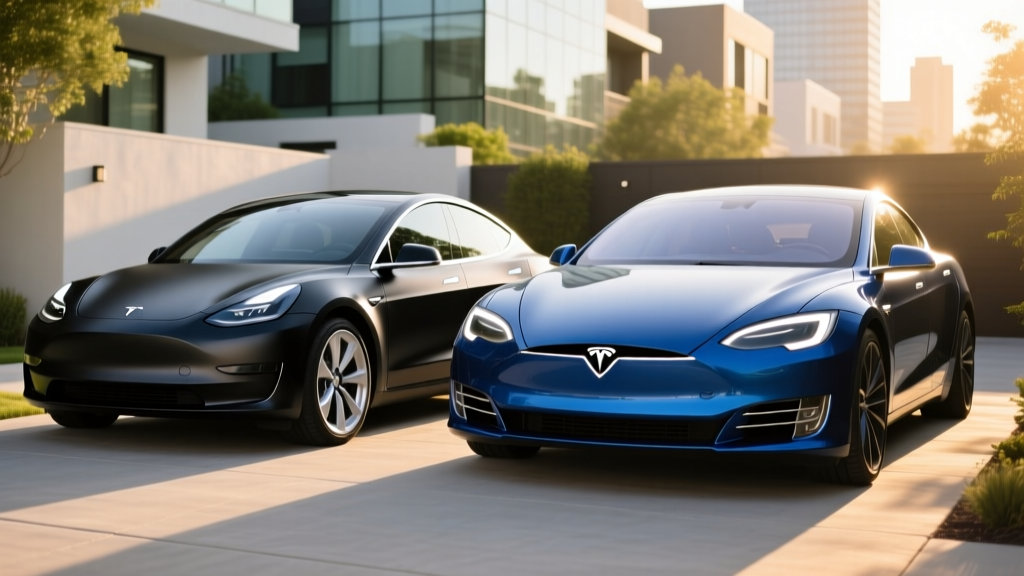
This guide focuses on the two most common used Tesla models you will encounter: the Model 3 (2018–2023) and the Model S (2016–2023). We will cover exact range figures, battery chemistry realities, charging speeds across model years, and the true cost of ownership — including whether these vehicles still qualify for any federal tax incentives.
Used Tesla Model 3: Specs, Range, and Real-World Performance
The Model 3 is the most abundant used Tesla on the market. Production started in 2017, but the 2018–2023 model years represent the bulk of available inventory. Tesla made running changes to battery packs, motors, and software, so specs vary significantly by year and trim.
| Spec | Standard Range Plus / RWD | Long Range AWD | Performance |
|---|---|---|---|
| EPA Range | 263–272 mi | 310–358 mi | 299–315 mi |
| Battery Capacity (usable) | ~50–55 kWh (LFP post-2021; NMC pre-2021) | ~75–82 kWh (NMC) | ~75–82 kWh (NMC) |
| 0–60 mph | 5.3–5.8 sec | 4.2–4.4 sec | 3.1–3.2 sec |
| Horsepower | ~283 hp | ~346 hp | ~450 hp |
| Drivetrain | RWD (single motor) | AWD (dual motor) | AWD (dual motor) |
| Max DC Fast Charge | 145–170 kW | 200–250 kW | 200–250 kW |
| 10–80% DCFC Time | ~28–32 min | ~25–30 min | ~25–30 min |
| Level 2 Home Charge Rate | 7.6–11.5 kW (~30–44 mi/hr) | 11.5 kW (~44 mi/hr) | 11.5 kW (~44 mi/hr) |
| Efficiency (MPGe) | 141 MPGe combined | 134 MPGe combined | 116 MPGe combined |
| Cargo Volume | 23 cu ft (trunk + frunk combined) | ||
| Rear Legroom | 35.2 in | ||
Battery Chemistry: LFP vs NMC in Used Model 3s
This is one of the most critical distinctions when shopping for an old Tesla Model 3. Starting in late 2021, Tesla began equipping Standard Range / RWD Model 3s with LFP (lithium iron phosphate) batteries supplied primarily by CATL. Long Range and Performance models retained NMC (nickel manganese cobalt) chemistry.
- LFP advantages: Longer cycle life (3,000+ cycles vs ~1,500 for NMC), can be charged to 100% daily without accelerated degradation, lower cost, no cobalt.
- LFP trade-offs: Lower energy density (shorter range for same pack size), worse cold-weather performance (~20–30% range loss vs ~15–20% for NMC), slower charge rates at very low SoC.
- NMC advantages: Higher energy density, better cold performance, faster peak charge rates.
- NMC trade-offs: Tesla recommends daily charge limit of 80% to preserve longevity, slightly faster calendar degradation.
If you are buying a used Model 3 for a daily commuter role with home charging, a 2022+ LFP Standard Range is arguably the smarter longevity play. For road trips and cold climates, a Long Range NMC remains the better tool.
Used Tesla Model S: The Original Luxury EV
The Model S has been in production since 2012, but the 2016+ facelift models (updated fascia, available 100D battery) and the 2021+ Plaid refresh are the two generations most relevant to used buyers in 2026. Earlier 2012–2015 cars with 60/85 kWh packs are cheap but carry substantial battery replacement risk.
| Spec | 2019 Long Range | 2021+ Long Range (Refresh) | 2021+ Plaid |
|---|---|---|---|
| EPA Range | 335 mi | 405 mi | 396 mi |
| Battery Capacity (usable) | ~95 kWh (NMC) | ~95 kWh (NMC) | ~95 kWh (NMC) |
| 0–60 mph | 3.7 sec | 3.1 sec | 1.99 sec |
| Horsepower | ~469 hp | ~670 hp | ~1,020 hp |
| Drivetrain | AWD (dual motor) | AWD (dual motor) | AWD (tri-motor) |
| Max DC Fast Charge | 200 kW | 250 kW | 250 kW |
| 10–80% DCFC Time | ~35–40 min | ~27–32 min | ~27–32 min |
| Level 2 Home Charge Rate | 16.5 kW (~52 mi/hr) with HPWC | 11.5 kW (~44 mi/hr) | 11.5 kW (~44 mi/hr) |
| Efficiency (MPGe) | 111 MPGe combined | 120 MPGe combined | 106 MPGe combined |
| Cargo Volume | 28 cu ft (trunk + frunk combined) | ||
| Rear Legroom | 35.4 in | ||
The Free Supercharging Question
Some pre-2017 Model S vehicles came with unlimited free Supercharging, either tied to the car (transferable) or the original owner (non-transferable). Tesla has periodically reinstated referral-based free Supercharging on newer used inventory. Always verify through the Tesla app or your Tesla account whether free Supercharging transfers with a specific VIN before purchasing — this can represent $1,500–$3,000 in annual fuel savings for high-mileage drivers. According to Tesla's official charging support page, transferability depends on the original purchase terms.
Charging Speed Deep Dive: What Used Tesla Owners Actually Experience
Charging speed is where many used Tesla buyers get surprised. Marketing materials quote peak kW figures, but the charge curve — how fast the battery charges across the entire 10–80% window — is what determines actual wait times on road trips.
| Charging Method | Power (kW) | Miles Added per Hour | Notes |
|---|---|---|---|
| Level 1 (120V household) | ~1.4 kW | ~3–5 mi/hr | Emergency only; overnight adds ~40 mi |
| Level 2 (240V, 32A) | 7.6 kW | ~30 mi/hr | Common home setup; full charge in ~10 hr |
| Level 2 (240V, 48A) | 11.5 kW | ~44 mi/hr | Requires Tesla Wall Connector or equivalent; full charge in ~7 hr |
| DC Fast (V3 Supercharger) | Peak 250 kW | ~1,000 mi/hr (peak) | 10–80% in ~25–30 min; tapers sharply above 80% |
| DC Fast (V2 Supercharger) | Peak 150 kW | ~600 mi/hr (peak) | 10–80% in ~35–40 min; older stations |
| DC Fast (non-Tesla CCS) | Varies | Varies | Pre-2025 Teslas need NACS-to-CCS adapter for non-Tesla networks |
Preconditioning and the Charge Curve
Tesla's battery thermal management is among the best in the industry, but preconditioning is essential to achieving advertised charge speeds. When you navigate to a Supercharger in the Tesla navigation system, the car automatically warms or cools the battery to optimal temperature. Without preconditioning — for example, plugging into a third-party DC fast charger without routing through nav — peak charge rates can drop 30–50%, especially in cold weather.
The charge curve on a Model 3 Long Range at a V3 Supercharger typically looks like this: 250 kW from roughly 10–25% SoC, tapering to ~150 kW by 50%, ~80 kW by 70%, and ~40 kW above 85%. This is why the 10–80% metric matters more than peak kW — the last 20% can take as long as the first 50%.
Cost, Tax Credits, and Total Ownership Economics
Used Tesla prices have dropped considerably from their 2022 peaks. As of early 2026, here is what you can expect to pay and what incentives may apply.
| Model | Typical Used Price Range | Federal Used EV Credit (§25E) | Adjusted Cost (Best Case) |
|---|---|---|---|
| 2019 Model 3 Standard Range Plus | $18,000–$22,000 | Up to $4,000 (30% of sale price, capped at $4,000) | $14,000–$18,000 |
| 2021 Model 3 Long Range AWD | $25,000–$30,000 | Up to $4,000 | $21,000–$26,000 |
| 2022 Model 3 Performance | $30,000–$35,000 | Up to $4,000 | $26,000–$31,000 |
| 2019 Model S Long Range | $35,000–$42,000 | Up to $4,000 | $31,000–$38,000 |
| 2021 Model S Plaid | $65,000–$78,000 | Up to $4,000 | $61,000–$74,000 |
Federal Used EV Tax Credit: §25E Rules
The Previously-Owned Clean Vehicles Credit (IRC §25E) provides up to $4,000 or 30% of the sale price (whichever is lower) for qualifying used EVs. Key requirements per the IRS used vehicle credit page:
- Sale price cap: The vehicle must sell for $25,000 or less to qualify.
- Buyer income limits: Adjusted gross income cannot exceed $75,000 (single), $112,500 (head of household), or $150,000 (joint).
- Vehicle age: Must be at least 2 model years old.
- Dealer requirement: Must be purchased from a licensed dealer (private-party sales do not qualify).
- Battery capacity: Must have at least 7 kWh battery (all Model 3 and Model S variants qualify).
- One-time use: The same VIN can only claim this credit once every 3 years.
This means a 2021 Model 3 Long Range selling for $28,000 from a dealer would not qualify — it exceeds the $25,000 sale price cap. A 2019 Model 3 Standard Range Plus at $21,000 from a qualifying dealer, bought by a single filer earning $70,000, would qualify for the full $4,000 credit, bringing the effective cost to $17,000. Always verify current rules with a tax professional, as incentive structures can change.
Ongoing Ownership Costs
Insurance for used Teslas tends to run 15–30% higher than comparable non-electric sedans, according to industry data. Expect annual premiums of $1,800–$2,800 for a Model 3 and $2,400–$3,600 for a Model S, depending on your driving record and location. Maintenance costs are low — no oil changes, minimal brake wear thanks to regenerative braking — but tire replacement comes more frequently (every 25,000–35,000 miles) due to the vehicle weight and instant torque.
Warranty Coverage and Battery Replacement Risk
Tesla's warranty structure for used vehicles depends on the original in-service date and current mileage.
- Model 3 Standard Range / RWD: Battery and drive unit warranted for 8 years / 100,000 miles (whichever comes first), with a minimum 70% capacity retention threshold.
- Model 3 Long Range / Performance: Battery and drive unit warranted for 8 years / 120,000 miles, 70% retention threshold.
- Model S (all variants): Battery and drive unit warranted for 8 years / 150,000 miles, 70% retention threshold.
- Basic vehicle warranty: 4 years / 50,000 miles (typically expired on any used Tesla you will find in 2026).
Battery Replacement Costs if Out of Warranty
This is the single biggest financial risk of buying an old Tesla. Out-of-warranty battery replacement costs, based on service center estimates and third-party EV repair shops:
- Model 3 (50–55 kWh LFP): $12,000–$16,000
- Model 3 (75–82 kWh NMC): $14,000–$18,000
- Model S (95–100 kWh NMC): $18,000–$24,000
Before purchasing, request a battery health report from Tesla (accessible through the service menu or by contacting Tesla support with the VIN). Compare the current maximum rated range at 100% SoC to the original EPA figure. A 5–8% loss at 50,000 miles is normal; anything above 12% warrants caution. Third-party tools like Tessie or the Tesla app's energy graph can also estimate State of Health (SoH).
Autopilot, FSD, and Software: What Transfers to Used Buyers
Tesla's software ecosystem is a major draw, but not all features transfer cleanly to second owners.
- Basic Autopilot: Included on all Model 3 and Model S vehicles. Provides Traffic-Aware Cruise Control and Autosteer (lane centering) on highways.
- Enhanced Autopilot (EAP): $6,000 original option. Adds Navigate on Autopilot (highway on/off-ramp assistance), Auto Lane Change, Autopark, and Summon. Transfers with the car on used purchases.
- Full Self-Driving (Supervised): $8,000 one-time purchase or $99/month subscription (pricing as of 2025–2026). Includes all EAP features plus traffic light/stop sign recognition and city street autosteer. FSD purchased outright transfers with the vehicle; subscription does not.
Always verify in the car's Software menu (Controls > Software) whether EAP or FSD is listed as active. Some used Teslas sold by third-party dealers may have had FSD removed if it was subscription-based or if Tesla reclaimed a promotional trial.
Who Should Buy an Old Tesla — and Who Should Look Elsewhere
Pros
- Access to the Supercharger network — still the most reliable DC fast-charging ecosystem in the US
- Over-the-air software updates keep older vehicles current with new features
- Low running costs: ~$0.04–$0.08 per mile on home electricity vs $0.12–$0.18 for gas
- Strong performance even in base trims (0–60 in 5.3 sec for a base Model 3)
- Minimal scheduled maintenance; no oil, filters, or spark plugs
- Used EV tax credit can bring effective price below $15,000 for a Model 3
Cons
- Out-of-warranty battery replacement is a $12,000–$24,000 risk
- Insurance premiums run 15–30% higher than comparable gas sedans
- Build quality on 2018–2020 Model 3s is inconsistent (panel gaps, paint defects, interior rattles)
- NMC battery requires 80% daily charge limit for longevity — reduces usable range vs EPA
- Older Model S (pre-2021) interior feels dated compared to the refresh
- No Apple CarPlay or Android Auto — Tesla's proprietary infotainment only
- Suspension and interior component repairs can be costly on high-mileage examples
Decision Framework: Is a Used Tesla Right for You?
Choose a used Model 3 (2021+ LFP RWD) if: You want an affordable daily commuter with home charging, drive under 40 miles round-trip, and can accept modest range for a lower purchase price and excellent battery longevity.
Choose a used Model 3 Long Range (2019–2022 NMC AWD) if: You take regular road trips, live in a cold climate, need AWD, and want 280+ real-world miles without spending over $30,000.
Choose a used Model S Long Range (2019–2021) if: You need a larger luxury sedan with more cargo room, want the longest real-world range of any used EV under $40,000, and can absorb higher insurance and maintenance costs.
Look at competitors instead if: You want Apple CarPlay, prefer a traditional dealer service network, need a compact crossover footprint (consider a used Hyundai Kona Electric or Chevrolet Bolt EUV), or want a vehicle under $15,000 where a Nissan Leaf or older Bolt EV may be more financially prudent.
Key Competitors: How the Used Tesla Stacks Up
The used EV market in 2026 offers legitimate alternatives depending on your priorities:
- Chevrolet Bolt EV/EUV (2020–2023): 259 mi EPA range, significantly cheaper ($12,000–$18,000 used), but limited to 55 kW DC fast charging — road trips require patience.
- Hyundai Kona Electric (2020–2023): 258 mi EPA range, 75 kW DCFC, more traditional infotainment with Apple CarPlay. Used prices $16,000–$22,000.
- Ford Mustang Mach-E (2021–2023): 230–314 mi EPA range depending on trim, 115–150 kW DCFC, crossover utility. Used prices $24,000–$35,000.
- Polestar 2 (2021–2023): 249 mi EPA range, 150 kW DCFC, premium build. Used prices $22,000–$30,000.
None of these competitors match Tesla's Supercharger network access or over-the-air update cadence. However, they may offer better value, lower insurance, and easier third-party servicing depending on your market. EPA range and efficiency data for all vehicles can be verified at fueleconomy.gov.
Frequently Asked Questions About Buying an Old Tesla
What is the real-world range of a used Tesla Model 3?
A 2021 Model 3 Long Range AWD (EPA 358 mi) typically delivers 290–320 miles in moderate-temperature highway driving, and 220–270 miles in cold weather below 32°F. A Standard Range Plus (EPA 263 mi) delivers roughly 210–240 miles real-world in mixed driving. Always subtract an additional 5–10% for battery degradation on vehicles with 50,000+ miles.
How fast does a used Tesla charge at home and on the road?
At home on a 240V Level 2 charger (48A), a Model 3 Long Range adds roughly 44 miles of range per hour, or a full charge in about 7 hours. On a V3 Supercharger (250 kW peak), a 10–80% charge takes 25–30 minutes. Older V2 Superchargers (150 kW) take 35–40 minutes for the same session. Preconditioning the battery by navigating to the charger is critical for achieving these speeds.
How much does a used Tesla cost after tax credits?
A 2019 Model 3 Standard Range Plus purchased from a dealer for $21,000 by a buyer under the income cap qualifies for the $4,000 §25E used EV credit, bringing the net cost to approximately $17,000. Model 3 Long Range and Model S variants typically exceed the $25,000 sale price cap and do not qualify for the federal used credit. State incentives vary — check your local energy office or AFDC state incentive database.
Does a used Tesla qualify for the federal EV tax credit?
The §30D new vehicle credit ($7,500) does not apply to used purchases. Instead, the §25E Previously-Owned Clean Vehicles Credit offers up to $4,000, but only for vehicles with a sale price of $25,000 or less, purchased from a dealer, by buyers under specific income limits. Verify current rules at irs.gov and consult a tax professional before relying on credit eligibility.
Is a used Tesla worth buying vs competitors?
A used Model 3 is worth buying if Supercharger network access, software updates, and strong resale value are priorities. If you want lower insurance, CarPlay support, cheaper out-of-warranty repairs, or a purchase price under $15,000, a used Chevrolet Bolt EV or Nissan Leaf may be more practical. The Model 3 remains the best all-around used EV for road-trip capability, while the Bolt wins on pure affordability.
What are the biggest risks of buying an old Tesla?
The primary risk is out-of-warranty battery replacement ($12,000–$24,000). Secondary risks include suspension wear on heavy Model S variants, MCU (media control unit) failures on pre-2021 Model S, and build-quality inconsistencies on early Model 3s. Always get a pre-purchase inspection from a Tesla-qualified technician and request a battery health report before committing.
Can I charge a used Tesla at non-Tesla charging stations?
Yes, but with caveats. All Teslas use the NACS (North American Charging Standard) connector natively. As of 2025–2026, many non-Tesla networks (Electrify America, EVgo, ChargePoint) have begun adding NACS cables. Where only CCS connectors are available, you will need a NACS-to-CCS adapter ($150–$250). Tesla's in-car navigation can locate compatible third-party chargers, but charging speeds may be lower than on Superchargers due to adapter limitations and lack of automatic preconditioning for non-Tesla networks.