The Appeal of a Used Tesla in 2026
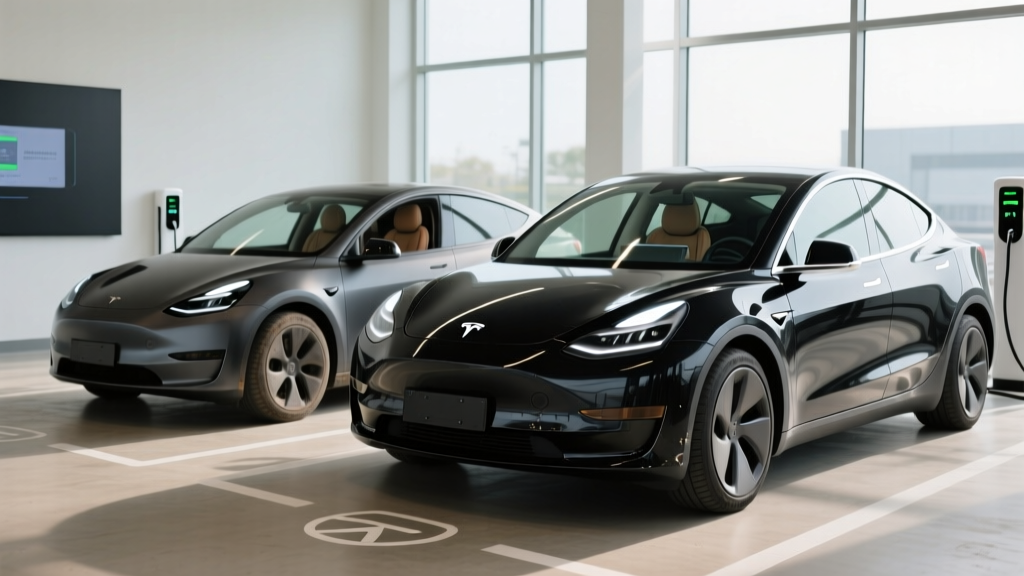
If you've been eyeing the used EV market, you've probably noticed that an old Tesla car — whether it's a 2019 Model 3, a 2020 Model Y, or an earlier Model S — often undercuts new EVs by $10,000 to $25,000. Tesla's early market dominance means there's a massive supply of pre-owned vehicles, and prices have softened considerably as newer competitors flood the market.
But buying a used Tesla isn't like picking up a used Corolla. Battery health, software dependencies, and the absence of the federal tax credit on most used models (the §25E used EV credit maxes out at $4,000 and has strict eligibility requirements) mean you need to evaluate these cars differently. This guide walks through what to expect from the most common used Tesla models you'll find in 2026.
Which Models Are You Actually Looking At?
The "old Tesla car" market breaks into four main vehicles, each with distinct characteristics depending on model year:
| Model | Years Commonly Available | Battery Chemistry | EPA Range (Varies by Year/Trim) | Typical Used Price Range (2026) |
|---|---|---|---|---|
| Model 3 Standard Range / RWD | 2018–2022 | LFP (2021+ RWD) / NMC (earlier) | 240–272 mi | $16,000–$24,000 |
| Model 3 Long Range AWD | 2018–2022 | NMC | 310–358 mi | $20,000–$29,000 |
| Model Y Long Range AWD | 2020–2022 | NMC | 303–330 mi | $24,000–$34,000 |
| Model S Long Range / Plaid | 2018–2022 | NMC | 320–405 mi | $30,000–$65,000 |
| Model X Long Range | 2018–2022 | NMC | 305–348 mi | $32,000–$58,000 |
Sources: fueleconomy.gov, Tesla CPO listings, Kelley Blue Book.
Real-World Range: What the EPA Sticker Doesn't Tell You
A 2020 Model 3 Long Range AWD carries an EPA sticker of 322 miles when new. In 2026, with typical battery degradation, expect:
- Real-world combined (new condition): ~280–300 mi
- With 8–12% degradation (5–6 years old): ~250–280 mi
- Highway driving at 75 mph: ~230–260 mi
- Cold weather (below 32°F): ~190–230 mi (25–35% loss)
Battery degradation is the single biggest variable when buying an old Tesla car. Tesla's battery management system is among the best in the industry, and data from fleet analytics shows most NMC batteries retain roughly 88–92% of original capacity after 100,000 miles. LFP batteries (found in 2021+ Model 3 RWD) degrade even less — often 94–97% retention at similar mileage — but started with lower total capacity.
How to check: On any used Tesla, navigate to Controls > Software to view battery health, or check the vehicle's projected range at 100% State of Charge compared to the original EPA figure. A 2020 Model 3 LR showing 275 miles at 100% SoC has experienced roughly 15% degradation — higher than average and worth negotiating on price.
Charging Speed: Still Competitive, With Caveats
Tesla's Supercharger network remains the most reliable DC fast-charging ecosystem in the US, and older Teslas still charge quickly — though not at the speeds of newer 800V architectures from Hyundai/Kia or Porsche.
| Model (Typical Year) | Max DC Fast Charge | 10–80% Time | Level 2 Home Charge (kW) | Miles Per Hour (L2) |
|---|---|---|---|---|
| Model 3 LR (2018–2020) | ~195 kW peak | ~28–35 min | 11.5 kW (48A) | ~44 mi/hr |
| Model 3 RWD LFP (2021–2022) | ~170 kW peak | ~30–38 min | 11.5 kW (48A) | ~37 mi/hr |
| Model Y LR (2020–2022) | ~210 kW peak | ~25–32 min | 11.5 kW (48A) | ~40 mi/hr |
| Model S (2019–2022) | ~200–250 kW peak | ~25–30 min | 11.5 kW (48A) | ~35 mi/hr |
| Model X (2019–2022) | ~200–250 kW peak | ~28–35 min | 11.5 kW (48A) | ~32 mi/hr |
Charging curve reality: Older Teslas peak at their maximum kW only briefly, typically between 10–30% SoC. Above 50%, the rate tapers significantly. A Model 3 LR might hit 195 kW at 15% SoC but drops to ~80 kW by 60% and ~40 kW by 80%. This is why the 10–80% time matters more than the peak number.
For home charging, you'll need a NEMA 14-50 outlet or a hardwired Tesla Wall Connector (Gen 2 or Gen 3). Budget $500–$1,500 for professional installation depending on your panel capacity and run distance. The onboard charger in these models accepts up to 11.5 kW (48 amps), which means a full charge from 10% takes roughly 7–9 hours overnight.
One advantage of buying an old Tesla car: the NACS connector is native, meaning full access to the Tesla Supercharger network without adapters. As of 2026, Tesla has opened Superchargers to NACS-equipped non-Tesla EVs, but Tesla owners still benefit from seamless plug-and-charge integration and generally the best uptime rates in the industry.
Performance and Efficiency
Even a base Model 3 RWD from 2020 delivers 283 hp and a 5.3-second 0–60 mph time — quick by any standard. The dual-motor Long Range variants add all-wheel drive and drop 0–60 to 4.2–4.4 seconds. The Model S Plaid (2021+) is a 1,020 hp monster at 1.99 seconds, though used examples command a premium.
Efficiency is where Tesla's older vehicles still shine compared to many competitors:
- Model 3 LR (2020): 141 MPGe combined / 24 kWh per 100 miles
- Model Y LR (2021): 122 MPGe combined / 28 kWh per 100 miles
- Model S LR (2020): 111 MPGe combined / 30 kWh per 100 miles
Per fueleconomy.gov, these efficiency figures translate to roughly $550–$700 per year in electricity costs at 15,000 miles driven, depending on your local utility rate. Compare that to $1,800–$2,200 annually for gasoline at $3.50/gallon and 25 MPG combined.
Pricing, Tax Credits, and Total Cost
Here's where buying an old Tesla car gets complicated. The federal §30D new EV tax credit does not apply to used vehicles. Instead, the §25E used EV credit offers up to $4,000 or 30% of the sale price (whichever is less), but with strict requirements:
- Sale price must be $25,000 or less
- Buyer AGI: ≤$75,000 single / ≤$112,500 head of household / ≤$150,000 joint
- Vehicle must be at least 2 model years old
- Must be purchased from a licensed dealer (private sales excluded)
- Battery capacity ≥7 kWh
- Credit is non-refundable (you must have tax liability to use it)
- Claimed once per VIN (check if a prior owner used it)
Source: IRS.gov §25E. Verify current rules with a tax professional.
| Scenario | Typical Price | §25E Credit Eligible? | Effective Cost |
|---|---|---|---|
| 2019 Model 3 LR, dealer, 65k mi | $21,500 | Yes (if under income cap) | ~$17,500 |
| 2021 Model 3 RWD LFP, dealer, 35k mi | $23,000 | Yes (if under income cap) | ~$19,000 |
| 2020 Model Y LR, private party, 50k mi | $26,500 | No (private sale) | $26,500 |
| 2021 Model S LR, dealer, 40k mi | $42,000 | No (over $25k cap) | $42,000 |
The $25,000 price cap eliminates most used Model S, Model X, and newer Model Y examples from the credit. Your best bet for capturing the full $4,000 is a 2018–2020 Model 3 purchased through a dealer at or under $25,000.
Warranty: What's Left?
Tesla's original warranty on these vehicles was:
- Basic vehicle: 4 years / 50,000 miles
- Battery & drive unit: 8 years / 100,000 miles (Model 3/Y RWD) or 8 years / 120,000 miles (Model 3/Y LR/AWD, Model S/X)
- Battery capacity retention threshold: 70% during warranty period
A 2019 Model 3 with 70,000 miles still has battery/drive unit warranty coverage through 2027 or 100,000–120,000 miles. A 2018 Model 3 with 95,000 miles is nearing the end of that coverage. Always check the in-service date — warranty starts from the original delivery date, not the model year.
Out-of-warranty battery replacement costs $12,000–$16,000 for Model 3/Y and $18,000–$22,000 for Model S/X, based on 2026 service pricing. However, complete battery failure is rare; degradation is gradual.
Pros and Cons of Buying an Old Tesla
- Supercharger network access (native NACS, best uptime)
- Over-the-air updates still supported on most 2018+ vehicles
- Class-leading efficiency (low cost per mile)
- Strong performance even in base trims
- Minimal scheduled maintenance (no oil, filters, spark plugs)
- Large used inventory = negotiating power
- Battery degradation reduces range vs. original EPA sticker
- Most used Teslas don't qualify for any federal tax credit
- Build quality on 2018–2020 Model 3/Y was inconsistent (panel gaps, paint)
- No Apple CarPlay or Android Auto (Tesla's proprietary infotainment only)
- Insurance costs remain above average for the segment
- FSD hardware on older models (HW3) may not support future unsupervised features
- Out-of-warranty repairs can be expensive (suspension, screen, door handles)
Is an Old Tesla Car Worth It vs. the Competition?
The used Tesla's biggest advantage is the Supercharger network and efficiency. But a 2021–2022 Chevrolet Bolt EUV (247 mi EPA, often available under $20,000 used), a Hyundai Kona Electric (258 mi), or a used Nissan Leaf (with CHAdeMO caveats) offer compelling alternatives for buyers who prioritize value over charging infrastructure.
Choose a used Tesla if:
- You take regular road trips and need reliable DC fast charging
- You want the lowest cost per mile in electricity
- You value performance and over-the-air feature updates
- You can charge at home and use Superchargers for longer trips
Look elsewhere if:
- You need Apple CarPlay/Android Auto
- You want a certified pre-owned warranty from a traditional dealer network
- You're buying above $25,000 and want to maximize value per dollar
- You drive mostly in extreme cold and need maximum range retention
Frequently Asked Questions
What is the real-world range of a used Tesla Model 3?
A 2020 Model 3 Long Range originally rated at 322 miles EPA will typically deliver 250–280 miles in real-world combined driving with moderate degradation. Highway driving at 75 mph reduces this to 230–260 miles, and cold weather can drop it to 190–230 miles. Always check the car's displayed range at 100% SoC before purchasing.
How fast does a used Tesla charge at home and on the road?
At home on a Level 2 charger (11.5 kW), expect 32–44 miles of range added per hour, meaning a full overnight charge is standard. On DC fast charging, older Model 3 and Model Y vehicles peak between 170–210 kW, achieving 10–80% in roughly 25–38 minutes depending on battery temperature and state of health.
Does a used Tesla qualify for the federal EV tax credit?
Used Teslas are not eligible for the §30D new vehicle credit. They may qualify for the §25E used EV credit of up to $4,000, but only if the sale price is $25,000 or less, you purchase from a licensed dealer, and your income falls below IRS caps ($75,000 single / $150,000 joint). Verify eligibility on IRS.gov.
How much does it cost to replace a Tesla battery out of warranty?
Out-of-warranty battery replacement runs $12,000–$16,000 for Model 3/Y and $18,000–$22,000 for Model S/X as of 2026. However, catastrophic battery failure is uncommon. Most batteries retain 85–92% capacity at 100,000 miles, making replacement unnecessary for most owners.
Should I buy a used Tesla with FSD (Full Self-Driving)?
FSD transfers with the vehicle if the original owner purchased it outright, but be cautious. Tesla's FSD (Supervised) remains an SAE Level 2 driver-assistance system — it requires full driver attention and is not autonomous. Older HW3 computers may have limited capability for future software improvements. Don't pay a significant premium for FSD on a used vehicle.
Is an old Tesla car reliable long-term?
Tesla's powertrain (battery and motors) has proven durable, with many vehicles exceeding 150,000 miles on the original battery. However, build quality on 2018–2020 vehicles can show issues: suspension component wear, window regulator failures, and touchscreen delamination are known concerns. Budget $500–$1,000 annually for non-powertrain repairs on higher-mileage examples.