Quick Verdict: The Model 3 Is a Capable Gravel Cruiser, Not a True Off-Roader
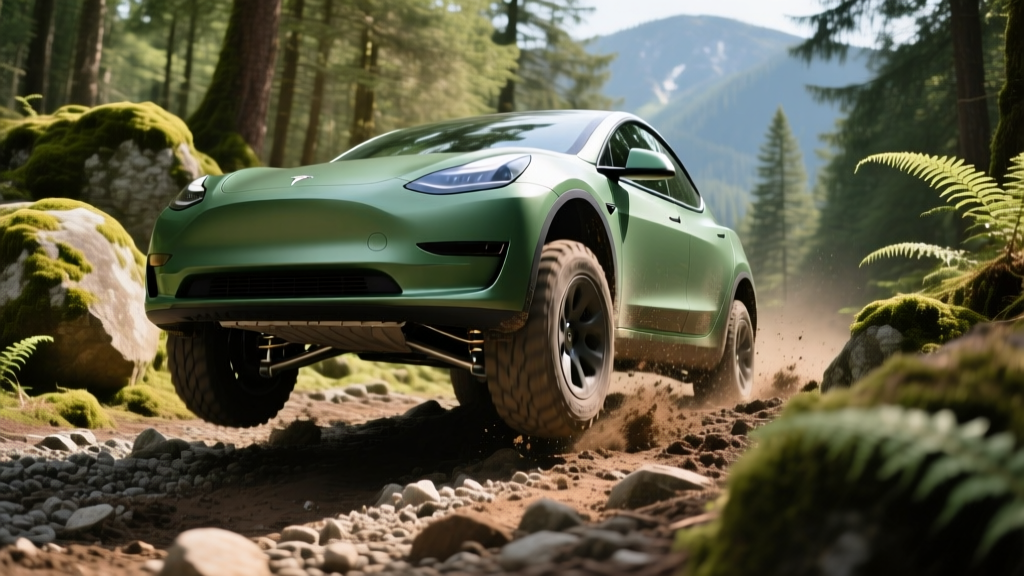
If you've been searching for an off-road Tesla Model 3, here's the honest answer: Tesla doesn't build one. The refreshed "Juniper" Model 3 Long Range AWD remains a low-slung sport sedan with 5.5 inches of ground clearance — roughly half what you'd find on a Subaru Outback or Ford Bronco Sport. But that doesn't mean it's helpless beyond pavement. With dual-motor all-wheel drive, precise torque vectoring, and an Off-Road Assist mode that debuted on the Juniper refresh, the Model 3 LR AWD can handle fire roads, maintained dirt trails, and snowy mountain passes with surprising composure. What it cannot do is rock-crawl, ford deep water, or survive rutted Jeep trails without risking its battery pack.
This review examines exactly what the 2026 Model 3 Long Range AWD can and cannot do off pavement, backed by real-world range data, charging benchmarks, and a clear-eyed look at the mechanical limitations that define its adventure ceiling.
| Spec | Value |
|---|---|
| EPA Range | 363 miles |
| Battery (usable) | ~79 kWh, NMC chemistry |
| Drivetrain | Dual-motor AWD |
| Horsepower | ~384 hp combined |
| 0-60 mph | 4.2 seconds |
| Ground Clearance | 5.5 inches |
| MPGe (combined) | 132 MPGe |
| Efficiency | 25 kWh/100 mi |
| Max DC Fast Charge | 250 kW (peak) |
| 10-80% DCFC Time | ~25 minutes |
| Level 2 Home Charging | 11.5 kW (~44 mi/hr) |
| Cargo Volume | 23 cu ft (rear) + 3.1 cu ft (frunk) |
| Rear Legroom | 35.2 inches |
| Base MSRP | $47,740 (incl. destination) |
| Battery Warranty | 8 years / 120,000 miles |
Range, Efficiency, and Real-World Expectations Off-Pavement
The 2026 Model 3 Long Range AWD carries an EPA-estimated 363 miles of range on its ~79 kWh NMC (nickel-manganese-cobalt) battery pack. That's class-leading efficiency — the sedan's aerodynamic drag coefficient of 0.219 and Tesla's heat-pump-equipped thermal management system squeeze more miles per kilowatt-hour than nearly any competitor.
EPA sticker: 363 miles
Highway (70-75 mph, flat terrain): ~290-310 miles
Mixed city/highway (moderate climate): ~320-340 miles
Dirt roads / gravel (25-40 mph, rolling terrain): ~280-310 miles (frequent acceleration from low speed increases consumption)
Cold weather (below 32°F, highway): ~230-260 miles (30-35% reduction without preconditioning)
Off-road driving introduces unique range variables. Low-speed crawling on rough terrain demands repeated torque application, which can push consumption to 300-350 Wh/mi — significantly worse than highway cruising. On maintained forest service roads at 25-35 mph, expect range roughly comparable to city driving: 280-310 miles on a full charge. Plan conservatively if your trail is remote.
Efficiency is rated at 132 MPGe combined (25 kWh per 100 miles) per EPA fueleconomy.gov data. That figure holds on paved surfaces; off-pavement efficiency will degrade based on surface resistance and elevation changes.
Charging Speed: DC Fast Charging and Home Level 2
Charging infrastructure is the make-or-break factor for any EV used in adventure scenarios. Remote trailheads rarely have DC fast chargers nearby, so understanding the Model 3's charging profile is essential for trip planning.
| Level | Power | Speed (mi/hr added) | Notes |
|---|---|---|---|
| Level 1 (120V household) | ~1.4 kW | ~5 mi/hr | Emergency/trickle only |
| Level 2 (240V, 48A) | 11.5 kW | ~44 mi/hr | Full overnight charge in ~8 hrs |
| DC Fast Charge (peak) | 250 kW | Up to ~175 mi in 15 min | Peak rate at low SoC only |
| DC Fast Charge (10-80%) | Avg ~130 kW | ~25 minutes | Curve tapers significantly above 60% |
The Model 3 LR AWD peaks at 250 kW on V3 Tesla Superchargers, though sustained rates average closer to 130 kW across the 10-80% window. The charge curve is aggressive early — you'll see 150+ kW below 40% state of charge — then tapers to protect the NMC cells. Above 80%, charging slows dramatically; plan your stops to leave at 80% rather than waiting for a full battery.
At home on a Level 2 Wall Connector (48 amps / 11.5 kW), you'll recover roughly 44 miles of range per hour. A depleted battery reaches full in about 8 hours. For off-road users who return to a base camp or cabin, installing a Level 2 charger is the single biggest range-extension strategy available.
Off-road charging caveat: Many trailheads in national forests and BLM land have zero charging infrastructure. The Model 3's 363-mile EPA range gives you a comfortable buffer for out-and-back day trips (up to ~140 miles each way on pavement, less on dirt), but multi-day overland trips require meticulous planning. Apps like PlugShare and A Better Routeplanner are essential.
Off-Road Capability: What the Model 3 Can Actually Do
Let's address the core question directly: Can you take a Tesla Model 3 off-road? The answer depends entirely on what you mean by "off-road."
What It Handles Well
- Maintained dirt and gravel roads: Forest service roads, fire roads, and graded county dirt roads are well within the Model 3's comfort zone. The dual-motor AWD system provides instant torque to all four wheels with no lag, and the Off-Road Assist mode (introduced with the Juniper refresh) adjusts throttle response, regenerative braking, and traction control for loose surfaces.
- Snow and ice: Tesla's AWD system excels in winter conditions. Independent motor control on each axle provides traction management that rivals dedicated snow-mode SUVs. Pair it with all-season or winter tires, and the Model 3 is a legitimate mountain-pass commuter.
- Light sand and packed dirt: On firm, flat surfaces like beach access roads or dry lakebeds, the Model 3 performs adequately. Keep momentum steady and avoid aggressive steering inputs.
- Wet grass and mud (shallow): Brief crossings are manageable, but sustained muddy conditions will quickly overwhelm the low ground clearance and street-oriented tires.
What It Cannot Do
- Rock crawling or technical trails: 5.5 inches of ground clearance is the hard limit. Any trail with rocks, logs, or deep ruts exceeding that clearance risks puncturing the battery skid plate — a catastrophic and expensive failure.
- Deep water fording: The Model 3 has no rated wading depth. Water ingress into the battery pack or drive units is a real risk above curb-level immersion.
- Steep, rutted descents: Without a low-range gear or hill-descent control calibrated for extreme grades, steep technical descents demand careful brake modulation.
- Sustained deep sand or deep mud: The low front air dam and flat underbody will dig in rather than float over soft surfaces.
Off-Road Assist Mode (Juniper Feature)
The Juniper-generation Model 3 includes an Off-Road Assist driving mode accessible from the touchscreen. When engaged, it:
- Softens throttle response to reduce wheel spin on loose surfaces
- Modifies regenerative braking to prevent sudden deceleration that could cause sliding
- Adjusts traction control thresholds to allow controlled wheel slip
- Displays a pitch/roll inclinometer on the main screen
This is a software aid, not a mechanical upgrade. It does not increase ground clearance, add skid plates, or change the suspension travel. Think of it as a helpful traction-management tool for moderate conditions, not a substitute for proper off-road hardware.
Performance, Interior, and Technology
The Model 3 Long Range AWD delivers 384 combined horsepower and a 4.2-second 0-60 mph time — performance figures that have no relevance on a dirt road but make it a genuinely quick highway cruiser between trailheads. The Juniper refresh brought meaningful improvements to ride quality: revised suspension tuning, acoustic glass, and improved sound deadening reduce cabin noise on gravel by a noticeable margin over the pre-2025 model.
Interior and Cargo
Interior space is adequate for two adults and gear for a weekend trip. The rear trunk offers 23 cubic feet (seats up), and the front trunk (frunk) adds 3.1 cubic feet — useful for charging cables, recovery gear, or a small cooler. Rear legroom measures 35.2 inches, which is tight for taller passengers on longer trips.
The 15.4-inch center touchscreen runs Tesla's latest software with integrated navigation, Supercharger routing, and trip energy profiling. The Juniper refresh added ventilated front seats, ambient lighting, and a rear-seat touchscreen for climate and media control. Build quality has improved substantially, though panel gaps still vary by production batch.
Driver Assistance
Tesla's Autopilot (standard) and Full Self-Driving Supervised (optional, $8,000) remain SAE Level 2 driver-assistance systems. The driver must remain engaged, hands on the wheel (or monitored via cabin camera), at all times. FSD Supervised handles highway lane changes, on-ramp-to-off-ramp navigation, and some city-street scenarios, but it is not autonomous driving. On unpaved roads, Autopilot disengages — lane markings and road-edge detection require paved, well-marked surfaces.
Tesla Autopilot and FSD Supervised are Level 2 systems. The vehicle can control steering and acceleration/braking under specific conditions, but the driver must continuously supervise and be prepared to take over instantly. This is not "self-driving." Only Level 4 services like Waymo operate without a human driver in defined zones.
Pricing, Trims, and Federal Tax Credit Eligibility
The 2026 Tesla Model 3 is offered in three trims. For off-road-adjacent use, the Long Range AWD is the only practical choice — the base RWD model lacks all-wheel drive, and the Performance trim sacrifices range for acceleration.
| Trim | Base MSRP | Drivetrain | EPA Range | Est. §30D Credit |
|---|---|---|---|---|
| RWD (Standard Range) | $38,990 | Rear-wheel drive | 272 mi | Up to $7,500* |
| Long Range AWD | $47,740 | Dual-motor AWD | 363 mi | Up to $7,500* |
| Performance AWD | $52,990 | Dual-motor AWD | 341 mi | Up to $7,500* |
*Federal tax credit eligibility under IRS §30D depends on buyer income, vehicle MSRP caps, battery-component sourcing, and critical-mineral requirements. Rules change periodically. Consult IRS.gov or a tax professional before relying on credit amounts. Point-of-sale transfer is available through participating dealers.
Federal Tax Credit Checklist (§30D)
- MSRP cap: Sedans must be priced at or below $55,000 — all Model 3 trims qualify on MSRP alone.
- Buyer income cap: Modified AGI must not exceed $150,000 (single), $225,000 (head of household), or $300,000 (joint).
- Battery sourcing: A percentage of critical minerals and battery components must be sourced from the U.S. or free-trade-agreement partners. These thresholds increase annually; check current-year IRS guidance.
- Point-of-sale transfer: Eligible buyers can transfer the credit to the dealer at purchase, reducing the upfront price rather than waiting for a tax refund.
- Assembly: Vehicle must undergo final assembly in North America (Model 3 is built in Fremont, CA and Austin, TX — qualifies).
For the Long Range AWD at $47,740, a fully eligible buyer could reduce their effective cost to approximately $40,240 after the maximum $7,500 credit. Add common options — FSD Supervised ($8,000), premium paint ($1,000-$2,500), 19-inch wheels ($1,500) — and an as-tested off-road-oriented build lands around $55,000-$60,000 before credits.
Warranty and Long-Term Battery Considerations
Tesla covers the Model 3 Long Range AWD battery and drive units for 8 years or 120,000 miles, whichever comes first, with a minimum 70% capacity retention threshold. The basic vehicle limited warranty is 4 years / 50,000 miles.
For off-road use, understand this critical exclusion: damage to the battery pack from impact with road debris, rocks, or terrain is not covered under warranty. Tesla's battery warranty covers defects and degradation, not physical damage from misuse. If you crack the battery skid plate on a rock, you're looking at a $15,000-$20,000+ replacement out of pocket (or through comprehensive insurance). This is the single largest financial risk of off-roading a Model 3.
Consider adding a titanium or aluminum aftermarket skid plate (available from third-party suppliers like EVLine or Abstract Ocean) if you plan regular dirt-road use. These bolt-on plates add 15-25 lbs and $400-$800 but can prevent catastrophic battery damage.
Pros and Cons: Model 3 LR AWD for Off-Road Use
- Class-leading 363-mile EPA range provides large adventure radius
- Dual-motor AWD with instant torque — excellent traction on loose surfaces
- Off-Road Assist mode optimizes throttle and regen for dirt
- Supercharger network access — most reliable DC fast-charging ecosystem
- Low center of gravity reduces rollover risk on uneven terrain
- Juniper ride-quality improvements reduce gravel-road harshness
- Heat pump maintains cabin comfort without major range loss in cold weather
- 5.5 inches ground clearance — severely limits trail selection
- No factory skid plates — battery is vulnerable to rock/obstacle impact
- Low front air dam is easily damaged on steep approach angles
- Street tires (stock) provide minimal off-pavement grip
- No spare tire — a puncture on a remote trail is a tow-truck situation
- Off-road battery damage is not warranty-covered
- Charging infrastructure near trailheads is sparse to nonexistent
- Low approach/departure/breakover angles compared to any crossover or SUV
Who Should (and Shouldn't) Consider This
Choose the Model 3 LR AWD for off-road use if:
- Your "off-road" means maintained gravel roads, fire roads, and dirt access routes to trailheads or campsites
- You prioritize range and charging speed over ground clearance
- You live in snow country and want AWD security with EV efficiency
- You're willing to add aftermarket skid plates and swap to all-terrain tires
- You plan trips where you can return to a Level 2 charger each night
Look elsewhere (Model Y, Rivian R1S, Subaru Solterra) if:
- You want to tackle technical trails, rock gardens, or deep ruts
- You need more than 5.5 inches of ground clearance
- You plan multi-day overland trips without reliable charging access
- You want a factory-equipped adventure vehicle with skid plates, tow hooks, and all-terrain tires from the showroom
- You need more than 26 cu ft of cargo space for gear
How It Compares to Alternatives
If off-road capability is a genuine priority, the Model 3 is the wrong tool. Here's how it stacks up against EVs better suited to adventure use:
| Vehicle | Ground Clearance | EPA Range | AWD | Base MSRP |
|---|---|---|---|---|
| Tesla Model 3 LR AWD | 5.5 in | 363 mi | Yes | $47,740 |
| Tesla Model Y LR AWD | 6.6 in | 320 mi | Yes | $49,990 |
| Subaru Solterra | 8.3 in | 227 mi | Yes | $44,995 |
| Rivian R1S (Dual-Motor) | 8.7-14.9 in (adjustable) | 352 mi | Yes | $75,900 |
| Ford Bronco Sport (gas baseline) | 8.8 in | N/A (25 MPG) | Yes | $32,990 |
The Tesla Model Y offers an additional 1.1 inches of ground clearance and significantly more cargo volume, making it a more practical adventure EV in the Tesla lineup. The Subaru Solterra (co-developed with Toyota's bZ4X) provides genuine crossover clearance at the cost of range. For serious off-road work, the Rivian R1S with its air-suspension-adjustable ride height is the benchmark — at a steep price premium.
Frequently Asked Questions
What is the real-world range of the Tesla Model 3 Long Range AWD off-road?
On maintained dirt and gravel roads at 25-40 mph, expect approximately 280-310 miles on a full charge — roughly 15-20% below the 363-mile EPA estimate. Technical low-speed crawling will reduce range further. Cold weather compounds the loss. Always plan with a 25-30% buffer for remote trips.
How fast does the Model 3 charge at home and on the road?
At home on a Level 2 (240V/48A) charger, the Model 3 adds ~44 miles of range per hour and fully charges in about 8 hours. On a V3 Tesla Supercharger (250 kW peak), it charges from 10-80% in approximately 25 minutes, though the charge curve tapers significantly above 60% state of charge. Peak rates are only sustained at low SoC.
How much does the Model 3 Long Range AWD cost after the federal tax credit?
The base MSRP is $47,740. If you qualify for the full $7,500 §30D federal tax credit (based on income, battery sourcing, and MSRP requirements), the effective price drops to approximately $40,240. Eligibility is not universal — check IRS.gov for current-year rules. Point-of-sale transfer is available.
Is the Tesla Model 3 worth buying for off-road use vs. competitors?
For light gravel roads, fire roads, and snow-covered passes, the Model 3 LR AWD offers unmatched range and charging infrastructure. For anything more technical — rock crawling, deep ruts, water crossings — it is not competitive with the Tesla Model Y, Subaru Solterra, or Rivian R1S. Match the vehicle to your actual terrain, not aspirational trail use.
What are the biggest pros and cons of off-roading a Model 3?
Pros: exceptional range, instant-torque AWD, Supercharger access, low rollover risk. Cons: only 5.5 inches of ground clearance, no factory skid plates, vulnerable battery pack, no spare tire, and off-road damage is not warranty-covered. The financial risk of a battery impact on a trail is significant.
Does the Tesla Model 3 qualify for the federal EV tax credit?
All 2026 Model 3 trims fall under the $55,000 MSRP cap for sedans and are assembled in North America, so they meet the basic vehicle requirements. However, buyer income limits ($150K single / $300K joint), battery-component sourcing thresholds, and critical-mineral requirements determine individual eligibility. These rules evolve annually — verify your eligibility on IRS.gov before purchase.
Can I add skid plates and all-terrain tires to the Model 3?
Yes. Aftermarket titanium and aluminum skid plates are available from EV specialty suppliers for $400-$800 and bolt onto existing mounting points. All-terrain tires in the factory 18-inch or 19-inch size (such as the Falken Wildpeak A/T Trail or BFGoodrich All-Terrain T/A KO2 in compatible sizes) improve gravel and snow traction. Neither modification increases ground clearance. Check that tire and wheel modifications don't void your Tesla warranty or affect range estimates.