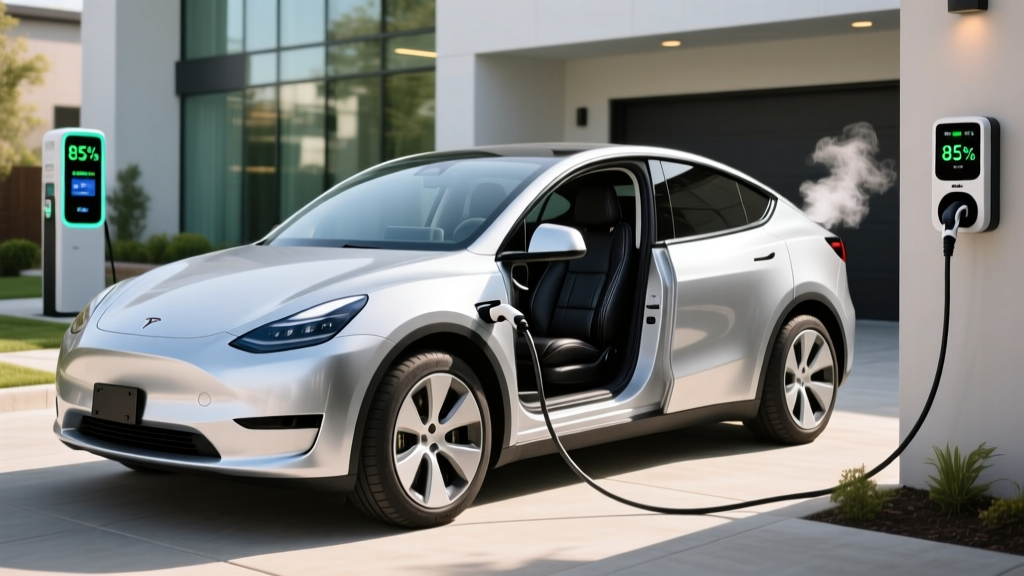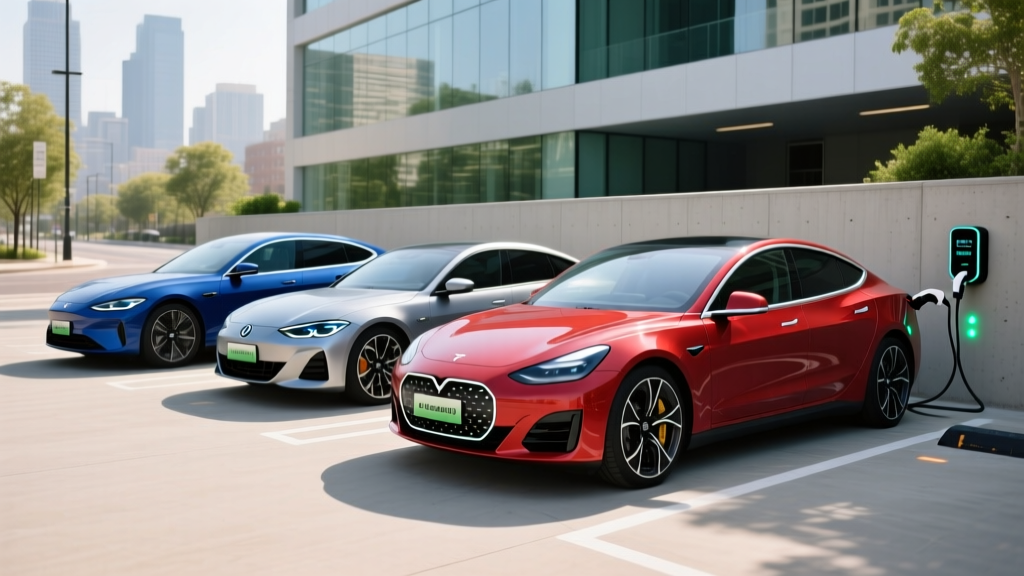
The wave of three-year leases signed in 2023 is crashing onto dealer lots right now. If you've been watching the electric vehicle market from the sidelines, off lease EVs in 2026 represent one of the most compelling entry points into electrified ownership we've seen. A lightly used Tesla Model Y, Hyundai Ioniq 5, or Ford Mustang Mach-E with 30,000 to 45,000 miles can now be had for 40% to 55% less than its original MSRP — and a subset of them still qualify for a federal tax credit that most new-car buyers don't know exists.
But buying a used EV is not the same calculus as buying a used gas car. Battery health, charging access, insurance premiums, and a patchwork of federal and state incentives all reshape the total cost of ownership (TCO). Below, we run the real numbers — the savings, the gotchas, and the exact math that determines whether an off-lease EV is the best financial move you can make in 2026.
The 2026 Off-Lease EV Market: What's Available and at What Price
Lease volumes exploded in 2023 as automakers used aggressive lease cash to move metal and comply with tightening CAFE standards. That means the 2026 off-lease pool is deep and diverse. Here's what you'll typically find at franchised dealers and auction sites like Manheim and ADESA:
- Tesla Model Y (2023): Long Range AWD, 310-330 mi EPA range, ~$27,000–$32,000 used (down from ~$52,990 MSRP)
- Hyundai Ioniq 5 (2023): SEL/Limited RWD or AWD, 266-303 mi EPA range, ~$24,000–$29,000 used
- Ford Mustang Mach-E (2023): Select/Premium ER AWD, 290-312 mi EPA range, ~$25,000–$31,000 used
- Volkswagen ID.4 (2023): Pro S AWD, 249-275 mi EPA range, ~$21,000–$26,000 used
- Kia EV6 (2023): Wind/GT-Line AWD, 274-310 mi EPA range, ~$26,000–$32,000 used
- Chevrolet Bolt EV/EUV (2023): 247-259 mi EPA range, ~$16,000–$20,000 used — the budget king
Prices vary by region, mileage, trim, and battery health. Always request the vehicle's State of Health (SoH) reading — a diagnostic metric most dealer service departments can pull from the BMS (battery management system). A healthy 2023 off-lease EV should show 92%–97% SoH. Anything below 88% warrants a price discount or a walk-away.
5-Year Total Cost of Ownership: The Full Breakdown
Sticker price is just the opening move. The real question is what you'll spend over five years of ownership. Below is a side-by-side comparison of a representative off-lease EV (a 2023 Hyundai Ioniq 5 SEL AWD, purchased at ~$26,500) versus a comparable new gas crossover (a 2026 Toyota RAV4 XLE AWD at ~$33,000 MSRP). Both driven 12,000 miles/year.
| Cost Category (5 Years / 60,000 mi) | Off-Lease Ioniq 5 AWD | New RAV4 XLE AWD |
|---|---|---|
| Purchase Price | $26,500 | $33,000 |
| Federal Tax Credit (§25E Used) | −$4,000 (if eligible) | $0 |
| Effective Purchase Cost | $22,500 | $33,000 |
| Fuel / Electricity (60k mi) | $3,240 (home charging avg) | $7,200 (gas at $3.00/gal, 28 MPG avg) |
| Maintenance | $1,100 | $3,400 |
| Insurance (5-yr total) | $9,600 | $7,800 |
| Depreciation (5-yr loss) | $9,800 | $12,500 |
| Total 5-Year Cost | $46,240 | $63,900 |
Assumptions: electricity at $0.14/kWh national average, Ioniq 5 efficiency at 3.0 mi/kWh (combined); gas at $3.00/gal, RAV4 at 28 MPG combined real-world. Insurance based on national EV average premium of ~$1,920/yr vs. ~$1,560/yr for gas equivalents (IIHS data). Depreciation estimated using Kelley Blue Book 5-year projections for each segment. Your numbers will vary by state, utility rate, and driving pattern.
The bottom line: even with higher insurance, the off-lease EV saves roughly $17,660 over five years in this scenario — and that gap widens further if you charge primarily on off-peak utility rates or have solar.
The Used EV Federal Tax Credit: §25E Explained (Up to $4,000)
Most buyers know about the new-vehicle §30D credit (up to $7,500). Fewer know about IRC §25E, the Previously-Owned Clean Vehicle Credit, which applies specifically to used EVs — including off-lease vehicles. Here's the precise eligibility framework as of 2026:
§25E Used EV Tax Credit Requirements
- Credit amount: 30% of the sale price, up to a maximum of $4,000
- Vehicle price cap: Sale price must be $25,000 or less — this is the hard ceiling
- Vehicle age: Must be at least 2 model years old (a 2023 model qualifies in 2026)
- Buyer income caps (MAGI): $75,000 single / $112,500 head of household / $150,000 married filing jointly
- Dealer requirement: Vehicle must be purchased from a licensed dealer (private-party sales do not qualify)
- Point-of-sale transfer: Yes — you can transfer the credit to the dealer at purchase, reducing your out-of-pocket cost immediately (same mechanism as §30D)
- First use rule: The credit can only be claimed once per vehicle (check the VIN — if a prior owner claimed it, you're ineligible)
- Claim frequency: One §25E credit per taxpayer every 3 years
- Battery sourcing/critical minerals: NOT required for §25E (unlike §30D for new vehicles)
Source: IRS.gov — Used Clean Vehicle Credit. Rules are current for 2026 but subject to legislative change. Always verify with a tax professional before relying on credit eligibility.
The $25,000 price cap is the critical constraint. A 2023 Ioniq 5 SEL listed at $24,900? Eligible. The same car at $25,500? Not eligible — and no amount of negotiation paperwork creativity can change that. This makes sub-$25,000 off-lease EVs like the Chevrolet Bolt EV/EUV, base VW ID.4, and well-priced Ioniq 5/Mach-E listings disproportionately valuable.
Charging vs. Gas: The Per-Mile Cost Reality
The single largest operational savings in EV ownership comes from fuel displacement. But the exact savings depend entirely on how and where you charge. Let's run three real scenarios against a 28 MPG gas crossover at $3.00/gallon:
| Charging Scenario | Rate | Cost per kWh | Cost per Mile* | vs. Gas (per mile) |
|---|---|---|---|---|
| Home Level 2 (national avg) | $0.14/kWh | $0.14 | $0.047 | $0.060 cheaper |
| Home Level 2 (off-peak / time-of-use) | $0.08/kWh | $0.08 | $0.027 | $0.080 cheaper |
| Public DC Fast Charging (avg) | $0.38/kWh | $0.38 | $0.127 | $0.020 more expensive |
| Gas Baseline (28 MPG, $3.00/gal) | — | — | $0.107 | — |
*Based on 3.0 miles per kWh (typical for an Ioniq 5 / Model Y class crossover). DC fast charging rates vary widely — Electrify America, EVgo, and Tesla Superchargers range from $0.28 to $0.58/kWh depending on location and membership.
Key takeaway: home charging is where the economics work. At the national average electricity rate, you'll spend roughly $0.047 per mile — less than half the cost of gas. But if you rely exclusively on public DC fast charging at $0.38/kWh average, you're actually spending more per mile than a fuel-efficient gas car. This is why home Level 2 charger installation (typically $500–$2,000 including equipment and electrician labor) is practically a prerequisite for EV ownership economics to pencil out.
Maintenance Savings: Where EVs Quietly Win
EVs eliminate most of the recurring maintenance costs that define gas-car ownership. No engine means no oil changes, no spark plugs, no timing belts, no exhaust system, and no multi-speed transmission fluid. Regenerative braking dramatically extends brake pad and rotor life — many EV owners report original brake pads at 80,000+ miles.
| Maintenance Item (per 60,000 mi) | EV Cost | Gas Car Cost |
|---|---|---|
| Oil Changes (6-8 over 60k mi) | $0 | $350–$600 |
| Brake Pads & Rotors | $0–$200 (regen extends life) | $600–$1,200 |
| Transmission Fluid/Service | $0 | $150–$400 |
| Coolant Flush | $100–$150 | $100–$150 |
| Cabin Air Filter | $40–$80 | $40–$80 |
| Tire Rotation & Replacement | $1,200–$1,800* | $900–$1,400 |
| Total Estimated (60k mi) | $1,340–$2,230 | $2,140–$3,830 |
*EVs tend to wear tires 15-25% faster than gas equivalents due to higher curb weight and instant torque. Budget for premium all-season or EV-specific tires (e.g., Michelin Pilot Sport EV, Hankook iON evo) at $200–$350 per tire.
Net maintenance savings over five years: roughly $1,500–$2,300. Not as dramatic as the fuel savings, but meaningful — and it compounds as the vehicle ages and gas-car maintenance costs accelerate.
The Insurance Reality: Why EVs Cost More to Insure
This is where the honest math diverges from the "EVs save you money everywhere" narrative. EV insurance premiums run 15%–25% higher than comparable gas vehicles, and the reasons are structural, not temporary:
- Higher repair costs: Battery packs, high-voltage wiring, and specialized sensors (cameras, radar, lidar) make collision repairs more expensive. A minor rear-quarter panel hit on an EV can total the car if the battery enclosure is compromised.
- Fewer qualified body shops: OEM-certified EV repair facilities are still limited, which drives up labor rates and cycle times.
- Higher vehicle values: Even used, off-lease EVs carry higher insured values than equivalent-age gas cars, increasing comprehensive and collision premiums.
- Total-loss frequency: Insurers are more likely to declare an EV a total loss after battery-adjacent damage, increasing claim payouts.
Average annual EV insurance premium in 2026: $1,800–$2,400 depending on model, state, and driver profile. A Tesla Model Y or Model 3 typically sits at the higher end; a Chevrolet Bolt or VW ID.4 tends toward the lower end. Always pull quotes from at least three insurers (including EV-friendly carriers like Lemonade, Root, and Progressive's EV-specific policies) before buying.
State, Local & Utility Incentives: The Variable Layer
Beyond the federal §25E credit, many states, municipalities, and electric utilities offer additional incentives for used EV purchases. These vary dramatically by jurisdiction and change frequently. Examples active in early 2026 include:
- California (CVRP): Up to $1,000–$4,500 for used EVs, income-dependent, for buyers at or below 400% of the federal poverty level
- Colorado: State tax credit of up to $3,500 for used EVs under $50,000 (stackable with federal)
- Utility rebates: Many utilities (PG&E, ConEdison, Xcel Energy, Austin Energy) offer $250–$1,000 rebates for used EV purchases or home charger installations
- HOV lane access: Several states still grant solo-occupant carpool lane access for EVs (check current state DMV rules — some have sunset or restricted this)
Always check your state's energy office website and your utility's EV program page for current incentive availability. These programs have funding caps and can close without notice.
Depreciation and Resale: The EV Value Curve in 2026
EV depreciation has been the industry's open wound. Early EVs (2018–2021 Nissan LEAF, early Bolt) suffered brutal value drops due to range obsolescence and battery degradation fears. The 2023 model year vehicles coming off lease now tell a different story:
- 2023 EVs have held 45%–58% of original MSRP at the 3-year mark, depending on model and trim. That's still below the gas-car average (~55%–62%) but significantly improved over earlier generations.
- Tesla Model Y leads retention in the segment (~55%–58% at 3 years), buoyed by Supercharger network access and strong brand demand.
- Hyundai/Kia E-GMP vehicles (Ioniq 5, EV6) retain ~48%–54%, supported by their 800V fast-charging architecture and strong EPA range figures.
- VW ID.4 and Ford Mach-E sit at ~42%–48%, partly due to higher initial lease volumes flooding the used market.
- Chevrolet Bolt EV/EUV retains ~50%–55% — its low original MSRP creates a floor that limits percentage-based depreciation.
If you buy an off-lease EV at $24,000 in 2026 and hold it for five years, expect a residual value of roughly $10,000–$14,000 (a loss of $10,000–$14,000). That depreciation curve is flattening as the used-EV buyer pool grows and battery longevity data becomes more robust. The 8-year / 100,000-mile battery warranty (federally mandated minimum) on most 2023 models still has 5+ years of coverage remaining when you buy off-lease — a significant safety net.
Frequently Asked Questions
How much does it really cost to own an off-lease EV over 5 years?
Based on our analysis, a typical off-lease EV purchased at ~$25,000 (after the §25E credit) and driven 12,000 miles/year costs roughly $44,000–$48,000 over five years including purchase, electricity, insurance, maintenance, and depreciation. That's $15,000–$20,000 less than a comparable new gas crossover over the same period, assuming you have access to home charging at average or below-average electricity rates.
Do I qualify for the used EV federal tax credit?
You qualify for the §25E credit (up to $4,000) if: the vehicle is at least 2 model years old, the sale price is $25,000 or less, you buy from a licensed dealer, and your modified adjusted gross income (MAGI) is at or below $75,000 (single), $112,500 (head of household), or $150,000 (married filing jointly). You can only claim this credit once every 3 years, and the vehicle's VIN must not have been previously used for a §25E claim. Consult IRS guidelines and a tax professional for your specific situation.
How much do I save on fuel and maintenance vs. a gas car?
Fuel savings: approximately $3,500–$4,500 over 5 years (60,000 miles) if you charge primarily at home at average electricity rates (~$0.14/kWh). Maintenance savings: approximately $1,500–$2,300 over 5 years, driven by eliminated oil changes, extended brake life from regenerative braking, and fewer mechanical systems. Combined: $5,000–$6,800 in operational savings. These figures erode if you rely heavily on public DC fast charging, which can cost $0.30–$0.58/kWh.
Are EVs more expensive to insure?
Yes. Expect to pay 15%–25% more for insurance on an EV compared to a similar gas vehicle — roughly $300–$600 more per year. The primary drivers are higher collision repair costs (battery and sensor-related), elevated total-loss rates, and a smaller pool of certified EV repair shops. Shop quotes aggressively; some insurers now offer EV-specific policies with competitive rates.
How well do off-lease EVs hold their value?
2023-model EVs coming off lease in 2026 have retained roughly 45%–58% of original MSRP at the 3-year mark — below the gas-car average but improving. If you buy at $24,000–$26,000 and hold for five years, expect a residual value of $10,000–$14,000. The remaining factory battery warranty (typically 8 years / 100,000 miles from original in-service date) provides buyer confidence that supports resale. Tesla and Hyundai/Kia models currently lead in retention within the EV segment.
Should I get a pre-purchase battery health check?
Absolutely. Before purchasing any off-lease EV, have the dealer or an independent EV-certified technician pull the battery's State of Health (SoH) via the OBD-II port or manufacturer diagnostic tool. A reading above 92% is normal for a 3-year-old EV with under 45,000 miles. Below 88%, negotiate a significant discount. Below 85%, walk away unless the price reflects an imminent battery replacement cost ($8,000–$18,000 depending on the model). Also verify the battery warranty transfer — it follows the vehicle, not the original owner, under federal mandate.