Quick Verdict: Two Very Different Paths to Smart EVs
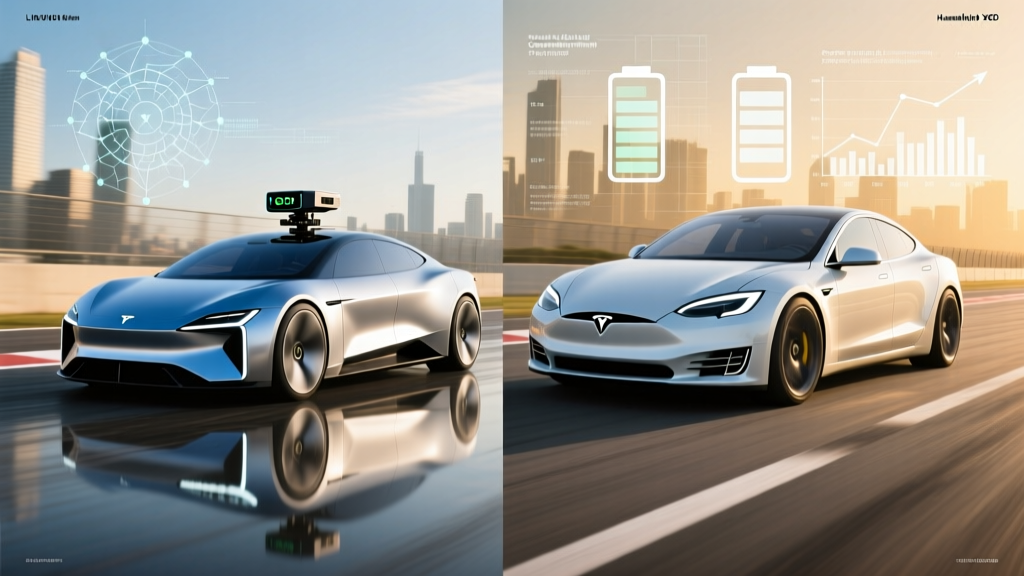
The phrase nvidia autonomy competition tesla captures one of the most consequential tech rivalries in the auto industry today. Tesla runs its own vertically integrated hardware (HW4) and software (FSD Supervised) stack, while Nvidia supplies its DRIVE Orin and next-generation Thor platforms to a growing coalition of automakers — including Mercedes-Benz, Hyundai/Kia, Jaguar Land Rover, and Volvo/Polestar. The result? Two fundamentally different ecosystems competing for the same buyer who wants an EV and advanced driver assistance.
This review breaks down the real-world ownership experience on both sides: the EVs that carry Nvidia's DRIVE platform versus Tesla's Model Y and Model 3. We'll cover range, charging, pricing, tax credits, and the autonomy tech itself — because buying a smart EV in 2026 means evaluating the silicon under the dash as much as the battery under the floor.
The Contenders: Tesla Model Y vs. Nvidia-Powered EVs
To make this comparison concrete, we're pitting the 2026 Tesla Model Y Long Range AWD against a representative Nvidia DRIVE Orin-equipped EV: the 2026 Hyundai Ioniq 5 Limited AWD. Hyundai's latest Ioniq 5 integrates Nvidia's DRIVE platform for its advanced ADAS suite, making it an ideal foil for Tesla's proprietary approach.
| Spec | Tesla Model Y LR AWD | Hyundai Ioniq 5 Limited AWD |
|---|---|---|
| EPA Range | 320 miles | 290 miles |
| Battery (usable) | 75 kWh (NMC) | 84 kWh (NMC, 4th-gen) |
| Peak DC Fast Charge | 250 kW | 240 kW (800V architecture) |
| 10–80% DC Charge Time | ~25 min | ~18 min |
| Level 2 Home Charge Rate | 11.5 kW (~44 mi/hr) | 10.9 kW (~39 mi/hr) |
| 0–60 mph | 4.8 sec | 5.1 sec |
| Horsepower | 384 hp | 320 hp |
| Drivetrain | Dual-motor AWD | Dual-motor AWD |
| EPA Efficiency | 117 MPGe (29 kWh/100mi) | 110 MPGe (31 kWh/100mi) |
| Cargo (rear seats up) | 30.2 cu ft (+ 4.1 cu ft frunk) | 27.2 cu ft (+ 0.85 cu ft frunk) |
| Cargo (rear seats folded) | 72.1 cu ft | 59.3 cu ft |
| Rear Legroom | 41.6 in | 39.4 in |
| Battery Warranty | 8 yr / 120,000 mi | 10 yr / 100,000 mi |
| ADAS Platform | Tesla HW4 (proprietary) | Nvidia DRIVE Orin |
| Base MSRP | $47,990 | $54,200 |
Real-World Range: What the EPA Sticker Doesn't Tell You
EPA vs. Reality
Tesla Model Y LR AWD: EPA 320 miles. Expect ~270–290 miles in mixed highway driving at 70–75 mph. In freezing temperatures (below 30°F), plan for 220–250 miles due to cabin heating and battery chemistry limitations.
Hyundai Ioniq 5 Limited AWD: EPA 290 miles. Expect ~245–265 miles highway. Cold weather drops this to ~200–225 miles. The Ioniq 5's heat pump (standard on Limited) partially mitigates winter losses compared to competitors without one.
Both vehicles use NMC (nickel manganese cobalt) battery chemistry, which offers higher energy density than LFP but is more sensitive to extreme cold. Tesla's slightly better efficiency (29 vs. 31 kWh/100mi) translates directly into its range advantage despite the smaller 75 kWh pack versus Hyundai's 84 kWh unit. For road-trippers who regularly cover 250+ miles between stops, the Model Y's efficiency edge matters. For urban commuters charging nightly at home, the gap narrows considerably.
Charging Speed: Where Nvidia's 800V Coalition Pulls Ahead
Charging speed is where the Nvidia-backed ecosystem makes its strongest case. Hyundai's E-GMP platform runs on an 800-volt architecture, which allows the Ioniq 5 to sustain higher charge rates longer through its curve. Tesla's Model Y, still on a 400V architecture, peaks at 250 kW but tapers more aggressively past 60% state of charge.
| Charging Level | Tesla Model Y LR AWD | Hyundai Ioniq 5 Limited AWD |
|---|---|---|
| Level 1 (120V / 12A) | ~1.4 kW — 4 mi/hr | ~1.4 kW — 4 mi/hr |
| Level 2 (240V / 48A) | 11.5 kW — 44 mi/hr | 10.9 kW — 39 mi/hr |
| DC Fast Charge (peak) | 250 kW | 240 kW |
| DC 10–80% Time | ~25 min | ~18 min |
| DC 10–80% Sustained Avg | ~155 kW | ~185 kW |
| Connector | NACS (native) | NACS (2025+ models) |
Key insight: Peak kW is a marketing number; sustained average kW is what determines how fast you actually charge. The Ioniq 5's 800V system sustains ~185 kW on average from 10–80%, while the Model Y averages ~155 kW over the same window. On a long road trip with multiple DC fast-charge stops, that 7-minute gap per stop adds up. Hyundai's 800V E-GMP platform remains one of the fastest-charging architectures available in 2026.
Both vehicles now use the NACS connector natively (Hyundai switched for the 2025 model year), giving both full access to Tesla's Supercharger network — currently over 25,000 stalls in North America — without an adapter.
Autonomy Tech Stack: Tesla HW4 vs. Nvidia DRIVE Orin
SAE Automation Level: Both Are Level 2
Tesla FSD (Supervised) and Nvidia-powered ADAS suites (like Hyundai's Highway Driving Assist 2+) are SAE Level 2 systems. That means the driver must remain fully engaged — hands on or near the wheel, eyes on the road — at all times. Neither system is "self-driving." True driverless operation (Level 4) is currently limited to geofenced robotaxi services like Waymo.
Tesla's Approach: Proprietary Vision-Only
Tesla's HW4 computer processes input from 8 cameras with no lidar, radar, or ultrasonic sensors. FSD (Supervised) handles highway lane changes, on-ramp-to-off-ramp navigation, city street turns, and traffic-light recognition. It's impressive in well-marked suburban and highway environments but can struggle with construction zones, faded lane markings, and unprotected left turns in heavy traffic. The $8,000 one-time purchase (or $99/month subscription) remains controversial given that Tesla itself labels it "Supervised."
Nvidia's Approach: Multi-Sensor Fusion via OEM Partners
Nvidia's DRIVE Orin platform (254 TOPS of compute) powers ADAS in multiple 2026 EVs. Hyundai pairs it with radar, cameras, and ultrasonic sensors in a sensor-fusion approach. The result is Hyundai's Highway Driving Assist 2 (HDA 2), which offers adaptive cruise, lane centering, and lane-change assist on divided highways. It's more conservative than FSD — no city-street navigation — but in our experience, it's also more predictable and less prone to disengagement events on the highway. HDA 2 comes standard on the Ioniq 5 Limited at no additional cost.
What Neither System Does:
- Drive without your supervision — you are legally and physically responsible
- Handle all weather conditions — heavy rain, snow, and fog degrade camera performance
- Replace attentive driving — NHTSA data shows Level 2 misuse contributes to crashes
- Work identically everywhere — performance varies by road type, marking quality, and region
Pricing, Trims, and Federal Tax Credit Eligibility
Both vehicles face the same shifting §30D federal tax credit landscape in 2026. Eligibility depends on MSRP caps, buyer income limits, and battery-component/critical-mineral sourcing requirements that have tightened since 2024.
| Tesla Model Y LR AWD | Hyundai Ioniq 5 Limited AWD | |
|---|---|---|
| Base MSRP | $47,990 | $54,200 |
| As-Tested (w/ ADAS) | $55,990 (FSD included) | $54,200 (HDA 2 standard) |
| §30D Credit Eligibility | Up to $7,500 (if sourcing reqs met) | Up to $7,500 (if sourcing reqs met) |
| Effective Price (max credit) | $40,490 | $46,700 |
| MSRP Cap (SUVs) | $80,000 — passes ✓ | $80,000 — passes ✓ |
| Income Cap (joint filers) | $300,000 AGI | $300,000 AGI |
| Point-of-Sale Transfer | Yes | Yes |
Critical caveat: The $7,500 credit is not guaranteed for every buyer. Under current IRS §30D rules, the credit is split into two $3,750 halves — one for battery-component manufacturing origin and one for critical-minerals sourcing. Both Tesla and Hyundai have worked to qualify, but supply-chain shifts mean eligibility can change month to month. Always verify on the DOE's fueleconomy.gov tax credit page before purchasing. Both vehicles qualify for point-of-sale transfer, meaning the dealer applies the credit as a down-payment reduction at purchase.
Pros, Cons, and Who Should Buy Which
Tesla Model Y LR AWD — Pros
- Best-in-class efficiency (117 MPGe / 29 kWh/100mi)
- 320-mile EPA range — longest in this comparison
- Largest Supercharger network (native NACS, no adapter)
- Most cargo space (72.1 cu ft folded + 4.1 cu ft frunk)
- OTA updates continuously add features
- FSD city-street capability (with supervision)
Tesla Model Y LR AWD — Cons
- $8,000 FSD cost adds significantly to total price
- Slower 10–80% DC charge time (~25 min vs 18 min)
- Minimalist interior lacks physical controls for some buyers
- Vision-only ADAS struggles in poor weather / construction zones
- Insurance premiums tend to run 15–25% higher than average
Hyundai Ioniq 5 Limited AWD — Pros
- Fastest 10–80% charge in class (~18 min, 800V)
- HDA 2 included at no extra cost on Limited trim
- Longer battery warranty (10 yr / 100,000 mi)
- Vehicle-to-load (V2L) powers devices at up to 3.6 kW
- Physical buttons and more conventional interior layout
- Multi-sensor fusion ADAS more predictable on highway
Hyundai Ioniq 5 Limited AWD — Cons
- Lower EPA range (290 mi) and efficiency (110 MPGe)
- Higher base MSRP ($54,200 vs $47,990)
- Less cargo room (59.3 cu ft folded)
- No city-street automated driving capability
- Smaller frunk (0.85 cu ft — barely fits a charging cable)
Choose the Tesla Model Y if:
- You prioritize maximum range and cargo space
- You regularly road-trip and value Supercharger density
- You want city-street ADAS capability and accept the supervision requirement
- You prefer a minimalist, screen-centric cabin
Choose the Hyundai Ioniq 5 (Nvidia DRIVE) if:
- Fast DC charging speed is your top priority
- You want ADAS included at no extra cost
- You value a 10-year battery warranty and V2L capability
- You prefer physical controls and a more traditional interior
Ownership Economics: 5-Year Cost Snapshot
Beyond MSRP, total cost of ownership (TCO) separates these two. Here's a 5-year / 75,000-mile estimate assuming $0.15/kWh home electricity, 80% home / 20% DCFC charging mix, and current insurance averages:
| Cost Category | Tesla Model Y LR AWD | Hyundai Ioniq 5 Limited AWD |
|---|---|---|
| Purchase (after max credit) | $40,490 | $46,700 |
| FSD / ADAS Cost | $8,000 | $0 (included) |
| 5-Yr Charging (est.) | $3,240 | $3,465 |
| 5-Yr Insurance (est.) | $11,250 | $8,750 |
| Maintenance (5 yr) | $1,800 | $2,100 |
| Est. 5-Yr Depreciation | $16,500 | $18,200 |
| Est. 5-Yr Total | $81,280 | $79,215 |
The Ioniq 5 edges out on 5-year TCO primarily because ADAS is bundled and insurance costs less. The Model Y's efficiency advantage saves ~$225 in charging over 5 years, but that's dwarfed by the $2,500 insurance gap and the $8,000 FSD add-on. Remove FSD from the equation and the Model Y's TCO drops to ~$73,280 — a clear win.
Frequently Asked Questions
What is the real-world range of these EVs?
The Tesla Model Y LR AWD delivers ~270–290 real-world highway miles (EPA 320). The Hyundai Ioniq 5 Limited AWD delivers ~245–265 real-world highway miles (EPA 290). Cold weather (below 30°F) reduces both by 15–25%. City driving with regenerative braking recovers some efficiency, often exceeding EPA estimates at lower speeds.
How fast does each EV charge at home and on the road?
At home on a Level 2 (240V) charger, the Model Y adds ~44 miles per hour (11.5 kW) and the Ioniq 5 adds ~39 miles per hour (10.9 kW). On DC fast chargers, the Ioniq 5 charges 10–80% in ~18 minutes (sustaining ~185 kW average) while the Model Y takes ~25 minutes (sustaining ~155 kW average). Both use the NACS connector natively in 2026.
How much does each cost after federal tax credits?
With the maximum $7,500 §30D credit applied at point of sale, the Tesla Model Y LR AWD drops to ~$40,490 and the Hyundai Ioniq 5 Limited AWD to ~$46,700. However, eligibility depends on your AGI (under $300,000 for joint filers), the vehicle's MSRP (under $80,000 for SUVs — both pass), and battery sourcing compliance. Always verify current eligibility on IRS.gov and fueleconomy.gov before purchase.
Is Tesla's FSD better than Nvidia-powered ADAS?
It depends on your use case. Tesla FSD (Supervised) covers more scenarios — including city streets, turns, and traffic-light response — but at an $8,000 cost and with more frequent disengagement events. Nvidia DRIVE Orin-powered systems like Hyundai's HDA 2 are more conservative (highway-only) but more predictable, come standard at no extra cost, and use multi-sensor fusion (camera + radar) for better redundancy. Neither is self-driving — both are SAE Level 2 requiring full driver attention.
Does the Nvidia autonomy ecosystem threaten Tesla's lead?
Nvidia's strategy is platform-level: it supplies the silicon and software framework to dozens of automakers, creating a broad coalition. Tesla's advantage remains vertical integration — it controls hardware, software, charging network, and data collection from millions of vehicles. In 2026, Tesla leads in autonomy feature breadth (city streets), while the Nvidia coalition leads in charging speed (800V), sensor redundancy, and multi-brand availability. The competition benefits buyers on both sides through rapid iteration.
Which EV is best for road trips vs. commuting?
For road trips: the Tesla Model Y wins on range (320 mi EPA) and Supercharger network density, though the Ioniq 5's faster charging partially compensates on routes with good DCFC coverage. For daily commuting: the Ioniq 5's bundled ADAS, lower insurance, and V2L capability make it a strong choice, especially if you charge at home overnight and rarely need the extra 30 miles of range.