Why Norwalk Tesla Buyers Keep Choosing the Model Y
If you've driven down I-95 through Fairfield County or navigated the Route 1 corridor in Norwalk, Connecticut, you've almost certainly spotted a Tesla Model Y. It's the default EV for suburban commuters in this stretch of southern Connecticut — close enough to New York City for regular trips, far enough out to make home charging practical. The Norwalk Tesla Service Center and nearby Supercharger infrastructure make ownership here more seamless than in most of the Northeast.
But does the 2026 Tesla Model Y actually deliver on its EPA range sticker when you're dealing with Connecticut winters, highway-speed commuting, and real-world charging? We've spent significant time with the current-generation Model Y (the "Juniper" refresh) to give you exact numbers — not marketing fluff.
2026 Tesla Model Y: Core Specifications
| Spec | Value |
|---|---|
| EPA Estimated Range | 320 miles |
| Battery Capacity | ~75 kWh usable (NMC chemistry) |
| Drivetrain | Dual-motor AWD |
| Horsepower | 384 hp (combined) |
| 0–60 mph | 4.8 seconds |
| Peak DC Fast Charge | 250 kW |
| 10–80% DC Charge Time | ~25 minutes |
| Level 2 Home Charging | 11.5 kW (~44 mi/hr) |
| EPA Efficiency | 122 MPGe combined / 27 kWh/100mi |
| Cargo Volume | 30.2 cu ft (rear seats up) / 72.1 cu ft (folded) |
| Base MSRP | $44,990 (Long Range AWD) |
| Warranty (Battery) | 8 years / 120,000 miles |
Source: fueleconomy.gov and Tesla.com official specs.
Real-World Range: What the EPA Sticker Doesn't Tell You
EPA Estimate: 320 miles
Real-World Highway (70–75 mph, moderate temps): ~265–285 miles
Real-World City/Suburban (mixed regen): ~295–310 miles
Connecticut Winter (30°F and below, highway): ~210–240 miles
Cold weather range loss of 25–35% is typical for NMC batteries at highway speeds. Using seat heaters and preconditioning helps recover 5–10%.
The Model Y Long Range's 320-mile EPA figure is achievable in ideal conditions — moderate temperatures, 55–60 mph suburban driving with frequent regen braking opportunities. But Norwalk commuters regularly hit I-95 at 70+ mph, and that's where aerodynamic drag eats into range. Expect roughly 270 miles of usable range on a warm-weather highway run to New Haven or Stamford.
Winter is the bigger concern in southern Connecticut. When temperatures drop below freezing, the NMC battery's internal resistance increases and cabin heating demands energy. On a January drive from Norwalk to Hartford (roughly 90 miles), you'll use closer to 40% of the battery rather than the 28% you'd expect from the EPA sticker. Preconditioning the battery while still plugged in at home is essential — it warms the pack and reduces the efficiency penalty once you're on the road.
Charging Speeds: Supercharger Network and Home Setup
One of the strongest arguments for buying a Tesla in the Norwalk area is charging infrastructure density. The Norwalk Supercharger station (near the SoNo Collection) and additional stalls in Stamford, Westport, and Milford mean you're rarely more than 15 minutes from a DC fast charger.
| Charging Level | Power (kW) | Miles Added per Hour | Typical Use Case |
|---|---|---|---|
| Level 1 (120V household) | ~1.4 kW | ~3–5 mi/hr | Emergency/trickle only |
| Level 2 (240V, Wall Connector) | 11.5 kW | ~44 mi/hr | Daily home charging |
| DC Fast (Tesla V3 Supercharger) | Up to 250 kW peak | ~1,000+ mi/hr (peak) | Road trips, quick top-ups |
| DC Fast (V4 Supercharger) | Up to 250 kW | Similar, improved cable | Newer stations |
Charging curve reality: The Model Y peaks at 250 kW only when the battery is preconditioned and at a low state of charge (roughly 10–20%). Sustained charging from 10–80% averages closer to 140–160 kW, taking about 25 minutes at a V3 Supercharger. Above 80% SoC, the charge rate tapers sharply to protect the NMC cells — expect 80–100% to take an additional 20+ minutes. For daily driving, charging to 80% at home on a Level 2 Wall Connector is the sweet spot for battery longevity.
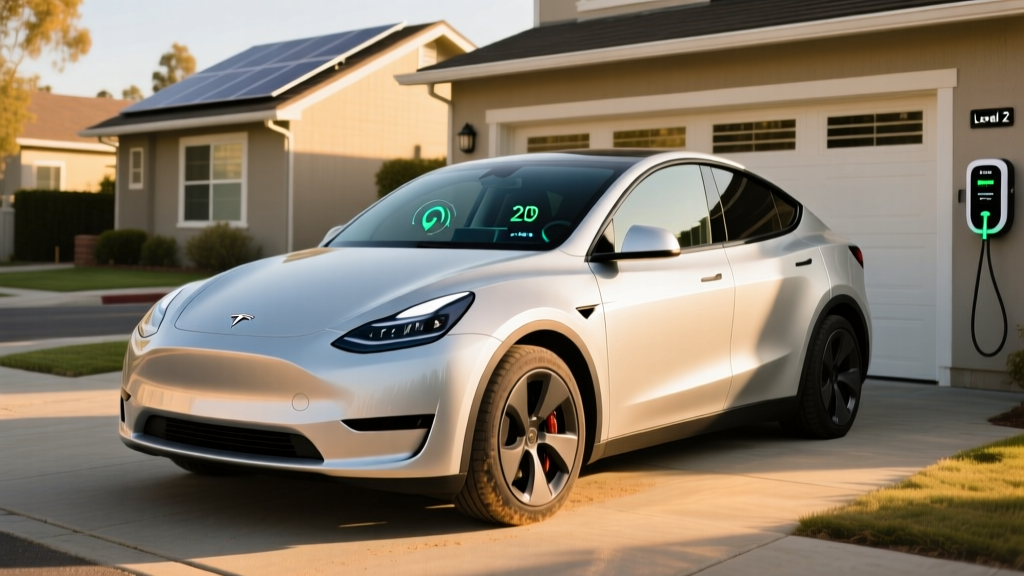
For Norwalk homeowners, installing a Tesla Wall Connector on a 60-amp circuit (48-amp continuous) delivers the full 11.5 kW. Most Fairfield County homes with 200-amp electrical panels can accommodate this, though older homes along the Norwalk River corridor may need a panel upgrade — budget $1,500–$3,000 for that work with a licensed electrician.
Pricing, Trims, and Federal Tax Credit Eligibility
| Trim | Base MSRP | Est. Price After §30D Credit* |
|---|---|---|
| Long Range AWD | $44,990 | ~$37,490 |
| Performance AWD | $48,990 | ~$41,490 |
*Federal tax credit eligibility depends on multiple factors. See checklist below.
- MSRP Cap: Vehicle must be under $80,000 for SUVs/crossovers — Model Y qualifies ✓
- Buyer Income Cap: AGI must not exceed $150,000 (single) / $300,000 (joint) — check your tax situation
- Battery Sourcing: Critical minerals and battery components must meet escalating domestic-content thresholds — Tesla's North American supply chain has largely adapted, but verify current-year compliance at IRS.gov qualified vehicle list
- Point-of-Sale Transfer: You can transfer the credit to the dealer at purchase for an immediate price reduction, or claim it on your tax return
- VIN Requirement: Vehicle must be assembled in North America — Model Y (Fremont/Austin) qualifies ✓
Rules change frequently. Consult a tax professional and verify on the IRS clean vehicle credit page before purchasing.
For most Norwalk-area buyers filing jointly with AGI under $300,000, the Model Y Long Range at roughly $37,500 after the credit represents strong value for a 320-mile AWD crossover. Connecticut also offers a CHEAPR rebate program that may stack additional savings — check current availability with your dealer.
Performance, Efficiency, and Daily Driving
The dual-motor AWD Model Y delivers 384 horsepower and a 4.8-second 0–60 mph time — more than adequate for merging onto I-95 or navigating the Merritt Parkway. The instant torque from the dual motors makes it feel quicker than the numbers suggest, particularly in the 0–30 mph range where most suburban driving happens.
Efficiency is where Tesla's engineering advantage shows. At 122 MPGe combined (27 kWh/100mi), the Model Y is one of the most efficient AWD electric crossovers on the market. For context, that translates to roughly $0.045–$0.055 per mile when charging at home on Eversource's standard Connecticut residential rate (~$0.22/kWh). Compare that to a 25 MPG gas crossover at $3.40/gallon — about $0.136 per mile. Over 15,000 annual miles, the Model Y saves roughly $1,200–$1,400 in fuel costs alone.
The regenerative braking system is aggressive enough for true one-pedal driving in most conditions, though the latest software update allows some creep customization. On Norwalk's hilly residential streets west of the highway, regen recovers meaningful energy on downhill stretches.
Interior, Cargo, and Technology
The Juniper-refreshed Model Y interior is noticeably quieter and more refined than pre-2025 models. Ambient lighting, ventilated front seats, and a rear-seat touchscreen improve the experience. The minimalist design still divides opinions — there are no physical buttons, and climate/seat controls live entirely on the 15.4-inch center touchscreen.
Cargo practicality: With 30.2 cubic feet behind the second row and 72.1 cu ft with seats folded, the Model Y handles Costco runs and luggage for a family of four comfortably. The front trunk (frunk) adds roughly 4.1 cu ft for charging cables or a small bag. Rear legroom is 41.6 inches — adequate for adults on longer drives to the Berkshires or Cape Cod.
Standout tech:
- 15.4-inch center touchscreen with fast response and OTA updates
- Autopilot standard (SAE Level 2 — driver must remain engaged at all times)
- Full Self-Driving (Supervised) available as a $8,000 add-on or $99/month subscription — still Level 2, not autonomous
- Sentry Mode, Dashcam, and Dog Mode included
- Tesla app with remote preconditioning, charging status, and location
Tesla Autopilot and FSD (Supervised) are SAE Level 2 driver-assistance systems. You must keep your hands on the wheel and eyes on the road at all times. These are not self-driving systems. Level 4 autonomous driving (no driver required) is currently only available through robotaxi services like Waymo in limited metro areas.
Pros, Cons, and the Competition
- Best-in-class Supercharger network reliability
- 320-mile EPA range with strong efficiency
- 250 kW peak DC fast charging
- Class-leading cargo volume for the segment
- Over-the-air updates continuously add features
- Strong resale value relative to EV competitors
- Norwalk-area Supercharger and service density
- No physical buttons — all controls via touchscreen
- Ride quality is firm on rough CT roads
- NMC battery requires 80% daily charge limit for longevity
- Insurance premiums 15–25% higher than gas equivalents
- FSD subscription adds cost without full autonomy
- Cold-weather range loss significant at highway speeds
How It Compares
The Model Y Long Range competes directly with the Hyundai Ioniq 5 (310-mile range, 350 kW peak charging on 800V architecture), Ford Mustang Mach-E Extended Range (320 miles, CCS charging), and the newer Chevrolet Equinox EV (315 miles, lower price). The Model Y's edge in the Norwalk market is the Supercharger network — while CCS competitors have improved via Electrify America and EVgo, Tesla's connector reliability and stall availability remain measurably better on I-95 corridor routes.
However, if you want faster peak charging (350 kW vs 250 kW) and a more traditional interior with physical controls, the Ioniq 5 is a serious alternative. And if NACS adoption matters to you, most 2025+ competitors now include NACS ports or adapters.
Who Should Buy the Model Y in Norwalk?
Choose the Model Y if: You commute on I-95, value Supercharger reliability for NYC/Boston trips, need cargo space for a family, and can install Level 2 at home.
Consider alternatives if: You want physical interior controls (Ioniq 5), need over 350 miles of range (no current crossover delivers this), or your budget is under $35,000 (look at used EVs or the Equinox EV).
Best use case: Suburban commuter with home charging, 20–40 mile daily round trip, occasional 150–250 mile road trips within the Northeast corridor.
Frequently Asked Questions
What is the real-world range of the 2026 Model Y?
Expect 265–285 miles on the highway in warm weather, 295–310 miles in suburban driving, and 210–240 miles in Connecticut winter highway conditions. The 320-mile EPA estimate assumes ideal mixed driving.
How fast does the Model Y charge at home and on the road?
At home on a Level 2 Wall Connector (11.5 kW), you'll add about 44 miles of range per hour — a full overnight charge from 20% to 80% takes roughly 5 hours. On a V3 Supercharger, 10–80% takes about 25 minutes at peak rates.
Does the Model Y qualify for the $7,500 federal tax credit?
The Model Y qualifies on MSRP (under $80,000 SUV cap) and North American assembly. Buyer income must be under $150K single / $300K joint, and battery sourcing must meet 2026 thresholds. Verify on the IRS qualified vehicles list before purchasing.
Is the Model Y worth it versus the Ioniq 5 or Mach-E?
For Norwalk-area buyers who prioritize charging network reliability and cargo space, the Model Y remains the benchmark. The Ioniq 5 charges faster on compatible infrastructure and offers a more conventional interior. The Mach-E is competitive but has a smaller Supercharger-equivalent network.
What does the Norwalk Tesla Service Center offer?
The Norwalk service location handles routine maintenance, warranty work, and mobile service dispatch. Tesla's mobile service covers most minor repairs at your home or office — a significant convenience advantage over traditional dealership service bays.
How long will the Model Y battery last?
Tesla warranties the battery for 8 years or 120,000 miles (whichever comes first) with a minimum 70% capacity retention. Real-world data from high-mileage Tesla owners suggests NMC packs typically retain 85–90% capacity at 100,000 miles when charged to 80% daily and avoiding frequent 100% charges.