Nissan's Off-Road EV Gambit: What the New Xterra Electrification Plans Mean for Buyers
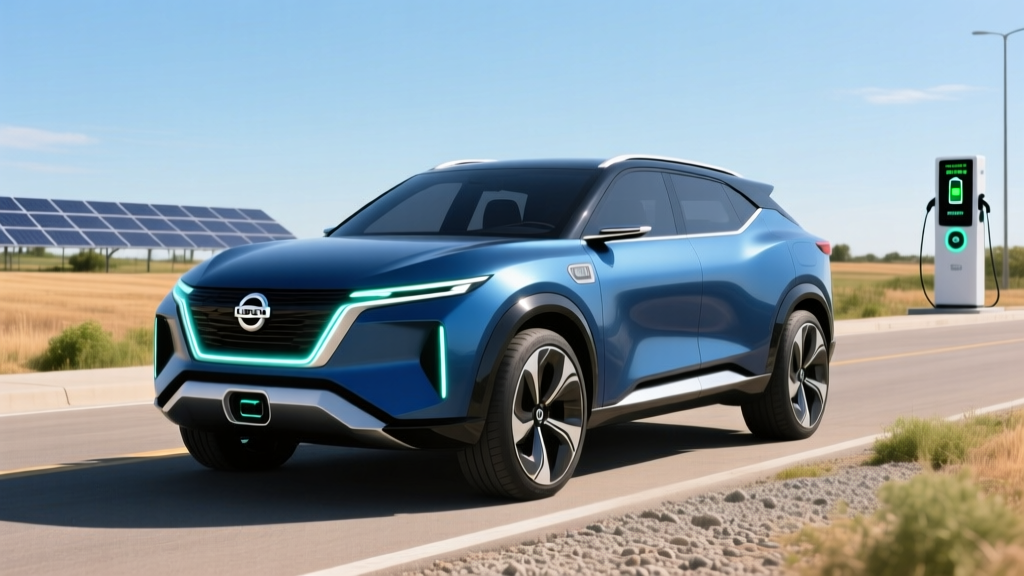
When Nissan confirmed it was exploring a return of the Xterra nameplate with an electrified powertrain, it set the off-road community buzzing. The original Xterra (2000–2015) was a rugged, body-on-frame SUV built for trails, not carpool lanes. Now, as part of Nissan's broader Ambition 2030 roadmap, the company has signaled that a new Xterra could arrive as a plug-in hybrid or fully electric model — blending trail capability with modern efficiency.
Here's everything we know about Nissan's Xterra electrification plans as of early 2026, what the specs might look like, and how a potential electric Xterra would stack up against the Ford Bronco, Jeep Wrangler 4xe, and Toyota 4Runner.
Expected Platform and Powertrain: CMF-EV or e-Power?
Nissan has not confirmed whether the new Xterra will be a battery-electric vehicle (BEV) or a plug-in hybrid (PHEV). Industry analysts point to two likely scenarios:
- BEV variant on CMF-EV platform: The same modular skateboard architecture underpinning the Ariya crossover, potentially stretched for a larger, body-on-frame-style SUV with reinforced underbody protection.
- PHEV variant using e-Power or a conventional plug-in setup: Nissan's e-Power series-hybrid system (where the gas engine acts as a generator, not directly driving the wheels) could offer electric-like torque with range security for remote trails.
Nissan's Ambition 2030 plan commits the company to launching 19 new EVs by 2030, with several targeted at the SUV and truck segments in North America. An electrified Xterra fits squarely in that strategy.
| Specification | BEV Estimate | PHEV Estimate |
|---|---|---|
| Battery Capacity | ~90 kWh usable (NMC) | ~20–25 kWh (NMC) |
| EPA Est. Range | ~260–290 mi | ~35–45 mi electric + gas range |
| Horsepower | ~340–390 hp (dual-motor AWD) | ~280–320 hp combined |
| 0–60 mph | ~5.5–6.5 sec | ~6.5–7.5 sec |
| Drivetrain | Dual-motor AWD (e-4ORCE) | AWD with rear e-motor |
| Max DC Fast Charge | ~130–150 kW (CCS/NACS) | ~50 kW |
| 10–80% DC Charge Time | ~35–40 min | ~25–30 min |
| Level 2 Home Charge Rate | ~7.2 kW (~22 mi/hr) | ~3.6 kW (~12 mi/hr EV range) |
| Est. Base MSRP | ~$48,000–$55,000 | ~$42,000–$48,000 |
Sources: Estimates derived from Nissan Ariya platform data, fueleconomy.gov, and industry analysis. Final specs pending manufacturer confirmation.
Real-World Range: What to Actually Expect
If the Xterra BEV arrives with a ~90 kWh NMC battery and an EPA rating near 280 miles, real-world results will depend heavily on how you drive it. Boxy, off-road-oriented SUVs carry an aerodynamic penalty — the Jeep Wrangler 4xe and Ford Bronco both sacrifice efficiency for upright styling and ground clearance.
EPA sticker: ~280 miles
Highway (70 mph, moderate temps): ~230–250 miles
Cold weather (below 32°F, highway): ~190–210 miles
Off-road/low-speed trail use: Highly variable — expect 200–240 mi equivalent
The key factor here is aero drag. A brick-shaped SUV with roof rails, all-terrain tires, and a lifted suspension can lose 15–25% of its EPA range at sustained highway speeds compared to a sleeker crossover like the Ariya. Cold weather compounds this, as battery chemistry slows and cabin heating draws additional energy. Nissan's e-4ORCE system includes a heat pump on the Ariya, and we'd expect the same on a production Xterra BEV — which mitigates some cold-weather loss.
For the PHEV variant, 35–45 miles of electric-only range would cover most daily commutes, with the gas engine providing unlimited range for remote trail access — a significant advantage for buyers who regularly venture beyond charging infrastructure.
Charging Speed and Infrastructure
Charging speed is where an off-road EV faces its toughest practical challenge. Remote trailheads rarely have DC fast chargers nearby, making home charging and route planning essential.
| Charging Level | Power | Miles Added | Notes |
|---|---|---|---|
| Level 1 (120V) | ~1.4 kW | ~3–4 mi/hr | Emergency/trickle only |
| Level 2 (240V home) | 7.2 kW | ~22 mi/hr | Full charge in ~12–13 hrs |
| DC Fast Charge | Up to 150 kW (peak) | ~150 mi in 30 min | 10–80% in ~35–40 min; tapers above 80% |
Nissan's current Ariya peaks at approximately 130 kW on DC fast chargers using CCS (or NACS on 2026 models with adapter/native port). The charge curve is moderate — it holds strong through 50% SoC but tapers noticeably above 80%, which is typical for NMC chemistry prioritizing longevity over peak speed.
For off-road buyers, the critical question is whether Nissan will equip the Xterra with preconditioning for fast charging. On the Ariya, battery preconditioning warms the pack to optimal temperature before arriving at a DC charger, reducing charge times in cold weather. We expect this feature to carry over — it's essential for winter trail trips.
The PHEV variant's smaller battery would charge much faster on Level 2 — a full 0–100% charge in roughly 2.5–3 hours on a standard 240V/32A home charger.
Performance, Capability, and Off-Road Tech
The original Xterra's appeal was its rugged simplicity: body-on-frame construction, a locking rear differential, and generous ground clearance. An electrified successor would need to honor that heritage while leveraging electric drivetrain advantages.
Nissan's e-4ORCE dual-motor AWD system (already in the Ariya) provides precise torque vectoring between front and rear axles. In a trail-rated Xterra, we'd expect:
- Estimated ground clearance: 9.0–10.0 inches (critical for rock clearance and approach/departure angles)
- Torque: 400–450 lb-ft (dual-motor BEV), available from 0 rpm — a significant off-road advantage over gas engines
- Towing capacity: ~3,500–5,000 lbs (estimated; EVs can tow but range drops 30–50% under load)
- Skid plates and underbody protection: Essential for any Xterra-badged vehicle, especially to protect the battery pack
- Drive modes: Sand, Mud, Rock, Snow — with one-pedal regen modes for controlled downhill descent
The instant torque of an electric drivetrain is a genuine off-road advantage. Electric motors deliver maximum torque at zero RPM, allowing precise low-speed crawling without the lag of a turbocharged gas engine. The Rivian R1S and Hummer EV have already demonstrated that electric off-roaders can be highly capable — Nissan would be competing in a space with proven benchmarks.
Pricing, Trims, and Federal Tax Credit Eligibility
Nissan has not announced official pricing, but based on the Ariya's positioning ($43,000–$60,000) and the competitive landscape, we estimate the following:
| Trim | Est. MSRP (BEV) | Est. MSRP (PHEV) | §30D Credit Eligibility |
|---|---|---|---|
| S (Base) | ~$48,000 | ~$42,000 | TBD — depends on battery sourcing |
| SV (Mid) | ~$52,000 | ~$46,000 | TBD |
| PRO-4X (Off-Road) | ~$57,000 | ~$51,000 | TBD |
| Platinum (Top) | ~$62,000 | — | TBD |
Federal tax credit outlook: Under current IRS §30D rules, a new Xterra BEV could qualify for up to $7,500 if it meets battery component and critical mineral sourcing requirements, stays under the $80,000 SUV MSRP cap, and the buyer meets income thresholds ($150K single / $300K joint). The PHEV variant, if it qualifies as a "new clean vehicle" with at least 7 kWh of battery capacity, could also be eligible. Nissan's battery sourcing will be the deciding factor — the company has been working to localize battery production in Tennessee, which bodes well for credit eligibility. However, final determination cannot be made until Nissan certifies the vehicle with the IRS. The credit can be applied as a point-of-sale reduction through a registered dealer.
Interior, Tech, and Cargo
The Xterra will need to balance ruggedness with the tech expectations of 2026 SUV buyers. Based on Nissan's current design language and competitive pressure:
- Infotainment: 12.3-inch touchscreen with wireless Apple CarPlay/Android Auto, over-the-air updates
- Driver assistance: Nissan ProPILOT 2.0 (SAE Level 2) with highway hands-free capability on mapped roads — note that the driver must remain attentive and engaged at all times
- Off-road displays: Inclinometer, compass, wheel articulation readout, trail camera system
- Cargo space (estimated): ~35–40 cu ft behind second row, ~70–75 cu ft with seats folded
- Roof rack: Expected, with integrated tie-downs and accessory rails (a hallmark of the original Xterra)
- Frunk (BEV only): Possible front trunk for gear storage, ~2–3 cu ft
Nissan's ProPILOT system is a competent Level 2 driver-assist feature — it handles lane centering and adaptive cruise well on highways, but it is not a self-driving system. The driver must keep hands on or near the wheel and maintain full situational awareness.
Warranty and Battery Longevity
Nissan currently offers the following coverage on the Ariya, which we expect to carry over:
- Battery warranty: 8 years / 100,000 miles (capacity retention guaranteed above ~66–70%)
- Powertrain warranty: 5 years / 60,000 miles
- Bumper-to-bumper: 3 years / 36,000 miles
NMC battery chemistry (expected for the BEV variant) typically shows 10–15% degradation over 100,000 miles based on industry data. LFP chemistry would offer better cycle life but lower energy density — a trade-off that matters for an SUV where range is already challenged by aerodynamics. Nissan's choice of NMC likely reflects the need to maximize range in a heavy, boxy vehicle.
Pros and Cons
- Instant electric torque ideal for off-road crawling
- Heritage nameplate with loyal following
- ProPILOT 2.0 highway assist included
- Potential §30D tax credit eligibility
- PHEV option solves range anxiety for remote trails
- Boxy shape hurts highway efficiency and real-world range
- Charging infrastructure scarce near remote trailheads
- Towing will significantly reduce BEV range
- DC fast charge speed (~130–150 kW) trails Hyundai/Kia 800V platforms
- Unreleased — timeline and final specs uncertain
How It Compares: Xterra vs. Key Competitors
The electrified Xterra wouldn't enter an empty segment. Here's how it would stack up against current off-road-capable electrified SUVs:
- Jeep Wrangler 4xe (PHEV): ~21 mi electric range, ~49 MPGe, $52,000+. Proven trail machine but limited EV-only range and aging platform.
- Ford Bronco (gas only, currently): No electrified variant yet, but Ford has signaled PHEV plans. Gas Bronco starts ~$39,000.
- Toyota 4Runner (2025+ turbo hybrid i-FORCE MAX): Hybrid but not plug-in. ~24 MPG combined, strong reliability reputation, $42,000+.
- Rivian R1S (BEV): ~340–410 mi EPA range, $75,000+. Premium pricing but best-in-class EV off-road capability.
The Xterra's opportunity is the $45,000–$55,000 price bracket — more accessible than the Rivian, more electric range than the Wrangler 4xe, and with heritage credibility the Bronco's EV plans haven't yet matched.
Who Should Wait for the Electric Xterra?
This EV suits you if:
- You want a mid-size SUV with genuine off-road capability and daily EV efficiency
- You can charge at home (Level 2) and your trail trips are within ~150 miles of home or a charger
- You prefer the PHEV option for unlimited range on remote adventures
- You value Nissan's dealer network and service accessibility over boutique EV brands
Look elsewhere if:
- You need maximum highway range (the Rivian R1S or a Tesla Model Y will outperform a boxy Xterra)
- You regularly tow heavy loads over long distances (EV towing range loss remains significant)
- You need a vehicle now — the Xterra is not yet available for purchase
Frequently Asked Questions
What is the real-world range of the electrified Nissan Xterra?
For the BEV variant, we estimate ~280 miles EPA, with real-world highway driving yielding approximately 230–250 miles in moderate temperatures, and 190–210 miles in cold weather. The PHEV variant would offer 35–45 miles electric-only plus unlimited gas range. These are preliminary estimates pending official EPA certification.
How fast does the Xterra charge?
The BEV variant is estimated to peak at ~130–150 kW on DC fast chargers, reaching 10–80% in approximately 35–40 minutes. Home Level 2 charging at 7.2 kW would add about 22 miles per hour. The PHEV variant would charge its smaller battery in roughly 2.5–3 hours on Level 2.
Does the Nissan Xterra qualify for the federal EV tax credit?
Eligibility under IRS §30D depends on battery component sourcing, critical mineral requirements, MSRP caps ($80,000 for SUVs), and buyer income limits ($150K single / $300K joint). Nissan's Tennessee battery production suggests a reasonable chance of eligibility, but final determination requires IRS certification at launch. Consult a tax professional and check IRS guidance before making a purchase decision.
Is the Xterra worth waiting for vs. buying a Wrangler 4xe or Bronco now?
If you need a vehicle immediately, the Wrangler 4xe is available now with proven trail capability. If you can wait and want more electric-only range (or a full BEV option) with Nissan's pricing and dealer network, the Xterra is worth monitoring. Final specs, pricing, and timeline will clarify the decision.
When will the new Nissan Xterra be available?
Nissan has not confirmed a specific launch date. Based on the company's product cadence and Ambition 2030 timeline, industry analysts expect a reveal in late 2026 or 2027, with deliveries potentially beginning in 2028. We will update this article as Nissan provides official information.
This article will be updated as Nissan releases confirmed specifications, pricing, and availability for the new Xterra. Last updated: early 2026.