The Quick Answer: Can You Buy a Nissan Skyline Electric?
Not yet, and likely not in the US anytime soon. As of early 2026, the Nissan Skyline Electric remains an announced concept vehicle previewed by Nissan in late 2024 as part of its mid-term electrification strategy. It is based on Nissan's upcoming modular EV platform and is expected to debut as a production model in Japan no earlier than the 2027 model year. No US-market release has been confirmed. If you are searching for a Nissan electric sedan you can actually buy today, the closest available option is the Nissan Ariya, a crossover SUV with up to 304 miles of EPA range starting around $39,590. This guide covers everything we know about the Skyline Electric concept, what the ownership math would look like, and how to prepare if Nissan eventually brings it stateside.
What Is the Nissan Skyline Electric? Concept vs. Production Reality
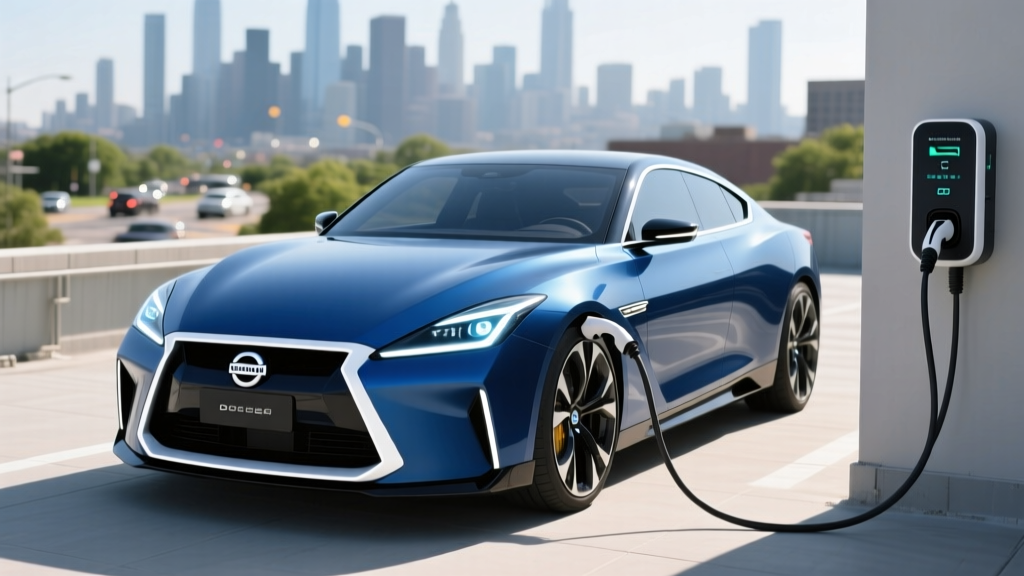
The "Skyline" nameplate carries enormous heritage weight — it is the predecessor to the modern Infiniti Q-series and the legendary GT-R lineage. Nissan resurrected the badge for an electric sedan concept shown at the 2024 Japan Mobility Show, positioning it as a premium sport sedan aimed squarely at the Tesla Model 3, BMW i4, and Hyundai Ioniq 6 segment.
Here is what Nissan has disclosed and what remains speculative:
| Specification | Announced / Confirmed | Estimated (Analyst Projection) |
|---|---|---|
| Platform | New modular EV architecture (next-gen CMF-EV evolution) | 800V-capable electrical system |
| Battery Chemistry | Not disclosed | Likely NMC for energy density; LFP variant possible for base trim |
| Battery Capacity | Not disclosed | ~85–100 kWh usable |
| EPA Range | Not disclosed (no US version confirmed) | ~310–370 miles (depending on drivetrain) |
| Drivetrain | Rear-wheel drive standard, AWD available | Single-motor RWD ~280 hp; Dual-motor AWD ~400+ hp |
| DC Fast Charging | Not disclosed | Peak ~200–250 kW; 10–80% in ~20–25 min |
| 0–60 mph | Not disclosed | AWD performance variant: ~4.0 sec |
| Production Timeline | Japan market: 2027 earliest | US market: 2028+ if confirmed, or Infiniti-badged variant |
| Estimated Starting MSRP (US) | Not announced | $48,000–$55,000 (base); $60,000+ (AWD performance) |
Critical caveat: Every number in the "Estimated" column is an analyst projection based on platform trends and competitor benchmarking. Nissan has not published official specs. If and when production details are finalized, expect revisions.
How Would the Skyline Electric Compare to Gas Sedans and Rivals?
Buyers cross-shopping a potential Skyline Electric are likely comparing it against the BMW 3 Series, Genesis G80, Tesla Model 3, and Hyundai Ioniq 6. Here is how the ownership math stacks up against a comparable gas sedan — using a BMW 330i as a baseline, since that is the traditional Skyline competitor.
| Cost Category | Nissan Skyline Electric (Est.) | BMW 330i (2025) |
|---|---|---|
| Purchase Price (base MSRP) | $52,000 | $46,700 |
| Federal Tax Credit (§30D, if eligible) | –$3,750 to –$7,500* | $0 |
| Effective Purchase Price | $44,500–$48,250 | $46,700 |
| Fuel / Electricity (5 yr, 75,000 mi) | $3,200–$5,400** | $9,400 (premium gas @ $4.50/gal, 28 MPG combined) |
| Maintenance (5 yr) | $1,500–$2,200 | $4,500–$6,000 |
| Insurance (5 yr avg.) | $9,500–$12,000 | $8,000–$10,500 |
| Depreciation (est. 5 yr) | $22,000–$28,000 | $20,000–$24,000 |
| Total 5-Year Cost | $80,700–$95,650 | $88,600–$95,600 |
* §30D credit eligibility depends on MSRP caps ($55,000 for sedans), buyer income limits, and battery component/critical mineral sourcing requirements per current IRS rules. Japanese-market battery sourcing may limit eligibility. Consult a tax professional.
** Electricity cost range assumes $0.13/kWh (home charging) to $0.40/kWh (public DC fast charging) at 3.5 miles/kWh efficiency.
The takeaway: even with a higher sticker price, the Skyline Electric could reach cost parity with a BMW 330i over five years, primarily through fuel and maintenance savings. The variable that could tip the balance either direction is depreciation — EVs have historically depreciated faster than sport sedans, though that gap has been narrowing as the used-EV market matures.
Real-World Ownership: What a First-Time EV Buyer Must Know
If Nissan does bring the Skyline Electric to the US, here are the practical ownership factors that spec sheets do not capture:
Home Charging Is Non-Negotiable for Most Owners
Over 80% of EV charging happens at home. If you have a garage or dedicated parking spot with access to a 240V circuit, a Level 2 home charger (7.2–11.5 kW) will replenish the Skyline's ~90 kWh battery in roughly 8–12 hours overnight — more than enough for daily driving. Installation costs typically run $800–$2,500 for a standard setup, but can jump to $3,000–$5,000+ if your electrical panel needs an upgrade from 100A to 200A service.
If you live in an apartment or lack dedicated parking, your public-charging dependency increases dramatically. Check PlugShare for DC fast charger density within 5 miles of your home and workplace before committing.
Real-World Range vs. EPA Sticker
Based on the estimated 340-mile EPA target, plan for these real-world adjustments:
- Highway driving (75+ mph): Expect ~270–290 miles. Aerodynamic drag hits sedans hard at speed.
- Cold weather (below 32°F): Expect ~220–260 miles. Battery chemistry slows and cabin heating draws significant energy unless a heat pump is included (likely, given Nissan's Ariya precedent).
- Mixed commuting (suburban + city with regen): You may actually exceed the EPA number, reaching 350+ miles, thanks to regenerative braking recapturing energy in stop-and-go traffic.
Charging Speed: The Curve Matters More Than Peak kW
When Nissan publishes a peak DC charge rate (likely ~200–250 kW), understand that this is a momentary peak, not a sustained rate. A typical charge curve tapers significantly above 80% State of Charge. On a road trip, the metric that matters is 10–80% time — estimated at 20–25 minutes for the Skyline Electric. Charging from 80–100% could take an additional 25–35 minutes. Plan road-trip stops around the 10–80% window.
Common Misconceptions About the Skyline Electric (and EVs in This Segment)
| Myth | Fact |
|---|---|
| "The Skyline Electric is available now in the US." | It is an announced concept. No US production date or pricing has been confirmed as of 2026. The Ariya is Nissan's current US-market EV. |
| "EV batteries need replacing every 5 years." | Modern NMC and LFP batteries are engineered for 1,500–3,000+ charge cycles. Nissan's current EV battery warranty covers 8 years/100,000 miles with a capacity-retention threshold (typically 60–70% SoH). Real-world data from fueleconomy.gov shows most EV batteries retain 85–90% capacity at 100,000 miles. |
| "It will qualify for the full $7,500 federal tax credit." | Eligibility under IRS §30D depends on battery sourcing, critical mineral requirements, MSRP caps ($55,000 for sedans), and buyer income limits. Japanese-sourced batteries have historically struggled with critical-mineral requirements. Never assume full credit eligibility. |
| "Charging takes too long for road trips." | At 200+ kW DC fast chargers (Electrify America, EVgo, Tesla Supercharger with adapter), a 10–80% session takes ~20–25 minutes — roughly a meal or restroom break. The US DC fast-charging network has grown to over 50,000 ports as of 2026. |
| "EVs cost more to insure." | Sometimes true — EV insurance premiums run 10–25% higher than equivalent gas cars due to higher repair costs and battery replacement risk. But the gap varies by model, driver profile, and insurer. Always get quotes before buying. |
Decision Framework: Should You Wait for the Skyline Electric or Buy Now?
Use This If/Then Framework
- IF you need an EV sedan in the next 12 months and want proven reliability → THEN buy a Tesla Model 3 (EPA 341 mi, ~$38,990), Hyundai Ioniq 6 (EPA 361 mi, ~$37,500), or BMW i4 (EPA 307 mi, ~$52,200). The Skyline Electric is years away from US availability.
- IF you want a Nissan electric vehicle now and can accept a crossover form factor → THEN consider the Nissan Ariya (EPA 289–304 mi, ~$39,590–$58,490 depending on trim and battery).
- IF you are a Skyline/GT-R enthusiast willing to wait and are flexible on timing → THEN monitor Nissan's official announcements through 2026–2027 for production confirmation and US-market plans. Set up alerts on Nissan's US newsroom.
- IF you lack home charging access and your area has sparse public DC fast chargers → THEN consider a plug-in hybrid (like the Toyota Prius Prime, 44 mi electric-only range, 52 MPG combined) as a bridge technology until charging infrastructure improves near you.
- IF you drive more than 400 miles per week on highways in extreme cold → THEN factor in 25–35% real-world range loss and ensure any EV you consider has a usable battery above 90 kWh to maintain a comfortable margin.
Preparing for an EV Purchase: Steps to Take Now
Whether you are waiting for the Skyline Electric or buying a different EV this year, these steps apply universally:
- Audit your electrical panel. Hire a licensed electrician to assess whether your home can support a 40A or 50A Level 2 circuit. Get a written quote before purchasing a charger.
- Map your charging ecosystem. Use PlugShare and the DOV Alternative Fuels Data Center to identify Level 2 and DC fast chargers along your regular routes.
- Calculate your real electricity rate. Check your utility bill for your $/kWh cost. If time-of-use rates are available, charging overnight at off-peak rates can cut fuel costs by 40–60%.
- Get insurance quotes early. Before committing to any EV, run quotes from at least three insurers. EV premiums vary wildly — some carriers now offer EV-specific discounts.
- Verify tax credit eligibility. Use the IRS's clean vehicle credit tool and cross-reference the specific VIN with the manufacturer's battery sourcing disclosures. Rules can change annually.
Frequently Asked Questions
Will the Nissan Skyline Electric be sold in the United States?
Nissan has not confirmed a US-market release. The Skyline badge is primarily associated with the Japanese domestic market. If it does come to the US, it may be sold under the Infiniti brand as a premium electric sedan, similar to how previous Skylines became Infiniti G/Q-series vehicles. No timeline has been announced.
What Nissan EVs can I buy in the US right now?
As of 2026, Nissan sells the Ariya (electric crossover, 289–304 mi EPA range, starting ~$39,590) and the LEAF (electric hatchback, 149–212 mi EPA range, starting ~$28,140). The Ariya is the more modern platform with DC fast charging capability (up to 130 kW peak) and available AWD. The LEAF uses the older CHAdeMO connector, which limits public charging options as the industry has standardized on CCS and NACS.
How much would it cost to charge the Skyline Electric at home?
Assuming a ~90 kWh battery and the US average residential electricity rate of ~$0.16/kWh (as of 2025 EIA data), a full charge would cost approximately $14.40. At an estimated efficiency of 3.5 miles per kWh, that is roughly $0.046 per mile — compared to about $0.16 per mile for a 28 MPG gas sedan at $4.50/gallon. Over 15,000 annual miles, home charging saves roughly $1,700 per year in fuel costs.
Is the Nissan Skyline Electric the same as the GT-R?
No. The Skyline Electric concept is a premium electric sport sedan — think BMW i4 competitor. The GT-R is a separate high-performance sports car lineage. While they share historical DNA (early GT-Rs were Skyline variants), Nissan has treated them as distinct product lines since 2007. Nissan has also announced a next-generation GT-R that may be electrified, but it is a separate project from the Skyline Electric sedan.
What battery chemistry will the Skyline Electric use?
Nissan has not disclosed chemistry details. Based on the segment and range targets, the most likely scenario is NMC (nickel manganese cobalt) for higher-energy trims to maximize range, with a possible LFP (lithium iron phosphate) option for a base model. LFP offers longer cycle life and lower cost but sacrifices some energy density — meaning a heavier or lower-range vehicle. We will update this guide when Nissan publishes official battery specifications.