Quick Answer: Can You Buy the Nissan Sakura EV in the US?
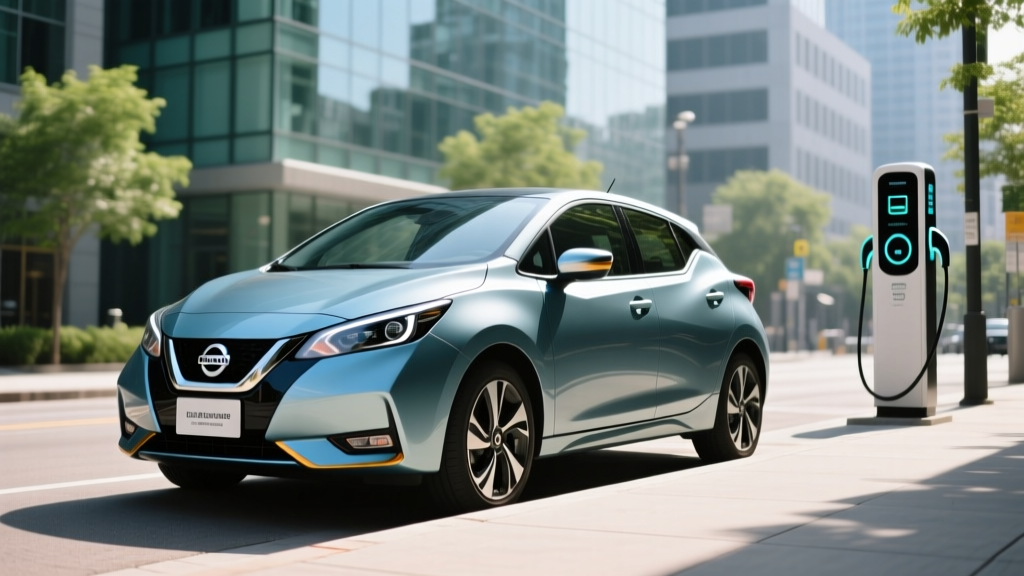
The Nissan Sakura is a kei-class electric microcar sold exclusively in Japan. As of 2026, Nissan has not announced US availability, and the Sakura does not meet US federal crash-testing (FMVSS) or EPA certification requirements in its current form. If you're in the US, the closest legal alternatives are the Chevrolet Equinox EV (base ~$33,000, EPA 319 mi) or a used Nissan Leaf (EPA 149–226 mi depending on year and battery).
For Japanese-market buyers or those curious about the platform, here's a full breakdown of what the Sakura delivers, what it costs, and how it stacks up against gas-powered kei cars and larger EVs.
Nissan Sakura EV: Core Specs at a Glance
| Spec | Value |
|---|---|
| Battery (usable) | 20 kWh, lithium-ion (NMC chemistry) |
| EPA-equivalent range (WLTP) | 180 km / ~112 mi (Japan JC08: 180 km) |
| Motor output | 47 kW (63 hp), 195 Nm (144 lb-ft) torque |
| 0–100 km/h (est.) | ~12.5 seconds |
| Top speed | 130 km/h (81 mph) |
| DC fast charge (CHAdeMO) | Up to ~30 kW peak; 10–80% in ~40 min |
| AC Level 2 charge | 6 kW onboard; 0–100% in ~4.5 hours |
| Length × Width × Height | 3,395 × 1,475 × 1,655 mm |
| Curb weight | ~1,070 kg (2,359 lb) |
| Base price (Japan, 2026) | ¥2,599,300 (~$17,200 USD before subsidies) |
| Battery warranty | 8 years / 160,000 km (capacity retention ≥66%) |
Note: The Sakura uses the CHAdeMO DC connector standard, which is being phased out in favor of NACS and CCS1 in North America. This is one of several barriers to a US launch.
Real-World Range: What 112 Miles Actually Means
WLTP rating: 180 km (112 mi)
Real-world expectation: 90–105 mi in mixed city/highway driving; 70–85 mi in sustained highway use at 80 km/h+ or in cold weather (below 40°F / 4°C).
The Sakura's 20 kWh battery is small by global EV standards — roughly a quarter of what you'll find in a Tesla Model Y Long Range (75 kWh usable). But the kei-car's low weight (2,359 lb) and city-optimized gearing mean efficiency is strong in stop-and-go traffic, where regenerative braking recovers energy constantly.
In Japanese urban testing cycles, owners report achieving close to the rated 180 km. However, the Sakura lacks a heat pump for cabin warming; it relies on a resistive PTC heater that draws 2–4 kW from the pack in winter. In sub-freezing temperatures, expect a 20–30% range reduction. If your daily commute is under 40 miles round-trip and you can charge at home overnight, the Sakura's real-world range is more than adequate for its intended use as a city runabout.
Charging: Speed, Connectors, and Infrastructure
| Level | Power | Connector | Charge Time | Miles Added/Hour |
|---|---|---|---|---|
| Level 1 (120V) | ~1.4 kW | J1772 (adapter) | ~14 hours (0–100%) | ~8 mi/hr |
| Level 2 (240V) | 6 kW | Type 1 / J1772 | ~4.5 hours (0–100%) | ~25 mi/hr |
| DC Fast | ~30 kW peak | CHAdeMO | ~40 min (10–80%) | N/A (session-based) |
The Sakura's DC charging tops out around 30 kW — a consequence of the small 20 kWh pack. Lithium-ion cells can only accept charge at a rate proportional to their capacity (the C-rate); a 1.5C peak rate on 20 kWh yields roughly 30 kW. The charge curve tapers sharply above 80% state of charge to protect cell longevity, which is why Nissan quotes 10–80% rather than a full charge time.
In Japan, CHAdeMO stations are widespread. In the US, CHAdeMO infrastructure has been declining since Electrify America and Tesla's NACS network came to dominate. Even if the Sakura launched stateside, finding a compatible DC fast charger on a road trip would be challenging.
Cost of Ownership: Sakura vs. Gas Kei Car vs. US-Market EV
For Japanese buyers, the Sakura's economics are compelling — especially with Japan's CEV (Clean Energy Vehicle) subsidy, which can reduce the effective purchase price by up to ¥550,000 (~$3,600). Here's how a 5-year ownership comparison looks:
| Category | Nissan Sakura EV | Honda N-Box (Gas Kei) | Nissan Leaf S (US, 40 kWh) |
|---|---|---|---|
| Purchase price (after subsidy) | ~¥2,050,000 ($13,600) | ~¥1,800,000 ($11,900) | ~$28,140 (MSRP) |
| Annual energy cost | ~¥30,000 ($200) electricity | ~¥90,000 ($600) gasoline | ~$540 electricity (US avg) |
| 5-year energy total | ~$1,000 | ~$3,000 | ~$2,700 |
| 5-year maintenance | ~$400 (cabin filter, tires, fluid checks) | ~$2,200 (oil, filters, belts, spark plugs) | ~$600 |
| 5-year total cost (purchase + energy + maint.) | ~$15,000 | ~$17,100 | ~$31,440 |
The Sakura's energy savings over a gas kei car are substantial in Japan, where electricity rates average ~¥30/kWh and gasoline hovers around ¥170/liter. The EV breaks even on its higher purchase price within roughly 3 years of typical driving (8,000 km/year).
What About US Federal Tax Credits?
Since the Sakura is not sold in the US, it is not eligible for the IRS §30D Clean Vehicle Credit. Even if Nissan homologated it for the US market, the vehicle would need to meet battery-sourcing and critical-mineral requirements, MSRP caps ($55,000 for sedans/coupes, $80,000 for SUVs/trucks/vans), and buyer income limits ($150,000 single / $300,000 joint) to qualify for up to $7,500. Consult a tax professional for eligibility specifics.
Common Misconceptions About the Nissan Sakura
| Myth | Fact |
|---|---|
| "It's just a golf cart — unsafe for real roads." | The Sakura earned a 4-star rating in Japan's JNCAP crash testing. It includes six airbags, AEB (automatic emergency braking), lane-keeping assist, and ProPILOT adaptive cruise. Its low top speed and weight are design choices for kei-class regulations, not safety compromises. |
| "The battery will degrade quickly because it's so small." | Nissan's battery management system limits usable capacity to protect cell health. The 8-year/160,000 km warranty guarantees ≥66% capacity retention. Small packs with conservative buffers often show less visible degradation than larger packs pushed to higher C-rates. |
| "I can import one to the US under the 25-year rule." | The 25-year import exemption (for vehicles not originally certified to FMVSS) applies to cars at least 25 years old. The Sakura debuted in 2022, making it ineligible until 2047. Private importation with full federalization is technically possible but costs $50,000+ in crash testing and modifications — far exceeding the car's value. |
| "It charges as fast as a Tesla." | The Sakura peaks at ~30 kW DC. A Tesla Model Y on a V3 Supercharger peaks at 250 kW. The Sakura adds ~25 miles of range in a 30-minute DC session; the Model Y adds ~200 miles in the same time. |
Decision Framework: Is the Sakura (or an Alternative) Right for You?
Choose the Nissan Sakura if:
- You live in Japan and qualify for CEV subsidies.
- Your daily driving is under 50 miles, mostly in urban or suburban areas.
- You have access to overnight Level 2 charging at home or work.
- You want the lowest possible operating cost and don't need highway-speed road-trip capability.
Choose a US-market compact EV (Equinox EV, Hyundai Kona Electric, Volvo EX30) if:
- You live in the US and need a vehicle that meets FMVSS safety standards.
- You require 200+ miles of EPA range for occasional highway trips.
- You want DC fast charging at 100+ kW on the NACS or CCS network.
- You want eligibility for the §30D federal tax credit (up to $7,500) or state incentives.
Choose a PHEV (Toyota Prius Prime, Hyundai Tucson PHEV) if:
- You lack reliable home charging access.
- You regularly drive 200+ miles in a single day and don't want to plan around charging stops.
- You want electric-only commuting (25–44 mi range) with gas-engine backup for road trips.
What a First-Time EV Buyer Should Know
Whether you're considering a kei-car like the Sakura or a full-size US-market EV, these fundamentals apply:
- kW vs. kWh: kW (kilowatts) measures power — how fast energy flows during charging. kWh (kilowatt-hours) measures energy — the battery's total capacity. A 20 kWh battery charged at 6 kW takes ~3.3 hours from empty. Think of kWh as the gas tank size and kW as the pump speed.
- Home charging is the backbone: Over 80% of EV charging happens at home. A Level 2 (240V) home charger costs $500–$1,500 for equipment plus $800–$2,500 for electrician installation, depending on whether your panel needs upgrading. Without home charging, EV ownership becomes significantly less convenient.
- Cold weather reduces range: All lithium-ion batteries lose efficiency in cold temperatures. Expect a 15–30% range reduction below freezing, worsened by cabin heating. EVs with heat pumps (most 2024+ models) mitigate this; the Sakura's resistive heater does not.
- Charging speed isn't linear: EVs charge fastest between 10–50% state of charge. Above 80%, the charge rate tapers dramatically to protect the battery. That's why manufacturers quote 10–80% times rather than 0–100%.
- Total cost of ownership favors EVs over time: Higher upfront prices are offset by lower fuel and maintenance costs. Break-even typically occurs in 3–6 years depending on local electricity rates, gas prices, and annual mileage.
Frequently Asked Questions
Will Nissan bring the Sakura to the US?
As of early 2026, Nissan has made no official announcement. The kei-car segment doesn't exist in US regulations (no equivalent size/class category), and the Sakura would require significant structural reinforcement, different lighting, NACS charging port adoption, and full FMVSS crash certification to sell legally. The business case is questionable given the US market's preference for larger vehicles.
How does the Sakura compare to the Nissan Leaf?
The Leaf (40 kWh or 62 kWh battery, EPA 149–226 mi) is a global compact hatchback with more range, higher top speed, and CCS/CHAdeMO DC charging at up to 100 kW (62 kWh version). The Sakura is smaller, lighter, cheaper, and designed specifically for Japan's kei-car tax and insurance benefits. They share no platform.
Can the Sakura handle highway driving?
Yes, but with caveats. Its 81 mph top speed and 63 hp motor mean merging onto high-speed expressways requires planning. The short wheelbase (2,495 mm) also makes it more susceptible to crosswinds and truck buffeting at speed. It's best suited for roads with speed limits of 80 km/h (50 mph) or below.
What's the battery replacement cost?
Nissan has not published an official replacement price for the Sakura's 20 kWh pack. For reference, a Leaf 40 kWh battery replacement in Japan runs approximately ¥650,000–¥800,000 ($4,300–$5,300). A Sakura pack, being half the capacity, would likely cost ¥350,000–¥500,000 ($2,300–$3,300) out of warranty — though replacements are rare within the first 10–15 years.
Does the Sakura support V2H (vehicle-to-home) or V2L?
Yes. The Sakura supports V2H via a compatible bidirectional CHAdeMO charger (such as the Nissan Leaf-to-Home system), allowing it to feed power back to a Japanese household during outages. At 20 kWh, it can power an average Japanese home (~4–6 kWh/day consumption) for roughly 3–4 days. V2L (vehicle-to-load, plugging devices directly into the car) is not natively supported without an external inverter adapter.