The Short Answer: There Is No Nissan Maxima EV
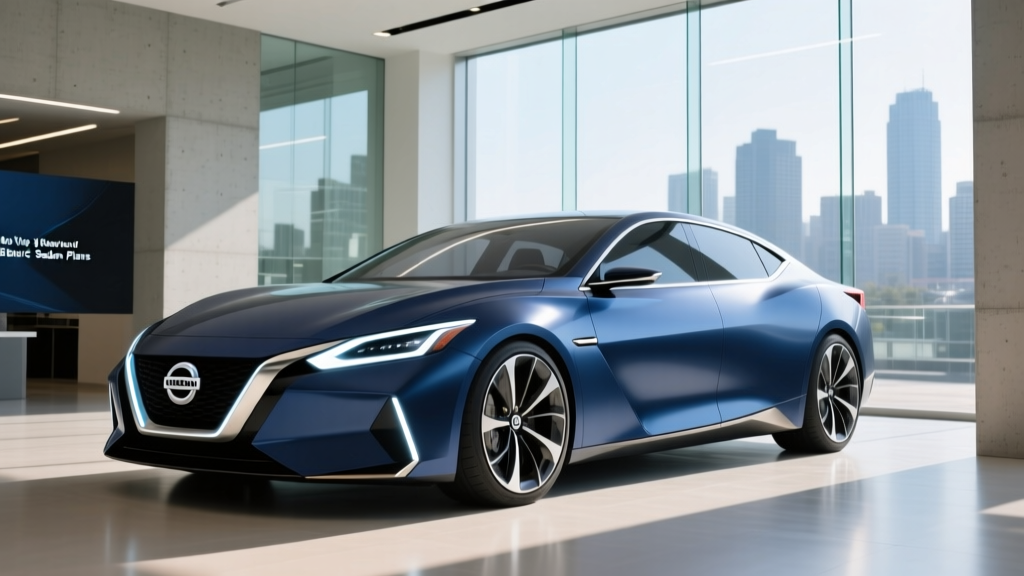
As of early 2026, Nissan has not announced, previewed, or confirmed a Nissan Maxima EV. The gas-powered Maxima was discontinued after the 2023 model year, and Nissan has not revealed an electric successor. If you're searching for a "Nissan Maxima EV," you're likely looking for a large, comfortable Nissan electric sedan — and while Nissan has committed to expanding its EV lineup, no direct Maxima replacement exists yet.
What Nissan does offer: The 2026 Nissan Leaf (up to 212 miles EPA range) and the 2026 Nissan Ariya (up to 304 miles EPA range). Neither is a full-size sedan, but the Ariya comes closest in price and premium feel. Below, we break down what a hypothetical Maxima EV would need to compete, how Nissan's current EVs stack up, and what to buy if you want a large electric sedan today.
Why the Nissan Maxima EV Doesn't Exist (Yet)
Nissan retired the Maxima after 2023 as part of a broader sedan lineup reduction. The Altima survives, but Nissan's investment dollars have shifted toward crossovers and SUVs — the Ariya, the refreshed Leaf, and the upcoming Nissan Chillz concept (previewed in 2025 as a compact electric crossover). Nissan's Nissan Ambition 2030 plan targets 27 electrified models globally by 2030, including 19 fully electric vehicles, but the company has prioritized SUVs and trucks for the U.S. market.
The full-size sedan segment has contracted sharply. The Toyota Avalon was discontinued after 2022. The Chevrolet Impala ended in 2020. Automakers see diminishing returns in large sedans as buyers migrate to crossovers. A Maxima EV would face an uphill battle against the Tesla Model S, Lucid Air, and even the Hyundai Ioniq 6 — all of which already offer 300+ miles of range and established charging networks.
What a Hypothetical Maxima EV Would Need to Compete
If Nissan were to revive the Maxima nameplate as an EV, here's the spec sheet it would need based on current segment benchmarks:
| Specification | Competitive Target | Why It Matters |
|---|---|---|
| EPA Range | 320–380 miles | Buyers expect 300+ in a premium sedan; less triggers range concern |
| Battery Capacity | 85–100 kWh (NMC) | Required for range target; LFP too heavy for this segment |
| DC Fast Charging | 250+ kW peak, 10–80% in ~20 min | Must match Tesla/Lucid/Hyundai charging speeds |
| 0–60 mph | 4.5–5.5 seconds | Maxima was always "four-door sports car" — EV torque advantage helps |
| Starting MSRP | $42,000–$48,000 | Must undercut Model S ($74,990) and compete with Ioniq 6 ($37,500) |
| Connector | NACS (Tesla standard) | Nissan has confirmed NACS adoption for future U.S. models |
Nissan has confirmed it will adopt the NACS connector on future U.S. EVs, granting access to Tesla's Supercharger network — a significant advantage over the Ariya's current CCS1 setup, which relies on Electrify America and other public networks.
Nissan's Current EV Lineup: What You Can Actually Buy
Since a Maxima EV isn't available, here's how Nissan's 2026 electric vehicles compare:
| Spec | 2026 Nissan Leaf SV Plus | 2026 Nissan Ariya Engage+ | 2023 Nissan Maxima (Discontinued) |
|---|---|---|---|
| Body Style | Compact hatchback | Compact SUV | Full-size sedan |
| EPA Range | 212 miles | 304 miles (Platinum+ e-4ORCE) | N/A (22 mpg combined) |
| Battery | 62 kWh (NMC) | 91 kWh (NMC) | N/A |
| Horsepower | 214 hp | 389 hp (e-4ORCE AWD) | 300 hp |
| 0–60 mph | ~6.5 sec | ~4.8 sec (AWD) | 5.7 sec |
| Max DC Charge Rate | 100 kW | 130 kW | N/A |
| 10–80% DC Charge | ~40 min | ~35 min | N/A |
| Base MSRP | $30,490 | $40,190 | $38,340 (2023) |
| §30D Tax Credit Eligible | Up to $3,750* | Up to $7,500* | N/A |
| Battery Warranty | 8 yr / 100,000 mi | 8 yr / 100,000 mi | 5 yr / 60,000 mi (powertrain) |
*Federal §30D tax credit eligibility depends on buyer income caps, battery sourcing requirements, and MSRP limits. Check current rules at IRS.gov. Credit amounts may be reduced based on critical-mineral and battery-component sourcing. Consult a tax professional.
Cost Comparison: Nissan Ariya vs. a Used Maxima vs. a Gas Midsize Sedan
If you're cross-shopping a new Nissan EV against a gas sedan (or a used Maxima), here's a 5-year total cost of ownership (TCO) estimate based on 15,000 miles per year, national-average electricity and fuel prices:
| Cost Category (5 Years) | 2026 Ariya Engage+ ($40,190) | 2023 Maxima (Used, ~$30,000) | 2026 Toyota Camry LE ($28,400) |
|---|---|---|---|
| Purchase Price (after credit) | $32,690 (est. after $7,500 credit) | $30,000 | $28,400 |
| Fuel / Electricity (75,000 mi) | $3,750 (home charging at $0.16/kWh) | $8,100 (26 mpg at $3.50/gal) | $7,350 (32 mpg at $3.50/gal) |
| Maintenance | $1,200 (no oil changes, minimal brake wear) | $3,500 (oil, brakes, fluids) | $3,000 |
| Insurance (avg.) | $9,500 | $7,500 | $7,000 |
| Estimated Depreciation | $12,000 | $9,000 | $8,500 |
| 5-Year Total | $59,140 | $58,100 | $54,250 |
Key takeaways: The Ariya's fuel and maintenance savings (~$10,000 over 5 years vs. the Maxima) are substantial, but higher insurance premiums and steeper EV depreciation partially offset them. The break-even point vs. a gas sedan typically arrives around year 6–7 if you can charge at home. Public-charging-only ownership is significantly more expensive — DC fast charging at $0.40–$0.50/kWh can double your "fuel" cost.
Large Electric Sedans You Can Buy Instead
If you want a spacious, comfortable electric sedan in the spirit of the Maxima, these are the real options in 2026:
Decision Framework: Which Large EV Sedan Fits You?
- Choose the Hyundai Ioniq 6 if you want the best range-per-dollar (361 miles EPA, ~$37,500 base) and don't mind a sloping roofline that limits rear headroom.
- Choose the Tesla Model 3 Long Range if you prioritize Supercharger access, software features, and 341 miles of EPA range — but accept the minimalist interior and panel-gap variability.
- Choose the Lucid Air Pure if budget allows ($69,900) and you want class-leading 419 miles of EPA range, genuine full-size sedan space, and luxury build quality.
- Choose the Nissan Ariya if you prefer an SUV ride height, want Nissan dealer familiarity, and 304 miles of range covers your daily needs — but know it's not a sedan.
- Wait for a Nissan electric sedan only if Nissan officially announces one. As of 2026, there is no confirmed timeline.
Common Misconceptions About a Nissan Maxima EV
| Myth | Fact |
|---|---|
| "The Maxima EV is coming in 2026." | Nissan has made no official announcement. The Maxima nameplate is dormant, and Nissan's U.S. EV focus is on SUVs and crossovers. |
| "The Ariya is basically an electric Maxima." | The Ariya is a compact crossover SUV with different proportions, a higher ride height, and a different platform (CMF-EV). It shares no body or chassis lineage with the Maxima. |
| "Nissan will bring back the Maxima as an EV because the name is popular." | Sedan demand has fallen sharply. Nissan's Ambition 2030 plan emphasizes crossovers, SUVs, and trucks for the U.S. A Maxima EV revival would be a contrarian bet against market trends. |
| "If I wait, Nissan will announce a Maxima EV soon." | Possible but unconfirmed. Nissan's next U.S. EV announcements are expected to focus on a next-gen Leaf and potential electric SUVs. No sedan has been previewed. |
| "The Leaf is Nissan's electric sedan." | The Leaf is a compact hatchback — smaller than the Sentra, far smaller than the Maxima. It doesn't compete in the same segment. |
What First-Time EV Buyers Should Know Before Shopping Nissan
If you're considering a Nissan EV (or any EV) as a first-time electric buyer, these practical realities matter more than model names:
Home charging is the single biggest ownership variable. If you can install a Level 2 (240V) home charger — typically a 32–48 amp wallbox on a 40–60 amp circuit — you'll wake up to a full battery every morning and rarely visit public chargers. Installation costs range from $500 (simple outlet near the panel) to $3,000+ (panel upgrade, long conduit runs). Without home charging, EV ownership means relying on public DC fast chargers at $0.40–$0.50/kWh — roughly double the cost of home charging and less convenient.
The Ariya's 130 kW peak charge rate is modest by 2026 standards. Competitors like the Hyundai Ioniq 6 (peak ~240 kW) and Tesla Model 3 (peak ~250 kW) charge significantly faster on road trips. The Ariya's 10–80% charge takes approximately 35 minutes at a capable DC station — acceptable, but not class-leading. The Leaf's 100 kW cap and CHAdeMO connector (on older models) further limit its road-trip practicality.
Nissan's ProPILOT Assist is a Level 2 driver-assist system — not self-driving. It provides adaptive cruise control and lane centering on highways, but you must keep your hands on the wheel and remain fully engaged. It does not navigate autonomously, handle city streets without input, or replace driver attention. This is consistent with every consumer vehicle on the market; only Waymo and Zoox robotaxi services operate at Level 4 (driverless in geofenced areas).
Frequently Asked Questions
Is Nissan making an electric Maxima?
No. Nissan has not announced any plans for an electric Maxima or a Maxima successor of any kind. The Maxima was discontinued after the 2023 model year. Nissan's U.S. EV strategy currently centers on the Leaf, Ariya, and future electric SUVs.
What is the largest Nissan EV available in 2026?
The 2026 Nissan Ariya is Nissan's largest electric vehicle in the U.S. market. It's a compact crossover SUV with up to 304 miles of EPA range (Platinum+ e-4ORCE trim), 389 hp in AWD form, and a starting price of $40,190. It seats five and offers 22.8 cubic feet of cargo space behind the rear seats.
Does the Nissan Ariya qualify for the $7,500 federal tax credit?
The Ariya may qualify for up to $7,500 under the §30D Clean Vehicle Credit, but eligibility depends on multiple factors: your modified adjusted gross income (capped at $150,000 single / $300,000 joint), the vehicle's MSRP (must be under $80,000 for SUVs), and battery component/critical-mineral sourcing requirements that tighten annually. The credit can be transferred to the dealer at point of sale as a purchase-price reduction. Verify current eligibility at IRS.gov or consult a tax professional.
Will Nissan bring back the Maxima nameplate?
There is no indication from Nissan that the Maxima name will return, either as a gas or electric vehicle. The full-size sedan market has contracted significantly, and Nissan has redirected resources toward crossovers and SUVs. While concept cars or future announcements could change this, nothing is confirmed as of 2026.
What Nissan EV has the best range?
The 2026 Nissan Ariya in its long-range trims (Engage, Engage+, Evolve+, and Empower+) offers up to 304 miles of EPA range when equipped with the 91 kWh battery and front-wheel drive. The e-4ORCE all-wheel-drive Platinum+ trim is rated at 272 miles. The Leaf tops out at 212 miles in SV Plus trim.
Should I buy an Ariya or wait for a Nissan electric sedan?
If you need a vehicle now, don't wait for an unannounced product. The Ariya is a capable electric crossover with good range, comfortable ride quality, and Nissan dealer support. If a sedan is a hard requirement, consider the Hyundai Ioniq 6, Tesla Model 3, or Lucid Air — all of which are available today with 340+ miles of range.
What charging connector does Nissan use?
Current Nissan EVs (2026 Leaf and Ariya) use the CCS1 connector for DC fast charging and J1772 for Level 2 AC charging. Nissan has confirmed it will transition to the NACS (Tesla) connector on future U.S. models, which will grant access to Tesla's Supercharger network via adapter or native port on upcoming vehicles. Existing Ariya and Leaf owners will likely be able to use a CCS-to-NACS adapter at Superchargers when Nissan enables compatibility.
Sources: EPA Fuel Economy — Nissan Ariya, Nissan USA Electric Vehicles, IRS Clean Vehicle Credits.