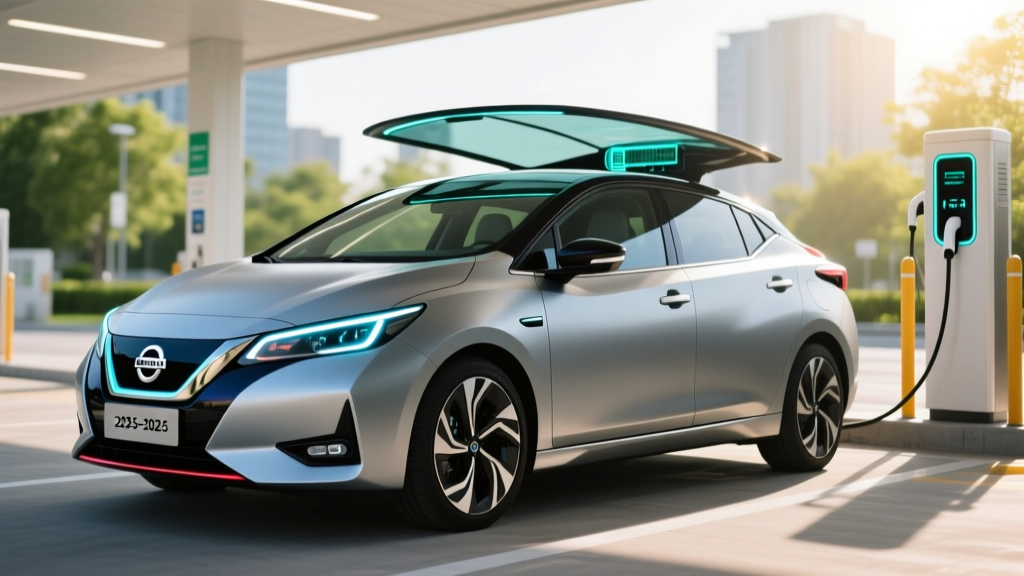
If you've been searching for a comprehensive Nissan Leaf wiki, you've likely noticed that information about America's original mass-market EV is scattered across forums, outdated articles, and Wikipedia pages that haven't kept pace with the latest model-year updates. This guide consolidates everything a prospective buyer or current owner needs to know about the Nissan Leaf in 2025 and 2026 — from battery chemistry and real-world range to charging limitations and federal tax credit eligibility.
The Nissan Leaf holds a unique position in the EV landscape. Launched in 2011 as the world's first affordable, mass-produced electric car, it has sold over 650,000 units globally. Yet in 2026, it remains both a bargain entry point into EV ownership and a cautionary tale about aging platform design. Let's break down exactly what you're getting.
2025-2026 Nissan Leaf Specs at a Glance
| Specification | Leaf S (40 kWh) | Leaf SV Plus (60 kWh) |
|---|---|---|
| EPA Range | 149 miles | 212 miles |
| Battery Capacity (usable) | ~39 kWh | ~59 kWh |
| Battery Chemistry | NMC (Lithium-ion) | NMC (Lithium-ion) |
| Horsepower | 147 hp | 214 hp |
| Torque | 236 lb-ft | 250 lb-ft |
| Drivetrain | FWD | FWD |
| 0-60 mph | ~7.9 sec | ~6.5 sec |
| MPGe (combined) | 111 MPGe | 104 MPGe |
| kWh/100 mi | 30 kWh | 32 kWh |
| Max DC Fast Charge | 50 kW (CHAdeMO) | 100 kW (CHAdeMO) |
| Level 2 Charge Rate | 6.6 kW | 6.6 kW |
| Cargo Volume | 23.6 cu ft (rear seats up) | 23.6 cu ft (rear seats up) |
| Base MSRP | ~$28,140 | ~$36,190 |
Real-World Range: What the EPA Sticker Doesn't Tell You
Leaf S (40 kWh): EPA 149 miles — Expect 120-135 miles in mixed highway driving; 100-115 miles in cold weather (below 32°F).
Leaf SV Plus (60 kWh): EPA 212 miles — Expect 175-195 miles highway; 145-165 miles in cold weather.
City driving with regenerative braking can exceed EPA estimates by 10-15%.
The Leaf's range story requires context. The 40 kWh Leaf S delivers an EPA-estimated 149 miles, which is adequate for daily commuting but falls well short of modern competitors. The SV Plus with its 60 kWh pack pushes that to 212 miles — respectable for the price point, but not class-leading.
The critical factor many wiki pages omit is the Leaf's passive battery thermal management. Unlike the Hyundai Ioniq 5, Tesla Model 3, or Chevrolet Equinox EV, the Leaf relies on air cooling rather than active liquid thermal management. This has two real-world consequences:
- Cold-weather range loss is severe: Expect 25-35% range reduction in freezing temperatures, worse than the 15-25% typical of liquid-cooled packs. The battery cannot warm itself efficiently, and cabin heating draws directly from the pack.
- Hot-weather fast-charge throttling: During repeated DC fast charging or summer highway driving, the Leaf's battery management system will reduce charge speeds to protect the cells — a phenomenon known among owners as "Rapidgate." This was partially mitigated in later model years but remains a physical limitation of air-cooled design.
According to fueleconomy.gov, the 2025 Leaf SV Plus achieves 104 MPGe combined (32 kWh/100 mi). Efficiency is slightly worse than the base model due to the heavier battery pack and more powerful motor.
Charging: The CHAdeMO Problem in 2026
The Nissan Leaf remains the last mainstream EV sold in the United States using the CHAdeMO DC fast-charging connector. This is the single most important factor prospective buyers must weigh.
| Charging Level | Leaf S (40 kWh) | Leaf SV Plus (60 kWh) | Miles Added per Hour |
|---|---|---|---|
| Level 1 (120V, 12A) | ~1.4 kW | ~1.4 kW | ~4-5 mi/hr |
| Level 2 (240V, 6.6 kW) | 6.6 kW | 6.6 kW | ~22-25 mi/hr |
| DC Fast (CHAdeMO) | 50 kW peak | 100 kW peak | N/A (session-based) |
| 10-80% DC Time | ~40 minutes | ~45 minutes | N/A |
Here's the practical reality: the vast majority of new DC fast-charging infrastructure being deployed in North America uses either the NACS (Tesla) connector or CCS1. Electrify America, EVgo, and most other networks have standardized on CCS, while Tesla's Supercharger network — now open to other brands via adapter — uses NACS. CHAdeMO stations are increasingly rare and are not being expanded.
For the Leaf SV Plus, the 100 kW peak charge rate sounds adequate, but the charge curve tapers significantly above 60% State of Charge (SoC). A 10-80% session takes approximately 45 minutes under ideal conditions. The 40 kWh model is limited to 50 kW, making road-trip stops even longer.
At home, the 6.6 kW onboard charger means a full Level 2 charge from empty takes roughly 6 hours for the 40 kWh pack and 9.5 hours for the 60 kWh pack. This is competitive with other EVs at this price point and works well for overnight charging.
Performance and Driving Dynamics
The Leaf is a front-wheel-drive compact hatchback, and it drives like one. The SV Plus's 214 horsepower and 250 lb-ft of torque deliver a 0-60 mph time of approximately 6.5 seconds — genuinely quick for a practical hatchback. The instant electric torque makes the Leaf feel peppier around town than the numbers suggest, particularly in the 0-30 mph range where most city driving happens.
However, the Leaf shows its age in other dynamic areas:
- No one-pedal driving mode: Unlike most modern EVs, the Leaf's regenerative braking is not strong enough to bring the car to a complete stop. You still need the friction brake pedal. The "e-Pedal" feature provides stronger regen but still creeps at low speeds.
- FWD only: No all-wheel-drive option is available, which limits appeal in snow-belt states.
- Ride quality: The heavy battery pack sits low, giving decent handling, but the suspension tuning is soft and the steering is numb — this is a commuter appliance, not a driver's car.
Interior, Cargo, and Technology
The Leaf's cabin is functional but dated. The 8-inch touchscreen infotainment system supports Apple CarPlay and Android Auto (wired on lower trims, wireless on SV Plus). A 7-inch digital driver display replaces traditional gauges. Nissan's ProPILOT Assist — a SAE Level 2 driver-assistance system combining adaptive cruise control and lane-centering — is available on SV Plus trims and works competently on well-marked highways.
Nissan ProPILOT Assist is a Level 2 driver-assistance system. The driver must keep hands on the wheel and eyes on the road at all times. It does not navigate autonomously, handle construction zones, or operate without active supervision.
Cargo space measures 23.6 cubic feet behind the rear seats and expands to 30.0 cubic feet with the 60/40 split rear seats folded. That's competitive with the Chevrolet Bolt EV (which was discontinued after 2023) but less than the Hyundai Kona Electric (25.8 cu ft). Rear-seat legroom is 33.5 inches — adequate for adults on shorter trips but tight for tall passengers on longer journeys.
Pricing, Trims, and Federal Tax Credit Eligibility
| Trim | Base MSRP | Est. After §30D Credit* | Key Features |
|---|---|---|---|
| Leaf S (40 kWh) | $28,140 | ~$20,640 | 149-mi range, 50 kW DC, basic infotainment |
| Leaf SV Plus (60 kWh) | $36,190 | ~$28,690 | 212-mi range, 100 kW DC, ProPILOT, heated seats |
*Federal tax credit estimates assume buyer meets all §30D requirements. Actual eligibility varies.
The Nissan Leaf's pricing is its strongest selling point. At $28,140 for the base S trim, it remains one of the least expensive new EVs available in the U.S. market. But the IRS §30D federal tax credit introduces complexity:
- MSRP cap: The Leaf qualifies (under the $55,000 sedan/hatchback cap).
- Buyer income cap: Modified AGI must not exceed $150,000 (single) / $300,000 (joint).
- Battery sourcing requirements: The critical minerals and battery component requirements under §30D have tightened annually since 2024. As of 2025-2026, vehicles must meet increasing percentages of U.S.-sourced or FTA-partner-sourced critical minerals and battery components to qualify for the full $7,500. The Leaf's battery is manufactured in Smyrna, Tennessee, but some upstream mineral sourcing may affect partial credit eligibility.
- Point-of-sale transfer: Eligible buyers can transfer the credit to the dealer at purchase, reducing the upfront price rather than waiting for a tax refund.
Consult a tax professional and verify current eligibility on the IRS Clean Vehicle provisions page before purchasing, as sourcing rules continue to evolve.
Battery Longevity, Warranty, and Degradation
Nissan provides an 8-year/100,000-mile lithium-ion battery capacity warranty. The warranty guarantees the battery will retain at least 62.5% of its original capacity (5 out of 9 bars on the dashboard capacity gauge) during the coverage period.
This warranty threshold is notably weaker than competitors. Hyundai, Tesla, and Chevrolet warrant their batteries to 70% capacity retention over the same period. The Leaf's air-cooled battery design, while simpler and lighter, subjects cells to more thermal stress over time, which can accelerate degradation — particularly in hot climates like Arizona, Texas, or Southern California.
Real-world data from Leaf owner communities shows:
- Early-model Leafs (2011-2015, 24/30 kWh): Significant degradation common, with many packs losing 20-40% capacity within 5-7 years in hot climates.
- Current-generation Leafs (2018+, 40/60 kWh): Improved cell chemistry has reduced but not eliminated degradation concerns. Expect 10-15% capacity loss over 8 years under moderate conditions; potentially 20-25% in extreme heat.
A full battery replacement for the 60 kWh pack currently costs approximately $8,000-$10,000 (parts and labor), though this is rarely needed within the warranty period for well-maintained vehicles.
Pros and Cons: The Honest Assessment
- One of the lowest MSRPs of any new EV
- Comfortable ride quality for commuting
- Proven, simple powertrain with extensive service history
- Adequate range for daily urban/suburban use (SV Plus)
- Eligible for federal tax credit (verify sourcing requirements)
- Good cargo versatility with folding rear seats
- CHAdeMO connector — dwindling public fast-charge network
- Air-cooled battery — worse cold-weather range and long-term degradation risk
- Dated interior design and infotainment
- No AWD option
- Weak battery warranty threshold (62.5% vs. 70%+ for competitors)
- Slow DC fast charging by 2026 standards
- No active battery preconditioning for fast charging
Who Should Buy the Nissan Leaf in 2026?
- You need the most affordable new EV possible and budget is the top priority
- Your daily round-trip commute is under 80 miles (40 kWh) or 120 miles (60 kWh)
- You can charge at home every night (Level 2 strongly recommended)
- You live in a mild climate without extreme cold or sustained heat
- You rarely take road trips over 150 miles one-way
- You rely on public DC fast charging — CHAdeMO infrastructure is shrinking
- You live in a cold-weather state and need reliable winter range
- You regularly drive highway trips over 150 miles
- You want modern tech, fast charging, or AWD
- Long-term battery degradation is a major concern
The Leaf's strongest competitors in 2026 include the Hyundai Kona Electric (261 mi EPA, CCS charging, liquid-cooled battery), the Chevrolet Equinox EV (300+ mi, NACS, modern platform), and the Tesla Model 3 (341 mi, Supercharger access). All cost more upfront but offer substantially better charging infrastructure access, thermal management, and technology.
Frequently Asked Questions
What is the real-world range of the Nissan Leaf?
The 40 kWh Leaf S delivers roughly 120-135 real-world highway miles (EPA 149), while the 60 kWh SV Plus achieves 175-195 highway miles (EPA 212). Cold weather reduces these figures by 25-35% due to the air-cooled battery design. City driving with regenerative braking can exceed EPA estimates.
How fast does the Nissan Leaf charge?
At home on Level 2 (240V), the Leaf charges at 6.6 kW, adding about 22-25 miles of range per hour. A full charge takes 6-9.5 hours depending on battery size. On DC fast charging (CHAdeMO), the 40 kWh model peaks at 50 kW and the 60 kWh at 100 kW, with 10-80% taking roughly 40-45 minutes.
Does the Nissan Leaf qualify for the federal EV tax credit?
The Leaf's MSRP falls under the §30D cap, and its Tennessee-built battery helps with component sourcing requirements. However, full $7,500 eligibility depends on the buyer's income (under $150K single / $300K joint), and evolving critical-mineral sourcing rules may reduce the credit amount. Verify current eligibility on irs.gov and consult a tax professional.
Is the Nissan Leaf worth buying over competitors?
If your priority is the lowest possible purchase price for a new EV and you charge at home in a mild climate, the Leaf remains compelling. However, the CHAdeMO connector is a significant liability as the charging industry has standardized on NACS and CCS. For buyers who need road-trip capability, cold-weather reliability, or modern tech, the Hyundai Kona Electric, Chevrolet Equinox EV, or Tesla Model 3 offer substantially more capability for additional cost.
How long will the Nissan Leaf battery last?
Nissan warrants the battery for 8 years/100,000 miles at a minimum of 62.5% capacity retention. Real-world data suggests current-generation Leafs (2018+) lose approximately 10-15% capacity over 8 years in moderate climates, though hot-climate degradation can reach 20-25%. Battery replacement costs approximately $8,000-$10,000 for the 60 kWh pack.
Can I use Tesla Superchargers with a Nissan Leaf?
No. Tesla's Supercharger network uses the NACS connector, and while Tesla has opened access to other brands via a built-in CCS adapter, the Leaf uses CHAdeMO — a completely different standard. There is no commercially available CHAdeMO-to-NACS adapter, and none is expected given the industry's move away from CHAdeMO.