The Cheapest New EV in America — But at What Cost?
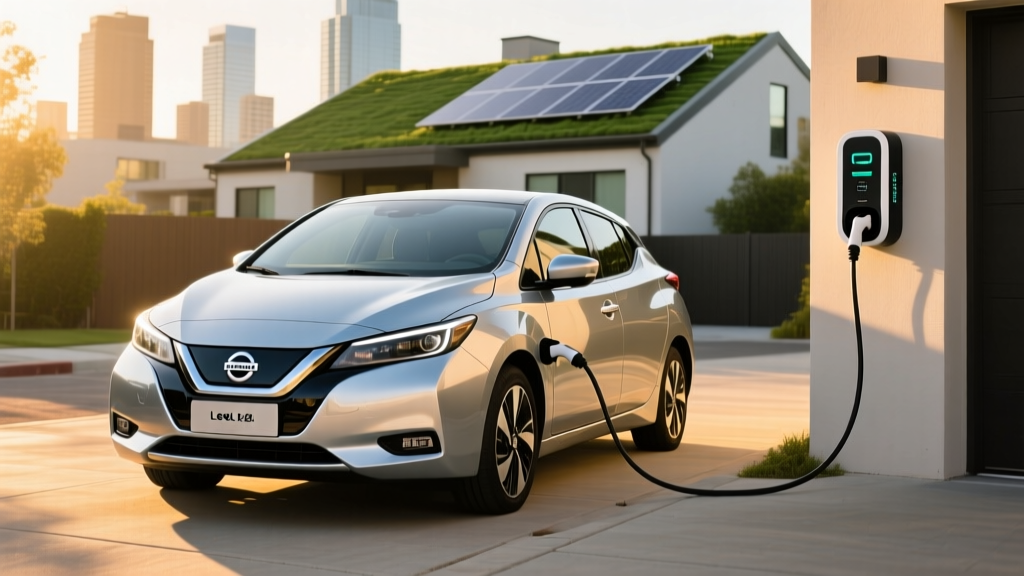
If you've been shopping for a new electric vehicle on a budget, you've likely asked: why is the Nissan Leaf so cheap? The 2026 Nissan Leaf S starts at just $28,140 before destination — a price point that undercuts nearly every other new battery-electric vehicle on the U.S. market by thousands of dollars. The SV Plus trim, with its larger battery and longer range, starts at $36,540.
But rock-bottom pricing in the EV space always comes with engineering trade-offs. The Leaf uses an aging platform, an air-cooled battery, and the increasingly orphaned CHAdeMO DC fast-charging standard. For the right buyer — a single commuter with home charging and a sub-40-mile daily drive — those trade-offs are perfectly acceptable. For everyone else, they're deal-breakers.
Here's exactly what you get, what you give up, and whether the math works in 2026.
2026 Nissan Leaf: Core Specifications
| Specification | Leaf S (40 kWh) | Leaf SV Plus (60 kWh) |
|---|---|---|
| Base MSRP | $28,140 | $36,540 |
| EPA Range | 149 miles | 212 miles |
| Battery (usable) | 40 kWh, NMC lithium-ion | 60 kWh, NMC lithium-ion |
| Motor Output | 147 hp / 236 lb-ft | 214 hp / 250 lb-ft |
| Drivetrain | FWD (single motor) | FWD (single motor) |
| 0–60 mph | ~7.9 seconds | ~6.5 seconds |
| DC Fast Charge (peak) | 50 kW (CHAdeMO) | 100 kW (CHAdeMO) |
| 10–80% DC Time | ~60 minutes | ~45 minutes |
| Level 2 Onboard Charger | 6.6 kW (~22 mi/hr) | 6.6 kW (~25 mi/hr) |
| MPGe (combined) | 111 MPGe | 104 MPGe |
| Efficiency | 30 kWh/100 mi | 32 kWh/100 mi |
| Cargo Volume | 23.6 cu ft (rear seats up) / 30.0 cu ft (folded) | 23.6 cu ft / 30.0 cu ft |
| Rear Legroom | 33.5 inches | 33.5 inches |
| Battery Warranty | 8 yr / 100,000 mi | 8 yr / 100,000 mi |
| Vehicle Warranty | 3 yr / 36,000 mi basic; 5 yr / 60,000 mi powertrain | 3 yr / 36,000 mi basic; 5 yr / 60,000 mi powertrain |
Source: EPA Fuel Economy, Nissan USA specifications.
Real-World Range: What the EPA Sticker Doesn't Tell You
Leaf S (40 kWh): EPA 149 miles. Expect 120–135 miles in mixed highway driving, and as low as 95–110 miles in freezing temperatures with cabin heat.
Leaf SV Plus (60 kWh): EPA 212 miles. Expect 175–195 miles highway, and roughly 140–160 miles in sustained sub-30°F conditions.
The Leaf's efficiency figures (111 MPGe for the S, 104 MPGe for the SV Plus) are competitive for a compact hatchback. But efficiency only matters when paired with usable battery capacity. The 40 kWh pack in the base Leaf S is small by 2026 standards — most rivals offer 60–80 kWh — which is why the range ceiling is low despite decent efficiency.
The bigger issue is thermal management. The Leaf still relies on passive air cooling for its battery pack rather than the liquid thermal management used by Hyundai, Tesla, BMW, and virtually every other modern EV maker. This has two consequences:
- Cold-weather range loss is steeper than average. Without a liquid system to precondition the battery efficiently, the Leaf's pack stays cold longer in winter, increasing internal resistance and reducing available capacity. A 30–40% range hit in sub-freezing weather is common, based on owner reports and independent testing.
- DC fast charging slows in heat. On hot days or during repeated fast-charge sessions, the Leaf's battery management system throttles charge speed to protect the cells — a phenomenon owners call "Rapidgate." You may see peak 100 kW on the SV Plus for only a few minutes before the rate drops to 40–50 kW.
Charging: The CHAdeMO Problem
| Charging Level | Connector | Peak Power | Rate (approx.) | Leaf S | Leaf SV Plus |
|---|---|---|---|---|---|
| Level 1 (120V) | J1772 | 1.4 kW | ~4 mi/hr | 38 hr (0–100%) | 57 hr (0–100%) |
| Level 2 (240V) | J1772 | 6.6 kW | ~22–25 mi/hr | 7 hr (0–100%) | 9.5 hr (0–100%) |
| DC Fast | CHAdeMO | 50 kW / 100 kW | Varies | ~60 min (10–80%) | ~45 min (10–80%) |
Here's the structural reason the Leaf charges slower than its competitors: it uses the CHAdeMO DC fast-charging standard, while the U.S. market has overwhelmingly adopted either CCS1 or the Tesla NACS connector (which is now being adopted by Ford, GM, Rivian, Hyundai, and others as the de facto standard).
As of 2026, CHAdeMO infrastructure is shrinking. Electrify America, the largest U.S. public charging network, has stopped installing new CHAdeMO connectors at its stations. Many older CHAdeMO stalls are being decommissioned or converted to CCS/NACS. According to data from the Alternative Fuels Data Center, CHAdeMO ports represent fewer than 10% of all public DC fast-charging ports in the United States.
This matters enormously for road trips. A Leaf owner on a 300-mile journey may find only one or two functioning CHAdeMO stations along their route, while CCS and NACS vehicles have dozens of options. For pure home-and-commute use, this is irrelevant — you plug in at home every night. But it effectively limits the Leaf to a local-use vehicle for most owners.
Why the Leaf's Price Is So Low: Five Engineering Realities
Understanding why is the Nissan Leaf so cheap requires looking at the platform and design decisions that keep costs down:
- Amortized platform. The current Leaf rides on a chassis architecture that dates back to 2017 (with roots in the 2010 original). The R&D costs were recouped years ago, allowing Nissan to price aggressively.
- Air-cooled battery. Liquid thermal management systems add cost — pumps, coolant loops, heat exchangers, and control software. The Leaf's passive cooling eliminates all of that, saving hundreds per vehicle at the expense of charge speed and cold-weather performance.
- Single motor, FWD only. No dual-motor AWD option, no high-performance variant. Keeping the powertrain simple reduces manufacturing complexity.
- Older infotainment and ADAS hardware. The Leaf's ProPilot Assist is a capable Level 2 system, but it uses a previous-generation sensor suite. Nissan isn't investing in next-gen hardware for a model that may be redesigned or discontinued soon.
- Market positioning. Nissan has explicitly positioned the Leaf as an entry-point EV to drive showroom traffic. The low price is strategic — it gets buyers into the Nissan ecosystem, where dealers can upsell to the Ariya crossover or other models.
Federal Tax Credit: Does the 2026 Leaf Qualify?
| Trim | MSRP | Max §30D Credit | Effective Price (if eligible) |
|---|---|---|---|
| S | $28,140 | $3,750* | ~$24,390 |
| SV Plus | $36,540 | $3,750* | ~$32,790 |
*Based on 2026 IRS §30D rules. The Leaf qualifies for $3,750 under the critical-minerals requirement but does not meet the battery-component sourcing threshold for the full $7,500. Eligibility also depends on buyer income caps (AGI ≤ $150,000 single / $300,000 joint) and MSRP caps ($55,000 for cars). Point-of-sale transfer is available at participating dealers. Always verify current rules at IRS.gov and consult a tax professional.
The Leaf's tax-credit situation is a key part of the affordability story — but it's not the full $7,500 that some competitors receive. Under the battery-sourcing requirements enacted by the Inflation Reduction Act, the Leaf's battery components and critical minerals must meet specific thresholds. As of the 2026 model year, Nissan's supply chain qualifies for the $3,750 critical-minerals half of the credit but not the $3,750 battery-component half, bringing the total to $3,750.
Even at $3,750, the Leaf S drops to roughly $24,390 — a price that competes with well-equipped gas-powered compact cars, not other EVs.
Interior, Tech, and Daily Livability
The Leaf's cabin is functional but dated. The 8-inch touchscreen (SV Plus; 5-inch on S) runs Nissan's older infotainment interface, which supports wireless Apple CarPlay and wired Android Auto. It works, but the resolution, responsiveness, and menu logic feel a generation behind Hyundai's and Kia's current systems.
ProPilot Assist is Nissan's Level 2 driver-assistance suite, combining adaptive cruise control with lane-centering. It's competent on divided highways but requires hands-on-wheel supervision at all times — this is not a hands-free system like GM's Super Cruise or Ford's BlueCruise. The Leaf also includes automatic emergency braking, blind-spot warning, and rear cross-traffic alert as standard.
Cargo and passenger space is a genuine strength. The 23.6 cu ft cargo area (behind the rear seats) is competitive with the Chevrolet Bolt EUV and larger than most compact crossovers. Fold the rear seats and you get 30.0 cu ft — enough for a week's worth of groceries or two large suitcases. Rear legroom at 33.5 inches is adequate for adults on shorter trips, though taller passengers will notice the low seat cushion height (a consequence of the battery pack under the floor).
Notable drawbacks:
- No front trunk (frunk) — the motor compartment is occupied by the inverter and power electronics.
- No heat pump. The Leaf uses resistive cabin heating, which draws significant energy from the battery in winter, compounding cold-weather range loss.
- No over-the-air (OTA) software updates for the powertrain. Infotainment updates require dealer visits.
- e-Pedal (one-pedal driving mode) does not bring the car to a complete stop and hold — you still need the brake pedal at low speeds.
Leaf vs. the Competition: Is It Worth Buying?
The Leaf's competitive set has shrunk. The Chevrolet Bolt EV/EUV was discontinued, and most affordable EVs now start in the $35,000–$40,000 range. Here's how the Leaf SV Plus stacks up against its closest rivals:
| Vehicle | Base MSRP | EPA Range | DC Fast Charge | Connector |
|---|---|---|---|---|
| 2026 Nissan Leaf SV Plus | $36,540 | 212 mi | 100 kW (CHAdeMO) | CHAdeMO |
| 2026 Hyundai Kona Electric | $34,975 | 261 mi | 100 kW (CCS→NACS) | NACS (2026+) |
| 2026 Volvo EX30 | $36,950 | 265 mi | 153 kW (CCS→NACS) | NACS (2026+) |
| 2026 Tesla Model 3 RWD | $38,990 | 272 mi | 170 kW (NACS) | NACS |
The Kona Electric offers more range, a modern NACS connector, and liquid battery cooling for less money than the Leaf SV Plus. The Tesla Model 3 RWD costs more upfront but delivers vastly superior charging infrastructure access, range, and technology. The Leaf S at $28,140 remains the price leader, but only if you can live with 149 miles of range and CHAdeMO charging.
Pros
- Lowest starting MSRP of any new EV in the U.S.
- Proven, reliable drivetrain with years of real-world data
- Spacious hatchback cargo area (23.6 cu ft)
- Comfortable ride quality for a compact EV
- ProPilot Assist standard on all trims
- Eligible for $3,750 federal tax credit (point-of-sale)
Cons
- CHAdeMO charging — infrastructure is disappearing
- Air-cooled battery — poor cold-weather performance and charge throttling
- No heat pump — resistive heating drains range in winter
- Dated infotainment and interior design
- 149-mile range on base S trim is limiting
- No AWD or performance options
- Likely near end of production cycle
Who Should Buy the 2026 Nissan Leaf?
The Leaf makes sense for a very specific buyer profile:
- Home-charging commuters with a daily round trip under 60 miles who can install a Level 2 charger at home and rarely need public DC fast charging.
- Budget-focused buyers who want a new EV at the lowest possible price and plan to hold the car for 5+ years (to ride out depreciation).
- Mild-climate residents in places like Southern California, Florida, or the Gulf Coast where cold-weather range loss is minimal.
- Second-car households where the Leaf handles daily errands and commuting while a gas or hybrid vehicle covers road trips.
The Leaf is not the right choice if you need road-trip capability, live in a cold climate, lack home charging access, or want a vehicle with strong long-term resale value (the Leaf's depreciation is steep, partly due to battery-longevity concerns and the dying CHAdeMO standard).
Frequently Asked Questions
What is the real-world range of the 2026 Nissan Leaf?
The Leaf S delivers roughly 120–135 miles in mixed driving, falling to 95–110 miles in freezing weather. The SV Plus manages 175–195 miles in mild conditions and 140–160 miles in cold weather. Highway driving at 70+ mph reduces range by 10–15% compared to city use due to aerodynamic drag — the opposite of gas cars.
How fast does the Leaf charge at home and on the road?
At home on a 240V Level 2 charger (6.6 kW), the Leaf S gains about 22 miles of range per hour, fully charging in ~7 hours. The SV Plus gains ~25 miles per hour, charging fully in ~9.5 hours. On DC fast chargers, the S peaks at 50 kW (10–80% in ~60 minutes) and the SV Plus peaks at 100 kW (10–80% in ~45 minutes), though heat-related throttling can add significant time.
How much does the Leaf cost after the federal tax credit?
The Leaf S starts at $28,140 and drops to approximately $24,390 after the $3,750 §30D credit. The SV Plus starts at $36,540 and drops to ~$32,790. Eligibility requires AGI within IRS limits ($150K single / $300K joint) and purchase from a participating dealer for point-of-sale transfer. Verify at IRS.gov.
Is the Nissan Leaf worth buying over the Hyundai Kona Electric or Tesla Model 3?
Only if price is the overriding factor and you have home charging. The Kona Electric offers 261 miles of EPA range, NACS charging compatibility, and liquid battery cooling for less money than the Leaf SV Plus. The Model 3 costs more but provides unmatched Supercharger network access and 272 miles of range. The Leaf's advantage is strictly its sub-$28K starting price.
Does the 2026 Nissan Leaf qualify for the full $7,500 federal EV tax credit?
No. Under current IRS §30D rules, the Leaf qualifies for $3,750 — the critical-minerals portion — but does not meet the battery-component sourcing requirement for the additional $3,750. This could change if Nissan adjusts its supply chain, but as of the 2026 model year, $3,750 is the maximum.
Will the Nissan Leaf be discontinued?
Nissan has not made an official announcement, but industry reporting suggests the current-generation Leaf will be replaced by a next-generation EV, likely on the CMF-EV platform shared with the Ariya. If you buy a 2026 Leaf, expect it to be near the end of this generation's production run, which may affect long-term parts availability and resale value.