The Nissan Leaf holds a unique place in EV history as one of the first mass-market electric cars, and more than a decade later, buyers still search for a practical, affordable commuter EV. One of the most common questions we see is straightforward: where is the Nissan Leaf built? The answer matters not just for supply-chain transparency, but also for understanding how the Leaf fits into Nissan's U.S. manufacturing footprint and whether it can meet the sourcing requirements of the federal EV tax credit.
In this 2026 profile, we'll answer the manufacturing question directly, then move into the numbers that actually determine whether the Leaf deserves a spot in your driveway: EPA range, battery chemistry, charging speed, real-world efficiency, pricing, and how it stacks up against newer competitors like the Chevrolet Bolt EV and Hyundai Kona Electric.
Nissan Leaf Production: Built in Smyrna, Tennessee
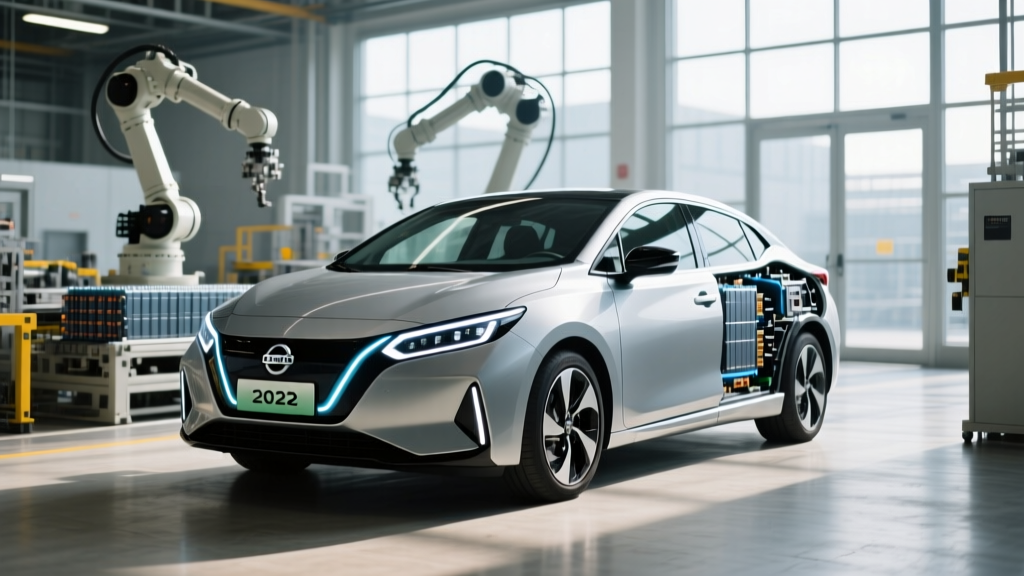
The Nissan Leaf sold in North America is assembled at Nissan's Smyrna Vehicle Assembly Plant in Smyrna, Tennessee. This facility has been the Leaf's U.S. production home since 2013, when Nissan shifted manufacturing from Oppama, Japan, to be closer to the American market. The Smyrna plant is one of Nissan's largest globally and also produces the Rogue, Pathfinder, Murano, and Infiniti QX60.
Leaf battery packs have historically been manufactured at Nissan's nearby battery facility in Decherd, Tennessee, though Nissan has consolidated some battery operations in recent years. The U.S. assembly location is relevant for buyers tracking domestic manufacturing, but as we'll discuss in the tax credit section, assembly location alone does not guarantee §30D eligibility — battery component and critical mineral sourcing rules also apply.
2026 Nissan Leaf Specifications at a Glance
| Spec | Leaf S (40 kWh) | Leaf SV PLUS (60 kWh) |
|---|---|---|
| EPA Range | 149 mi | 212 mi |
| Battery (usable) | ~39 kWh | ~59 kWh |
| Battery Chemistry | NMC (lithium-ion) | NMC (lithium-ion) |
| Motor Output | 110 kW / 147 hp | 160 kW / 214 hp |
| Drivetrain | FWD (single motor) | FWD (single motor) |
| 0–60 mph | ~7.9 sec | ~6.5 sec |
| Max DC Fast Charge | ~50 kW (CHAdeMO) | ~100 kW (CHAdeMO) |
| 10–80% DC Time | ~60 min | ~45 min |
| Level 2 Onboard Charger | 6.6 kW | 6.6 kW |
| EPA Efficiency | 111 MPGe | 109 MPGe |
| Cargo Volume (rear seats up/down) | 23.6 / 30.0 cu ft | 23.6 / 30.0 cu ft |
| Base MSRP | ~$28,140 | ~$36,190 |
Source: fueleconomy.gov and Nissan USA specifications. Pricing reflects 2026 model year MSRP before destination.
Real-World Range: What the EPA Sticker Doesn't Tell You
EPA sticker (SV PLUS): 212 miles
Real-world highway (70–75 mph): ~175–190 miles
Real-world cold weather (below 32°F): ~140–165 miles
City/commuter driving (mild weather): ~200–215 miles (regen-heavy routes can match or exceed EPA)
The Leaf SV PLUS's 212-mile EPA estimate is achievable in moderate conditions with a mix of city and suburban driving. The Leaf's regenerative braking system (including Nissan's e-Pedal mode, which enables one-pedal driving) recovers meaningful energy in stop-and-go traffic, sometimes allowing real-world city range to meet or slightly exceed the sticker number.
However, highway driving at sustained speeds above 70 mph reduces efficiency noticeably — expect a 10–15% drop. Cold weather is the bigger concern. The Leaf's air-cooled battery thermal management system (as opposed to the liquid-cooled systems in competitors like the Bolt EV and Kona Electric) means the pack cannot precondition as aggressively, and cold-weather range loss typically runs 20–30%. If you live in a region with harsh winters and a long commute, the 40 kWh Leaf S at 149 miles EPA becomes a risky proposition — you could see effective range dip below 110 miles on a freezing morning.
Charging Speed: CHAdeMO in an NACS World
The Leaf's charging story is one of its most debated aspects in 2026, and it comes down to two factors: the CHAdeMO connector and the air-cooled battery.
| Level | Power (kW) | Connector | Miles Added per Hour | Notes |
|---|---|---|---|---|
| Level 1 (120V) | ~1.4 kW | J1772 (included cable) | ~4–5 mi/hr | Overnight trickle; 40 kWh full in ~28 hr |
| Level 2 (240V) | 6.6 kW | J1772 | ~22–25 mi/hr | Full charge in ~7 hr (60 kWh) / ~5 hr (40 kWh) |
| DC Fast (CHAdeMO) | Up to 100 kW (SV PLUS) | CHAdeMO | ~180 mi/hr (peak) | 10–80% in ~45 min; tapers above 80% |
The Leaf uses CHAdeMO for DC fast charging — a connector standard that has lost significant ground in North America to CCS and, increasingly, the Tesla NACS standard (now adopted by Ford, GM, Rivian, Hyundai, and others). As of 2026, Electrify America, EVgo, and most major networks have shifted new installations to CCS/NACS, with CHAdeMO ports becoming legacy infrastructure. You can still find CHAdeMO chargers, but availability is shrinking, and some networks have stopped maintaining them.
The SV PLUS peaks at approximately 100 kW on DC fast charging, which is adequate but not class-leading. The air-cooled battery also means sustained charging sessions or repeated back-to-back fast charges can trigger thermal throttling (sometimes called "Rapidgate" in Leaf communities), where the car reduces charge rate to protect the battery. On a single session, 10–80% takes roughly 45 minutes — acceptable for the price point, but noticeably slower than liquid-cooled rivals that sustain peak rates longer.
For home Level 2 charging, the 6.6 kW onboard charger is standard. A full overnight charge on a 240V/32A circuit adds roughly 22–25 miles of range per hour, meaning most owners will wake up to a full battery every morning — which is the ideal EV ownership pattern.
Performance, Ride, and Daily Drivability
The Leaf SV PLUS delivers 214 horsepower and 250 lb-ft of torque from its front-mounted single motor, good for a 0–60 mph time of approximately 6.5 seconds. That's brisk enough for confident highway merging and passing. The base Leaf S with 147 hp is more leisurely at around 7.9 seconds to 60 mph — perfectly adequate for city commuting but less punchy on freeway on-ramps.
Ride quality is a Leaf strength. The low center of gravity from the under-floor battery pack gives it planted handling for a compact hatchback, and the suspension tuning prioritizes comfort over sportiness. Cabin noise is well-controlled at city speeds, though wind and tire noise become more noticeable above 70 mph.
Nissan's ProPILOT Assist (standard on SV PLUS, optional on SV) provides SAE Level 2 driver assistance with adaptive cruise control and lane centering. It's competent for highway cruising but requires continuous driver engagement — this is not a hands-off system. The 8-inch touchscreen infotainment system supports wireless Apple CarPlay and wired Android Auto, and the Leaf includes a 360-degree Around View Monitor on higher trims, which is genuinely useful for tight parking situations.
Pricing, Trims, and Federal Tax Credit Eligibility
| Trim | Base MSRP | Max §30D Credit | Effective Price (if eligible) |
|---|---|---|---|
| S (40 kWh) | ~$28,140 | Up to $3,750 | ~$24,390 |
| SV (40 kWh) | ~$30,000 | Up to $3,750 | ~$26,250 |
| SV PLUS (60 kWh) | ~$36,190 | Up to $3,750 | ~$32,440 |
Source: IRS §30D Clean Vehicle Credit guidelines. Eligibility depends on MSRP caps, buyer income limits, and battery component/critical mineral sourcing requirements. The Leaf has historically qualified for a partial credit ($3,750) due to critical mineral sourcing rules. Confirm current-year eligibility at irs.gov or with a tax professional. Point-of-sale transfer is available if all requirements are met.
- MSRP cap: Leaf is under the $55,000 passenger vehicle cap ✓
- Buyer income cap: AGI must not exceed $150,000 (single) / $300,000 (joint) — verify against your tax return
- Battery component sourcing: Leaf partially meets requirements → $3,750 credit (not the full $7,500)
- Critical minerals: Does not fully satisfy the critical minerals threshold as of the current tax year
- Point-of-sale transfer: Available — you can apply the credit at purchase to reduce your out-of-pocket cost
The Leaf S at an effective ~$24,390 (if you qualify for the partial credit) remains one of the least expensive new EVs available in the U.S. market. That price-to-EV proposition is the Leaf's strongest competitive argument in 2026.
Leaf vs. Bolt EV vs. Kona Electric: Where It Stands
The Leaf competes in the affordable compact EV hatchback segment against the Chevrolet Bolt EV (259 mi EPA, CCS connector, liquid-cooled battery) and the Hyundai Kona Electric (261 mi EPA, CCS/NACS transition, liquid-cooled). Here's how the key numbers compare:
| Metric | Nissan Leaf SV PLUS | Chevrolet Bolt EV | Hyundai Kona Electric |
|---|---|---|---|
| EPA Range | 212 mi | 259 mi | 261 mi |
| Battery | 59 kWh (NMC, air-cooled) | 65 kWh (NMC, liquid-cooled) | 64.8 kWh (NMC, liquid-cooled) |
| DC Fast Connector | CHAdeMO | CCS1 | CCS1 / NACS (2026+) |
| Max DC Charge Rate | ~100 kW | ~115 kW | ~100 kW |
| Base MSRP | ~$36,190 | ~$28,000 | ~$34,000 |
| 0–60 mph | ~6.5 sec | ~6.5 sec | ~6.7 sec |
The Leaf trails on range and charging infrastructure access. The Bolt EV offers 47 more miles of EPA range at a lower starting price with a CCS connector and liquid-cooled battery — a compelling package. The Kona Electric similarly out-ranges the Leaf and is transitioning to NACS compatibility. The Leaf's advantages are its proven reliability record, comfortable ride, and the low entry price of the base S trim for budget-focused buyers who primarily need a city commuter.
Battery Warranty, Longevity, and Degradation
Nissan covers the Leaf's battery with an 8-year / 100,000-mile warranty against defects and excessive capacity loss (typically defined as dropping below 9 bars on the 12-bar capacity gauge, which corresponds to roughly 70% state of health). California and states that follow CARB emissions rules extend this to 10 years / 150,000 miles.
The air-cooled battery design has historically been a concern for long-term degradation, particularly in hot climates. Early-generation Leafs (2011–2017) showed measurable capacity loss in Arizona and Texas summers. The current-generation pack chemistry and management are improved, but the fundamental limitation of passive air cooling remains. If you live in a region with sustained high temperatures or plan to DC fast-charge frequently, expect slightly more degradation over 5–8 years compared to liquid-cooled competitors.
For most moderate-climate, home-charging owners, the Leaf battery holds up adequately — data from fleet operators and long-term owners suggests 10–15% capacity loss over 100,000 miles is typical, which is within the warranty threshold.
Pros and Cons
Pros
- One of the lowest-priced new EVs (S trim under $29K)
- Comfortable ride and quiet cabin for the segment
- Proven reliability with over a decade of real-world data
- e-Pedal one-pedal driving is intuitive and effective
- Good cargo space (23.6 cu ft) for a compact hatch
- Built in Tennessee — U.S. assembly
Cons
- CHAdeMO connector is losing infrastructure support
- Air-cooled battery limits fast-charge sessions and hot-climate longevity
- 212-mile max range trails Bolt EV and Kona Electric
- Only partial §30D tax credit ($3,750, not $7,500)
- Dated interior design compared to newer rivals
- No AWD or heat pump option for cold-weather optimization
Who Should Buy the 2026 Nissan Leaf?
The Leaf is best suited for budget-conscious commuters who charge primarily at home, drive under 100 miles round-trip daily, and live in moderate climates. The base S trim at ~$28,140 (potentially ~$24,390 after the partial credit) is an outstanding value for a second car or a first EV for someone with reliable Level 2 home charging and no need for frequent road trips.
The Leaf is not ideal for buyers who need frequent DC fast charging on road trips (CHAdeMO availability is declining), those in extreme hot or cold climates (air-cooled battery and no heat pump), or anyone prioritizing maximum range. For those use cases, the Bolt EV or Kona Electric are stronger choices.
Frequently Asked Questions
Where is the Nissan Leaf manufactured?
The Nissan Leaf for the North American market is assembled at Nissan's Smyrna, Tennessee plant. Battery production has been handled at Nissan's Decherd, Tennessee facility, though operations have been consolidated in recent years.
What is the real-world range of the Nissan Leaf?
The SV PLUS (60 kWh) is EPA-rated at 212 miles. In real-world highway driving at 70+ mph, expect 175–190 miles. In freezing temperatures, range can drop to 140–165 miles. City commuters using regenerative braking may match or slightly exceed the EPA estimate in mild weather.
How fast does the Leaf charge at home and on DC fast chargers?
On a Level 2 home charger (240V, 6.6 kW), the SV PLUS gains roughly 22–25 miles of range per hour, reaching a full charge in about 7 hours. On a CHAdeMO DC fast charger, the SV PLUS peaks at ~100 kW, achieving 10–80% in approximately 45 minutes. Charging slows significantly above 80% SoC to protect the battery.
Does the Nissan Leaf qualify for the federal EV tax credit?
The Leaf qualifies for a partial §30D credit of $3,750 (not the full $7,500) due to battery component and critical mineral sourcing requirements. Eligibility also depends on buyer income limits ($150K single / $300K joint AGI) and the vehicle's MSRP being under the $55,000 cap. The credit can be transferred at the point of sale. Always verify current-year rules at irs.gov or consult a tax professional.
Is the Nissan Leaf worth buying over the Chevrolet Bolt EV?
For the lowest possible entry price, the base Leaf S is compelling. But the Bolt EV offers 47 more miles of range, a CCS connector with broader charging network support, and a liquid-cooled battery — all at a comparable or lower price. If range and road-trip charging matter, the Bolt EV is the stronger pick. If you want a comfortable, proven commuter at the lowest cost and charge at home, the Leaf S remains a solid choice.
Will the Nissan Leaf switch to NACS?
As of the 2026 model year, the Leaf continues to use the CHAdeMO DC fast-charging connector. Nissan has announced plans to adopt NACS for future EV models, but the current-generation Leaf has not been updated with the new connector. Adapters from CHAdeMO to CCS exist but are limited and not universally compatible with all charging networks.
How long will the Leaf battery last?
Nissan warranties the battery for 8 years / 100,000 miles (10 years / 150,000 miles in CARB states). Real-world data from long-term owners suggests 10–15% capacity loss over 100,000 miles with regular home charging. Air-cooled batteries in hot climates may degrade faster. Avoid frequent back-to-back DC fast charging and prolonged storage at 100% SoC to maximize battery life.