Quick Verdict: The 2026 Nissan Leaf at a Glance
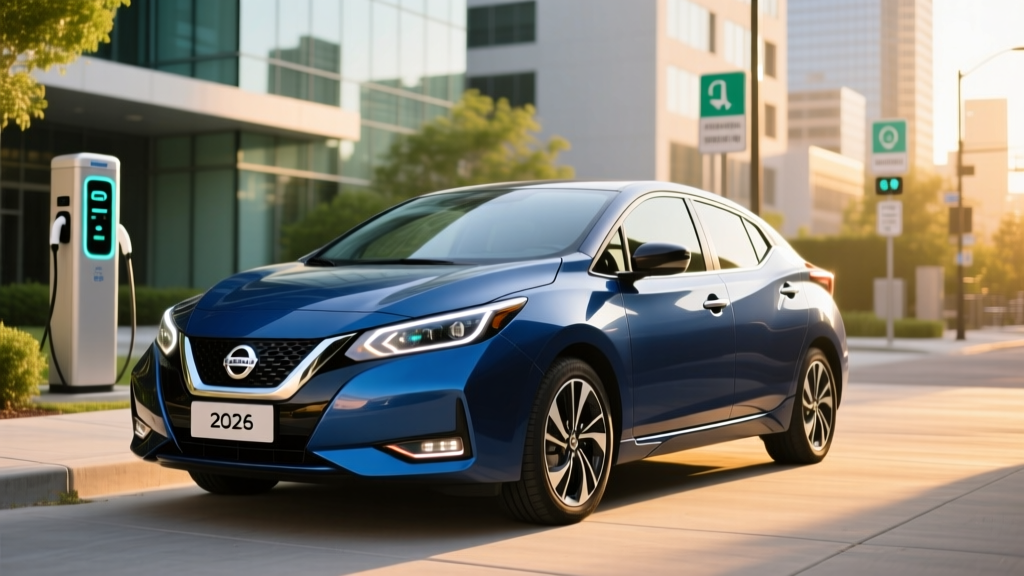
The Nissan Leaf remains one of the most affordable new electric vehicles on the market, and for 2026 it continues with a refreshed battery pack and the long-overdue switch to the CCS2/NACS-compatible charging standard. But buyers searching for Nissan Leaf weight specs, real-world range, and charging speed need to know exactly what they're getting — and where this aging platform falls short against newer rivals like the Chevrolet Equinox EV and Hyundai Kona Electric.
The Leaf is a practical commuter hatchback, not a road-trip machine. If your daily drive is under 40 miles round-trip and you can charge at home, the Leaf's low entry price and proven reliability make it compelling. If you need highway-fast DC charging or 300+ miles of range, look elsewhere.
| Spec | Leaf S (40 kWh) | Leaf SV Plus (60 kWh) |
|---|---|---|
| EPA Range | 149 miles | 212 miles |
| Battery (usable) | 40 kWh (NMC) | 60 kWh (NMC) |
| Curb Weight | ~3,485 lbs | ~3,680 lbs |
| Motor Output | 147 hp / 236 lb-ft | 214 hp / 250 lb-ft |
| 0–60 mph | ~7.9 sec | ~6.5 sec |
| Drivetrain | FWD | FWD |
| Max DC Fast Charge | 50 kW (CCS2) | 100 kW (CCS2) |
| 10–80% DC Time | ~60 min | ~45 min |
| Level 2 Charge Rate | 6.6 kW (~22 mi/hr) | 6.6 kW (~22 mi/hr) |
| MPGe (combined) | 111 MPGe | 104 MPGe |
| Cargo Volume | 23.6 cu ft / 30.0 cu ft (rear seats folded) | 23.6 cu ft / 30.0 cu ft |
| Base MSRP | $29,135 | $37,285 |
| Battery Warranty | 8 years / 100,000 miles | |
How Much Does the Nissan Leaf Weigh? Curb Weight Breakdown
Understanding the Nissan Leaf weight matters for efficiency, tire wear, and payload. The 2026 Leaf's curb weight varies by trim and battery configuration:
- Leaf S (40 kWh): Approximately 3,485 lbs — lighter battery means less mass to accelerate and brake, translating to slightly better city efficiency.
- Leaf SV Plus (60 kWh): Approximately 3,680 lbs — the larger battery adds roughly 195 lbs. This extra weight is offset by the higher energy capacity, but it does contribute to the SV Plus's slightly lower MPGe rating.
- Gross Vehicle Weight Rating (GVWR): ~4,354 lbs across trims.
- Payload capacity: Roughly 850–870 lbs including passengers and cargo.
For context, the Leaf is lighter than most crossover EVs (the Hyundai Ioniq 5 weighs ~4,400 lbs) but heavier than the Mini Cooper SE (~3,100 lbs). The Leaf's weight is well-distributed thanks to the under-floor battery pack, giving it a low center of gravity that aids stability despite the front-wheel-drive layout.
Real-World Range: What to Expect Beyond the EPA Sticker
EPA Estimated Range: 149 mi (S) / 212 mi (SV Plus)
Real-World Expectation:
- City/commute driving (mild weather): 195–215 mi (SV Plus)
- Highway driving (70 mph, mild): ~170–185 mi (SV Plus)
- Cold weather (below 30°F, mixed): ~145–165 mi (SV Plus) — expect 20–30% range loss
- Hot weather with A/C (above 90°F): ~185–200 mi (SV Plus)
The Leaf SV Plus's 60 kWh NMC (nickel manganese cobalt) battery delivers its best efficiency in stop-and-go city driving where regenerative braking recaptures energy. On sustained highway runs at 70+ mph, aerodynamic drag and the Leaf's relatively upright hatchback profile reduce range noticeably.
Cold weather is the Leaf's Achilles heel. Unlike many modern EVs, the Leaf lacks a dedicated battery heat pump (it uses a resistance heater for cabin warmth and passive battery thermal management). In freezing temperatures, expect a 20–30% range reduction. If you live in northern climates and need reliable winter range, the Leaf's cold-weather performance is a genuine limitation — consider a vehicle with active battery thermal management and a heat pump, such as the Hyundai Kona Electric or Tesla Model 3.
According to fueleconomy.gov, the SV Plus achieves 104 MPGe combined (121 city / 88 highway). The S trim, with its smaller battery and lighter weight, edges up to 111 MPGe combined.
Charging Speed: The Leaf's Biggest Weakness
| Charging Level | Power | Rate / Speed | Notes |
|---|---|---|---|
| Level 1 (120V household) | 1.4 kW | ~4–5 miles per hour | Emergency/top-up only; ~40+ hours for full charge (SV Plus) |
| Level 2 (240V home/public) | 6.6 kW | ~22 miles per hour | Full charge in ~9–10 hours (SV Plus); overnight-ready |
| DC Fast Charge (CCS2) | Up to 100 kW (SV Plus) / 50 kW (S) | 10–80% in ~45 min (SV Plus) / ~60 min (S) | Peak rate not sustained; tapers significantly above 80% |
Charging speed is where the 2026 Leaf shows its age most clearly. The SV Plus peaks at 100 kW on a DC fast charger — acceptable for occasional road trips but far behind the 200–350 kW peak rates offered by competitors built on 800V architectures (Hyundai Ioniq 5, Kia EV6, Porsche Taycan).
The Leaf's charge curve is relatively flat compared to modern EVs: it ramps to ~85–100 kW in the 10–40% state-of-charge window, then gradually tapers. Above 80%, charging slows to roughly 30–40 kW, making the 80–100% top-off a lengthy affair. For road-trip planning, plan stops around 30-minute sessions to stay in the fast-charging sweet spot.
Home Level 2 charging at 6.6 kW is perfectly adequate for daily use. A full overnight charge (8–10 hours) replenishes the SV Plus battery completely. Installation of a Level 2 home charger (240V, 30–40 amp circuit) typically costs $500–$2,000 depending on your electrical panel and run distance — consult a licensed electrician for a site-specific quote.
For 2026, Nissan has transitioned the Leaf to the CCS2 charge port (dropping the legacy CHAdeMO connector used on earlier models), improving compatibility with the Electrify America, EVgo, and ChargePoint networks. If you have an older CHAdeMO-equipped Leaf, adapters are available but add cost and complexity.
Performance, Interior, and Technology
The SV Plus's 214-horsepower front-mounted motor delivers brisk acceleration for a commuter hatchback: 0–60 mph in approximately 6.5 seconds. That's quick enough for confident highway merging but not sports-sedan territory. The base S trim's 147 hp motor takes roughly 7.9 seconds to 60 mph. Both trims are front-wheel drive only — no AWD option is available.
Regenerative braking is adjustable via Nissan's e-Pedal mode, which enables near one-pedal driving in city traffic. However, the Leaf's regen doesn't bring the car to a complete hold without touching the brake pedal — a minor annoyance compared to the full-stop regen in the Chevrolet Bolt or Tesla models.
Interior Space and Cargo
The Leaf offers practical hatchback utility:
- Front legroom: 42.1 inches
- Rear legroom: 33.5 inches — adequate for adults on shorter trips but tight for tall passengers on long rides
- Cargo behind rear seats: 23.6 cu ft
- Cargo with rear seats folded: 30.0 cu ft
- No frunk: The Leaf's motor and electronics occupy the front compartment
Infotainment and Driver Assistance
The 2026 Leaf features an 8-inch (S) or available 12.3-inch (SV Plus) touchscreen with wireless Apple CarPlay and Android Auto. Nissan's ProPILOT Assist is standard on SV Plus — a Level 2 driver-assistance system combining adaptive cruise control and lane-centering. It performs competently on marked highways but requires continuous driver supervision and does not support hands-free operation. The base S trim includes Nissan Safety Shield 360 (automatic emergency braking, blind-spot warning, rear cross-traffic alert, lane departure warning).
Pricing, Trims, and Federal Tax Credit Eligibility
| Trim | Base MSRP | As-Tested (typical) | Est. §30D Credit | Effective Price |
|---|---|---|---|---|
| Leaf S (40 kWh) | $29,135 | $30,500 | Up to $3,750* | ~$25,385 – $26,750* |
| Leaf SV Plus (60 kWh) | $37,285 | $39,800 | Up to $3,750* | ~$33,535 – $36,050* |
*Tax credit estimates are subject to IRS §30D rules. Eligibility depends on buyer income, battery component sourcing, and critical mineral requirements. Always verify current-year eligibility at irs.gov or with a qualified tax professional.
Federal Tax Credit Eligibility Checklist (§30D)
- MSRP cap: The Leaf qualifies — its MSRP is well under the $55,000 car cap
- Buyer income cap: AGI must not exceed $150,000 (single) / $225,000 (head of household) / $300,000 (joint)
- Battery sourcing: The Leaf's battery components and critical minerals must meet phased-in domestic-content thresholds. For 2026, this may limit the credit to $3,750 (half-credit) if either the component or mineral requirement is unmet
- Point-of-sale transfer: Eligible buyers can transfer the credit to the dealer at purchase for an immediate price reduction — no need to wait for tax filing
- Assembly: Must be assembled in North America (the Leaf is built in Smyrna, Tennessee)
The Leaf's credit situation is nuanced. While its US assembly and low MSRP clear two major hurdles, Nissan's battery supply chain may not fully satisfy the critical-minerals requirement for the full $7,500 credit in all model years. Buyers should confirm the exact credit amount with their dealer and cross-reference the DOE's qualifying vehicle list before signing.
Ownership Costs, Warranty, and Who the Leaf Suits Best
Nissan covers the Leaf's battery and electric powertrain for 8 years or 100,000 miles (whichever comes first), with a capacity-loss warranty that triggers if the battery degrades below approximately 66% of original capacity (as indicated by the battery capacity gauge bars). The basic vehicle warranty is 3 years / 36,000 miles.
Long-term battery degradation data for the Leaf is mixed. Earlier-generation Leafs (2011–2017, air-cooled batteries) showed notable degradation in hot climates. The current-generation Leaf uses passive air cooling rather than active liquid thermal management — an engineering choice that keeps costs down but may accelerate degradation in extreme heat over many years. Owners in temperate climates report acceptable degradation curves; those in Arizona, Texas, or the Middle East should monitor State of Health (SoH) closely.
Who Should Buy the Nissan Leaf?
Best for: Budget-conscious commuters with home charging access, mild-climate residents, and drivers who prioritize low purchase price over road-trip capability. The Leaf excels as a second car or a dedicated city/suburban runabout.
Not ideal for: Frequent road-trippers (slow DC charging and 212-mile max range), cold-climate drivers without garage parking (no battery heat pump), those needing AWD, or families requiring more rear-seat space and cargo volume.
Pros
- Low entry price — one of the cheapest new EVs available
- Proven platform with extensive real-world reliability data
- US-assembled (Smyrna, TN) — supports §30D eligibility
- Comfortable ride quality and quiet cabin for the price segment
- Adequate Level 2 home charging for overnight replenishment
- Hatchback cargo versatility (23.6 cu ft)
Cons
- DC fast charging peaks at only 100 kW — slowest in its class
- No active battery thermal management (passive air cooling only)
- Significant cold-weather range loss (20–30%)
- FWD only — no AWD option
- Rear-seat legroom is tight at 33.5 inches
- CHAdeMO legacy on pre-2025 models complicates public charging
- Interior materials and tech feel dated vs. newer competitors
How the Leaf Compares to Key Competitors
| Spec | 2026 Nissan Leaf SV Plus | 2026 Hyundai Kona Electric | 2026 Chevrolet Equinox EV 3LT |
|---|---|---|---|
| EPA Range | 212 mi | 261 mi | 319 mi |
| Battery | 60 kWh (NMC) | 65 kWh (NMC) | 85 kWh (NMC) |
| Max DC Charge | 100 kW | 150 kW | 150 kW |
| 10–80% Time | ~45 min | ~41 min | ~38 min |
| HP / 0–60 | 214 hp / 6.5s | 201 hp / 7.2s | 213 hp / 7.8s |
| Base MSRP | $37,285 | $34,975 | $43,900 |
| Battery Thermal Mgmt | Passive air | Active liquid | Active liquid |
| Heat Pump | No | Yes | Yes |
The Kona Electric undercuts the Leaf on price while offering more range, faster charging, and active thermal management. The Equinox EV costs more but delivers class-leading range and a modern platform. The Leaf's primary advantage is its low base price on the S trim ($29,135) — but that comes with only 149 miles of range.
Frequently Asked Questions
What is the Nissan Leaf's curb weight?
The 2026 Nissan Leaf S (40 kWh) weighs approximately 3,485 lbs. The SV Plus (60 kWh) weighs approximately 3,680 lbs. The GVWR is roughly 4,354 lbs across trims.
What is the real-world range of the Nissan Leaf?
The EPA rates the SV Plus at 212 miles. In real-world highway driving at 70 mph, expect 170–185 miles. In freezing temperatures, range drops to roughly 145–165 miles due to the Leaf's lack of a battery heat pump.
How fast does the Nissan Leaf charge?
On a DC fast charger, the SV Plus peaks at 100 kW, reaching 10–80% in approximately 45 minutes. At home on a Level 2 (240V, 6.6 kW) charger, expect roughly 22 miles of range added per hour, or a full charge in about 9–10 hours.
Does the 2026 Nissan Leaf qualify for the federal EV tax credit?
The Leaf is assembled in the US (Smyrna, TN) and its MSRP is under the $55,000 cap, so it clears two major §30D requirements. However, the exact credit amount ($3,750 or $7,500) depends on battery component and critical-mineral sourcing thresholds that change annually. Verify at irs.gov before purchasing. Buyer income caps also apply.
Is the Nissan Leaf worth buying in 2026?
If you want the most affordable new EV and your driving is mostly local with home charging access, the Leaf S at ~$29,000 (potentially ~$25,000 after credit) is hard to beat. But the SV Plus at $37,000+ faces stiff competition from the Kona Electric and Equinox EV, which offer more range, faster charging, and better thermal management for similar or only slightly higher prices.
Does the Nissan Leaf have a heat pump?
No. The 2026 Leaf uses a resistance heater for cabin heating and passive air cooling for the battery. This contributes to significant range loss in cold weather and potentially faster battery degradation in extreme heat compared to EVs with active liquid thermal management.
What connector does the 2026 Nissan Leaf use?
The 2026 Leaf uses the CCS2 (Combined Charging System) connector for DC fast charging and a J1772 inlet for Level 1/Level 2 AC charging. Earlier Leaf models (pre-2025) used CHAdeMO for DC charging.