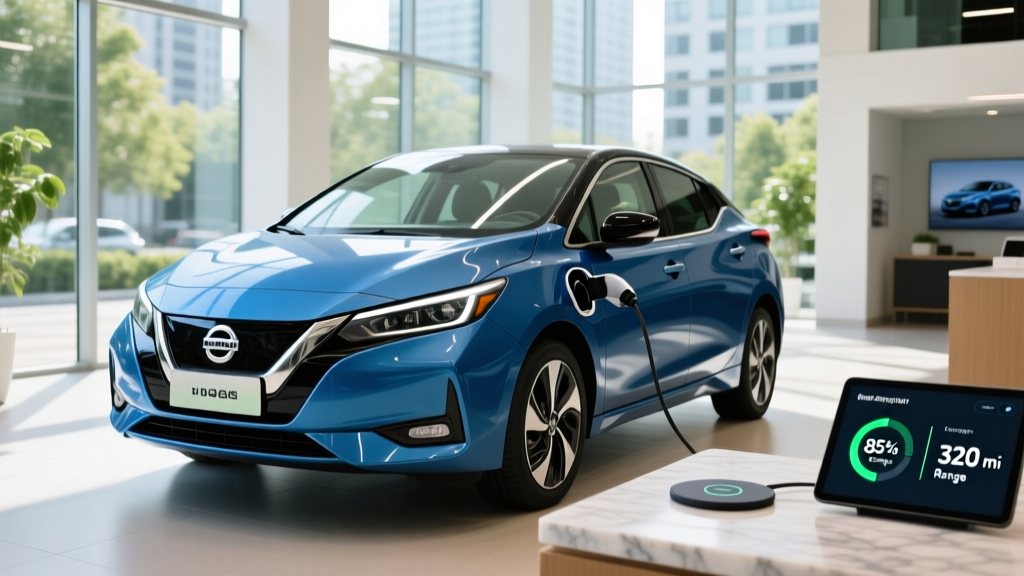
The 2026 Nissan Leaf at a Glance
The Nissan Leaf remains one of the most affordable new electric vehicles on the U.S. market, and for 2026 it continues to offer two battery options across its S and SV PLUS trims. But with the federal EV tax credit landscape shifting under IRS §30D rules — including battery-sourcing and critical-mineral requirements — many buyers are asking a direct question: does the 2026 Nissan Leaf still qualify for the full $7,500 federal tax credit?
The short answer is complicated. The Leaf's eligibility hinges on where its battery cells and minerals are sourced, and Nissan has historically struggled to meet the increasingly strict domestic-content thresholds that the Inflation Reduction Act phased in starting 2023. Below, we break down exactly what the credit rules mean for the Leaf, then cover the full ownership picture — range, charging, performance, and whether this EV still makes sense in a market crowded with newer competitors.
Range, Battery, and Real-World Efficiency
The 2026 Leaf is offered in two configurations:
- Leaf S: 40 kWh usable battery (NMC chemistry), EPA-estimated 149 miles of range.
- Leaf SV PLUS: 60 kWh usable battery (NMC chemistry), EPA-estimated 212 miles of range.
Leaf S (40 kWh): EPA 149 mi — expect ~120–130 mi on the highway at 70 mph; ~100–110 mi in sustained cold weather (below 30°F) with cabin heat.
Leaf SV PLUS (60 kWh): EPA 212 mi — expect ~175–190 mi highway; ~150–165 mi in cold weather. City driving with regen braking can push closer to or slightly above the EPA figure.
Efficiency on the SV PLUS is rated at 111 MPGe combined (roughly 30 kWh per 100 miles), which is respectable but trails more aerodynamically optimized competitors like the Hyundai Kona Electric (129 MPGe). The base S trim achieves 123 MPGe combined. The Leaf's boxy hatchback shape creates more drag at highway speeds, which is why real-world highway range drops noticeably compared to the EPA sticker.
| Spec | Leaf S | Leaf SV PLUS |
|---|---|---|
| EPA Range | 149 mi | 212 mi |
| Battery (usable) | 40 kWh (NMC) | 60 kWh (NMC) |
| Efficiency (combined) | 123 MPGe | 111 MPGe |
| Horsepower | 147 hp | 214 hp |
| 0–60 mph | ~7.9 sec | ~6.5 sec |
| Drivetrain | FWD | FWD |
| Max DC Fast Charge | 50 kW (CHAdeMO) | 100 kW (CHAdeMO) |
| 10–80% DC Time | ~60 min | ~45 min |
| Level 2 Rate | 6.6 kW (~23 mi/hr) | 6.6 kW (~23 mi/hr) |
| Cargo Volume | 23.6 cu ft (rear seats up) / 30.0 cu ft (folded) | 23.6 cu ft / 30.0 cu ft |
| Base MSRP | $28,140 | $36,190 |
Charging Speed: The Leaf's Biggest Weakness
Charging is where the 2026 Leaf shows its age most clearly. The Leaf still uses the CHAdeMO DC fast-charging connector rather than the CCS1 or NACS (Tesla-style) connectors that now dominate North American public charging infrastructure.
| Level | Power | Leaf S | Leaf SV PLUS |
|---|---|---|---|
| Level 1 (120V household) | ~1.4 kW | ~4 mi/hr | ~4 mi/hr |
| Level 2 (240V home/public) | 6.6 kW | ~23 mi/hr (full in ~7 hr) | ~23 mi/hr (full in ~10 hr) |
| DC Fast Charge | Peak 50 kW / 100 kW | 10–80% in ~60 min | 10–80% in ~45 min |
Here is why this matters practically:
- CHAdeMO infrastructure is shrinking. Electrify America and most major networks have standardized on CCS1, and Tesla's Supercharger network uses NACS. CHAdeMO stalls are increasingly rare and often poorly maintained at the few locations that still have them.
- 100 kW peak is modest. The SV PLUS peaks at 100 kW but cannot sustain that rate — the charge curve tapers significantly above 60% state of charge. Expect an average rate closer to 65–75 kW during a typical 10–80% session.
- No NACS adapter option. Unlike Ford and GM, which now use NACS and can access Tesla Superchargers, Nissan has not announced a NACS adapter for the Leaf. This limits road-trip flexibility considerably.
For home Level 2 charging, the 6.6 kW onboard charger is adequate. A full overnight charge on a 240V circuit is practical for both trims, and this is how the vast majority of Leaf owners will refuel. But if public fast charging is part of your routine, the Leaf's CHAdeMO dependency is a genuine limitation in 2026.
Federal Tax Credit: Does the 2026 Leaf Qualify?
This is the question driving searches, and the answer requires understanding the current IRS §30D rules, which have tightened significantly since the Inflation Reduction Act took effect.
- Maximum credit: $7,500 ($3,750 for battery components + $3,750 for critical minerals)
- Vehicle MSRP cap: $55,000 for sedans/hatchbacks — Leaf qualifies on price (MSRP well under cap)
- Buyer income cap: AGI ≤ $150,000 (single) / $300,000 (joint) / $225,000 (head of household)
- Battery component sourcing: Must be manufactured or assembled in North America (phase-in percentages increase annually)
- Critical minerals sourcing: Must be extracted or processed in the U.S. or a free-trade-agreement country
- FEOC exclusion: Battery cannot contain components from a Foreign Entity of Concern (e.g., certain Chinese suppliers)
- Point-of-sale transfer: Eligible buyers can transfer the credit to the dealer for an upfront price reduction
Where the Leaf stands: The Nissan Leaf's battery cells have historically been sourced from suppliers that do not fully meet the North American manufacturing and critical-mineral thresholds. As of the 2026 model year, the Leaf does not appear on the IRS list of vehicles eligible for the full $7,500 credit. It may qualify for a partial credit ($3,750) if it meets one of the two sourcing prongs, but buyers should verify current eligibility directly at fueleconomy.gov before purchasing.
| Trim | Base MSRP | Est. Credit | Effective Price |
|---|---|---|---|
| Leaf S | $28,140 | $0–$3,750* | $24,390–$28,140 |
| Leaf SV PLUS | $36,190 | $0–$3,750* | $32,440–$36,190 |
*Credit eligibility depends on IRS sourcing determinations and buyer income. Confirm at irs.gov before purchase. State and local incentives may also apply but vary by jurisdiction.
Performance, Interior, and Technology
The Leaf SV PLUS delivers 214 horsepower and 250 lb-ft of torque through a single front-mounted motor driving the front wheels. The 0–60 mph time of roughly 6.5 seconds is adequate for merging and passing, though it trails sportier EVs in this price range. The base S trim's 147 hp feels more leisurely, especially at highway speeds.
Inside, the Leaf uses Nissan's familiar 8-inch touchscreen infotainment system with Apple CarPlay and Android Auto (wired on S, wireless on SV PLUS). The digital instrument cluster is clear, and physical climate controls are a practical touch. ProPILOT Assist — Nissan's Level 2 driver-assistance system — is available on SV PLUS and includes adaptive cruise control with lane centering. Note: this is not self-driving. The driver must keep hands on the wheel and eyes on the road at all times.
Cargo space is 23.6 cubic feet behind the rear seats and 30.0 cubic feet with the 60/40 split rear seats folded — competitive for a compact hatchback. Rear legroom is 33.5 inches, which is tight for taller passengers on longer trips.
Battery Warranty and Longevity
Nissan covers the Leaf's battery with an 8-year/100,000-mile warranty against capacity loss below 9 bars (out of 12) on the battery health gauge. In practice, this roughly corresponds to about 70–75% of original capacity. The powertrain carries a 5-year/60,000-mile warranty.
Nissan's NMC batteries have shown moderate degradation over time. Owner-reported data suggests roughly 10–15% capacity loss over the first 100,000 miles, which is within the warranty threshold but more than some competitors using LFP chemistry (which degrades more slowly). The Leaf also lacks active liquid battery thermal management — it relies on passive air cooling, which can contribute to faster degradation in hot climates and limits sustained fast-charging performance.
How the Leaf Compares to Key Competitors
The Leaf's value proposition has narrowed as competitors have caught up and surpassed it in range, charging speed, and infrastructure access:
- Hyundai Kona Electric: EPA 261 mi, CCS1 fast charging at 100+ kW, more modern interior, similar starting price. Eligible for partial or full credit depending on sourcing.
- Chevrolet Bolt EV (if remaining stock/new): EPA 259 mi, CCS1, historically qualified for the full $7,500 credit. A stronger value if available.
- Nissan's own upcoming models: Nissan has signaled next-generation EVs on new platforms with NACS/CCS charging and larger batteries. The current Leaf is a legacy design.
The Leaf's strongest argument remains its low entry price on the S trim and its simplicity. For a buyer who charges exclusively at home and drives under 100 miles per day, the Leaf S at ~$28,000 (potentially less with a partial credit or state incentives) is a functional commuter appliance.
- Low starting MSRP — one of the cheapest new EVs available
- Simple, proven platform with wide dealer service network
- Adequate home Level 2 charging for daily commuting
- Comfortable ride quality for city and suburban driving
- Hatchback cargo versatility (23.6/30.0 cu ft)
- CHAdeMO connector — shrinking public fast-charge access
- Modest DC fast-charge speed (50–100 kW peak, slow taper)
- Likely ineligible for the full $7,500 federal tax credit
- Passive battery cooling — degradation risk in hot climates
- Real-world highway range significantly below EPA sticker
- Platform is aging — no NACS, limited ADAS features
Who Should Buy the 2026 Nissan Leaf?
Choose the Leaf S if: You need the lowest-cost new EV, charge at home on Level 2, drive under 80 miles round-trip daily, and live in a mild climate. Budget is your top priority and you can accept limited road-trip capability.
Choose the Leaf SV PLUS if: You want more range (212 mi EPA) and the extra power of 214 hp, still primarily charge at home, and occasionally need to fast-charge on longer trips — but have verified CHAdeMO availability along your common routes.
Look elsewhere if: You rely on public DC fast charging, want access to the Tesla Supercharger network, need the full $7,500 tax credit to make the math work, live in a hot climate (passive battery cooling), or regularly drive highway distances over 150 miles.
Frequently Asked Questions
Does the 2026 Nissan Leaf qualify for the $7,500 federal EV tax credit?
The Leaf likely does not qualify for the full $7,500 credit under current IRS §30D rules due to battery-sourcing requirements. It may be eligible for a partial $3,750 credit if it meets one of the two sourcing prongs. Always verify at fueleconomy.gov before purchasing, as eligibility determinations can change.
What is the real-world range of the Nissan Leaf SV PLUS?
The EPA rates the SV PLUS at 212 miles, but expect roughly 175–190 miles in real-world highway driving at 65–75 mph, and 150–165 miles in cold weather below 30°F. City driving with regenerative braking can match or slightly exceed the EPA estimate.
Can I charge the Nissan Leaf at Tesla Superchargers?
No. The Leaf uses the CHAdeMO DC fast-charging connector and is not compatible with Tesla's NACS connector or Supercharger network. Nissan has not announced a NACS adapter for the current-generation Leaf.
How long does it take to charge the Leaf at home?
On a 240V Level 2 home charger (6.6 kW), the Leaf S (40 kWh) charges fully in about 7 hours, and the SV PLUS (60 kWh) in about 10 hours. Both are practical for overnight charging. A standard 120V outlet (Level 1) adds only about 4 miles of range per hour and is not practical as a primary charging method for the SV PLUS.
Is the Nissan Leaf a good car for road trips?
The Leaf is not ideal for road trips in 2026. The CHAdeMO connector limits fast-charging station availability, the 100 kW peak charge rate is slow by modern standards, and real-world highway range on the SV PLUS is roughly 175–190 miles. For frequent road-trippers, an EV with CCS1 or NACS and 250+ kW charging capability is a better choice.
How long will the Leaf battery last?
Nissan warranties the battery for 8 years/100,000 miles against capacity dropping below 9 of 12 bars (~70–75% of original). Owner data suggests 10–15% degradation over 100,000 miles under normal conditions. The passive air-cooling system can accelerate degradation in hot climates. A full battery replacement, if ever needed out of warranty, typically costs $6,500–$9,000 depending on the pack size.