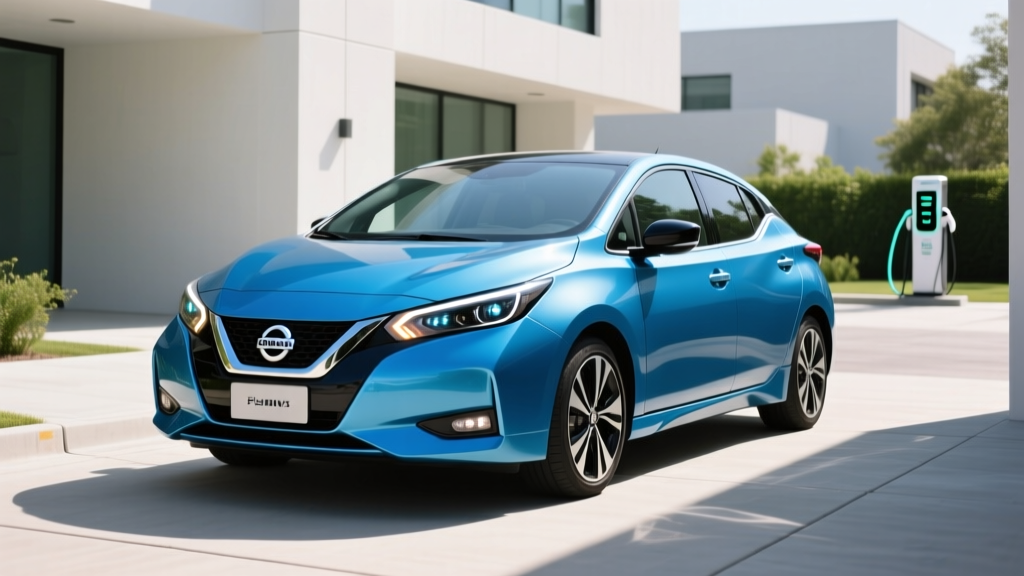
The Nissan Leaf holds a unique place in electric-vehicle history. When it first arrived for the 2011 model year, it became the world's first mass-market, purpose-built battery electric vehicle sold by a major automaker. Over more than a decade of production, the Leaf has evolved from a 73-mile-range commuter car into a 212-mile hatchback with DC fast charging — though not without controversy over its charging connector and battery cooling strategy.
If you've been searching for the Nissan Leaf release year timeline, whether you're researching a used model or evaluating the 2026 version, this guide covers every major generation, the specs that matter, and whether the Leaf still holds up against modern competition like the Chevrolet Bolt EV, Hyundai Kona Electric, and Tesla Model 3.
Nissan Leaf Release Year Timeline: Every Generation at a Glance
Understanding the Leaf's generational shifts is critical because battery capacity, range, and charging hardware changed dramatically between model years. A 2015 Leaf is a fundamentally different vehicle from a 2026 Leaf — even though they share a nameplate.
| Generation | Release Year (Model Year) | Battery (kWh) | EPA Range (miles) | DC Fast Charge |
|---|---|---|---|---|
| 1st Gen (ZE0) | 2011 | 24 kWh | 73 | CHAdeMO ~50 kW |
| 1st Gen refresh | 2013–2015 | 24 kWh | 75–84 | CHAdeMO ~50 kW |
| 1st Gen (30 kWh) | 2016–2017 | 30 kWh | 107 | CHAdeMO ~50 kW |
| 2nd Gen (ZE1) | 2018 | 40 kWh | 151 | CHAdeMO ~50 kW |
| 2nd Gen Plus | 2019 | 62 kWh | 226 | CHAdeMO ~100 kW |
| 2nd Gen refresh | 2023–2026 | 40 / 60 kWh | 149 / 212 | CHAdeMO ~50–100 kW |
The most significant jump came with the 2019 Leaf Plus, which introduced a 62 kWh battery and pushed range past 200 miles for the first time. The 2023 refresh brought updated styling, a new infotainment system, and slightly revised battery management, but the fundamental platform and CHAdeMO connector remained unchanged.
2026 Nissan Leaf Specs: Range, Battery, and Efficiency
For the 2026 model year, Nissan continues to offer the Leaf in two battery configurations: the standard 40 kWh pack (Leaf S) and the larger 60 kWh pack (Leaf SV Plus). Both use NMC (nickel manganese cobalt) lithium-ion chemistry — not LFP — which means higher energy density but a more conservative state-of-charge management strategy to preserve long-term battery health.
| Spec | Leaf S (40 kWh) | Leaf SV Plus (60 kWh) |
|---|---|---|
| Battery capacity | 40 kWh usable | 60 kWh usable |
| Chemistry | NMC | NMC |
| EPA range | 149 miles | 212 miles |
| MPGe (combined) | 111 MPGe | 109 MPGe |
| Energy consumption | 30 kWh/100 mi | 31 kWh/100 mi |
| Horsepower | 147 hp | 214 hp |
| Torque | 236 lb-ft | 250 lb-ft |
| 0–60 mph | ~7.9 sec | ~6.5 sec |
| Drivetrain | FWD (single motor) | FWD (single motor) |
| Cargo volume | 23.6 cu ft (rear seats up) | 23.6 cu ft (rear seats up) |
| Rear legroom | 33.5 in | 33.5 in |
The EPA rates the Leaf SV Plus at 212 miles, but real-world results depend heavily on conditions. In mild weather (60–75°F) with mixed city/highway driving, expect 190–205 miles. On sustained highway trips at 70–75 mph, plan for 170–185 miles due to aerodynamic drag. In freezing temperatures (below 32°F) without preconditioning, range can drop to 140–160 miles — a 25–35% reduction. The Leaf does not offer a standard heat pump (resistance heating is standard), which compounds cold-weather energy loss.
Charging Speed: CHAdeMO in a NACS/CCS World
This is the Leaf's most significant competitive disadvantage in 2026. While Tesla's NACS connector has become the de facto North American standard — with Ford, GM, Rivian, Hyundai, and others adopting it — the Leaf remains the last major EV still using CHAdeMO for DC fast charging. Nissan has confirmed that the next-generation Leaf (expected for the 2027 or 2028 model year) will switch to NACS, but for now, current buyers must navigate a shrinking CHAdeMO infrastructure.
| Charging Level | Leaf S (40 kWh) | Leaf SV Plus (60 kWh) |
|---|---|---|
| Level 1 (120V, 12A) | ~1.4 kW / ~4 mi/hr | ~1.4 kW / ~4 mi/hr |
| Level 2 (240V, 32A) | 6.6 kW / ~22 mi/hr | 6.6 kW / ~20 mi/hr |
| DC Fast (CHAdeMO) | ~50 kW peak | ~100 kW peak |
| 10–80% DC time | ~40 minutes | ~45 minutes |
The Leaf SV Plus peaks at approximately 100 kW on DC fast chargers, but its passive air-cooled battery thermal management (rather than active liquid cooling) means charging speed tapers aggressively above 80% state of charge and in hot weather. On a 95°F day, you may see peak rates limited to 70–80 kW to protect the cells. This is a known limitation of the Leaf platform and a reason many owners avoid repeated same-day DC fast charging in summer.
At home on a Level 2 charger (240V, 6.6 kW onboard charger), a full charge from empty takes roughly 6 hours for the 40 kWh pack and 9.5 hours for the 60 kWh pack. Most owners charging overnight from a typical daily drive of 30–40 miles will replenish in 3–4 hours.
Pricing, Trims, and Federal Tax Credit Eligibility
The 2026 Nissan Leaf remains one of the most affordable new EVs on the market, though its pricing advantage has narrowed as competitors like the Chevrolet Equinox EV and the updated Hyundai Kona Electric have moved downmarket.
| Trim | Base MSRP | Federal Tax Credit (§30D) | Effective Price (if eligible) |
|---|---|---|---|
| Leaf S (40 kWh) | $29,235 | Up to $3,750* | ~$25,485 |
| Leaf SV Plus (60 kWh) | $37,285 | Up to $3,750* | ~$33,535 |
*Tax credit amounts reflect 2026 IRS §30D rules. The Leaf qualifies for a partial credit — typically $3,750 — because its battery sourcing and critical-mineral content partially meet requirements. Full $7,500 credit eligibility depends on satisfying both the battery-component and critical-minerals thresholds, which vary by production batch. Additionally, buyers must meet income caps ($150,000 single / $300,000 joint) and the vehicle must be under the $55,000 MSRP cap for non-SUVs. The Leaf qualifies on MSRP. Credit can be transferred to the dealer at point of sale per IRS guidelines. Consult a tax professional for your specific situation.
Destination charges, dealer options, and state/local incentives are not included. Check fueleconomy.gov for the latest EPA-verified figures and credit eligibility updates.
Tech, Safety, and Driver Assistance
The 2026 Leaf comes with Nissan's ProPILOT Assist on SV Plus trims — a Level 2 driver-assistance system combining adaptive cruise control and lane-centering on divided highways. This is not autonomous driving; the driver must remain attentive with hands on the wheel at all times. The base S trim includes Nissan Safety Shield 360 (automatic emergency braking, blind-spot warning, rear cross-traffic alert, lane departure warning, and high-beam assist).
The infotainment system features an 8-inch touchscreen (12.3-inch on SV Plus) with wireless Apple CarPlay and wired Android Auto, a 6-speaker audio system, and available Bose premium audio. A notable omission: the Leaf still lacks a built-in navigation system with charge-route planning, meaning long-trip route optimization depends on third-party apps like PlugShare or A Better Routeplanner.
NHTSA has awarded the Leaf a 5-star overall safety rating, and the IIHS has given recent models Good ratings in most crash-test categories, though headlight ratings have varied by trim.
Pros and Cons: Honest Assessment
Pros
- Among the lowest MSRPs for a new EV in 2026
- Comfortable, quiet ride ideal for commuting
- Proven platform with over a decade of real-world data
- Spacious hatchback cargo area (23.6 cu ft)
- Standard Safety Shield 360 on all trims
- One-pedal driving with e-Pedal mode
Cons
- CHAdeMO connector — shrinking public DC network
- Passive air cooling limits repeated fast charging
- No heat pump — significant cold-weather range loss
- FWD only — no AWD option for snow-belt buyers
- Slower DC charging vs CCS/NACS competitors
- No active battery preconditioning for DC charging
- End-of-generation platform; replacement imminent
Who Should Buy the 2026 Nissan Leaf?
The Leaf is best suited for budget-conscious commuters who charge primarily at home and drive fewer than 100 miles round-trip daily. If your routine is a 20-mile commute with Level 2 charging at home or work, the Leaf S at ~$25,500 after credit is one of the cheapest ways into a new EV. The SV Plus extends that to ~150-mile round trips with a comfort margin.
It is not ideal for road-trippers (CHAdeMO infrastructure is thinning), cold-climate buyers without a garage (no heat pump, significant range loss), or those who need AWD. If you frequently drive 200+ miles in a day or rely on public fast charging, the Chevrolet Equinox EV (315+ miles, NACS/CCS), Hyundai Ioniq 5 (303 miles, NACS), or Tesla Model 3 (341 miles, NACS) are stronger choices despite higher starting prices.
Frequently Asked Questions
What year did the Nissan Leaf first come out?
The Nissan Leaf was first released for the 2011 model year in the United States (December 2010 in Japan). It was the world's first mass-produced, affordable battery-electric vehicle from a major automaker and has sold over 650,000 units globally across all release years.
What is the real-world range of the 2026 Nissan Leaf?
The EPA rates the Leaf SV Plus at 212 miles and the Leaf S at 149 miles. Real-world range varies: expect 190–205 miles (SV Plus) in mild weather with mixed driving, 170–185 miles on sustained highway trips, and as low as 140–160 miles in freezing temperatures due to the lack of a heat pump.
Does the 2026 Nissan Leaf qualify for the federal EV tax credit?
Yes, but likely for a partial credit of approximately $3,750, not the full $7,500. Eligibility depends on battery-component and critical-mineral sourcing rules under IRS §30D, as well as buyer income caps ($150K single / $300K joint). The Leaf's MSRP is well under the $55,000 non-SUV cap. Consult a tax professional and verify current rules at irs.gov.
How fast does the Nissan Leaf charge?
On Level 2 (240V), the Leaf charges at 6.6 kW, adding roughly 20–22 miles of range per hour. On DC fast charging (CHAdeMO), the SV Plus peaks at ~100 kW with a 10–80% time of about 45 minutes; the S trim peaks at ~50 kW. Note that passive air cooling causes tapering in hot weather.
Is the Nissan Leaf being discontinued?
Nissan has confirmed that a next-generation Leaf is in development, expected to debut for the 2027 or 2028 model year with a new platform and NACS connector. The current-generation Leaf continues to be sold for the 2026 model year. No official discontinuation date has been announced for the current generation.
Is the 2026 Nissan Leaf worth buying over competitors?
If your priority is the lowest possible purchase price for a new EV and you charge at home, yes — the Leaf S is hard to beat at under $26,000 after credit. If you need road-trip capability, cold-weather efficiency, or access to Tesla Superchargers, competitors like the Equinox EV, Kona Electric, or Model 3 offer more versatility at higher prices.