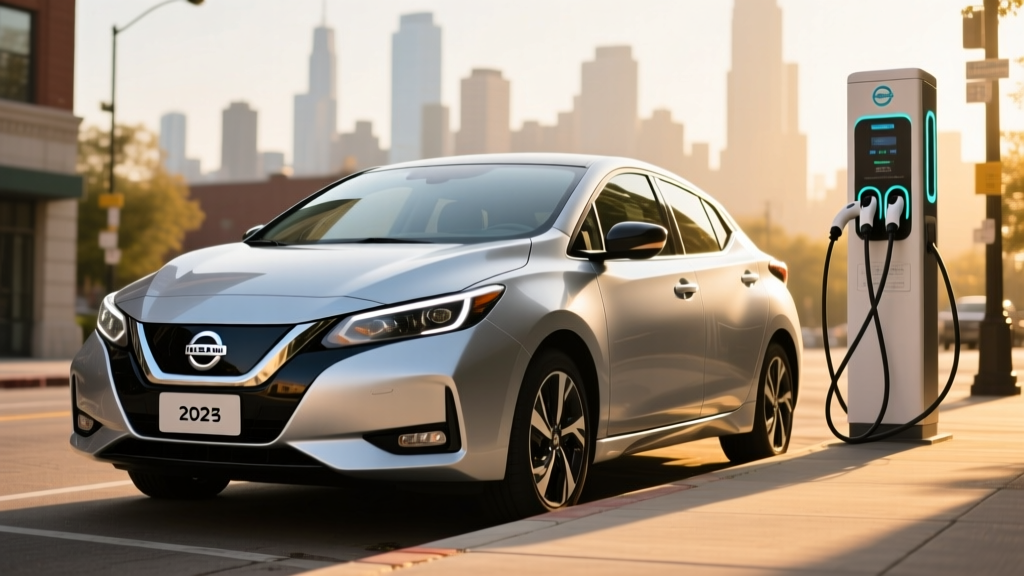
The Nissan Leaf occupies a strange place in the EV landscape. As one of the original mass-market electric vehicles, it carries over a decade of real-world ownership data — and a legacy of battery chemistry decisions that still echo through its reputation today. For 2026, Nissan continues the Leaf with the 40 kWh and 62 kWh battery packs, CHAdeMO DC fast charging, and a starting price that undercuts nearly every competitor. But recent discussions around Nissan Leaf production issues — from supply chain constraints affecting availability to the long-running debate over its passively cooled battery — make this a purchase that deserves careful scrutiny.
After examining current specs, ownership reports, and real-world driving data, here's what you need to know before signing on the dotted line.
2026 Nissan Leaf: Quick Verdict and Key Specs
| Specification | Leaf S (40 kWh) | Leaf SV Plus / SL Plus (62 kWh) |
|---|---|---|
| EPA Range | 149 miles | 212 miles |
| Battery (usable) | 40 kWh, NMC | 62 kWh, NMC |
| Horsepower | 147 hp | 214 hp |
| 0–60 mph | ~7.9 sec | ~6.5 sec |
| Drivetrain | FWD (single motor) | FWD (single motor) |
| Max DC Fast Charge | 50 kW (CHAdeMO) | 100 kW (CHAdeMO) |
| 10–80% DC Time | ~40 min | ~45 min |
| Level 2 Rate | 6.6 kW (~25 mi/hr) | 6.6 kW (~22 mi/hr) |
| EPA Efficiency | 111 MPGe / 30 kWh/100mi | 104 MPGe / 33 kWh/100mi |
| Base MSRP | $28,140 | $36,140 |
| Federal Tax Credit | Up to $3,750* | Up to $3,750* |
| Battery Warranty | 8 yr / 100,000 mi | 8 yr / 100,000 mi |
*Tax credit subject to IRS §30D rules; see eligibility section below.
Real-World Range: What the EPA Sticker Doesn't Tell You
The Leaf's lack of an active liquid thermal management system for its battery is the root cause of its cold-weather vulnerability. Without a dedicated heat pump or liquid heating loop, the battery relies on resistive cabin heating and passive thermal exchange. This means:
- Summer highway driving: ~185–195 miles (Plus), with some loss from A/C load and aero drag at speed
- Mild weather city driving: You can approach or even slightly exceed the EPA number thanks to regenerative braking at lower speeds
- Cold weather (20–30°F): Expect 25–35% range reduction; resistive heating is a significant energy draw
- Extreme cold (below 10°F): Range loss can reach 40%, and charge speeds also drop substantially
According to fueleconomy.gov, the 2025/2026 Leaf SV Plus achieves 104 MPGe combined (33 kWh per 100 miles). That efficiency is respectable, but it falls behind competitors like the Hyundai Kona Electric (120 MPGe) and Chevrolet Bolt EUV (109 MPGe) — partly because the Leaf's older platform is heavier relative to its battery capacity.
Charging Speed: The CHAdeMO Problem
| Charging Level | Power / Rate | Miles Added Per Hour | Notes |
|---|---|---|---|
| Level 1 (120V) | 1.4 kW | ~4–5 mi/hr | Emergency/trickle only; full charge in 35–50+ hours |
| Level 2 (240V, 6.6 kW) | 6.6 kW | ~22–25 mi/hr | Home or workplace; full charge in ~7–9.5 hours |
| DC Fast (40 kWh) | 50 kW peak (CHAdeMO) | ~180 mi/hr (peak) | 10–80% in ~40 min; tapers heavily above 80% |
| DC Fast (62 kWh Plus) | 100 kW peak (CHAdeMO) | ~350 mi/hr (peak) | 10–80% in ~45 min; tapers above 75–80% |
The Leaf's DC fast charging is its most significant competitive weakness in 2026. While Tesla, Hyundai, Kia, and Ford have all migrated to the NACS (North American Charging Standard) connector — granting access to the vast Supercharger network — Nissan has retained the CHAdeMO connector. CHAdeMO infrastructure is shrinking as networks prioritize CCS and NACS deployment.
On the Plus model, the 100 kW peak rate sounds adequate, but the charge curve tells a different story:
- 10–60% SoC: The Plus sustains roughly 70–100 kW, adding range quickly
- 60–80% SoC: Power tapers to ~40–50 kW as the BMS protects the passively cooled cells
- Above 80%: Charging slows dramatically to under 20 kW; plan to unplug at 80% on road trips
The passive battery cooling also means that on hot days or after repeated fast-charge sessions, the Leaf may throttle charge speed to protect the cells — a phenomenon owners colloquially call "rapidgate." On a multi-stop road trip, your second and third DC charges of the day may be noticeably slower than the first.
For home Level 2 charging, the onboard 6.6 kW charger is standard. A full charge of the 62 kWh pack takes roughly 9.5 hours — fine for overnight replenishment but slower than the 11.5 kW chargers found in some competitors.
Production Issues and Availability: What Buyers Are Reporting
The phrase "Nissan Leaf production issues" has surfaced repeatedly in owner forums and EV communities, and it encompasses several distinct concerns:
Supply Chain and Dealer Allocation
Nissan's Sunderland (UK) and Smyrna (TN) plants have faced intermittent production slowdowns tied to battery cell supply and broader component shortages. For US buyers, this translates to limited dealer inventory, particularly for the SV Plus and SL Plus trims in popular colors. Multiple buyers have reported 4–8 week waits or being told their preferred configuration isn't in the pipeline. If you're shopping now, cast a wider dealer net and be prepared to order or accept a different trim.
Passive Battery Thermal Management — A Legacy Design Decision
The most enduring "production issue" is Nissan's continued use of passive (air-cooled) battery thermal management in a market that has standardized liquid cooling. This design was cost-effective when the Leaf launched in 2010, but in 2026 it results in:
- Faster battery degradation in hot climates (Arizona, Texas, Florida owners report higher capacity loss)
- Reduced fast-charge speeds in warm weather or on back-to-back DC sessions
- Greater cold-weather range loss compared to liquid-cooled competitors
Nissan's official Leaf page notes the battery is designed for longevity, but independent data from sources like PlugShare and owner-reported State of Health (SoH) readings show that 5–7 year old Leafs in hot climates often retain 80–88% capacity — versus 90–95% for liquid-cooled packs from Tesla, Hyundai, and GM.
Platform Age and Refresh Timeline
The current Leaf rides on a platform architecture that traces back to 2017 (with the original dating to 2010). Nissan has confirmed a next-generation Leaf is in development — expected to adopt liquid cooling, a NACS or CCS connector, and a modernized skateboard platform — but as of 2026, it remains announced but not yet available for purchase. Buyers weighing whether to wait should consider that the next-gen model likely won't arrive in US showrooms before late 2027 or 2028.
Performance, Interior, and Daily Livability
The Leaf Plus's 214 horsepower and 250 lb-ft of torque deliver a 6.5-second 0–60 mph time — peppy for city merging and passing but not in the same league as dual-motor competitors. The single front motor and FWD layout mean torque steer is noticeable under hard acceleration, and the Leaf is not available with AWD.
Cargo and Passenger Space
- Rear cargo (behind second row): 23.6 cu ft — competitive with the Kona Electric (25.8 cu ft) but less than the Bolt EUV (which has been discontinued; remaining stock offers 16.3 cu ft due to its liftback design nuance)
- Cargo with rear seats folded: ~30 cu ft (limited by the raised load floor from the battery pack beneath)
- Rear legroom: 33.5 inches — adequate for adults on shorter trips but tighter than the Ioniq 5 or Model Y
- No frunk: The Leaf has no front trunk; the space is occupied by power electronics
Technology and Driver Assistance
The 2026 Leaf includes an 8-inch (S trim) or 12.3-inch (SV/SL) touchscreen with wireless Apple CarPlay and Android Auto. Nissan's ProPILOT Assist is available on SV Plus and standard on SL Plus — it provides SAE Level 2 lane centering and adaptive cruise control. This is a driver-assist system, not autonomous driving; you must keep your hands on the wheel and eyes on the road at all times.
Notable tech drawbacks:
- No vehicle-to-load (V2L) capability — you can't power devices or your home from the battery
- ProPILOT requires lane markings and disengages in construction zones or faded lines
- The infotainment system, while functional, lacks the speed and polish of Hyundai's or Tesla's interfaces
Pricing, Trims, and Federal Tax Credit Eligibility
| Trim | Battery | Base MSRP | Est. Federal Credit* | Effective Price* |
|---|---|---|---|---|
| S | 40 kWh | $28,140 | Up to $3,750 | ~$24,390 |
| SV | 40 kWh | $32,040 | Up to $3,750 | ~$28,290 |
| SV Plus | 62 kWh | $36,140 | Up to $3,750 | ~$32,390 |
| SL Plus | 62 kWh | $39,640 | Up to $3,750 | ~$35,890 |
*Federal Tax Credit (§30D) — Critical Details:
The Leaf's federal tax credit eligibility is not guaranteed at the full $7,500. Under current IRS §30D rules, you must meet ALL of the following:
- MSRP cap: The Leaf qualifies (under the $55,000 sedan/hatchback cap)
- Buyer income cap: AGI must not exceed $150,000 (single), $225,000 (head of household), or $300,000 (joint)
- Battery sourcing requirements: A percentage of critical minerals and battery components must be sourced from the US or free-trade-agreement partners — Nissan's Japanese/Chinese battery supply chain has historically limited the Leaf to the $3,750 partial credit rather than the full $7,500
- Point-of-sale transfer: You can elect to transfer the credit to the dealer at purchase, reducing your out-of-pocket cost immediately — but you must still meet income requirements at tax filing time, or repay the credit
Always verify current-year eligibility with a tax professional and the IRS Clean Vehicle Credit portal before purchasing.
Pros, Cons, and Who Should Buy the Leaf
- Lowest entry price in the EV segment ($28,140 before credits)
- Proven powertrain with over a decade of ownership data
- Comfortable ride quality and quiet cabin at city speeds
- Standard CHAdeMO DC charging (no adapter needed at legacy stations)
- 8-year/100,000-mile battery warranty with capacity retention guarantee (below 9 bars on the capacity gauge triggers warranty replacement)
- Adequate cargo space (23.6 cu ft) for a compact hatchback
- CHAdeMO connector — shrinking public DC network access as NACS/CCS dominate
- Passive battery cooling leads to faster degradation in hot climates and throttled charge speeds
- Real-world highway range of 170–185 mi (Plus) is below competitors
- No active thermal management means poor cold-weather performance
- FWD only — no AWD option for snow-belt buyers
- Dated platform; next-gen replacement still years away
- Limited DC fast-charge speed (100 kW peak, 50 kW on base model)
Who the Leaf Suits Best
Buy the Leaf if: You're a budget-conscious commuter who drives under 100 miles per day, can charge at home overnight, lives in a temperate climate, and values the lowest possible purchase price over cutting-edge tech or road-trip capability.
Look elsewhere if: You need road-trip range (300+ miles), live in a hot climate where battery degradation is a concern, rely on public DC fast charging (CHAdeMO availability is declining), or want AWD for winter driving.
Leaf vs. Key Competitors: Is It Worth Buying in 2026?
| Spec | Nissan Leaf SV Plus | Hyundai Kona Electric | Tesla Model Y (LR) | Chevrolet Equinox EV |
|---|---|---|---|---|
| EPA Range | 212 mi | 261 mi | 320 mi | 319 mi |
| Battery | 62 kWh NMC | 65 kWh NMC | 75 kWh NMC | 85 kWh NMC |
| DC Fast Charge | 100 kW (CHAdeMO) | 100 kW (CCS/NACS) | 250 kW (NACS) | 150 kW (CCS/NACS) |
| 10–80% Time | ~45 min | ~43 min | ~25 min | ~30 min |
| 0–60 mph | 6.5 sec | 7.2 sec | 5.0 sec | 7.8 sec |
| Base MSRP | $36,140 | $33,975 | $44,990 | $33,600 |
| Connector | CHAdeMO | NACS (adapter avail.) | NACS (native) | NACS (adapter avail.) |
| Thermal Mgmt. | Passive (air) | Liquid | Liquid | Liquid |
The comparison is stark. The Hyundai Kona Electric offers 49 more miles of range, liquid battery cooling, and NACS/CCS access for less money. The Chevrolet Equinox EV delivers 319 miles of range and modern charging at a similar price point. The Leaf's only remaining advantage is its rock-bottom S trim starting price at $28,140 — but that 40 kWh model's 149-mile range limits its usefulness significantly.
For buyers who can stretch their budget by $5,000–$8,000, the Kona Electric or Equinox EV represent substantially better long-term value — particularly when you factor in battery longevity, charging network access, and resale value.
Frequently Asked Questions
What is the real-world range of the 2026 Nissan Leaf?
The Leaf SV Plus (62 kWh) carries a 212-mile EPA rating. In real-world highway driving at 70 mph, expect 170–185 miles. In cold weather below 30°F, range drops to roughly 130–150 miles on the highway. The base 40 kWh Leaf S (149 mi EPA) delivers approximately 110–130 miles in mixed driving, and as little as 95 miles on a cold highway run.
How fast does the Nissan Leaf charge?
On DC fast charging, the Plus model peaks at 100 kW via CHAdeMO, reaching 10–80% in roughly 45 minutes (with significant tapering above 80%). The base 40 kWh model peaks at 50 kW, taking about 40 minutes for 10–80%. At home on Level 2 (240V, 6.6 kW), a full charge of the Plus takes approximately 9.5 hours. Level 1 (120V) adds about 4–5 miles per hour and is suitable only for overnight trickle charging.
Does the Nissan Leaf qualify for the federal EV tax credit?
The Leaf qualifies for a partial federal tax credit — typically $3,750 rather than the full $7,500 — due to battery component and critical mineral sourcing requirements under IRS §30D. Eligibility also depends on your income (AGI caps: $150K single / $300K joint), and the Leaf's MSRP falls well under the $55,000 cap. The credit can be transferred to the dealer at point of sale. Always verify current-year rules at irs.gov and consult a tax professional.
Is the Nissan Leaf worth buying versus the competition?
At the base S trim ($28,140 before credits), the Leaf offers the cheapest entry into new EV ownership. But for most buyers, competitors like the Hyundai Kona Electric ($33,975, 261 mi range, liquid cooling, NACS access) and Chevrolet Equinox EV ($33,600, 319 mi range) deliver significantly more range, better battery longevity, and access to modern charging networks. The Leaf is worth considering only if budget is the absolute top priority and you can charge at home.
What are the biggest Nissan Leaf production issues?
The primary concerns are: (1) limited dealer inventory due to supply chain constraints, resulting in 4–8 week waits for some trims; (2) the continued use of passive air-cooled battery thermal management, which accelerates degradation in hot climates and throttles DC charge speeds; and (3) the aging platform, which hasn't received a fundamental redesign since 2017. A next-generation Leaf with liquid cooling and updated charging is in development but not expected before late 2027–2028.
What is the Leaf's battery warranty?
Nissan covers the Leaf's battery for 8 years or 100,000 miles against defects and excessive capacity loss. Specifically, if the battery capacity gauge drops below 9 bars (out of 12) within the warranty period, Nissan will replace or refurbish the pack. This is a straightforward warranty, but note that the passive cooling system means hot-climate owners may see capacity loss sooner than liquid-cooled competitors — though still typically within the warranty threshold.
The 2026 Nissan Leaf remains the budget EV for buyers who know its limitations and can work within them. If your commute is short, your climate is mild, and your garage has a 240V outlet, the Leaf can serve as reliable, affordable daily transportation. But the production issues — from dwindling inventory to a battery design that hasn't kept pace with the industry — mean you should go in with eyes wide open. For most shoppers spending $30,000 or more, the competition offers a more future-proof package.