Quick Verdict: The Hot Hatch That Plays It Cool
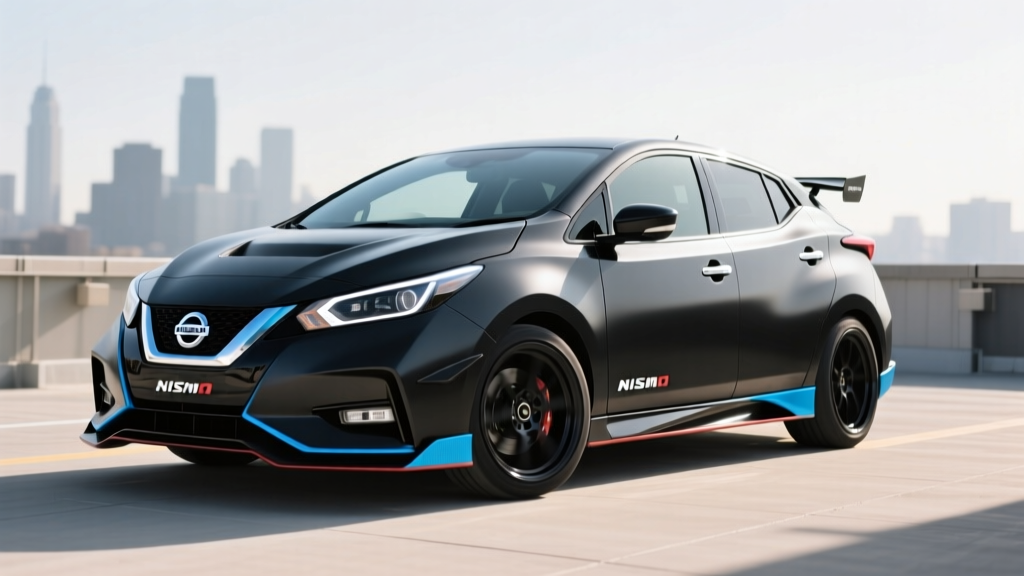
The 2026 Nissan Leaf NISMO occupies a strange corner of the EV market. It's the only EV wearing Nissan's motorsport badge, promising sharper handling, a stiffer chassis, and visual aggression that the standard Leaf simply doesn't deliver. But beneath the NISMO body kit and retuned suspension sits the same 60 kWh battery pack and CHAdeMO charging port that have defined the Leaf since its 2018 refresh — and that's where the conversation gets complicated for prospective buyers in 2026.
If you want an electric hot hatch that carves canyons on weekends and commutes silently on weekdays, the Leaf NISMO delivers a uniquely engaging drive at a relatively accessible price point. If you prioritize cutting-edge charging infrastructure, maximum range, or access to Tesla's Supercharger network without adapters, this isn't the EV for you. Here's every number you need to make the call.
Range & Efficiency: EPA Sticker vs. Real-World Reality
- EPA Estimated Range: 212 miles (combined city/highway)
- Real-World Highway (70 mph, mild weather): ~175–190 miles
- Real-World Highway (cold weather, 30°F or below): ~145–165 miles
- City/Commuter Driving (regenerative braking active): ~215–230 miles
The EPA's 212-mile figure for the Leaf NISMO reflects a blended driving cycle that favors city speeds, where regenerative braking recaptures energy and aerodynamic drag is minimal. On the highway at sustained 70–75 mph speeds, expect to lose roughly 10–15% of that rated range due to the Leaf's relatively boxy profile and the NISMO's wider 215/50R18 tires, which increase rolling resistance.
Cold weather is the bigger concern for northern-climate buyers. The Leaf's battery thermal management system relies on passive air cooling rather than the active liquid cooling found in the Hyundai Ioniq 5 or Tesla Model 3. In sub-freezing temperatures, lithium-ion cell resistance increases, and without a heat pump (the Leaf uses a conventional resistive HVAC system), cabin heating draws directly from the traction battery. Expect 25–35% range loss in sustained cold-weather driving.
Efficiency comes in at 111 MPGe combined, which translates to approximately 30 kWh per 100 miles. That's competitive with the Chevrolet Bolt EUV but trails the Tesla Model 3 RWD (132 MPGe) and Hyundai Ioniq 6 (140 MPGe), both of which benefit from more aerodynamic shapes and heat-pump HVAC systems.
Battery Chemistry, Capacity & Longevity
| Specification | 2026 Nissan Leaf NISMO |
|---|---|
| Battery Chemistry | NMC (Nickel Manganese Cobalt) |
| Total Battery Capacity | 62 kWh (gross) |
| Usable Battery Capacity | ~60 kWh (estimated) |
| Battery Cooling | Passive air cooling |
| Heat Pump | No (resistive cabin heater) |
| Battery Warranty | 8 years / 100,000 miles (capacity below 9 bars on gauge) |
| Powertrain Warranty | 5 years / 60,000 miles |
Nissan uses an NMC (nickel manganese cobalt) pouch-cell architecture supplied primarily by Envision AESC. Unlike the LFP (lithium iron phosphate) batteries increasingly found in base-trim Tesla Model 3s and some BYD models, NMC chemistry offers higher energy density — meaning more range in a physically smaller pack — but historically shows faster degradation when repeatedly charged to 100% or exposed to high temperatures.
Nissan's battery warranty guarantees the pack will retain at least 9 out of 12 capacity bars (roughly 66–75% state of health) over 8 years or 100,000 miles. In practice, most Leaf owners report degradation in the 8–12% range over the first five years, which is acceptable but trails the slower degradation curves seen in liquid-cooled packs from Tesla and Hyundai. The passive cooling system is the primary bottleneck: repeated DC fast charging sessions in hot weather accelerate cell wear because the pack cannot shed heat efficiently.
Charging: The CHAdeMO Problem in a NACS World
| Charging Level | Connector | Max Power | Speed / Time |
|---|---|---|---|
| Level 1 (120V household) | J1772 | 1.4 kW | ~4 miles per hour |
| Level 2 (240V home/public) | J1772 | 7.2 kW (onboard charger) | ~24 miles per hour; 0–100% in ~9.5 hours |
| DC Fast Charging | CHAdeMO | 50 kW peak | 10–80% in ~60 minutes |
This is the Leaf NISMO's most significant competitive weakness in 2026. While the broader EV market has largely consolidated around the NACS (North American Charging Standard) connector — with Ford, GM, Rivian, Hyundai, and Volvo all gaining access to Tesla's Supercharger network — Nissan continues to equip the Leaf with CHAdeMO for DC fast charging.
The 50 kW peak DC charge rate is painfully slow by 2026 standards. For context, the Hyundai Ioniq 5 peaks at 240 kW (10–80% in ~18 minutes), the Tesla Model 3 peaks at 250 kW (~15 minutes), and even the budget Chevrolet Equinox EV manages 150 kW (~30 minutes). At 50 kW, the Leaf NISMO's charge curve is relatively flat — it doesn't taper dramatically above 80% the way higher-rate chargers do — but the total time from 10% to 80% still stretches past an hour.
On the home front, the 7.2 kW onboard charger is perfectly adequate. A standard Level 2 home installation on a 40-amp circuit will replenish the full 60 kWh usable battery in about 9.5 hours, which is fine for overnight charging. Most Leaf NISMO owners will do 90%+ of their charging at home, where the CHAdeMO limitation is irrelevant. The CHAdeMO port only becomes a pain point on road trips, where CHAdeMO-equipped stations are increasingly rare outside of legacy Electrify America and EVgo locations.
Performance & Driving Dynamics: Where NISMO Earns Its Badge
| Performance Metric | 2026 Leaf NISMO | 2026 Leaf SV Plus (standard) |
|---|---|---|
| Horsepower | 214 hp | 214 hp |
| Torque | 250 lb-ft | 250 lb-ft |
| 0–60 mph | ~6.5 seconds | ~6.8 seconds |
| Drivetrain | FWD (single front motor) | FWD (single front motor) |
| Suspension | NISMO-tuned sport dampers | Standard comfort-tuned |
| Steering | Revised ratio, firmer effort | Standard electric power steering |
| Wheels/Tires | 18" alloy, 215/50R18 | 17" alloy, 215/50R17 |
The NISMO treatment doesn't transform the Leaf into a Tesla Model 3 Performance rival — it's still a front-wheel-drive hatchback with 214 horsepower. What it does deliver is a noticeably more engaging chassis. The retuned dampers reduce body roll through corners, the steering rack feels tighter on-center, and the e-Pedal mode (Nissan's one-pedal driving system with aggressive regenerative braking up to ~0.2g) makes stop-and-go traffic genuinely relaxing.
The 6.5-second 0–60 mph time is brisk enough for confident highway merging and entertaining on back roads, but it's not thrilling by 2026 EV standards. The Hyundai Ioniq 5 RWD does it in 5.0 seconds, and dual-motor AWD EVs in this price range (the Volkswagen ID.4 AWD Pro, for instance) hit 60 in the low-5-second range. The Leaf NISMO's FWD layout also means torque steer is perceptible under hard acceleration from a stop — something you won't feel in a RWD or AWD electric platform.
Where the NISMO genuinely shines is low-speed urban agility. The compact hatchback footprint (176.4 inches long, 70.5 inches wide), combined with a tight 34.8-foot turning circle, makes it a natural city car. The sport suspension is firm but not punishing over potholes, and the low center of gravity from the floor-mounted battery pack keeps it planted through sweeping on-ramps.
Interior, Tech & Practicality
Inside, the Leaf NISMO carries the same cabin architecture as the standard Leaf, with NISMO-specific touches: red stitching on the seats and steering wheel, NISMO-logo front seats with slightly more aggressive bolstering, and a red accent strip on the dashboard. The 12.3-inch touchscreen infotainment system runs Nissan's latest software with wireless Apple CarPlay and Android Auto, and the digital instrument cluster includes an NISMO-branded startup animation.
Driver Assistance: Nissan ProPILOT Assist is standard — this is an SAE Level 2 system combining adaptive cruise control with lane-centering. It works competently on well-marked highways but requires continuous driver supervision. This is not a hands-off or "self-driving" system. ProPILOT also includes automatic emergency braking, blind-spot warning, rear cross-traffic alert, and a 360-degree camera.
- Cargo (behind rear seats): 23.6 cu ft
- Cargo (rear seats folded): 57.3 cu ft
- Front legroom: 42.1 inches
- Rear legroom: 33.5 inches
- Frunk: None (front space occupied by power electronics)
- Towing capacity: Not rated for towing
Cargo space is generous for a compact hatchback and competitive with the Chevrolet Bolt EUV (though the Bolt offers slightly more). Rear legroom is adequate for adults under 6 feet but will feel snug for taller passengers on longer trips. The absence of a frunk is a missed opportunity — the Hyundai Kona Electric and Kia Niro EV both offer small front trunks — but it's a minor complaint given the rear cargo volume.
Pricing, Tax Credits & Total Cost
| Trim / Configuration | MSRP (2026) | Est. Federal Credit | Effective Price |
|---|---|---|---|
| Leaf NISMO (single trim) | $37,500 (est.) | Up to $7,500 (§30D)* | ~$30,000 |
| Leaf SV Plus (comparison) | $34,000 (est.) | Up to $7,500 (§30D)* | ~$26,500 |
*Federal tax credit eligibility under IRS §30D rules depends on multiple factors that change frequently:
- MSRP cap: Vehicle must have an MSRP at or below $55,000 (cars/hatchbacks). The Leaf NISMO clears this easily.
- Buyer income cap: Modified adjusted gross income must not exceed $150,000 (single) / $300,000 (joint filing).
- Battery sourcing: The percentage of critical minerals and battery components that must be sourced from the US or free-trade-agreement countries increases annually. Verify current-year requirements with a tax professional before purchasing.
- Point-of-sale transfer: As of 2024, buyers can transfer the credit to the dealer for an upfront price reduction, rather than waiting to claim it on their tax return.
The Leaf NISMO's credit eligibility is historically strong — Nissan's Envision AESC battery supply chain has generally met critical-mineral thresholds — but the specific 2026 sourcing requirements should be confirmed at the dealership or via the IRS clean vehicle credit lookup tool before signing. State and local incentives (such as California's CVRP or Colorado's state credit) can stack on top of the federal credit, further reducing effective cost.
How It Stacks Up Against Competitors
| Spec | 2026 Leaf NISMO | 2026 Hyundai Kona Electric N Line | 2026 Mini Cooper SE |
|---|---|---|---|
| EPA Range | 212 mi | 261 mi | ~200 mi (est.) |
| Battery (usable kWh) | 60 kWh | 64 kWh | ~50 kWh |
| Peak DC Charge Rate | 50 kW | 100+ kW | ~95 kW |
| 0–60 mph | ~6.5 sec | ~7.0 sec | ~6.7 sec |
| Horsepower | 214 hp | 201 hp | 215 hp |
| DC Connector | CHAdeMO | CCS / NACS adapter | CCS / NACS adapter |
| Starting MSRP (est.) | $37,500 | $36,500 | $36,000 |
The Leaf NISMO's closest rivals are other sporty compact EVs, and the comparison reveals both its strengths and its age. The Hyundai Kona Electric offers 49 more miles of EPA range, faster DC charging, and access to the growing NACS/Supercharger network via adapter — all for slightly less money. The redesigned Mini Cooper SE is the more charismatic handler with a more premium interior, though its range and cargo space trail the Leaf.
Where the Leaf NISMO holds its ground is in ride comfort and value. The NISMO-tuned suspension strikes a better daily-driver balance than the Mini's firm setup, and Nissan's ProPILOT Assist is more capable than Mini's basic driver aids. If your daily drive is under 50 miles round-trip, you charge at home, and you rarely road-trip beyond 150 miles from home, the Leaf NISMO's CHAdeMO limitation becomes a footnote rather than a dealbreaker.
- You want a sporty compact EV under $38K and can charge at home
- Your daily commute is under 60 miles round-trip
- You rarely take road trips exceeding 150 miles one-way
- You value ride comfort alongside sport handling
- You qualify for the full $7,500 federal tax credit
- You need access to Tesla Superchargers or the NACS network
- You regularly drive in extreme cold (below 20°F)
- Fast DC charging on road trips is a priority
- You need AWD or more than 214 horsepower
- Long-term battery degradation in hot climates concerns you
Frequently Asked Questions
What is the real-world range of the 2026 Nissan Leaf NISMO?
The EPA rates the Leaf NISMO at 212 miles combined. In real-world highway driving at 70 mph in mild temperatures, expect approximately 175–190 miles. In cold weather (30°F or below), range drops to roughly 145–165 miles due to the lack of a heat pump and passive battery thermal management. City driving with regenerative braking can exceed the EPA estimate, reaching 215–230 miles.
How fast does the Leaf NISMO charge at home and on DC fast chargers?
On a Level 2 home charger (240V, 32-amp), the Leaf NISMO charges at 7.2 kW, adding roughly 24 miles of range per hour and reaching a full charge from empty in about 9.5 hours. DC fast charging tops out at 50 kW via the CHAdeMO connector, taking approximately 60 minutes for a 10–80% charge. This is significantly slower than competitors using CCS or NACS connectors at 150–350 kW stations.
Does the 2026 Nissan Leaf NISMO qualify for the $7,500 federal EV tax credit?
The Leaf NISMO has historically qualified for the full §30D credit, as its MSRP is well under the $55,000 car cap and its Envision AESC battery has generally met critical-mineral sourcing thresholds. However, eligibility depends on your income (under $150K single / $300K joint), the current-year battery-sourcing rules, and dealer documentation. Always verify with the IRS clean vehicle credit lookup tool and consult a tax professional before purchasing. The credit can be transferred to the dealer at point of sale for an immediate price reduction.
Is the Leaf NISMO worth buying over the standard Leaf SV Plus?
If driving engagement matters to you, yes. The NISMO-tuned suspension, firmer steering, and sport seats meaningfully improve the driving experience over the softer SV Plus. The 0–60 time is marginally quicker (6.5 vs. 6.8 seconds), but the real difference is in cornering composure and steering feel. If you view your EV purely as transportation and want to save roughly $3,500, the SV Plus delivers the same range and powertrain in a more comfort-oriented package.
What are the biggest drawbacks of the 2026 Leaf NISMO?
The three main limitations are: (1) CHAdeMO DC charging at just 50 kW, which is increasingly isolated as the industry moves to NACS; (2) passive air-cooled battery thermal management, which accelerates degradation in hot climates and during repeated fast-charging sessions; and (3) no heat pump, which causes significant range loss in cold weather. These are all carryover compromises from the Leaf's aging platform.
Can I use Tesla Superchargers with the Leaf NISMO?
Not directly. The Leaf uses a CHAdeMO DC connector, while Tesla Superchargers use NACS. As of 2026, there is no commercially available CHAdeMO-to-NACS adapter that supports DC fast charging at Supercharger power levels. You'll need to rely on Electrify America, EVgo, ChargePoint, and other networks that still maintain CHAdeMO connectors — and those stations are becoming less common.